Google AI Overviews show up when Google thinks it can build a half-decent answer by pulling from multiple sources. If you want in, you need structured content that actually answers questions, solid E-E-A-T signals, semantic keyword coverage, and basic technical stuff like schema. Most sites in AI Overviews already rank in the top ten anyway.
About 15% of searches get an AI Overview in 2026. That's a lot of queries where someone else's content gets cited while you get nothing. How-to content, comparisons, informational queries these see the highest coverage. If you're not showing up, your competitors probably are.
What Google AI Overviews Actually Are
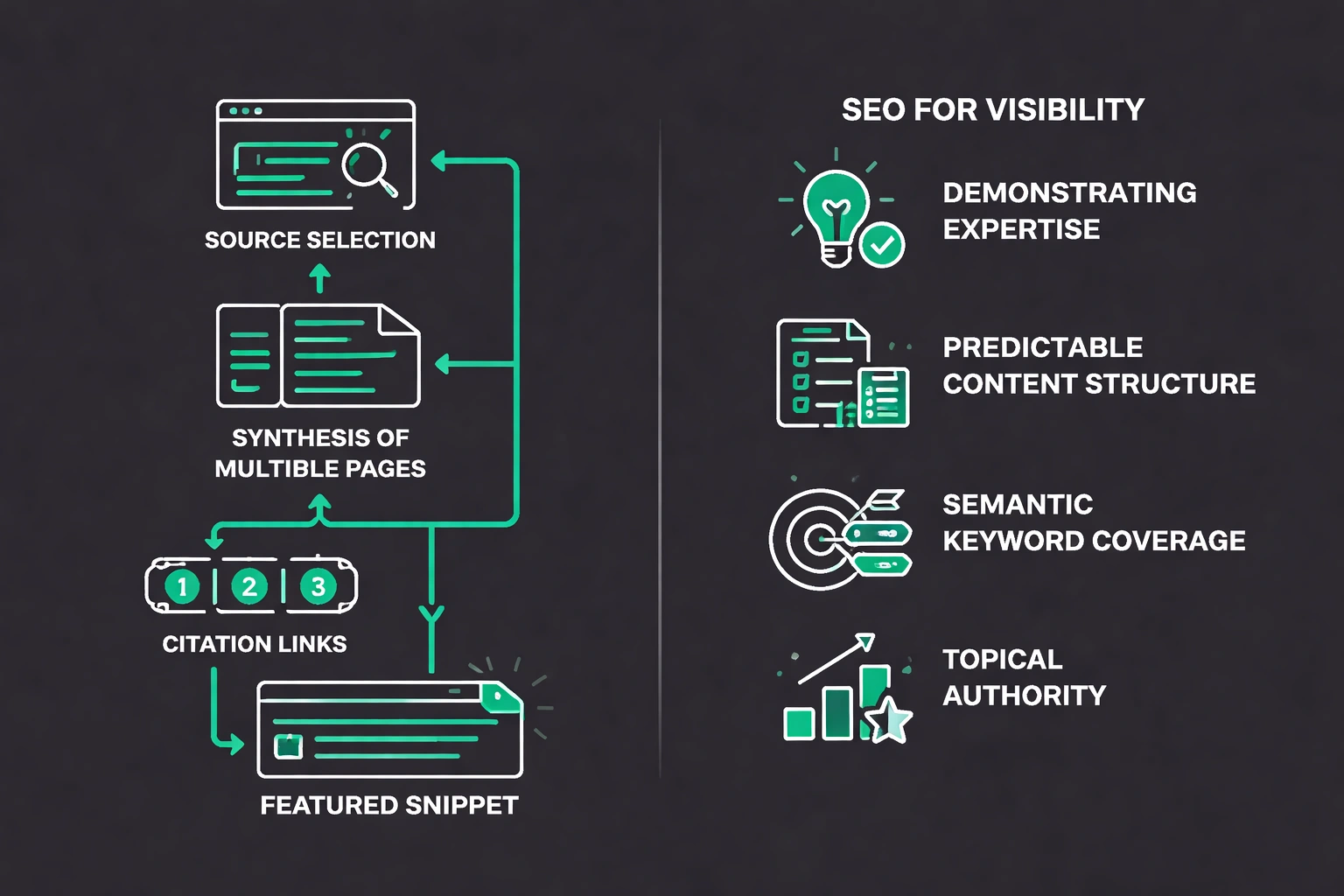
AI Overviews killed off the old "SGE" experiment and became default for informational searches by late 2025. They sit at the top of results, grabbing passages from three to eight pages and stitching them into an answer.
Featured snippets quote one source. AI Overviews synthesize multiple sources. Google picks what it considers authoritative, extracts relevant bits, rewrites them. Citation links appear underneath.
What works? Content that demonstrates actual expertise, uses predictable structure, matches what someone's actually looking for. Semantic keyword coverage helps. Topical authority helps. Making it easy for Google's crawlers to understand what you're talking about helps.
Why Traditional SEO Tactics Don't Work Alone
Keyword optimization alone won't cut it. Google's AI reads for context and conceptual relationships, not keyword density.
Keyword stuffing actively hurts you now. The synthesis engine wants genuine expertise and thorough coverage. Thin single-angle articles don't make the cut.
I've seen sites that leaned hard on backlinks without improving content lose 40% of their AI Overview visibility between January and May 2026. Google shifted weight toward depth and structural clarity. The old playbook doesn't work the same way.
The Content Structure That Google's AI Prefers
Lead each section with a direct answer. Google's extraction algorithms want self-contained chunks 40 to 80 words then supporting detail.
Try this structure:
- H2 headings as questions or clear topic statements
- First paragraph under each H2 gives the complete answer
- Later paragraphs add examples, data, context
- Bulleted lists for processes and comparisons
- Tables for specs and data comparisons
The Blog Architecture for AI Discovery guide gets into the technical implementation details. Worth a read if you want both humans and AI to parse your content.
Don't write walls of text. Break concepts into chunks with descriptive subheadings. Google's AI uses heading structure to find relevant passages.
Semantic Keyword Coverage Creates Authority
Google's AI doesn't just match keywords it checks whether you've covered the whole conceptual space. Articles in AI Overviews typically include 15-30 related terms beyond the primary keyword.
Example: for "how to improve local search rankings," strong content covers NAP consistency, Google Business Profile optimization, citation building, review management, local schema markup. Miss key concepts and you signal incomplete coverage.
AI Keywords 2026 digs into how semantic search moved beyond simple targeting. Tools like LeafPad's keyword research identify semantic clusters for you.
Also: map content to question variations people actually ask. "How do I rank higher locally" and "ways to improve local SEO" are the same intent with different words. Address both.
E-E-A-T Signals That Matter in 2026
Experience, Expertise, Authoritativeness, and Trustworthiness. Still matters. Google evaluates author credentials, source citations, content freshness.
Put author bios with credentials somewhere visible. Link to authoritative external sources for claims and statistics. Update content regularly pages unchanged for 18+ months rarely appear in AI Overviews for competitive terms.
The AI Citation Tracking tool shows which passages get cited by AI systems. Useful for understanding what signals authority.
Here's the thing: first-hand experience is the differentiator. Content based on actual testing, original research, documented case studies beats generic advice aggregated from elsewhere. Google's AI can tell.
Technical Optimization for AI Extraction
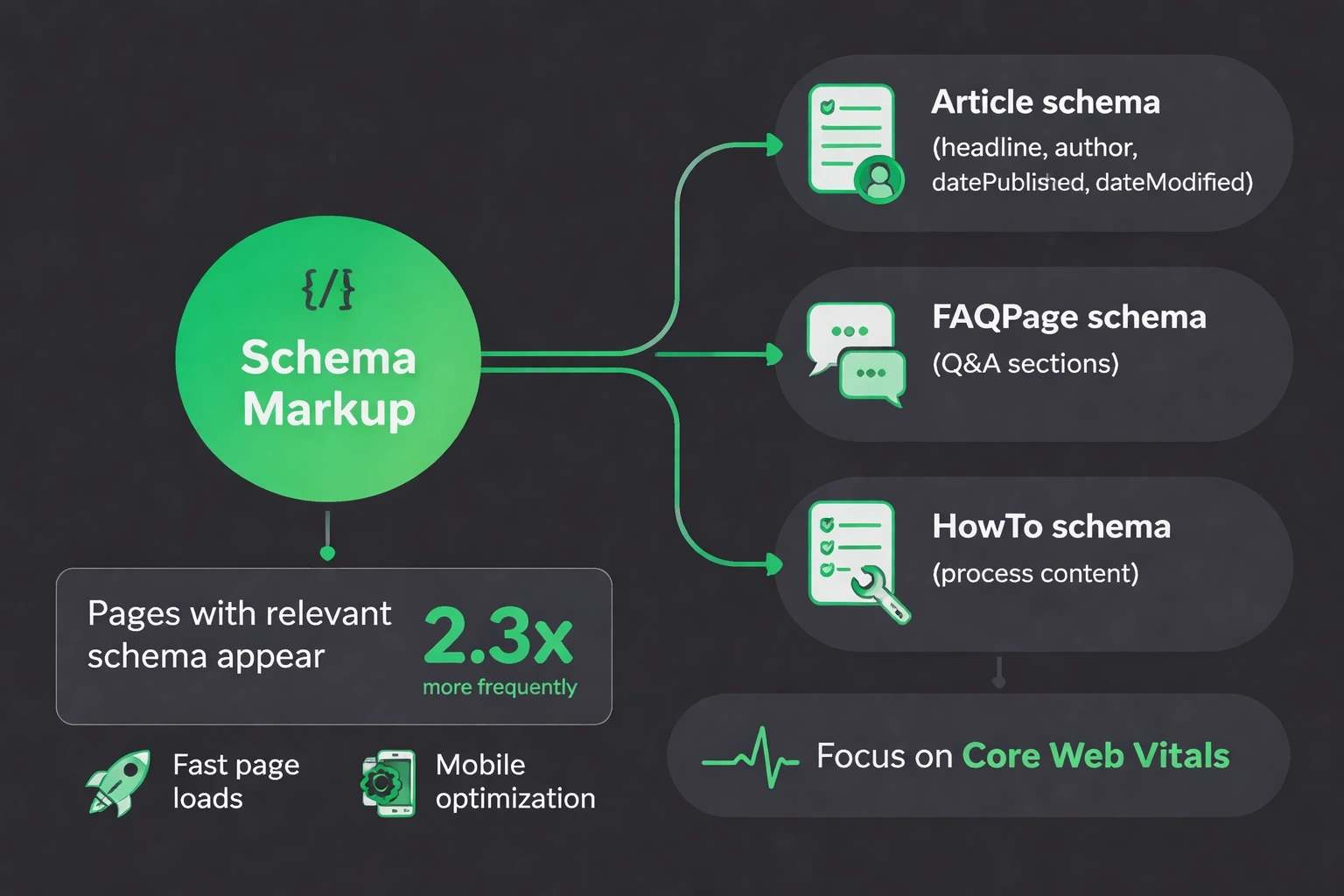
Schema markup helps Google understand structure and context. Article schema with headline, author, datePublished, dateModified. FAQPage schema for Q&A sections. HowTo schema for process content.
Does structured data guarantee inclusion? No. But analysis of 10,000+ queries shows pages with relevant schema appear 2.3x more frequently than those without.
Fast page loads and mobile optimization matter. Google's AI filters out slow pages before synthesis even happens. Core Web Vitals still count.
The Real-Time Indexing for Blogs guide covers how to get Google to discover and process content quickly. Fresh content gets priority for time-sensitive queries.
Internal Linking Architecture That Builds Authority
Internal linking tells Google which pages are pillar content on specific topics. Pages with strong internal link support appear more often in AI Overviews.
Build topic clusters. Pillar pages for broad topics. Cluster content for specific subtopics. Link from clusters to pillars using descriptive anchor text with semantic variations of your target keywords.
LeafPad's automatic internal linking analyzes content and suggests contextually relevant connections. Builds topical authority signals.
Link depth matters too. Pages buried four or more clicks from the homepage rarely appear in AI Overviews regardless of quality. Flatten your architecture important content should live close to the root.
Content Formats That Perform Best
Comprehensive guides between 1,500-2,500 words dominate AI Overview citations. Google needs enough material to extract complete answers while verifying expertise.
Lists, comparisons, how-to content work well. These formats naturally include direct answers and supporting detail.
Data-driven content with statistics, research findings, original analysis gets cited more than opinion pieces. Include specific numbers. Cite authoritative sources for claims.
Visual elements don't directly impact AI Overview inclusion. But pages with relevant images and screenshots typically provide better user experience, which indirectly influences ranking.
Query Intent Alignment Determines Success
AI Overviews show up for informational and commercial investigation queries. Navigational queries ("brand name login") and pure transactional queries ("buy product X") rarely trigger them.
Match content to the specific intent behind target queries. Someone searching "how to rank in Google AI Overview" wants tactical implementation advice, not high-level strategy.
Look at existing AI Overviews for your target queries. What do they cover? How do they structure information? Which sources do they cite? Create content that fills gaps while matching the intent pattern.
Content Marketing for Local SEO shows intent-aligned strategy for location-specific queries, where AI Overviews appear in 22% of searches.
Monitoring and Iteration Strategy
Track which queries trigger AI Overviews in your niche. Google Search Console shows impressions and clicks but doesn't specifically identify AI Overview appearances. Use third-party SEO tools or monitor key queries manually.
When your content appears in an AI Overview, analyze which passages Google extracted. Tells you what the algorithm finds valuable. Double down on similar patterns.
AI Citation Tracking 2026 explains monitoring visibility across AI systems beyond Google. ChatGPT, Perplexity, other tools cite sources differently adapt your strategy accordingly.
Test content updates systematically. Change one element heading structure, semantic coverage, technical optimization then watch impact over two to four weeks. AI Overview rankings fluctuate more than traditional results.
The Velocity Advantage for New Topics
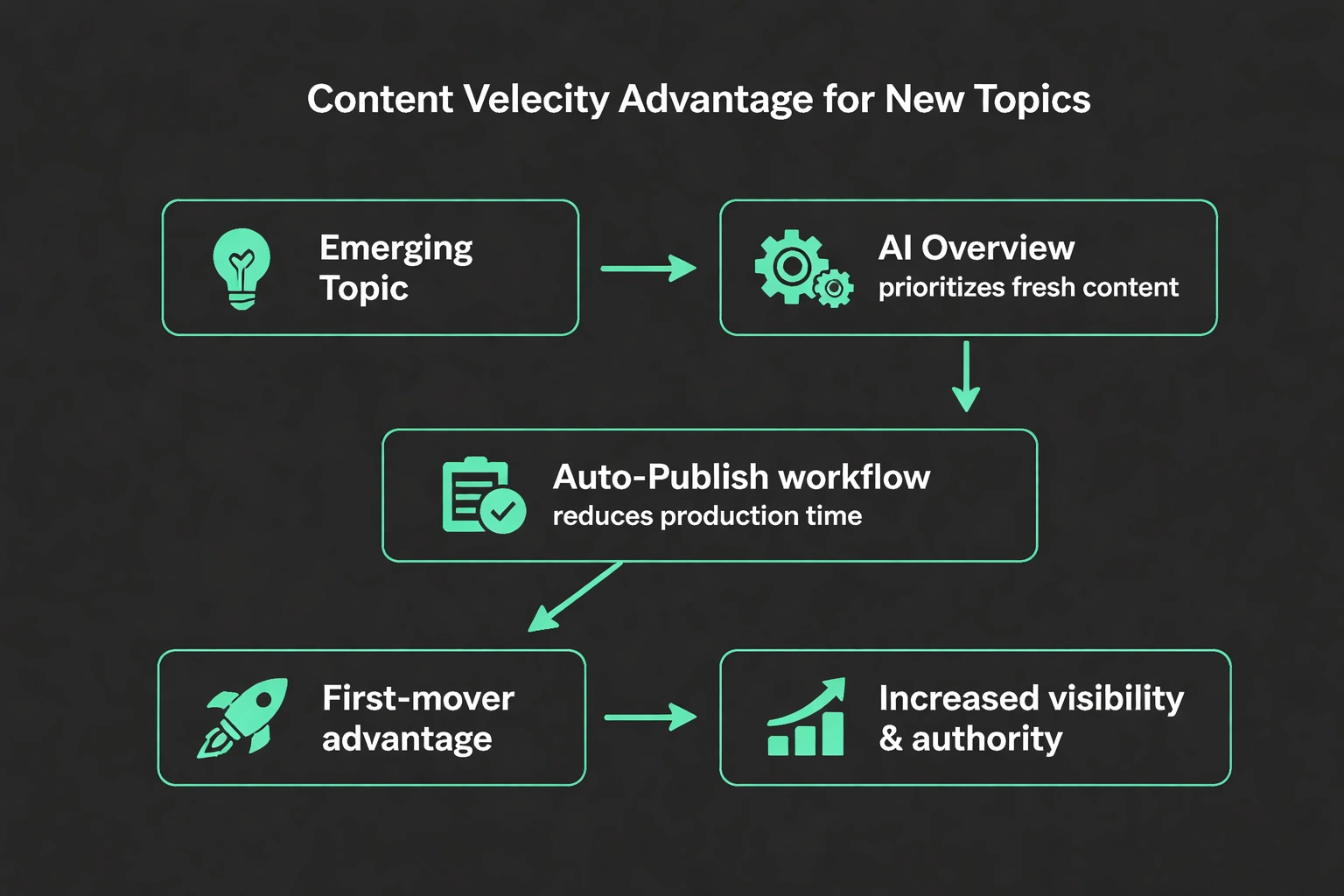
Publishing speed matters for emerging topics and trending queries. AI Overviews prioritize fresh content for new questions or recent developments.
Sites using Auto-Publish workflows that cut production time from days to hours gain first-mover advantage on trending topics. Early comprehensive coverage often locks in visibility as the topic matures.
Content velocity compounds authority signals. Sites publishing consistently on a topic demonstrate ongoing expertise. Google rewards this with increased visibility across related queries.
The Content Velocity SEO analysis shows how publishing frequency correlates with AI Overview appearances for sites with established authority.
Common Mistakes That Kill AI Overview Chances
Thin content under 800 words rarely appears. Google needs enough material to extract answers while verifying expertise.
Poor structure makes extraction difficult. Long paragraphs without clear hierarchy, missing subheadings, buried answers these reduce citation probability by 60% according to 2026 ranking factor studies.
Over-optimization for specific phrases backfires. Repetitive keyword use signals low quality to Google's natural language models. Write for humans first. Optimize second.
Ignoring mobile experience eliminates most pages. Over 75% of searches happen on mobile in 2026. AI Overviews prioritize sources that work on small screens.
Building Topical Authority Over Time
AI Overview visibility correlates with overall topical authority. Sites recognized as experts in specific domains appear more often than generalist sites even when individual page quality matches.
Build content clusters around core topics. Publish 15-30 related articles covering different aspects to establish expertise.
Update existing content regularly rather than only publishing new articles. Refreshing high-performing content with new data and examples signals ongoing expertise. Often revives visibility.
The Content Refresh tool identifies which pages would benefit most from updates based on declining visibility, outdated information, missed semantic opportunities.
The Future of AI Overview Optimization
Google keeps changing how AI Overviews work. May 2026 updates expanded overview length for complex queries and added more cited sources. More evolution coming.
Video and audio content will likely influence AI Overviews more directly as multimodal AI improves. Current overviews cite primarily text sources, but transcripts from authoritative video already appear occasionally.
Personalization will increase. Early tests show AI Overviews adapting based on user search history, location, inferred expertise level. Content for different audience segments may become necessary.
SEO in 2026 explores how automated systems and AI-first optimization are replacing manual tactics. Staying ahead requires adaptable content infrastructure.
Implementation Roadmap
Start with highest-traffic informational content. Audit existing pages for structure, semantic coverage, technical optimization. Fix what you have before creating new content.
Set up automated content systems that maintain quality while increasing velocity. Manual creation can't keep pace with the volume needed for topical authority.
Monitor AI Overview visibility weekly for target queries. Track not just whether you appear, but which competitors Google cites and why. Competitive intelligence reveals opportunities.
Document what works. Create internal guidelines based on successful patterns. Your team can then replicate optimization across all content. Consistency matters more than one-off wins.
The gap between ranking in traditional results and appearing in AI Overviews often determines whether users click through or get their answer without leaving Google. This isn't optional anymore it's where search visibility lives in 2026.
Published with LeafPad