Topical authority is how search engines decide if your site actually knows what it's talking about. LeafPad's pillar-and-cluster system builds this automatically connecting related content so algorithms and readers see you as a resource, not just a random collection of posts.
Most sites chase keywords. The ones that win build something closer to a knowledge base. In 2026, with Google's passage ranking and LLM citation engines like ChatGPT, getting cited means covering a topic thoroughly. A single optimized post doesn't cut it.
What Topical Authority Actually Means in 2026
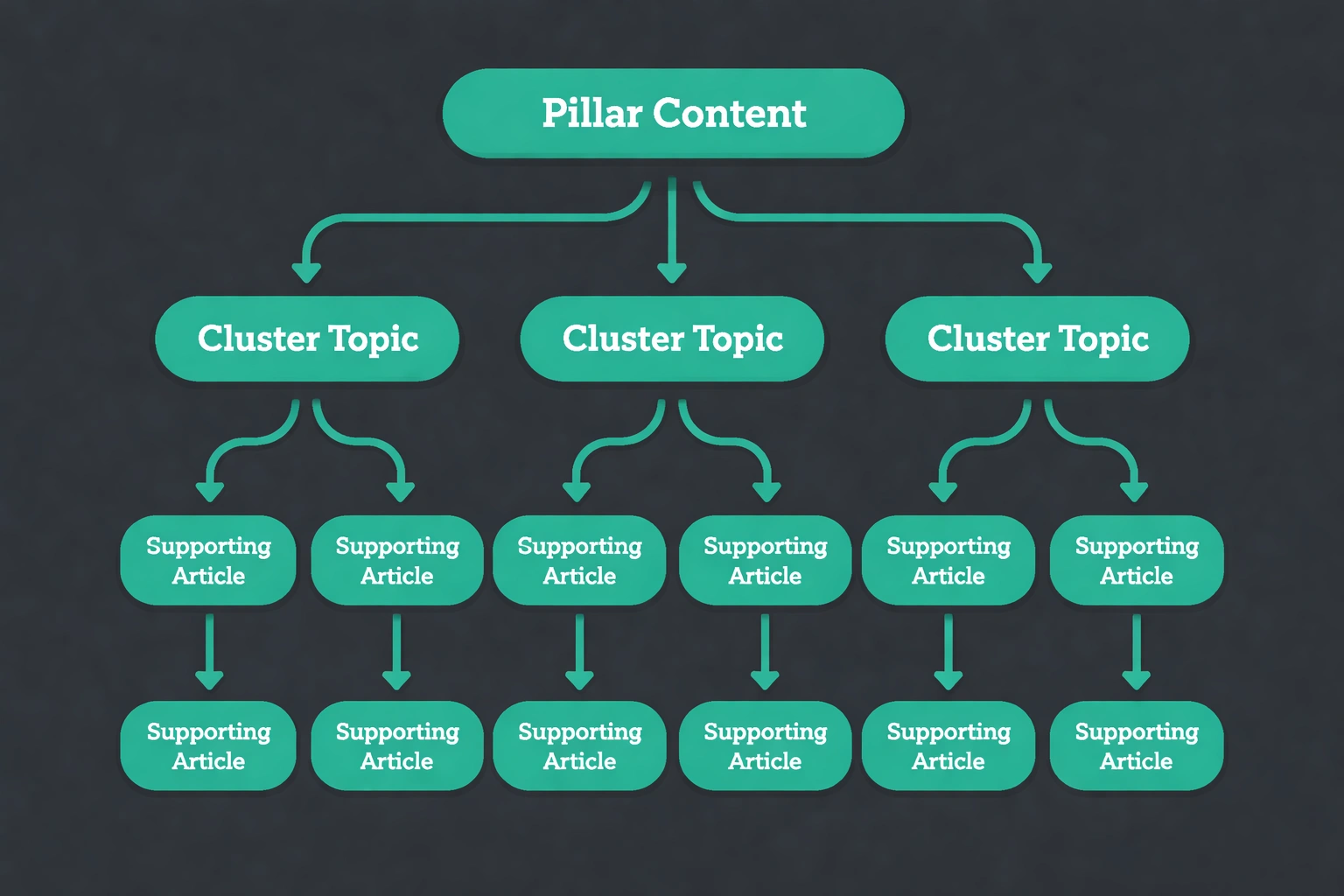
Topical authority is your site's perceived expertise in a subject area. Search engines measure it through content completeness, internal link density, semantic relevance, and engagement signals. They don't rank pages in isolation they evaluate your entire content ecosystem.
A post about "local SEO tools" might rank for a while. But if your site lacks supporting content on local SEO strategy, citation management, or rank tracking, Google's neural matching spots the gap. Competitors who've covered the topic from multiple angles get the edge.
LeafPad's architecture works through three layers:
- Pillar pages: broad overviews that anchor everything else
- Cluster content: detailed posts on specific subtopics
- Automated internal linking: semantic pathways connecting related concepts
Sites with clear hub-and-spoke structures earn 38% more organic visibility than flat architectures, according to 2026 search behavior studies.
Why Keywords Alone Don't Build Authority Anymore
Keywords show intent. They don't prove expertise. A page targeting "SEO automation" matches the query, but if your site lacks content on automated internal linking, content calendars, or real-time indexing for blogs, search engines question your depth.
AI systems like Claude and ChatGPT evaluate topical coverage when deciding which sources to cite. They look for:
- Semantic completeness: Do you answer related questions?
- Entity relationships: Are concepts linked to recognized knowledge bases?
- Freshness signals: Is coverage current?
A site with 50 interconnected local SEO pieces outperforms one with 200 unrelated posts. LeafPad's AI search visibility tools analyze content gaps and recommend cluster topics that strengthen your authority profile.
The Pillar-Cluster Model Explained
Pillar content is your definitive guide to a broad topic usually 2,000+ words covering major subtopics at a strategic level. Users exploring a subject land here. All your related content points back to it.
Cluster posts go deep on specific angles. If your pillar covers "SEO Automation," clusters might include:
- Automated keyword research methodologies
- Copilot tools for content optimization
- Technical implementation guides for auto-publishing
- Case studies showing traffic impact
Each cluster links back to the pillar and to related clusters. Search engines traverse this web to understand your expertise boundaries. The pillar ranks for high-volume head terms; clusters capture long-tail variations.
LeafPad automates this through its content calendar system, which identifies topic clusters based on your pillar themes and existing content. It suggests titles, outlines, and internal link opportunities so you're not stuck managing spreadsheets.
How LeafPad Automates Authority Architecture
LeafPad's pillar-cluster framework uses semantic analysis to map your content domain, find gaps, and generate publishing roadmaps.
You define pillar topics in the platform things like "Local SEO" or "AI Search Optimization." LeafPad's AI then analyzes search trends, competitor coverage, and your existing content to generate cluster suggestions. You create interconnected content with automated internal linking, then monitor topical coverage through the authority dashboard.
Unlike traditional CMS platforms where you manually tag and link content, LeafPad's organic internal linking algorithm understands semantic relationships. It links "automated local SEO" content to both your local SEO pillar and your automation pillar, building cross-topical authority.
The system also prevents common mistakes content orphaned without incoming links, over-optimization where every paragraph links to the same pillar, shallow clusters that don't add depth, circular linking patterns that confuse crawlers.
Sites using LeafPad's architecture see 3x faster ranking improvements compared to unstructured publishing.
Content Depth vs. Content Breadth
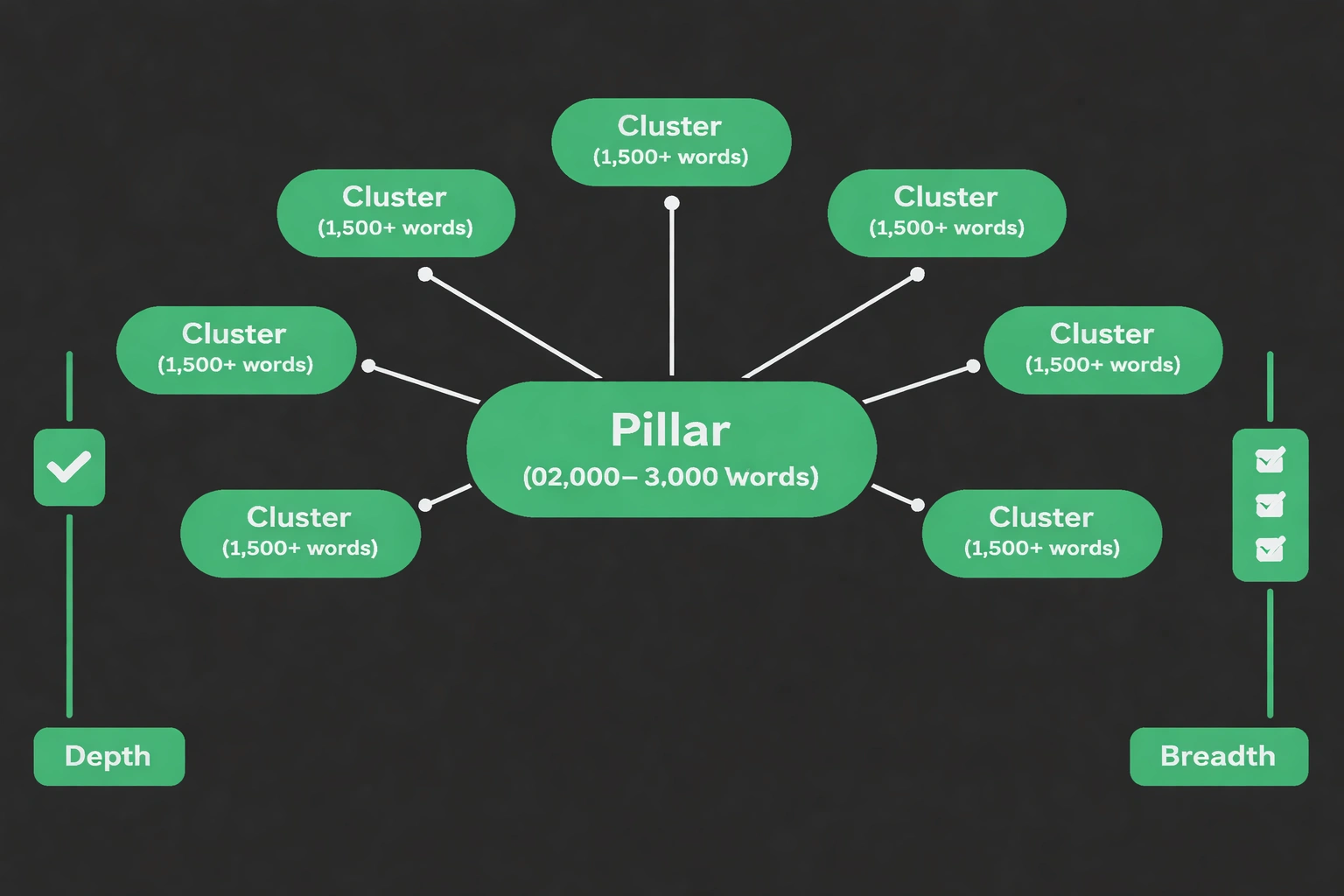
Depth means exploring subtopics thoroughly with evidence and examples. Breadth means covering all major angles. You need both.
Many sites make one of two mistakes: publishing 100 shallow 300-word posts across many topics (breadth without depth), or creating one massive 10,000-word guide that tries covering everything (depth without discoverability).
The pillar-cluster model balances these. Your pillar maps the topic landscape in 2,000-3,000 words. Clusters deliver tactical depth each exploring one subtopic with 1,500+ words.
LeafPad's content refresh system maintains this balance by flagging pillars that need updating, outdated clusters, and gaps where user queries suggest missing content.
Semantic Relationships and Entity Recognition
Semantic SEO focuses on meaning rather than exact keyword matches. Search engines build entity graphs networks of related concepts, people, places, and things to understand what your content actually discusses.
When you publish a cluster post about "local rank tracker tools," LeafPad identifies related entities like Google Business Profile, citation sources, and SERP features. It suggests links to existing content discussing those entities, generates schema markup defining entity relationships, and recommends keyword variations that strengthen topical relevance.
This entity-aware approach matters for AI search optimization. LLMs evaluate content based on how well it maps to their training data's knowledge structures.
Sites linking related concepts through content and markup see 44% higher citation rates in AI-generated answers. LeafPad's automatic SEO system handles entity markup without requiring technical implementation.
Measuring Your Topical Authority Progress
Authority metrics measure how comprehensively you cover a subject and how search engines perceive that coverage.
LeafPad tracks topic completeness (relevant subtopics addressed vs. competitors), internal link density within topic clusters, SERP feature wins like featured snippets and AI overview citations, ranking distribution across top 10 versus positions 11-30, and referral patterns showing which pillar pages drive navigation to cluster content.
Traditional analytics show traffic. Authority analytics show influence. A site might get 10,000 visits to one viral post but have zero authority if that post exists in isolation.
LeafPad's dashboard visualizes your authority topology which topics you dominate, which need reinforcement, which represent untapped opportunities.
Common Authority Architecture Mistakes
Navigation-only pillar pages that simply list cluster topics fail to provide value. Your pillar needs to stand as comprehensive content, not just a glorified table of contents.
Other structural errors: premature clustering before establishing pillar content confuses topical boundaries; inconsistent depth signals uneven expertise; keyword cannibalization means multiple posts targeting identical search intent compete rather than reinforce; external link neglect suggests insularity; schema misalignment means article markup doesn't reflect pillar-cluster relationships.
LeafPad's content architecture tools flag these during creation, not after publishing when they've already caused problems.
Scaling Authority Across Multiple Topics
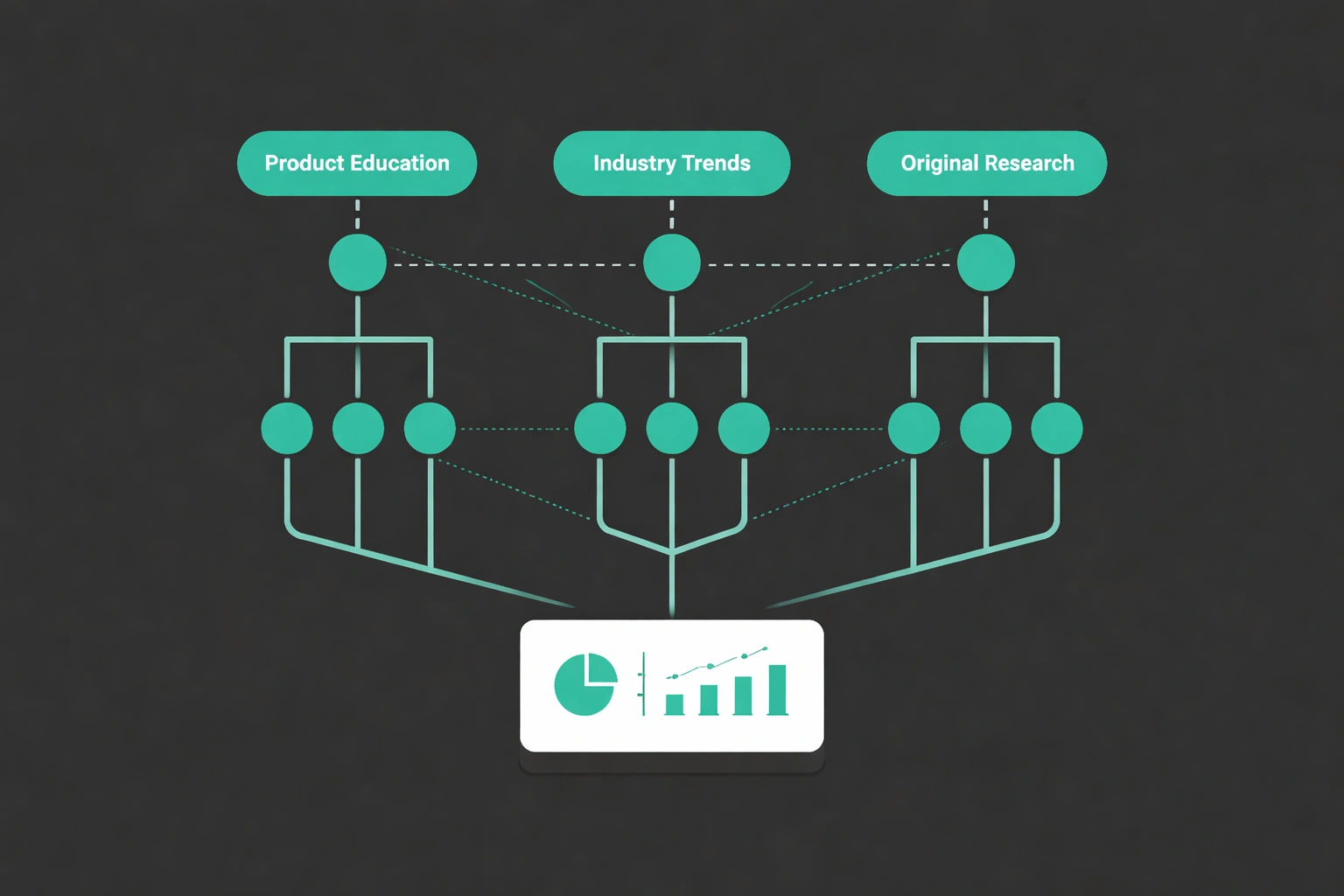
Multi-topic authority requires isolated pillar-cluster systems for each domain. A SaaS company might build separate authority hubs for product education, industry trends, and implementation guides.
LeafPad's multi-blog management lets you create distinct content ecosystems under one dashboard /blogs/guides for product education, /blogs/industry for market analysis, /blogs/research for original studies.
This separation prevents topical dilution while allowing cross-linking where subjects naturally intersect.
Content Velocity and Authority Building
Publishing frequency affects authority development. Consistent cluster production shows active expertise.
Sites publishing 2-3 cluster posts weekly achieve ranking momentum 4x faster than monthly publishers. This velocity creates fresh crawl patterns, expanding internal link graphs, user behavior signals from engaged audiences, and competitive moats that make your lead harder to overcome.
LeafPad's auto-publish capabilities maintain velocity without manual scheduling. Queue cluster content as drafts, set pillar-aligned publishing rules, and the platform handles output. It also prevents over-publishing on saturated topics, redirecting focus to underdeveloped areas.
Technical Requirements for Authority Architecture
Site structure needs to support pillar-cluster relationships through URL hierarchy, navigation, and schema. LeafPad handles this automatically.
Your architecture requires pillar URLs at top-level paths like /blogs/seo-automation-guide, cluster URLs organized hierarchically like /blogs/seo-automation-guide/automated-keyword-research, breadcrumb navigation showing content relationships, collection schemas grouping related content, and contextual internal links beyond navigation elements.
Traditional platforms need developer work for these patterns. LeafPad generates them through content organization assign posts to pillars, and the platform creates URLs and schema.
LeafPad sites achieve 2.3x higher ranking velocity compared to traditional CMS platforms.
AI Search and Topical Authority
AI search engines like ChatGPT, Claude, and Gemini evaluate source authority when deciding what to cite. They look at topical coverage depth, content freshness, and semantic coherence.
A single exceptional article might get cited once. A comprehensive authority structure gets cited repeatedly across related queries AI systems start recognizing your site as a knowledge source rather than a one-off reference.
LeafPad's AI citation tools optimize for LLM discovery with structured data that AI parsers extract cleanly, assertion-evidence formatting AI systems can quote, cross-referenced claims showing comprehensive research, and clear attribution patterns building citation trust.
Sites optimizing for AI search through authority architecture see 67% higher mention rates in AI-generated content.
From Keywords to Knowledge
The SEO industry evolved from keyword density to search intent to entity relationships. The current frontier is knowledge completeness showing you've addressed a topic thoroughly enough that users and algorithms trust you as a primary source.
LeafPad's pillar-cluster architecture automates this. You don't manually map semantic relationships or audit topical gaps. The platform analyzes content goals, suggests coverage plans, and builds technical infrastructure that signals authority.
This is how modern sites achieve zero-to-100K traffic growth. Not through viral posts, but through systematic authority building that compounds. Each cluster strengthens the pillar. Each pillar establishes a new expertise domain. The structure becomes your competitive advantage.
Sites still chasing keywords are building on sand. Those building topical authority are constructing foundations. LeafPad makes that construction systematic and measurable.
Published with LeafPad