Get cited by ChatGPT, Perplexity, and Google AI Overviews
60 percent of searches now end without a click because the AI summary already answered. Leafpad writes content the way AI engines like to quote, then tracks which queries are naming you and which are naming competitors.
47%
of queries now show a Google AI Overview
2.5B
ChatGPT prompts processed every day
+40%
citation lift from GEO signals (Aggarwal et al., KDD 2024)
The shift
Why AI citations are the new ranking
Google AI Overviews now appear in up to 47 percent of all queries, though only around 10 percent of commercial and transactional searches (WordStream, 2025), and clicks to websites drop sharply when they do. ChatGPT processes 2.5 billion prompts a day (TechCrunch, July 2025, citing OpenAI data). If those answers do not name your brand, you are invisible to that traffic, even if you rank first in classic Google.
Getting named in AI answers is a different game than ranking. AI engines pull from sources that are structured, current, and confident — clear answers up top, real statistics, named authors, and FAQ blocks that line up with how people ask.
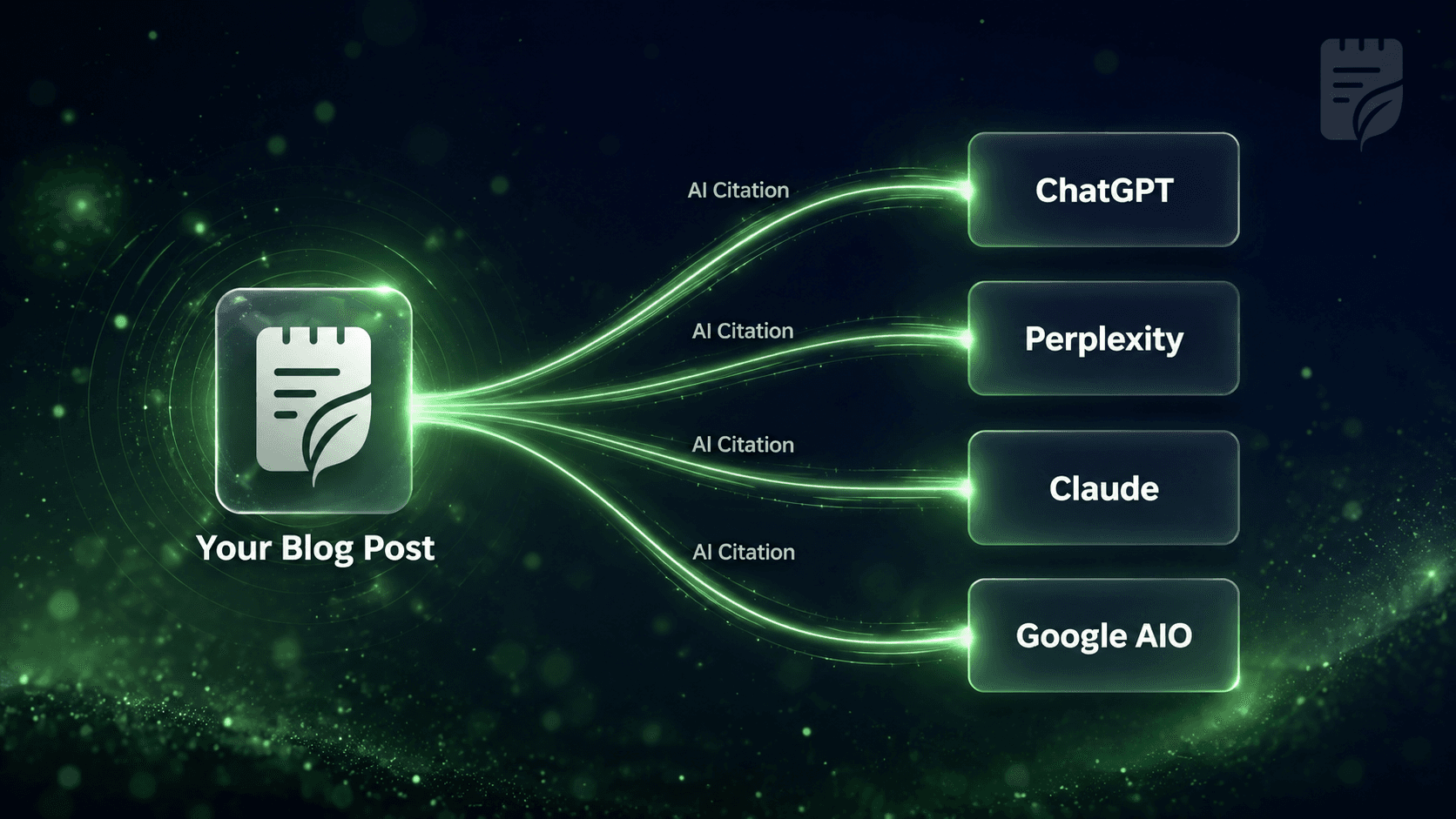
Leafpad builds for both Google rankings and AI citations on every post. That is what GEO means: generative engine optimization, writing so AI tools quote you, not just Google. And for posts that already existed but dropped out of citation pools, Leafpad's content refresh automation rewrites them with the same signals so they re-enter competition without losing their original URL or backlinks.
How it works
How Leafpad earns AI citations
Inverted pyramid answers
The first 40 to 80 words of every Leafpad post answer the question directly. AI engines extract from the top of pages first, so a buried answer is a missed citation. The full explanation comes underneath.
Statistics, quotes, and named sources
The Aggarwal et al. GEO research (Princeton, KDD 2024) found that citations, statistics, and quotations together boosted AI citation visibility by over 40 percent. Leafpad's writing layer adds these signals automatically.
FAQPage schema and visible Q&A
Every Leafpad post includes 3 to 5 self-contained FAQs, each 50 to 200 words, marked up with FAQPage JSON-LD. FAQPage schema correlates with higher AI citation rates because the visible Q&A is exactly what LLMs extract.
Named authors with Person schema
Every Leafpad post is attributed to a real author entity with a Person schema block. That builds the EEAT signal (expertise, experience, authoritativeness, trustworthiness) that AI engines look for when deciding whose content to quote.
Citation tracking
Citation tracking, every week
Leafpad runs your top 20 to 50 target queries through ChatGPT, Perplexity, Claude, Gemini, and Google AI Overviews on a weekly cadence, captures which sources got cited, and tells you:
- Which Leafpad posts are getting quoted
- Which competitors are showing up instead of you
- Which queries you are missing entirely
- Where to focus the next refresh
You see your share of voice in AI answers next to your Google rankings, in one dashboard.
Engines tracked weekly
New engines added as they reach meaningful traffic share.
FAQ
Frequently asked questions
Which AI engines does Leafpad track?
ChatGPT, Perplexity, Claude, Gemini, and Google AI Overviews. We add new engines as they launch and reach meaningful traffic share.
How often does Leafpad check who got cited?
Weekly by default. You can also trigger an on-demand check before a launch, a campaign, or a content refresh push.
How does Leafpad actually get my content cited?
By writing the way AI engines extract: direct answers in the first 80 words, real statistics with named sources, FAQ blocks for the questions people actually ask, structured headings, and FAQPage and Article schema. The Aggarwal GEO paper showed these signals together improve AI citation visibility by over 40 percent.
Do I need separate tools for AI citation tracking?
No. Most teams stitch together Otterly, Profound, or Peec AI on top of their content tool. Leafpad is the content engine and the tracker in one place.
Will writing for AI hurt my Google rankings?
The opposite. The signals AI engines like (clear structure, real data, named sources, fresh content) are the same signals Google has rewarded for years. The dual-surface approach lifts both.
Built for the search engine after Google
If half of your future traffic comes from people asking AI assistants, your blog needs to be readable by both Google and the assistants. Leafpad is built for that world.