If you run a local business, you aren't fighting for global domination. You're fighting for the person three miles away who needs a pizza right now. That difference changes your entire SEO strategy.
When someone searches for your service plus a location, Google’s priorities shift. Authority matters less than proximity and relevance. A national brand with a million backlinks doesn't automatically win the local shop with 50 reviews and a complete profile often takes the top spot. In 2026, with AI search engines like ChatGPT and Perplexity pulling recommendations directly into conversational results, being visible locally is how you get found at all.
Local searches convert fast. "Coffee shop open now" isn't research; it's a purchase intent. 76% of people searching nearby visit a business within a day, and 28% buy something. If you aren't showing up, you're handing revenue to the competition.
The Core Components of Local Business SEO
Google Business Profile Optimization
Your Google Business Profile is the anchor. It’s what appears in the Local Pack the three map pins that show up above organic results.
Focus on the stuff that moves the needle:
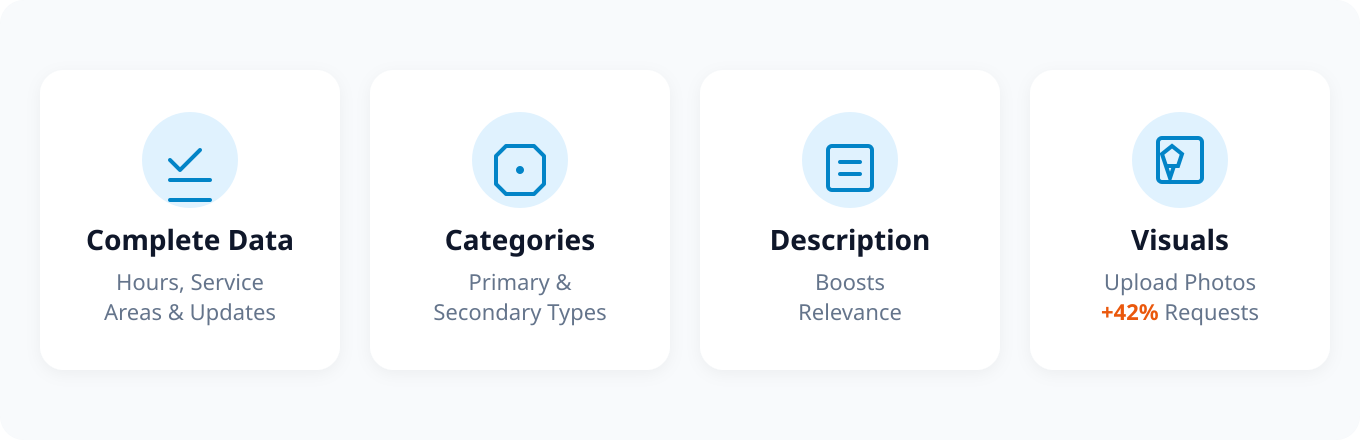
Fill out everything. Google rewards comprehensive profiles. That means hours (including holiday hours), service areas, categories (primary and secondary), and attributes like wheelchair access or outdoor seating. The Google My Business description is often overlooked but carries weight for relevance.
Upload photos. Businesses with photos get 42% more direction requests. Upload exterior shots, interior shots, team photos. Update them occasionally fresh images signal an active business.
Get reviews. Google reviews for SEO act as a ranking factor and social proof. Higher counts and ratings correlate with higher rankings. Respond to all of them, positive or negative, within 48 hours. Google watches response rates.
On-Site SEO for Local Intent
Your website needs to scream local relevance. National SEO tactics don't always translate.
If you serve multiple areas, build location-specific pages. Target "[service] in [city]" naturally. Don't just swap city names in a template Google penalizes thin location pages that feel manufactured.
Use LocalBusiness schema. This code tells search engines what you do and where you are. Include your NAP (name, address, phone), hours, and service area. This feeds AI search results and rich snippets. For the technical side, our on-site SEO for local businesses guide walks through the setup.
NAP Consistency Across the Web
NAP stands for Name, Address, and Phone. Keeping these identical across every directory builds trust. Inconsistencies "St." vs "Street", "Suite 100" vs "#100" confuse the algorithm and dilute your ranking signals.
Check Yelp, Yellow Pages, Bing Places, Apple Maps, Facebook, and industry-specific sites. Use the exact same format everywhere. If you moved or changed numbers, update every listing manually. It’s tedious, but it works.
How Local Search Algorithms Work
Google’s local algorithm weighs three things: relevance, distance, and prominence.
Relevance: Do you match the query? Accurate categories and service descriptions help here. If you do plumbing and HVAC, list both.
Distance: How close are you to the searcher? You can't game this, but service-area businesses can define their reach.
Prominence: How well-known are you? This includes links, review quality, citation count, and your general online footprint. Traditional SEO authority still applies locally.
Understanding these local SEO ranking factors helps you prioritize. Fix relevance first (you control it), then build prominence through citations and reviews.
The Content Strategy That Wins Local Rankings
Local businesses often ignore content, assuming it’s for big brands. That’s a mistake.
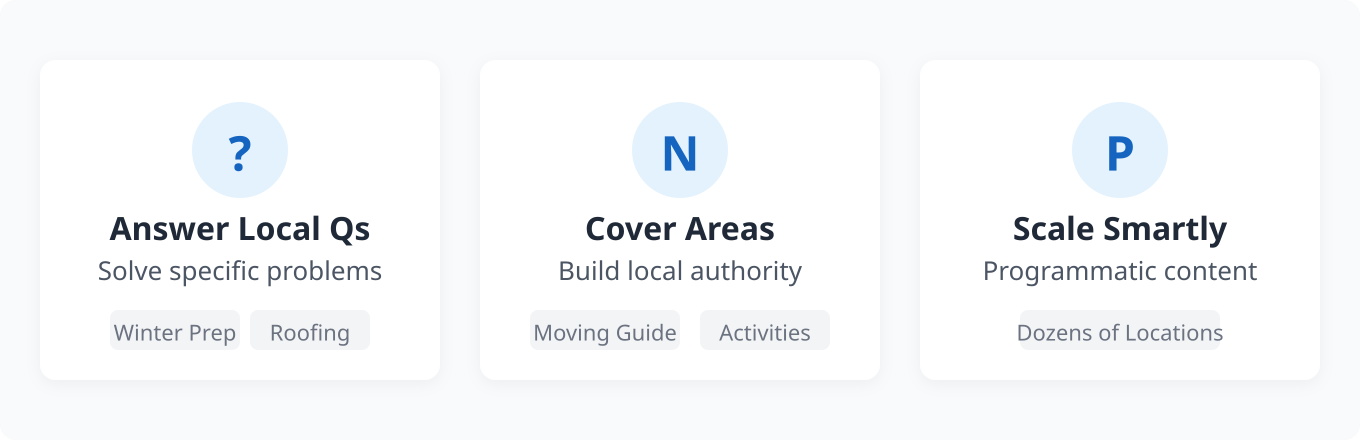
Answer local questions. A Florida roofer should write about "Hurricane-Proof Roofing Options for Miami Homeowners." A Chicago HVAC company should cover "Preparing Your Furnace for Chicago Winters." These topics attract local traffic and build authority.
Cover neighborhoods. If you serve specific areas, create pages for them. "Best Family Activities in [Neighborhood]" or "Moving to [Neighborhood]" positions you as a local expert.
Use programmatic content carefully. If you have dozens of locations, manual writing doesn't scale. Platforms like LeafPad enable automated local SEO to maintain quality while scaling.
Publish consistently. Regular posting signals business activity. Even small businesses benefit from weekly posts answering customer questions.
Common Local SEO Mistakes That Kill Rankings
Most local businesses shoot themselves in the foot with basic errors:
Wrong category selection. Your primary category is weighted heavily. Pick the most specific one that fits your core service. Don't chase search volume if it doesn't match what you do.
Ignoring negative reviews. Unanswered complaints hurt. Respond professionally and offer to fix the issue. Potential customers read your replies.
Low-quality directories. Twenty authoritative citations beat 200 spammy ones. Focus on sites people actually use.
Keyword stuffing. "Dallas plumber Dallas plumbing Dallas Texas plumber" looks terrible and triggers spam filters. Write for humans.
Bad mobile experience. Over 60% of local searches are on mobile. If your site is slow or broken on phones, you lose.
Measuring Local SEO Performance

You can't fix what you don't track. Check these monthly:
Local pack rankings. Use tools to see where you appear in map results for target keywords.
GBP insights. This tells you how people find you (direct vs. discovery searches), what actions they take (calls, clicks, directions), and where they are.
Local traffic. In Google Analytics, filter organic traffic by location. Look for geo-modified keywords.
Conversions. Local traffic should convert higher than general traffic. If it doesn't, your landing page needs work.
Review flow. Track how many reviews you get monthly compared to competitors.
For tracking at scale, local rank tracker tools automate monitoring and flag ranking drops before they hurt revenue.
Building a Sustainable Local SEO System
The winners in 2026 aren't just spending more; they're building systems that compound.
Automate review asks. Send emails after service with a direct link to your Google review form.
Audit citations quarterly. Catch NAP drift before it confuses Google.
Plan content. Map out topics by season and local events. Consistency beats sporadic effort.
Train your team. Teach staff to ask for reviews and mention location in social posts.
The Role of Automation in Modern Local SEO
Manual work doesn't scale for multi-location businesses. Automation helps, but quality matters.
Content generation. Instead of writing 50 city pages by hand, use templates with dynamic local data. They should still read like a human wrote them.
Internal linking. Automate connections between related local content to build topic clusters.
Citation management. Let software submit your info to directories and monitor for inconsistencies.
Platforms like LeafPad combine these with SEO architecture, letting smaller businesses compete without massive teams.
Taking Action on Local SEO Today
Local SEO is a grind, not a one-time project. It rewards consistency.
- Audit your Google Business Profile completely.
- Verify NAP consistency on the top 10 directories.
- Install LocalBusiness schema.
- Build a review generation system.
- Publish one piece of local content this week.
Most markets have unclaimed local SEO opportunities. Your competitors are likely making the mistakes listed above. The businesses that win are the ones that show up consistently, give search engines the right signals, and actually help the local community.
The best time to start was last quarter. The second best time is right now.
Published with LeafPad