SEO in 2026 isn't about gaming algorithms anymore. It's about building systems that handle the basics so you don't have to think about them. The game has shifted from manual optimization to content topology, passage relevance, and programmatic scaling.
If you're still optimizing for keywords and backlinks, you're invisible. Search engines and LLMs parse content structurally now. Here's what actually moves the needle.
Start With Domain-Level Infrastructure
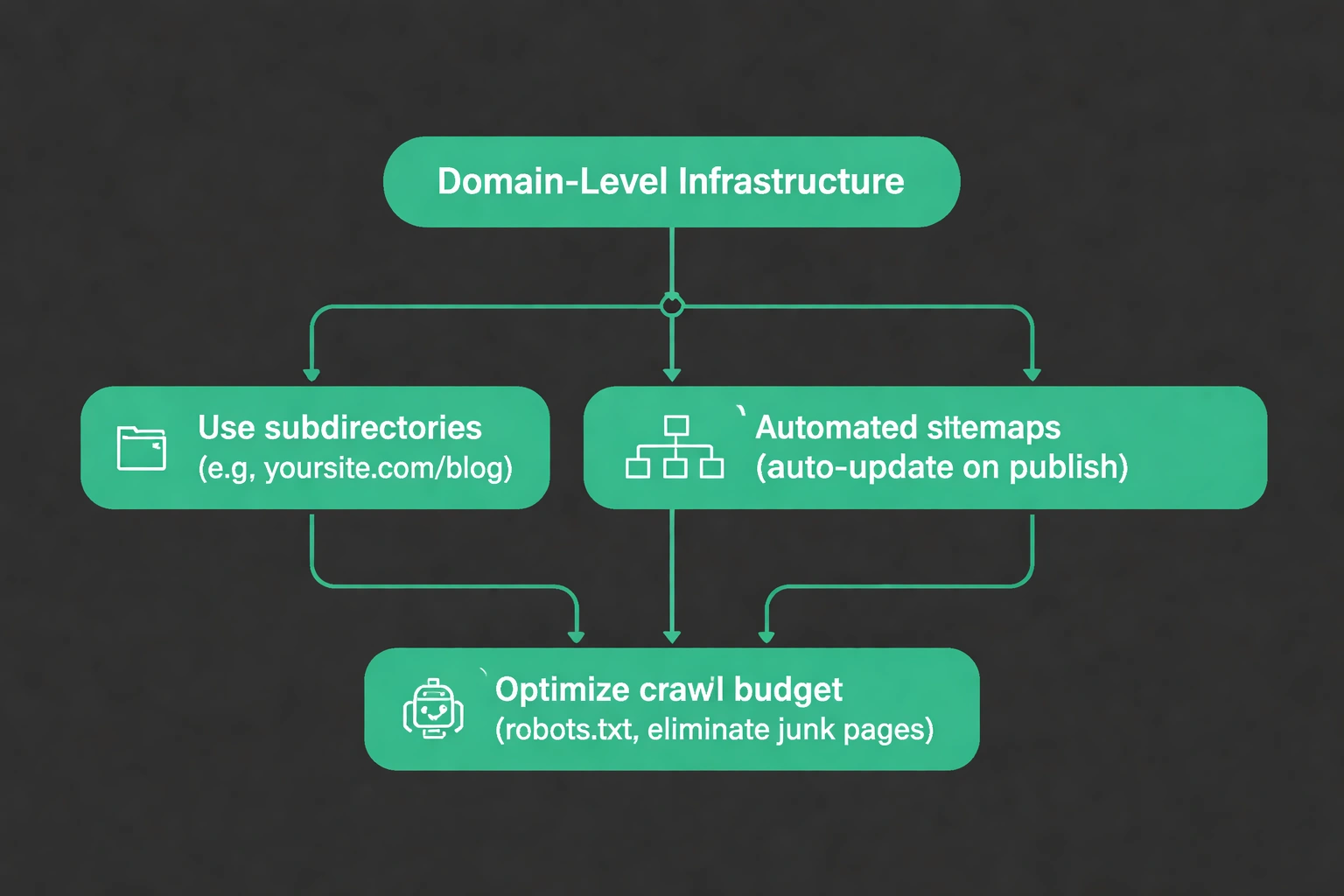
Before you write anything, check your plumbing. If your infrastructure is broken, nothing else matters.
Subdirectories over subdomains. Host your blog at yoursite.com/blog, not blog.yoursite.com. I see people make this mistake constantly. Subdomains split your authority. LeafPad publishes content this way by design because it forces every article to strengthen the root domain.
Automated sitemaps. Your sitemap should update the second you hit publish. If you're manually updating XML files, you're already behind.
Crawl budget. Large sites waste crawler time on junk pages. Use robots.txt aggressively, consolidate thin content, and prioritize what matters. Crawling tools in 2026 can show you exactly where bots get stuck.
Schema markup. You need structured data for articles, FAQs, and products. If you're adding this manually, you'll never scale. It needs to be automatic.
Design for Passage-Level Relevance
This is the biggest shift. Search engines rank individual sections now, not just whole pages.
H2 sections as answers. Each section needs to answer a specific question on its own. The first 40–80 words under every H2 should work in isolation. That's how you get pulled into AI overviews.
Semantic clustering. Stop repeating exact keywords. Group related terms and variations naturally. AI keywords in 2026 are about covering a topic, not hitting density targets.
Question-answer formatting. Write questions as H3s and answer them directly. It matches how people actually talk to LLMs and voice assistants.
Use structural markers. Clear headings, short paragraphs, lists. Algorithms use these to identify distinct content blocks. Give them what they want.
Implement Automatic Internal Linking
Manual linking doesn't scale. You'll miss connections, create orphans, and waste time.
Contextual insertion. Your system should scan new content and insert relevant links automatically. Automatic internal linking isn't lazy it's necessary.
Anchor diversity. Repetitive exact-match anchors look unnatural. Vary the language. Let automated systems enforce this across thousands of links.
Bidirectional linking. If page A links to page B, page B should probably link back. This creates content clusters that signal topical authority.
Link depth. If an important page is more than three clicks from your homepage, it's buried. Flag these pages and fix them.
LeafPad's internal linking algorithm handles this programmatically. It scans semantic relationships and fixes distribution gaps without human intervention.
Optimize for Content Velocity
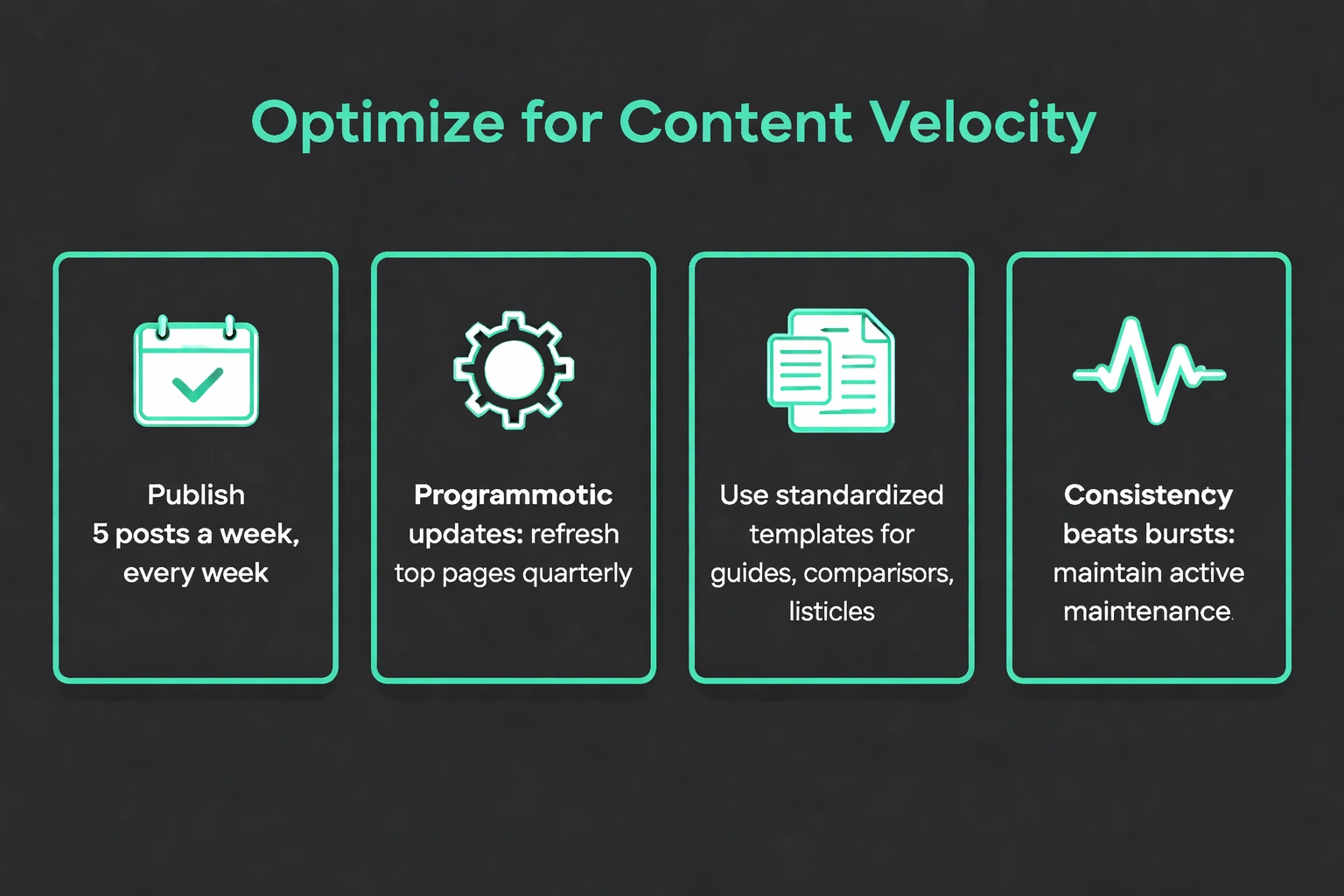
Consistency beats sporadic bursts every time.
Publish rhythm. Five posts a week, every week, beats twenty posts once a month. Consistency signals active maintenance. Content velocity SEO explains the mechanics if you need the data.
Minimum viable frequency. Most sites need one new piece weekly. Competitive niches need more. That's the floor.
Programmatic updates. Refresh your top pages quarterly. Update dates, stats, and sections. It triggers recrawls and keeps content relevant.
Use templates. Standardize your structures for guides, comparisons, and listicles. Blog post templates for AI search accelerate production without sacrificing quality.
Automate workflows. Manual formatting kills velocity. Use systems that handle metadata and images at publish time. Developer-free blog publishing removes these bottlenecks completely.
Measure What Actually Drives Rankings
Vanity metrics waste time. Focus on signals that correlate with revenue.
Indexed vs published. If you publish 100 articles but only 60 get indexed, you have a problem. Track this gap weekly.
CTR by position. If you're on page one but nobody clicks, your title or description doesn't match intent. Fix it.
Direct vs organic ratios. Direct versus search traffic tells you how strong your brand is. Pure organic reliance is fragile.
Passage performance. Use Search Console to see which sections trigger impressions. That's what's resonating.
Domain freshness. Domain freshness affects all your rankings. Watch your update frequency and recrawl rates.
How to measure SEO success in 2026 connects these metrics to actual business outcomes.
Automate Repetitive Optimization Tasks
Automation isn't about cutting corners. It's about applying best practices consistently.
Auto-generate meta descriptions. AI writes decent descriptions instantly. Don't waste human time on this past your top 50 pages.
Programmatic title testing. Let systems test title variations, measure CTR, and deploy winners. Continuous improvement beats static titles.
Image optimization. Every image needs alt text and sub-second load times. Automate this at upload.
Schema injection. Generate JSON-LD with templates. Don't hand-code structured data.
Real-time indexing. Ping Google via API when you publish. Don't wait for the next crawl. Real-time indexing for blogs walks through the setup.
Monitoring. Set up alerts for broken links, missing metadata, and indexing drops. Fix issues before they hurt rankings.
SEO automation in 2026 isn't optional. You can't maintain this manually at scale.
Build Content Topology
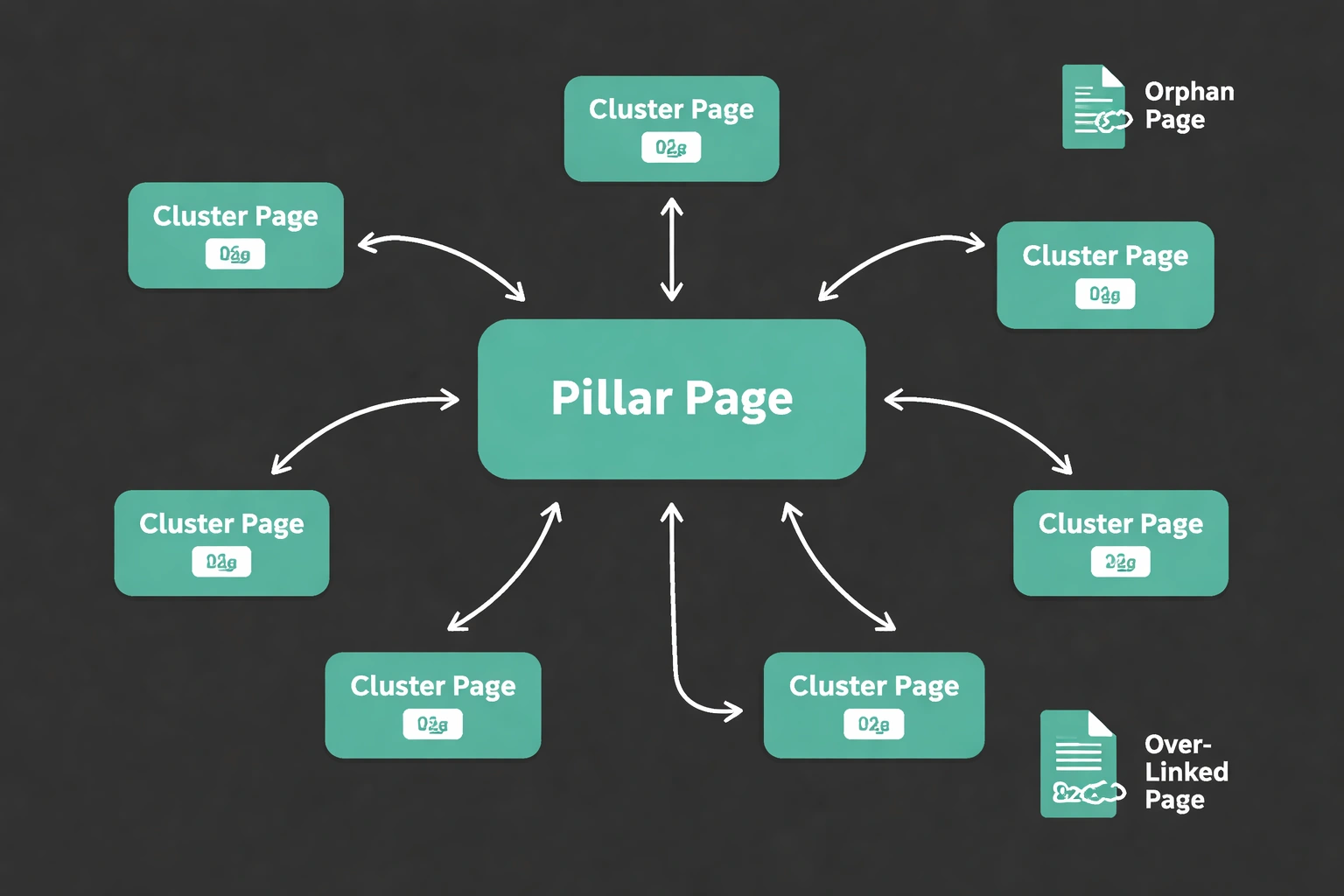
Search engines see your site as a network, not a collection of pages.
Pillar-cluster models. Create a pillar page for broad topics. Build cluster pages for subtopics that link back. This signals expertise.
Map relationships. Understand how queries connect semantically. Build content that covers entire topic graphs.
Visualize link flow. Use tools to show where authority flows. Find orphans. Fix over-linked pages.
Programmatic SEO. Use programmatic SEO for location and comparison pages. Just maintain quality and uniqueness.
Avoid thin content. Thousands of near-identical template pages trigger quality filters. Every page needs unique value.
Optimize for AI Search Engines
Traditional search and LLM answer engines need different things.
Structure for extraction. AI models pull passages to generate answers. Clear formatting and self-contained sections make this easier. AI search SEO explains how to rank in ChatGPT and AI overviews.
Be comprehensive. Surface-level content gets filtered out. Use examples. Provide context.
Write conversationally. AI favors dialogue over keyword stuffing. Explain things like you're talking to a colleague.
Use explicit Q&A. LLMs match prompts to content better when questions appear as headers with direct answers underneath.
Integrate SEO With Content Marketing
SEO and content marketing aren't separate. They're the same workflow.
Match intent. Don't target keywords just for volume. Target what your audience actually wants to know.
Repurpose. Turn blog posts into video scripts, social posts, and emails. Multiply the value.
Close feedback loops. Watch what drives conversions. Do more of that. Content marketing for local SEO shows how local businesses integrate these efforts.
Multiple authors. Different voices broaden coverage. LeafPad's team management features make collaboration easy.
Simplify Technical Dependencies
Complex setups create bottlenecks. Keep it simple.
No-code publishing. Content teams shouldn't need developers to hit publish. LeafPad integrates with Bolt, Replit, and other platforms with almost no setup.
Automatic deployment. Publishing triggers deployment. No manual builds.
Version control for content. Track changes and roll back without Git. Content needs safety rails too.
Zero-downtime migration. Zero-downtime blog migration lets you switch platforms without losing SEO equity.
Scale Without Losing Quality
Scaling content breaks quality if you let it. Build guardrails.
Automated checklists. Run checks for readability, heading hierarchy, meta fields, and link presence before publishing.
Editorial calendars. Plan ahead. Assign ownership. Track status. Maintain consistency.
Template discipline. Standardize formatting across content types. It maintains quality as volume increases.
AI drafting with human editing. Use AI for first drafts. Have humans refine and fact-check. We published from Claude shows how this workflow actually functions.
Good SEO in 2026 isn't about tricks or hacks. It's about building infrastructure that automates the tedious work so you can focus on content. The sites that win are the ones that stop fighting the basics and start building systems that handle them.
Published with LeafPad