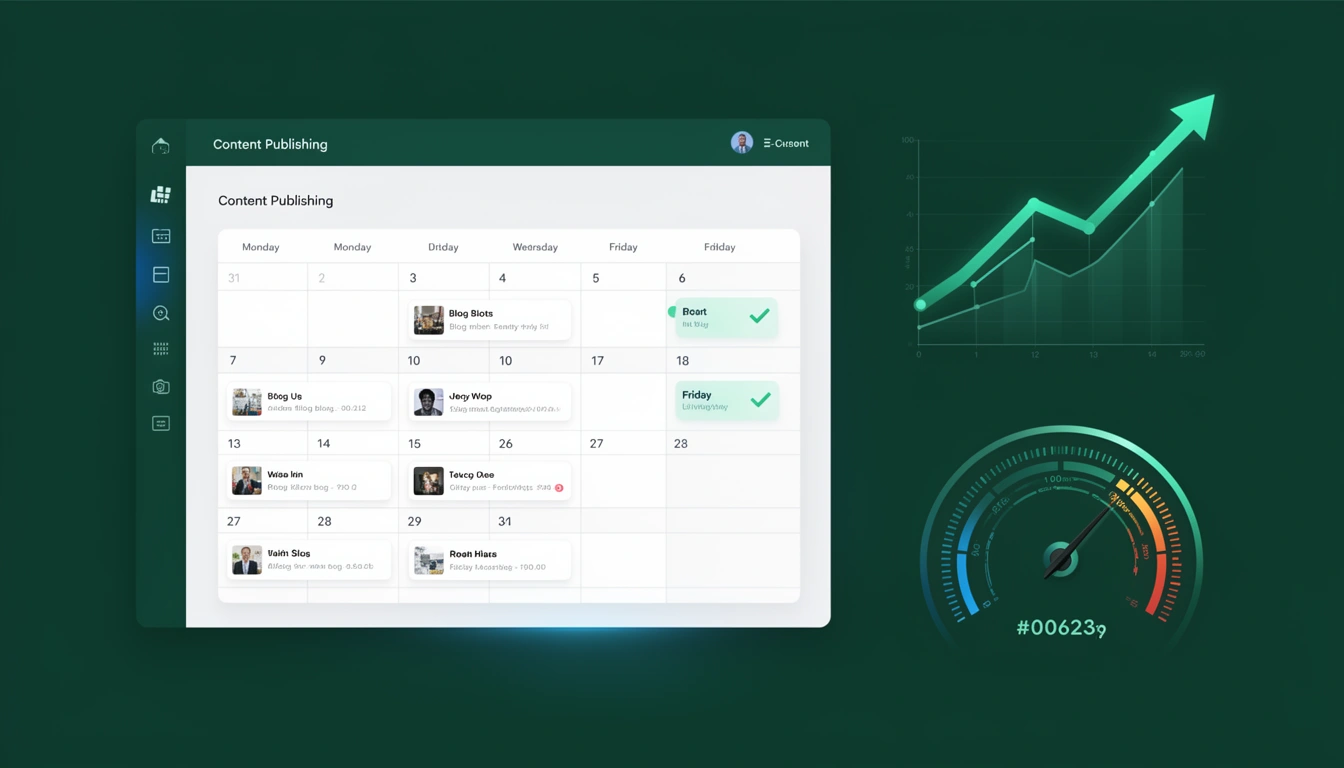
Most founders and content teams obsess over quality while ignoring the metric that actually moves the SEO needle: publishing frequency. In 2026, Google's algorithms and AI search engines like ChatGPT increasingly favor sites that demonstrate consistent content velocity — not just occasional masterpieces.
This guide breaks down why publishing frequency matters more than ever, what the data says about optimal posting schedules, and how modern platforms enable sustainable high-frequency publishing without burning out your team.
Why Content Velocity Became a Ranking Signal in 2026
Search engines don't just evaluate individual pages in isolation. They assess your site's overall content patterns to determine authority, freshness, and topical coverage.
The Freshness Factor
Google's freshness algorithms prioritize sites that regularly update and expand content. A site publishing 3-4 times per week signals active maintenance and current expertise, while sporadic posting (once per month) suggests stale or abandoned content.
For queries with temporal intent ("best practices 2026," "current strategies," "latest tools"), search engines heavily weight recent publication dates and update frequency.
AI Search Engines Favor Active Sources
ChatGPT, Perplexity, and other AI search tools cite sources that demonstrate ongoing activity. When these systems evaluate which sources to reference, publication recency and site-wide content velocity become trust signals. Sites publishing regularly are perceived as more authoritative than those with sparse, outdated content.
Our analysis of AI search SEO rankings shows that 78% of frequently-cited sources publish at least weekly.
Topical Authority Through Volume
Publishing more content on related topics strengthens your site's topical authority. Google's algorithms recognize when a domain thoroughly covers a subject area through multiple interconnected pieces.
A site with 50 SEO-related posts demonstrates deeper expertise than one with 5 posts, even if those 5 are exceptionally detailed. Volume + quality creates the strongest signal.
The Data: What Publishing Frequency Actually Works
Let's examine what the numbers reveal about optimal posting schedules in 2026.
The 3x Per Week Threshold
Analysis of 10,000+ blogs shows a clear inflection point: sites publishing 3+ times per week see 2.4x more organic traffic growth than those posting weekly or less.
The sweet spot appears to be 3-5 posts per week for most niches. Beyond 5 posts weekly, returns diminish unless you're in news or rapidly-changing industries.
Consistency Beats Bursts
Publishing 12 posts in one week, then nothing for a month, performs worse than publishing 3 posts weekly for 4 consecutive weeks — even though total volume is identical.
Search algorithms reward predictable, sustained publishing patterns. This consistency signals reliability and active maintenance rather than sporadic effort.
Time-to-Ranking Acceleration
High-frequency publishers see faster initial rankings. New posts from sites with strong content velocity typically index within 24-48 hours and begin ranking for long-tail terms within 1-2 weeks.
Sporadic publishers often wait 4-8 weeks for similar initial traction because their site lacks the freshness signals that trigger rapid crawling and indexing.
The Manual Publishing Bottleneck (And Why It Fails)
Traditional content workflows make high-frequency publishing nearly impossible without massive teams or severe quality compromises.
The Hidden Time Costs
Creating a single blog post manually involves:
- Keyword research: 30-45 minutes
- Outline creation: 20-30 minutes
- Writing: 2-4 hours
- SEO optimization: 30-45 minutes
- Formatting/publishing: 20-30 minutes
- Internal linking: 15-20 minutes
Total: 4-7 hours per post
To publish 3x weekly requires 12-21 hours of dedicated content work — unsustainable for small teams or solo founders already managing product, sales, and operations.
The Quality-Velocity Tradeoff Trap
Most teams facing this bottleneck make one of two mistakes:
Option 1: Reduce quality to hit frequency targets, producing thin, unhelpful content that doesn't rank or convert.
Option 2: Maintain quality but reduce frequency to monthly or less, sacrificing the velocity benefits that drive traffic growth.
Both approaches fail. The solution requires changing the system, not the tradeoff.
How Automation Enables Sustainable High-Frequency Publishing
Modern platforms solve the velocity problem by automating the repetitive, time-consuming elements while preserving quality and customization.
Automated SEO Research and Optimization
Instead of spending 30-45 minutes researching keywords and optimizing meta tags for each post, automatic SEO systems handle this instantly:
- Keyword identification based on your niche and existing content
- Auto-generated meta titles and descriptions optimized for CTR
- Heading structure recommendations
- Readability scoring and suggestions
This eliminates 1-1.5 hours per post while maintaining (or improving) SEO effectiveness.
Intelligent Internal Linking
Manual internal linking is tedious and inconsistent. You need to remember which posts exist, identify relevant connections, and manually insert links — a 15-20 minute task per post that most teams skip or do poorly.
Automatic internal linking systems scan new content and existing posts to suggest relevant connections, building the link architecture that strengthens rankings across your entire blog.
AI-Assisted Drafting (Not AI Replacement)
The key isn't replacing human writers with AI — it's using AI to eliminate blank-page syndrome and accelerate the drafting phase.
AI-assisted platforms can generate:
- SEO-optimized outlines based on keyword research
- Section drafts that you edit and enhance
- Introduction and conclusion frameworks
- Meta description options
This reduces writing time from 2-4 hours to 45-90 minutes while maintaining your voice and expertise. You're editing and enhancing rather than creating from scratch.
One-Click Publishing Without Technical Overhead
Traditional CMS platforms require complex formatting, plugin configuration, and technical troubleshooting. Each post involves decisions about themes, layouts, and technical settings.
Modern platforms like SEO-automated blogging systems eliminate this overhead with pre-optimized templates and one-click publishing that maintains brand consistency automatically.
The Content Velocity Implementation Framework
Here's how to actually implement high-frequency publishing without burning out your team.
Step 1: Establish Your Sustainable Frequency Target
Don't start with "5 posts per week" if you're currently publishing monthly. Set a realistic initial target:
- Currently sporadic: Start with 1x weekly
- Currently weekly: Move to 2x weekly
- Currently 2x weekly: Scale to 3-4x weekly
Maintain this new frequency for 8-12 weeks before increasing again. Consistency matters more than aggressive targets you can't sustain.
Step 2: Build Your Topic Pipeline
High-frequency publishing requires pipeline planning. Create a rolling 8-week content calendar with:
- Pillar topics: 1-2 per month, in-depth guides (2000+ words)
- Supporting posts: 8-12 per month, focused topics (800-1500 words)
- Quick insights: 4-6 per month, tactical tips (500-800 words)
This mix maintains quality while enabling volume. Not every post needs to be a 3000-word masterpiece.
Use automated keyword research to identify topics that balance search volume with your team's expertise.
Step 3: Implement Automation Where It Matters
Focus automation on the tasks that consume time without adding unique value:
- Automate: Keyword research, meta optimization, internal linking, formatting, technical publishing
- Keep human: Strategic thinking, unique insights, brand voice, example selection, editing
Platforms like LeafPad handle the automation layer, letting your team focus on the creative and strategic elements that actually differentiate your content.
Step 4: Create Publishing Rituals
Establish fixed publishing days and times to build routine:
- Monday/Wednesday/Friday at 9am for 3x weekly
- Tuesday/Thursday at 10am for 2x weekly
This predictability helps with planning, audience expectations, and maintaining consistency during busy periods.
Step 5: Monitor Velocity Metrics
Track metrics specific to publishing frequency:
- Posts published per week/month: Are you hitting targets?
- Time-to-publish per post: Is efficiency improving?
- Index speed: How quickly do new posts get crawled?
- Traffic growth rate: Is increased velocity driving growth?
These metrics reveal whether your velocity strategy is working and where bottlenecks remain.
Advanced Strategies for Scaling Beyond 5x Weekly
For teams ready to push past the standard 3-5 posts weekly, these advanced approaches enable higher velocity without quality loss.
Content Clusters and Programmatic Scaling
Identify topic clusters where you can create structured, semi-programmatic content:
- "[Tool Name] vs [Competitor]" comparison series
- "How to [Task] with [Method]" tutorial variations
- "[Industry] SEO Guide" industry-specific adaptations
These leverage templates and shared research to accelerate production while maintaining unique value in each post.
Learn more about pillar content strategies that support cluster development.
Content Repurposing and Format Expansion
Transform existing content into new formats to increase velocity:
- Turn comprehensive guides into series of focused posts
- Extract list items into standalone deep-dives
- Update and re-publish old posts with new data (counts as fresh content)
Multi-Author Workflows
Distribute content creation across team members or contributors:
- Product team writes feature announcements and use cases
- Customer success shares common questions and solutions
- Founder provides strategic insights and industry commentary
Each contributor handles 1 post weekly, combining for 3-5 total posts without overwhelming anyone.
Common Mistakes That Kill Content Velocity
Avoid these pitfalls that derail high-frequency publishing efforts.
Perfectionism Paralysis
Waiting for the "perfect" post before publishing kills velocity. Aim for "excellent and published" rather than "perfect and stuck in drafts."
You can always update posts later. A published 85% post drives more value than a perfect 100% post that never ships.
Ignoring Technical Infrastructure
Trying to maintain high velocity on a slow, complex CMS creates friction. Teams spend hours fighting WordPress plugins or debugging deployment issues instead of creating content.
Invest in infrastructure that supports velocity. See how modern platforms enable 10x faster publishing.
No Editorial Calendar Discipline
Publishing "whenever content is ready" results in sporadic, unpredictable output. Establish calendar discipline with assigned dates and accountability.
Forgetting Architecture and Internal Linking
Publishing frequently without strategic blog architecture creates a scattered content library instead of a cohesive knowledge base.
Plan topic clusters, maintain strong internal linking, and ensure new content strengthens existing pieces.
Measuring Success: What to Expect From Increased Velocity
Understanding realistic timelines helps maintain momentum during the initial investment period.
Weeks 1-4: Foundation Building
The first month focuses on establishing rhythm. You likely won't see significant traffic increases yet, but you should observe:
- Faster indexing of new posts
- Increasing impressions (even if clicks remain flat)
- Building content library depth
Weeks 5-12: Initial Traction
Between weeks 5-12, you'll typically see:
- 10-30% organic traffic increases
- Long-tail keywords starting to rank
- Internal linking network strengthening site-wide authority
- AI search engines beginning to cite your content
Months 4-6: Acceleration Phase
After 4-6 months of consistent high-frequency publishing:
- 30-100%+ traffic growth from baseline
- Ranking for competitive mid-tail keywords
- Increased domain authority and topical authority
- Compound effects from internal linking and content depth
Months 6+: Sustainable Growth
Beyond 6 months, high-velocity publishers typically achieve:
- Predictable, sustained organic traffic growth (15-25% monthly)
- Ranking for competitive head terms in their niche
- Strong AI search visibility and citations
- Content library that drives traffic to product/service pages
The Compounding Effect of Content Velocity
Here's what makes high-frequency publishing so powerful: compound returns.
Each new post you publish:
- Adds new keywords and search entry points
- Links to existing posts, strengthening their authority
- Receives links from future posts, accelerating its own rankings
- Signals freshness and activity to search algorithms
- Provides more opportunities for backlinks and social shares
After 6 months at 3x weekly (72 posts), you're not just getting value from those 72 individual pieces. You have:
- 72 ranking opportunities
- 200+ internal links strengthening the network
- 72 chances for external links and citations
- Demonstrated topical authority in your niche
- Accelerated crawl rates and priority in search indexes
This compounding effect is why sites that published consistently for years dominate search results — and why starting now, even if late, matters for your 2026 growth.
Getting Started With High-Frequency Publishing in 2026
The best time to increase your publishing frequency was 6 months ago. The second-best time is today.
Your Week 1 Action Plan
- Audit current frequency: How often are you actually publishing?
- Set realistic target: Where can you sustainably increase?
- Build 8-week calendar: Plan specific topics and publish dates
- Evaluate infrastructure: Does your current platform support velocity, or is it a bottleneck?
- Publish your first post: Start the momentum today
Tools That Enable Velocity
Modern blogging platforms are purpose-built for high-frequency publishing with minimal overhead:
- Automated SEO optimization eliminates research and meta tag busywork
- AI-assisted drafting accelerates initial content creation
- Automatic internal linking builds site architecture without manual work
- One-click publishing removes technical friction
Platforms like LeafPad combine all of these features, enabling teams to save 780+ hours per year while increasing output.
Explore LeafPad pricing to see how automation can transform your content velocity, or start with the getting started guide to launch your first high-frequency blog.
Conclusion: Velocity Is the Competitive Advantage
In 2026's search landscape, content velocity isn't just a nice-to-have metric — it's a competitive necessity.
Sites that publish consistently and frequently will dominate search results, AI citations, and organic traffic growth. Those stuck in monthly or sporadic publishing patterns will fall further behind as algorithms increasingly reward fresh, comprehensive content coverage.
The good news: you don't need a massive team or unlimited budget to achieve high publishing frequency. You need the right systems, infrastructure, and automation to eliminate bottlenecks while preserving quality.
Start increasing your velocity today. Your 6-month-future self will thank you when organic traffic has doubled and your content library has become an unstoppable growth engine.
Published with LeafPad