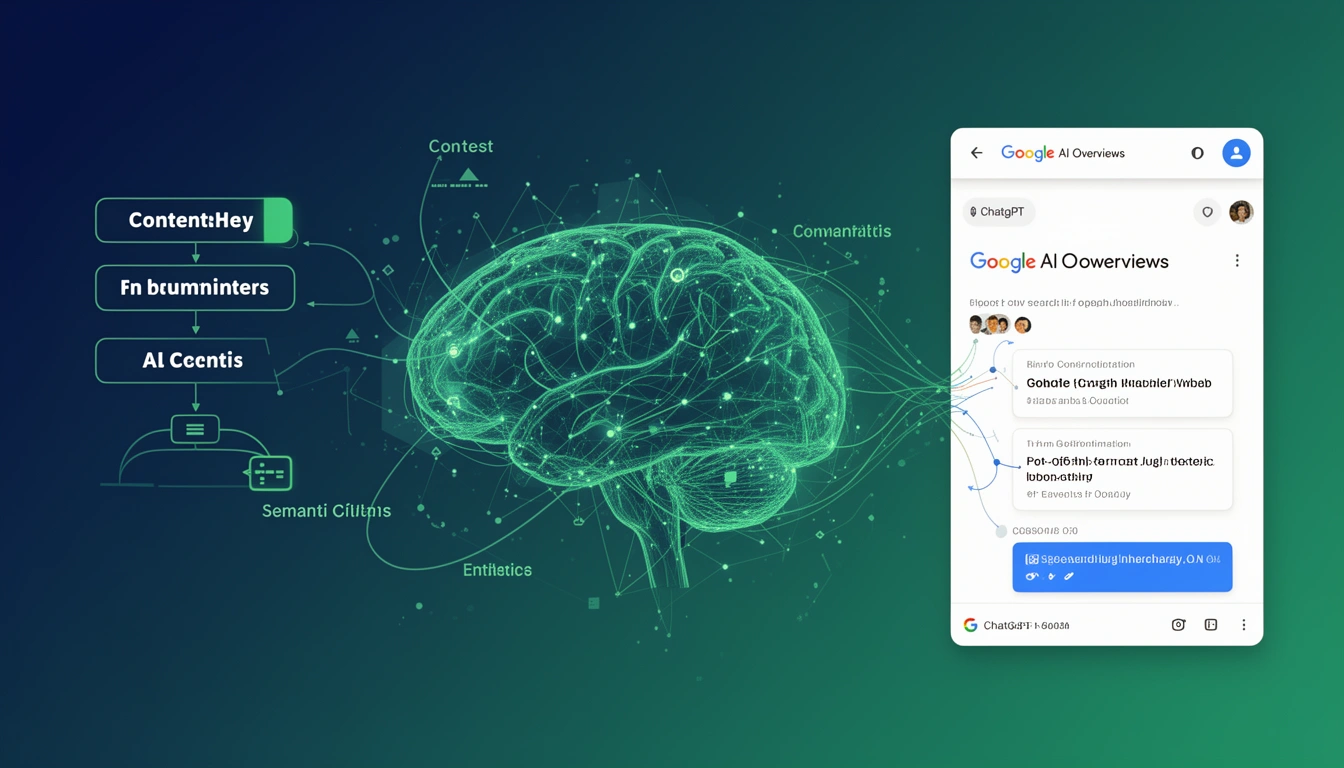
AI search engines like ChatGPT, Perplexity, and Google's AI Overviews are fundamentally changing how content gets discovered, consumed, and ranked. Unlike traditional search that simply matches keywords, AI search understands, synthesizes, and presents information in conversational formats. For content creators and businesses, this shift demands a new approach to SEO—one where structured, semantically rich content wins.
This guide explains how AI search engines process content, why automatic optimization gives you a competitive edge, and exactly how to write blogs that AI can't ignore.
How AI Search Engines Consume Content: The 3-Stage Process
AI search engines don't just crawl and index—they comprehend. Understanding this process is crucial for optimization.
Stage 1: Content Ingestion and Parsing
When an AI encounters your blog post, it first parses the structure:
- Semantic HTML elements (headings, lists, tables, semantic tags) are weighted heavily
- Schema markup provides explicit context about content type and relationships
- Internal linking patterns reveal content hierarchy and topic relationships
- Meta descriptions and titles serve as content summaries for quick relevance assessment
AI models use this structural information to build a content graph—a representation of how information connects within your site and across the web.
Stage 2: Semantic Understanding and Entity Recognition
Next, the AI performs natural language understanding:
- Named Entity Recognition (NER): Identifies people, places, products, concepts
- Intent classification: Determines whether content is informational, transactional, navigational, or commercial
- Topic modeling: Maps content to semantic topic clusters
- Sentiment and quality signals: Assesses authoritativeness, depth, and usefulness
This is why clear, specific language outperforms vague marketing speak. AI models trained on billions of documents recognize patterns of authoritative content.
Stage 3: Retrieval and Synthesis for Answers
When a user asks a question, AI search engines:
- Retrieve relevant passages from their indexed content graph
- Rank sources based on relevance, recency, authority, and structural clarity
- Synthesize information from multiple sources into coherent answers
- Cite sources that contributed most directly to the answer
Your content appears in AI answers when it provides precise, well-structured information that directly addresses user intent.
Why Structured, Automatically Optimized Content Wins in AI Search
Manual SEO often focuses on keyword placement. AI search requires something deeper: semantic optimization at scale.
The Structural Advantage
AI models are trained to recognize and prioritize well-structured information:
| Content Element | AI Search Impact | Automatic Optimization Benefit |
|---|---|---|
| Hierarchical headings (H2-H6) | Enables precise passage retrieval | Auto-generates semantic heading structures |
| Bulleted/numbered lists | Direct extraction for step-by-step answers | Formats complex info into scannable lists |
| Tables and data | Structured data for comparison queries | Auto-structures comparisons and specifications |
| Definition blocks | Featured in "what is" queries | Identifies and formats key definitions |
| Schema markup | Explicit semantic signals | Auto-applies Article, FAQ, HowTo schemas |
Platforms like LeafPad automatically apply these structural optimizations, ensuring every post is AI-ready without manual formatting work.
Consistency Across Content Collections
AI models favor sources that demonstrate topical authority through consistent, interconnected content. Automatic optimization ensures:
- Uniform semantic structure across all posts
- Consistent internal linking that reinforces topic relationships
- Standardized metadata that signals content quality
- Programmatic content collections that cover topic variations comprehensively
This is where automatic SEO systems excel—they maintain optimization standards across hundreds or thousands of pages that would be impossible to manually perfect.
Real-Time Optimization for Evolving Algorithms
AI search algorithms update continuously. Automatic optimization systems can:
- Retroactively apply new best practices to existing content
- Adjust semantic signals based on performance data
- Update internal linking as new content creates better pathways
- Refresh metadata to align with current search patterns
Manual updates across a content library would take weeks; automatic systems do it instantly.
How to Write Blogs for AI Discoverability: The 8-Point Framework
Here's exactly how to structure your content for maximum AI search visibility.
1. Lead with Direct, Specific Answers
AI-optimized approach:
"AI search SEO is the practice of optimizing content structure, semantic clarity, and entity relationships so AI models can accurately retrieve, understand, and cite your content in conversational search results."
Traditional approach (less effective):
"In today's evolving digital landscape, understanding the nuances of modern search optimization has become increasingly important for businesses looking to stay competitive..."
AI models prioritize content that answers questions immediately and precisely. Save storytelling for after you've delivered the answer.
2. Use Question-Based Headings
Structure headings to match natural language queries:
- ✅ "How do AI search engines rank content?"
- ✅ "What is semantic search optimization?"
- ✅ "Why does structured content perform better in AI answers?"
- ❌ "Our Approach to Modern SEO"
- ❌ "Key Considerations"
Question-based headings create direct alignment between user queries and your content sections, increasing retrieval probability.
3. Create Scannable, Extract-Ready Formats
AI models excel at extracting information from specific formats:
For process explanations: Use numbered lists
- First, the AI ingests and parses your content structure
- Next, it performs semantic understanding and entity recognition
- Finally, it retrieves and synthesizes relevant passages for answers
For comparisons: Use tables
(See the table in the previous section for an example)
For definitions: Use bold labels or definition lists
Semantic SEO: Optimization focused on topic meaning and context rather than exact keyword matches.
For feature lists: Use bulleted lists with descriptive formatting
4. Include Explicit Entity Mentions
AI models build knowledge graphs from entities. Include:
- Product names: "ChatGPT," "Google AI Overviews," "Perplexity AI"
- Concepts: "natural language processing," "retrieval-augmented generation"
- Methodologies: "semantic search," "entity recognition," "topic modeling"
- Companies/tools: Name specific platforms and technologies
First mentions should include brief context: "ChatGPT, OpenAI's conversational AI search interface, prioritizes..."
5. Demonstrate Topical Authority Through Internal Linking
AI models assess authority partly through content interconnectedness. Link to related content naturally:
- Link to broader strategy guides when mentioning specific tactics
- Reference automation case studies when discussing efficiency benefits
- Connect to comparison content when contrasting approaches
Platforms like LeafPad automatically suggest relevant internal links based on semantic similarity, building this authority signal systematically.
6. Write for Featured Snippet Formats
AI answers often mirror featured snippet structures:
Paragraph format (40-60 words): Best for definitions
"AI search SEO focuses on optimizing content so AI models can accurately retrieve and cite it in conversational search results. Unlike traditional SEO's keyword focus, AI search optimization prioritizes semantic clarity, structural formatting, and entity relationships that help AI understand context and intent."
List format: Best for steps or rankings
Table format: Best for comparisons or specifications
7. Update Content with Temporal Signals
AI models factor recency into relevance scoring. Include:
- Year markers: "in 2025," "as of December 2025"
- Version references: "ChatGPT-4," "Google's latest AI Overviews update"
- Trend indicators: "emerging," "current best practices," "recent developments"
Regular content updates signal freshness and maintain AI search visibility over time.
8. Optimize Meta Content for AI Summarization
Meta descriptions and titles serve as content summaries for AI models:
Title best practices:
- Include primary topic + benefit/format: "AI Search SEO: Complete Guide to Ranking in ChatGPT & AI Overviews"
- Use semantic keywords, not exact-match stuffing
- Keep under 60 characters for full display
Meta description best practices:
- Summarize key points in 150-160 characters
- Include primary entities and concepts
- Write in natural language, not keyword lists
Real-World Example: AI-Optimized vs. Traditional Blog Structure
Let's compare two approaches to the same topic: "How to optimize images for web performance."
Traditional Approach (Lower AI Discoverability)
Title: "Image Optimization Tips"
Structure:
- Introduction (3 paragraphs of general context)
- "Why Images Matter" (vague heading)
- "Our Recommendations" (prose paragraph listing 5 tips)
- "Conclusion" (summary paragraph)
Why it underperforms:
- Vague headings don't match search queries
- No structured formats for easy extraction
- Delayed delivery of actionable information
- Missing explicit process steps
AI-Optimized Approach (Higher AI Discoverability)
Title: "How to Optimize Images for Web Performance: 5-Step Guide"
Structure:
- Direct answer paragraph: "Image optimization reduces file sizes while maintaining visual quality, improving page load speed and Core Web Vitals scores. The process involves choosing efficient formats, compressing files, implementing lazy loading, using responsive sizing, and serving through CDNs."
- Heading: "What is web image optimization?" → Definition block
- Heading: "How to optimize images: 5-step process" → Numbered list with detailed sub-steps
- Heading: "Which image formats are most efficient?" → Comparison table (JPEG vs WebP vs AVIF)
- Heading: "What tools automate image optimization?" → Bulleted list with descriptions
Why it performs better:
- Question-based headings match natural queries
- Immediate, specific answer at the top
- Multiple extract-ready formats (lists, tables, definitions)
- Clear entity mentions (format names, tools, metrics)
- Logical structure mirrors how AI retrieves information
Measuring AI Search Performance: Key Metrics
Track these signals to gauge AI search optimization success:
Direct AI Search Metrics
- AI citation frequency: How often your content appears in ChatGPT, Perplexity, or AI Overview answers
- Zero-click impression growth: Increases in featured snippet and AI answer appearances
- Referral traffic from AI platforms: Clicks from AI search interfaces to your content
Proxy Indicators
- Featured snippet ownership: Higher featured snippet rates correlate with AI answer inclusion
- Passage ranking performance: Google's passage indexing mirrors AI retrieval patterns
- Knowledge graph mentions: Entity recognition in search results
- "People Also Ask" presence: Question-based visibility signals
Content Quality Signals
- Dwell time increases: Well-structured content keeps visitors engaged
- Lower bounce rates: Direct answers reduce immediate exits
- Internal link click-through: Strong content relationships drive deeper engagement
Automating AI Search Optimization at Scale
Optimizing individual posts manually is time-intensive. Automatic SEO systems handle optimization at scale:
What Gets Automated
- Semantic heading generation: AI creates question-based, hierarchical headings
- Structured format application: Auto-converts content into lists, tables, and extract-ready blocks
- Entity recognition and linking: Identifies concepts and creates relevant internal links
- Schema markup injection: Applies Article, FAQ, HowTo, and other schemas automatically
- Meta optimization: Generates SEO-optimized titles and descriptions
- Readability enhancement: Adjusts sentence structure and formatting for clarity
The LeafPad Advantage
LeafPad applies these optimizations automatically to every post:
- Real-time SEO scoring as you write, with AI-powered suggestions
- Automatic semantic structuring that ensures AI-friendly formatting
- Built-in internal linking recommendations based on content similarity
- Schema markup auto-generation for all content types
- Programmatic content collections that scale AI-optimized pages across keyword variations
This means every piece of content published through LeafPad is automatically optimized for AI search—no manual formatting, no SEO expertise required.
Future-Proofing Your Content for AI Search Evolution
AI search will continue evolving rapidly. Future-proof your content with these principles:
Focus on Semantic Completeness
Cover topics thoroughly with interconnected content. AI models favor sources that provide comprehensive topic coverage rather than isolated posts.
This is where pillar content strategies excel—creating hub pages with supporting cluster content that demonstrates depth.
Maintain Structural Consistency
As AI models evolve, they'll increasingly favor sources with predictable, high-quality structural patterns. Automatic optimization ensures this consistency.
Prioritize Unique Insight Over Commodity Information
AI can synthesize basic information from thousands of sources. Content that AI can't ignore includes:
- Original research and data
- Unique methodologies and frameworks
- Specific case studies and examples
- Expert analysis and interpretation
Build Topic Authority Systematically
AI models assess authority through content breadth and interconnectedness. Use programmatic content approaches to cover topic variations comprehensively.
Getting Started with AI Search Optimization
Ready to optimize your content for AI search? Here's your action plan:
Immediate Actions
- Audit your top 10 posts for structural optimization opportunities
- Add question-based headings to match natural language queries
- Convert prose into scannable formats (lists, tables, definition blocks)
- Strengthen internal linking to build topical authority signals
- Update meta content with semantic keywords and clear summaries
Long-Term Strategy
- Implement automatic optimization: Use platforms like LeafPad to systematize AI-friendly formatting
- Build content clusters: Create comprehensive topic coverage through interconnected posts
- Track AI search performance: Monitor featured snippets, zero-click impressions, and AI citations
- Iterate based on results: Refine your approach as you identify what drives AI visibility
Why Automation Matters
Manual AI search optimization is possible but not scalable. To compete effectively, you need systems that:
- Apply best practices consistently across all content
- Update retroactively as algorithms evolve
- Maintain optimization quality as you scale content production
- Free your team to focus on unique insights rather than formatting
This is exactly what automatic blogging platforms deliver—AI-optimized content at scale, without the manual overhead.
Conclusion: AI Search Requires Structural Excellence
AI search engines don't just match keywords—they understand context, extract precise information, and synthesize answers from structurally excellent sources. To win in this environment, your content must be:
- Immediately actionable: Direct answers before storytelling
- Structurally clear: Headings, lists, tables, and definitions that AI can extract
- Semantically rich: Entity mentions and topic relationships that build authority
- Consistently optimized: Standards maintained across all content
- Topically comprehensive: Depth demonstrated through interconnected coverage
Manual optimization can achieve this for individual posts. Automatic SEO systems achieve it at scale—making every piece of content AI-ready without the time investment.
As AI search continues to grow, the gap between manually optimized and automatically optimized content will widen. Start building your AI search advantage today.