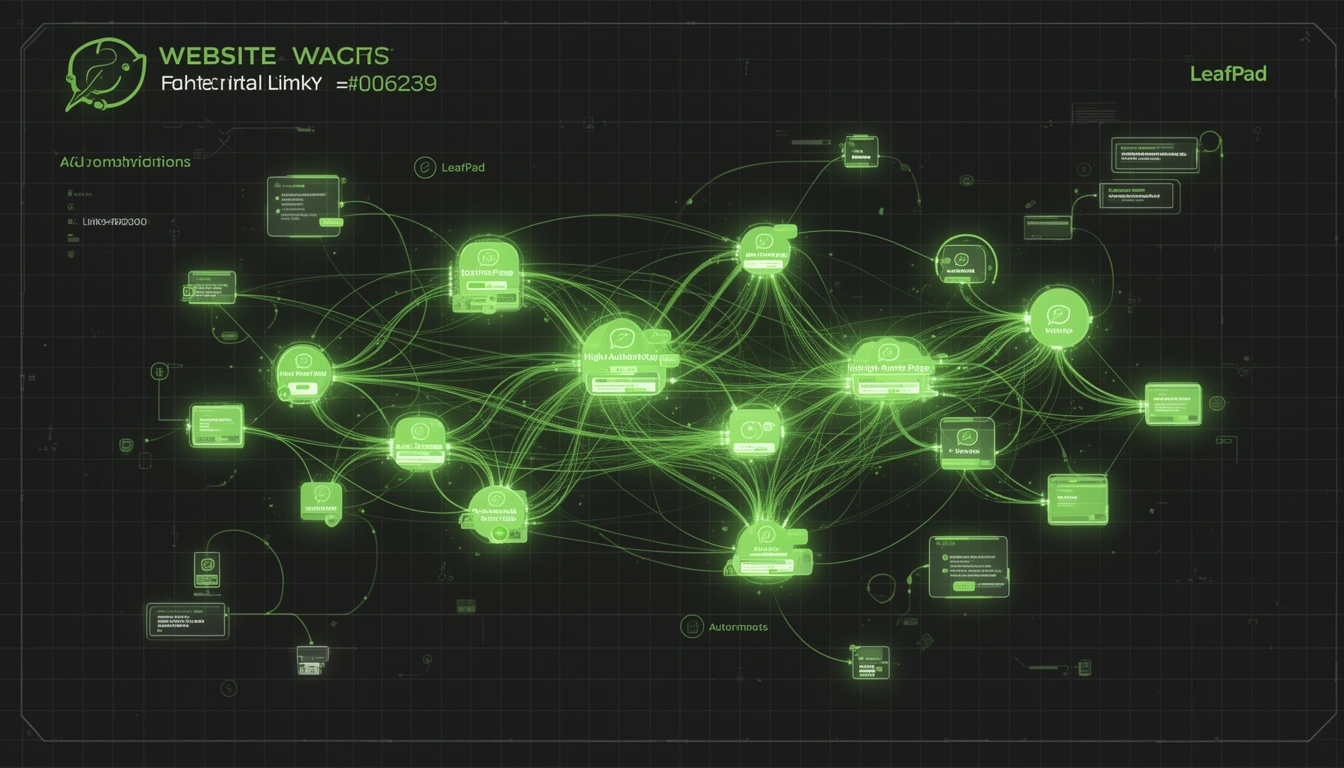
Internal linking is one of the most underutilized yet powerful SEO strategies available. While most teams focus on creating content and building backlinks, the architecture of how pages connect within your site determines whether Google can crawl efficiently, understand topical authority, and rank your content competitively.
Manual internal linking—the practice of hand-selecting anchor text and URLs every time you publish—works at small scale. But as your blog grows beyond 50, 100, or 500 pages, maintaining a coherent linking structure becomes impossible without automation.
This guide explores why automatic internal linking matters for modern SEO, how it impacts crawlability and rankings, and why automated systems outperform manual approaches for teams scaling content.
What Is Automatic Internal Linking?
Automatic internal linking uses algorithms or AI systems to analyze your content and dynamically insert contextually relevant links between pages on your site. Instead of manually deciding which pages to link together, the system:
Scans published content for semantic relationships
Identifies keyword and topical overlaps
Suggests or inserts anchor text that matches search intent
Updates link structures as new content is published
Ensures deep pages receive link equity from high-authority pages
Platforms like LeafPad include built-in internal link suggestions that help users create optimized link structures without manual mapping, making it easier to scale blogs that drive organic traffic.
Why Internal Linking Matters for SEO
Internal links serve three critical SEO functions:
1. Crawlability and Indexation
Search engine bots discover pages by following links. If a page isn't linked from anywhere on your site, it's considered an orphan page—invisible to crawlers and unlikely to rank.
Automatic internal linking ensures:
Every published page is accessible within a few clicks from the homepage
New content gets crawled faster because it's immediately linked from existing pages
Deep content (like older blog posts) remains discoverable and indexed
Google's algorithms prioritize sites with clear information architecture. A well-linked site signals quality and helps bots allocate crawl budget efficiently.
2. PageRank Distribution and Link Equity
PageRank flows through internal links. Pages with high authority (like your homepage or popular blog posts) pass ranking power to pages they link to.
Manual linking often concentrates link equity unevenly:
High-traffic pages get over-linked
Important but less-visible pages receive no internal support
Link equity gets trapped in silos without cross-topic connections
Automated systems analyze link equity distribution and suggest links that balance authority across your site, helping more pages rank competitively.
3. Topical Authority and Semantic Relevance
Google evaluates expertise by analyzing how well your site covers a topic through interconnected content. Internal links help establish topical clusters—groups of related pages that signal depth and authority.
For example, if you publish content about automatic SEO for startups, linking to related posts about AI search SEO and SEO system architecture reinforces semantic relationships and boosts rankings for the entire cluster.
The Problem with Manual Internal Linking
Manual internal linking breaks down as content scales. Common challenges include:
Inconsistent Linking Patterns
Different writers link differently. Without centralized rules, some posts include 10 internal links while others have zero. This creates uneven crawl paths and weakens site structure.
Outdated Links
When you publish new content, older posts don't automatically update to link to it. This means new pages miss out on link equity from established content, slowing their ability to rank.
Time-Intensive Maintenance
Manually auditing 500+ posts to find linking opportunities is impractical. Teams end up ignoring internal linking entirely or applying it inconsistently.
Missed Opportunities
Humans can't remember every page on a large site. Automated systems surface connections that writers would never identify manually, creating more comprehensive link networks.
No Data-Driven Optimization
Manual linking relies on intuition. Automated systems use analytics to prioritize links based on:
Pages with high traffic potential but low internal links
Content with strong backlinks that should pass equity internally
Keyword gaps where linking can improve topical coverage
How Automatic Internal Linking Works
Effective automated internal linking systems use a combination of:
Natural Language Processing (NLP)
NLP algorithms analyze content to identify:
Primary and secondary keywords
Semantic themes and topics
Entities (brands, products, concepts) mentioned across pages
This allows the system to match pages based on meaning, not just exact keyword matches.
Graph-Based Mapping
Your site's structure is represented as a graph where:
Nodes = individual pages
Edges = internal links
Graph algorithms identify:
Orphan pages (nodes with no incoming links)
Hub pages (nodes with high authority that should link out more)
Broken paths where navigation requires too many clicks
Contextual Anchor Text Generation
Instead of generic anchors like "click here," automated systems generate descriptive anchor text that matches search intent and improves relevance signals.
For example, linking to a post about how automatic SEO saves founders 780 hours per year uses the exact phrase users might search for, strengthening keyword associations.
Dynamic Updates
When new content is published, automated systems:
Identify related existing posts
Insert links from older content to new pages
Update navigation paths to ensure discoverability
This keeps your link structure fresh without manual intervention.
Benefits of Automatic Internal Linking Over Manual Approaches
1. Scalability Without Overhead
Whether you have 10 or 10,000 pages, automated systems maintain optimal linking patterns without additional human effort. This is critical for teams using automatic blogging or programmatic SEO strategies.
2. Faster Indexation
Automated linking ensures new content is immediately connected to existing pages, helping Google discover and index it faster. Studies show pages with strong internal linking get indexed 3-5x faster than orphan pages.
3. Improved Rankings for Long-Tail Keywords
Automated systems surface niche topics buried deep in your site and link them strategically. This helps long-tail content rank competitively, driving incremental organic traffic.
4. Better User Experience
Relevant internal links reduce bounce rates by guiding users to related content. This engagement signal indirectly boosts SEO performance.
5. Consistent SEO Standards
Automated rules ensure every page follows the same linking best practices:
3-7 contextual internal links per post
Descriptive anchor text aligned with target keywords
Balanced distribution of link equity
6. Data-Driven Prioritization
Automated systems use analytics to prioritize links that drive measurable outcomes:
Pages ranking on page 2 that need a boost
High-conversion pages that should receive more traffic
Content clusters that need stronger topical connections
Automatic Internal Linking Strategies That Drive Results
Strategy 1: Pillar-Cluster Linking
Organize content into pillar content pages (comprehensive guides) and cluster pages (supporting subtopics). Automated systems:
Link all cluster pages back to the pillar
Link related cluster pages to each other
Update links as new cluster content is added
This structure maximizes topical authority and helps pillar pages rank for competitive keywords.
Strategy 2: Contextual Keyword-Based Linking
Automated systems scan content for keyword phrases that match other pages' target keywords, then insert contextual links. For example:
Mention "WordPress alternative" → link to WordPress Alternative 2025
Mention "location pages" → link to how auto-generated location pages drive revenue
Strategy 3: Authority Page Boosting
Identify pages with high backlink profiles or traffic, then automatically insert links from those pages to newer or underperforming content. This passes authority where it's needed most.
Strategy 4: Freshness-Based Linking
Automatically update older content to link to recently published posts. This keeps older pages feeling current and helps new content gain traction faster.
Strategy 5: User Journey Optimization
Analyze user behavior to identify common navigation paths, then insert links that align with how real visitors browse your site. This improves engagement metrics and reduces bounce rates.
Technical Considerations for Automated Internal Linking
Avoid Over-Linking
Too many internal links dilute PageRank and create poor user experience. Best practices recommend:
3-7 contextual links per 1,000 words
Prioritize highly relevant links over quantity
Avoid linking the same page multiple times from one article
Use Descriptive Anchor Text
Anchor text should clearly describe the linked page's content. Avoid:
Generic phrases ("click here," "read more")
Over-optimized exact-match keywords
Vague or misleading descriptions
Monitor Link Equity Flow
Use tools like Screaming Frog or Ahrefs to visualize internal link distribution. Ensure:
No pages are orphaned
High-value pages receive adequate internal links
Link depth (clicks from homepage) stays under 3-4 for important content
Maintain Mobile-Friendly Navigation
Automated links should render properly on mobile devices, where most users browse. Test navigation paths to ensure accessibility across screen sizes.
How LeafPad Automates Internal Linking
LeafPad includes built-in internal link suggestions that analyze your content in real-time and recommend contextually relevant links as you write. Features include:
Semantic matching: AI identifies topically related posts based on content meaning, not just keywords
Anchor text optimization: Suggestions include SEO-friendly anchor text aligned with target keywords
Automated updates: When new posts are published, older content is automatically scanned for linking opportunities
Link equity balancing: The system prioritizes links to underlinked pages with high ranking potential
Cluster-aware linking: Recognizes content clusters and ensures proper pillar-cluster architecture
This automation integrates seamlessly with automatic SEO workflows, making it easy for startups and teams to scale content without hiring SEO specialists.
Measuring the Impact of Automatic Internal Linking
Track these metrics to quantify ROI:
Organic Traffic Growth
Monitor traffic increases for pages that received new internal links. Expect 15-40% lifts for well-linked pages within 30-60 days.
Indexation Rate
Track how quickly new pages get indexed after implementing automated linking. Faster indexation indicates improved crawlability.
Keyword Rankings
Monitor ranking improvements for target keywords. Pages with strong internal support typically rank 2-5 positions higher.
Engagement Metrics
Track bounce rate, pages per session, and time on site. Better internal linking should increase engagement by 10-30%.
Conversion Rates
If internal links guide users toward conversion pages, track conversion rate improvements. Strategic linking can boost conversions by 20-50%.
Common Mistakes to Avoid
Linking Only to High-Traffic Pages
Don't concentrate links on already-popular content. Distribute link equity to pages that need ranking support.
Ignoring User Intent
Links should match user expectations. Don't force irrelevant links just to meet quotas.
Using the Same Anchor Text Repeatedly
Vary anchor text for links pointing to the same page. This looks more natural and avoids over-optimization penalties.
Neglecting External Links
While internal links matter, don't ignore external links to authoritative sources. Balance is key for credibility.
Setting and Forgetting
Even automated systems need periodic audits. Review link structures quarterly to ensure alignment with SEO goals.
The Future of Automatic Internal Linking
As AI and machine learning advance, expect automatic internal linking systems to become more sophisticated:
Predictive linking: AI will predict which links drive conversions and prioritize those connections
Personalized link structures: Different user segments will see different internal links based on behavior and intent
Real-time optimization: Links will adjust dynamically based on live performance data
Voice and visual search integration: Internal linking will optimize for how users discover content via AI assistants and image search
Platforms investing in AI search optimization are already building these capabilities to help content rank in ChatGPT, Perplexity, and Google AI Overviews.
Implementing Automatic Internal Linking Today
If you're ready to scale internal linking without manual overhead:
Audit your current link structure: Identify orphan pages, broken links, and uneven link distribution
Choose an automated system: Platforms like LeafPad offer built-in automation, or use plugins for existing CMS platforms
Define linking rules: Set guidelines for anchor text, link density, and topical relevance
Start with clusters: Implement pillar-cluster linking first, then expand to broader automation
Monitor and iterate: Track performance metrics and refine rules based on data
For teams managing multiple blogs or scaling programmatic SEO campaigns, automation becomes essential rather than optional.
Conclusion
Internal linking is too important to leave to chance—and too time-consuming to manage manually at scale. Automatic internal linking systems deliver better crawlability, stronger rankings, and more efficient SEO workflows than manual approaches.
By leveraging AI-powered link suggestions, semantic analysis, and data-driven prioritization, you can build a site architecture that compounds authority, accelerates indexation, and drives sustainable organic growth.
Whether you're a startup scaling automatic SEO or an established team managing hundreds of posts, automated internal linking is one of the highest-leverage optimizations you can implement in 2026.
Start building smarter link structures today with LeafPad's automated blogging platform and watch your organic traffic compound month over month.
Published with LeafPad