Look at your browser's address bar. Sometimes you type a website address and go straight there. Other times you type something vague and end up on a search results page. These two actions feel similar, but they're completely different animals, and the distinction matters more than you might think for your website's traffic.
Here's what's actually happening in each case, and why it should shape your entire approach to SEO in 2026.
What happens when you type a URL
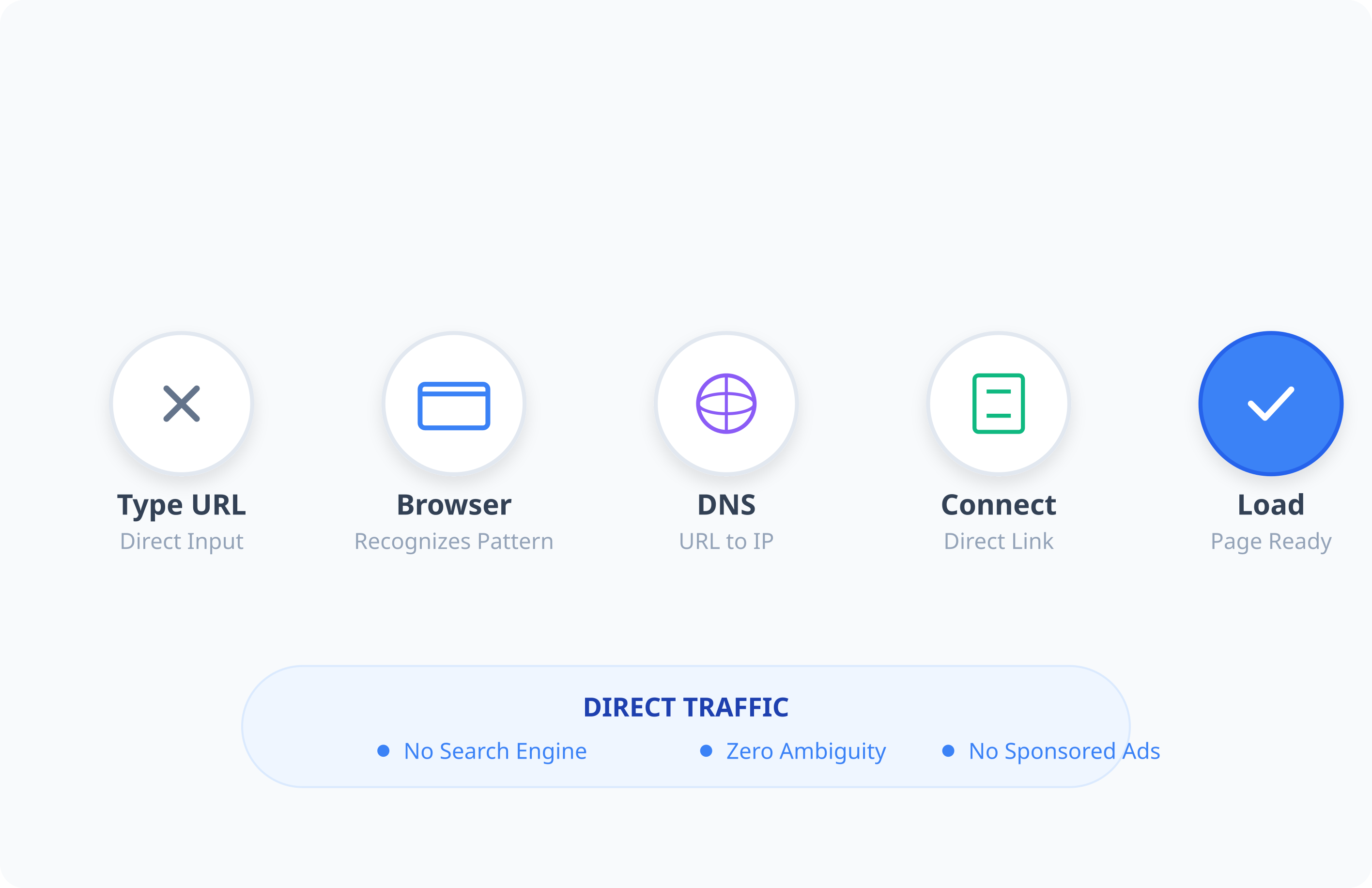
When you type a URL directly, you're telling your browser exactly where you want to go. No ambiguity.
The sequence is straightforward. Your browser recognizes the web address pattern (like "leafpad.io" or "https://example.com"). It contacts DNS servers to translate that human-readable address into an IP address. Then it connects directly to that server and loads the page.
No search engine involved. No algorithm deciding what to show you. No sponsored results cluttering the path.
This is direct traffic: users who already know where they're going. They might have your URL memorized, bookmarked, or they're typing it from a business card or podcast mention. Browser autocomplete helps here too, suggesting URLs from your history as you type.
What happens when you search
Type something that doesn't look like a URL, and your browser switches gears entirely.
Now you're in discovery mode. Your query gets sent to your default search engine Google, Bing, DuckDuckGo, whatever you've set. The search engine processes your query against billions of indexed pages, ranks them, and serves up a results page. You pick from the options presented.
This path is slower and more complex. You're not just trying to reach a destination; you're asking for directions and getting multiple answers.
How browsers decide which is which
Modern browsers use pattern detection to figure out what you're trying to do.
URL indicators include the obvious stuff: "http://" or "https://", recognizable domain extensions like .com or .io, slash patterns that suggest file paths. If you type "leafpad.io/blog", the browser knows you want that specific page.
Search indicators look different: natural language phrases, questions, multiple words without domain structure, keywords that don't match known domains.
Chrome calls this the "omnibox" a single bar that handles both functions. Firefox, Safari, and Edge work similarly. The browser makes this determination in real-time, often predicting your intent before you finish typing.
Why the distinction matters for your traffic
Direct traffic means brand strength
When users type your URL directly, that's brand recognition in action. These visitors don't need search engines to find you. They already know you exist.
This traffic tends to convert better and engage more deeply because it's returning visitors, people who've heard your brand mentioned somewhere, or users following a direct recommendation. If your analytics show growing direct traffic, something's working.
Search traffic means growth potential
Search traffic is how strangers discover you. It requires actual SEO work to capture. You're competing against other results, dependent on algorithm changes, and fighting for visibility on a crowded page.
Most growing websites need both traffic sources. LeafPad's automated SEO features help capture search traffic by handling the optimization heavy lifting.
How analytics platforms categorize this
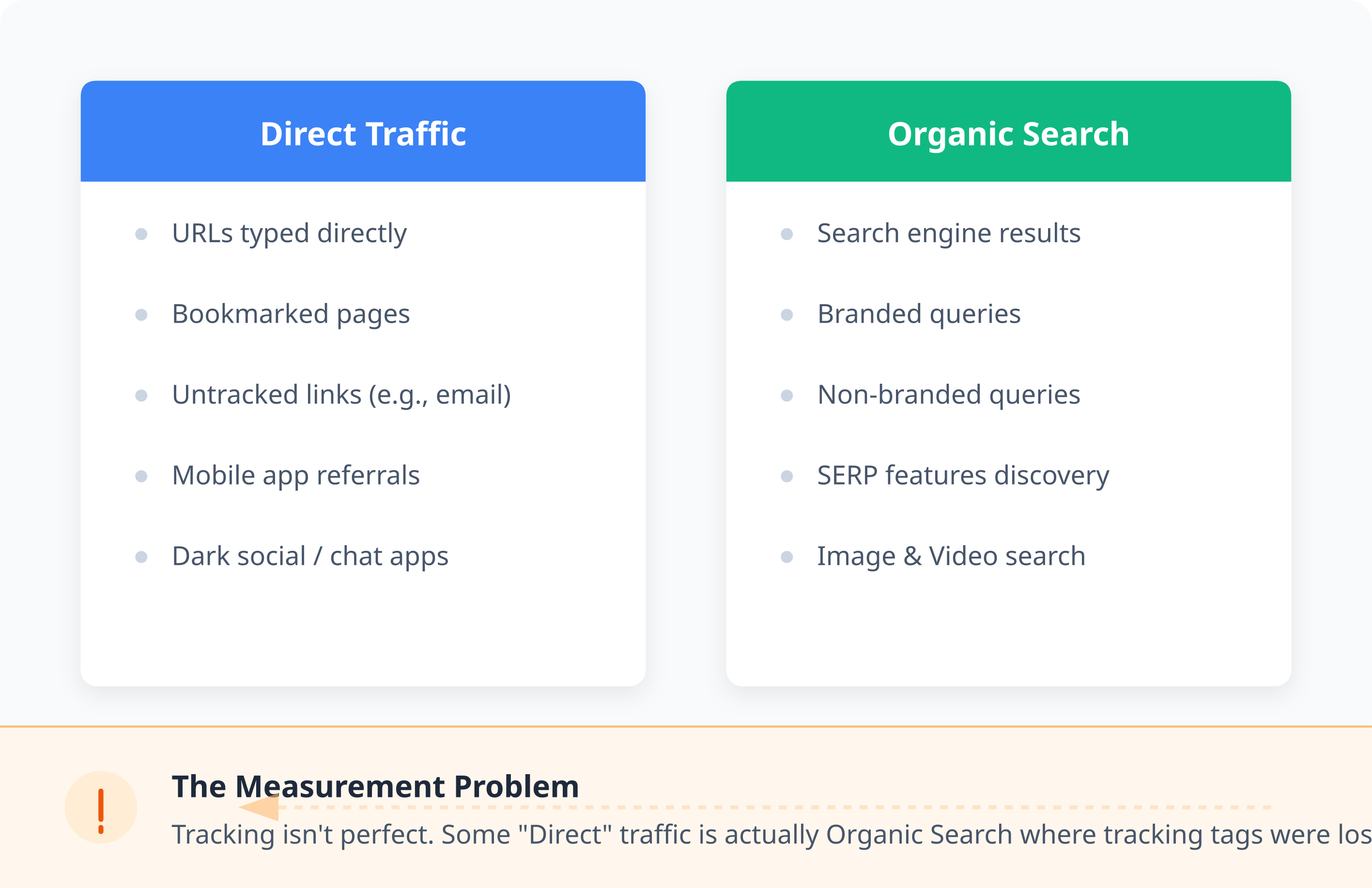
Google Analytics 4 and similar tools try to separate these behaviors, though the tracking isn't perfect.
Direct traffic typically captures: URLs typed directly, bookmarked pages, links from untracked sources like email clients, and some mobile app referrals.
Organic search traffic captures: all searches from engines, branded and non-branded queries, and discovery through SERP features.
The measurement problem: not all "direct" traffic is truly direct. Someone might search your brand name and click your result. Without proper tracking configured, that might show up as direct traffic even though it technically passed through a search engine.
The landscape is shifting in 2026
The search-versus-type distinction is getting blurrier.
AI search changes the game
ChatGPT, Perplexity, and other AI search tools have created a third navigation category: AI-assisted discovery. Users ask an AI for recommendations and then navigate based on that conversation. Understanding how to rank in AI search is no longer optional.
Browser features blur the line
Modern browsers now show search suggestions before you finish typing. They predict URLs from partial input. Some display mini search results right in the dropdown. The address bar is becoming a hybrid of direct navigation and search.
Voice search is almost entirely search
Voice-activated queries overwhelmingly go through search engines rather than direct URL navigation. As voice search grows, the discovery pathway dominates for initial contact with new websites.
Optimizing for both pathways
For direct URL traffic: pick a memorable domain short and clear beats clever and complicated. Invest in offline marketing like podcasts, speaking gigs, even business cards. Create resources worth bookmarking: tools, calculators, reference guides that people return to repeatedly.
For search traffic: publish consistently to build topical authority with search engines. Target long-tail keywords with specific intent rather than broad, competitive terms. Build internal linking structures that distribute authority across your content.
LeafPad handles the discovery side by automating technical SEO and making it simple to publish optimized blog content at scale.
The user journey from search to direct
A typical progression looks like this: A user has a problem and searches for solutions. They discover your website, maybe alongside competitors. If your content helps them, they might search your brand name next time. Eventually, they remember your URL and navigate directly. They become a repeat visitor who bypasses search entirely.
The goal is moving users along this spectrum from discovery to loyalty. Content quality and user experience determine whether that transition happens.
A few misconceptions worth clearing up
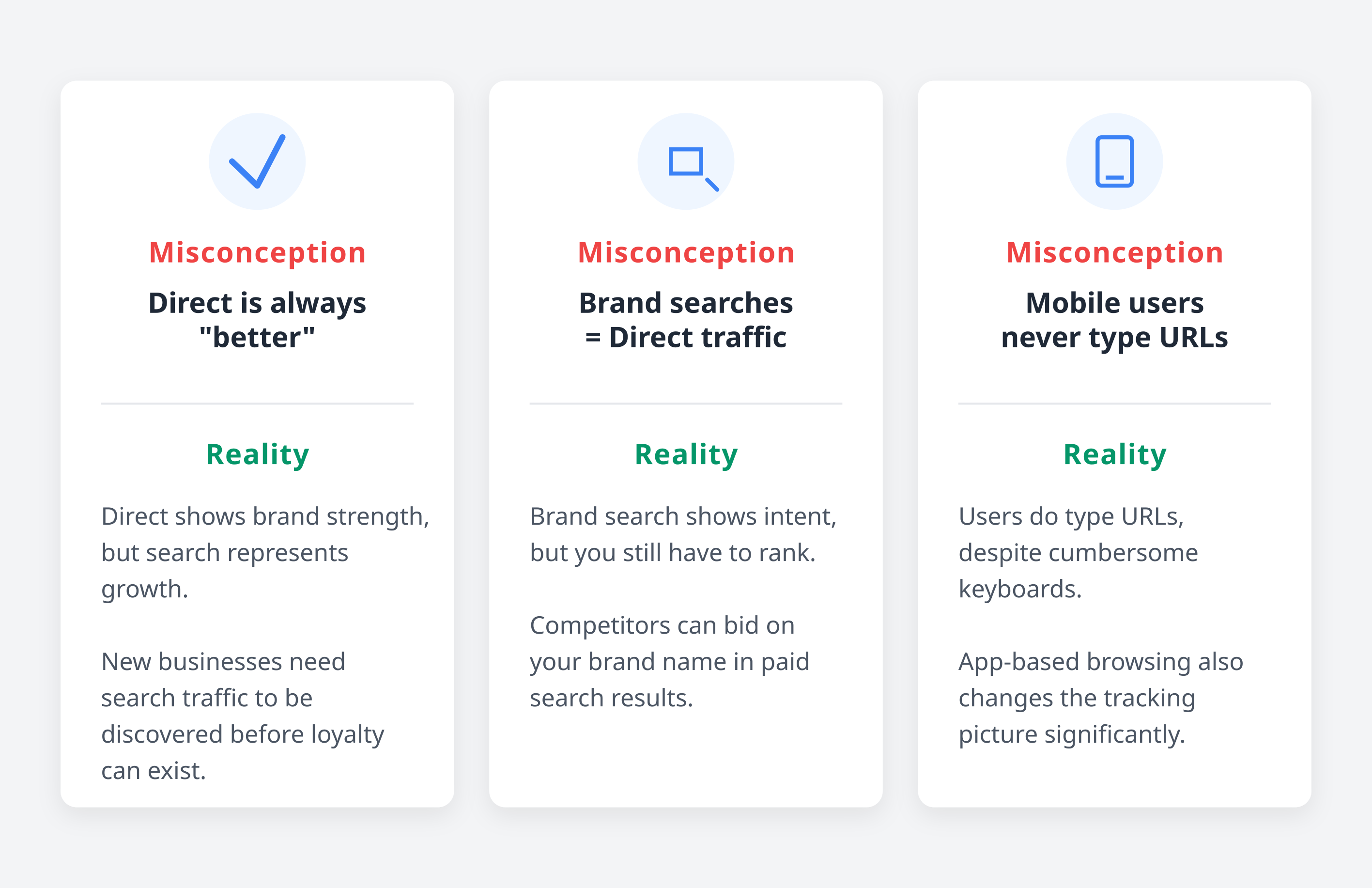
Direct traffic isn't always "better." It shows brand strength, but search traffic represents growth. New businesses need search traffic to become known. You can't have loyal direct visitors until people discover you first.
Brand searches aren't the same as direct traffic, either. They show intent, but you still have to rank for your own brand name and competitors can bid on it in paid search.
And mobile users absolutely type URLs, though mobile keyboards make it more cumbersome. Mobile also introduces app-based browsing, which changes the tracking picture further.
What to actually do
For more direct traffic: make your domain impossible to forget, get mentioned in podcasts and press, create tools people bookmark, build an email newsletter that drives return visits.
For more search traffic: publish regularly to build authority, target specific long-tail keywords, optimize for featured snippets and other SERP features, fix technical SEO issues that prevent proper indexing.
Most successful websites need both. Search feeds growth. Direct indicates loyalty.
The technical reality
Under the hood, the mechanics are simple. Type a URL, and your browser makes an HTTP(S) request directly to that server. Search, and your browser sends a request to a search engine, which processes it and returns results.
The strategic implications run deeper. Understanding this split helps you interpret analytics correctly, allocate budget between brand-building and SEO, and measure whether your marketing actually works.
Looking forward
The line between search and direct navigation will keep blurring. AI assistants, voice interfaces, and whatever comes next will create new navigation patterns we can't fully predict.
But the core principle holds: create content worth discovering through search, and experiences worth returning to directly.
Building a blog that ranks well in both traditional search engines and AI platforms is how you capture that initial discovery traffic. Do it well enough, and those visitors eventually skip the search step entirely.
That's the real measure of success being memorable enough that people type your URL without thinking about it.
Published with LeafPad