
SEO in 2026 is basically an automation problem. The real question isn't whether you need an auto SEO plugin anymore it's which one isn't going to waste your time. The market is flooded with tools that promise the moon, and most of them are just marketing wrappers around the same basic features. Founders and marketing teams I talk to are exhausted by the noise.
These tools have evolved past simple metadata managers. The current crop uses machine learning to analyze content in real-time, suggest optimizations based on what's actually ranking, and handle technical implementations that used to mean filing a Jira ticket for your dev team.
What "automatic" actually means
Let's be precise. "Auto SEO plugin" gets thrown around pretty loosely. Real automation isn't just spitting out a meta description. It has to handle multiple layers without you hovering over it.
Actual automation looks like:
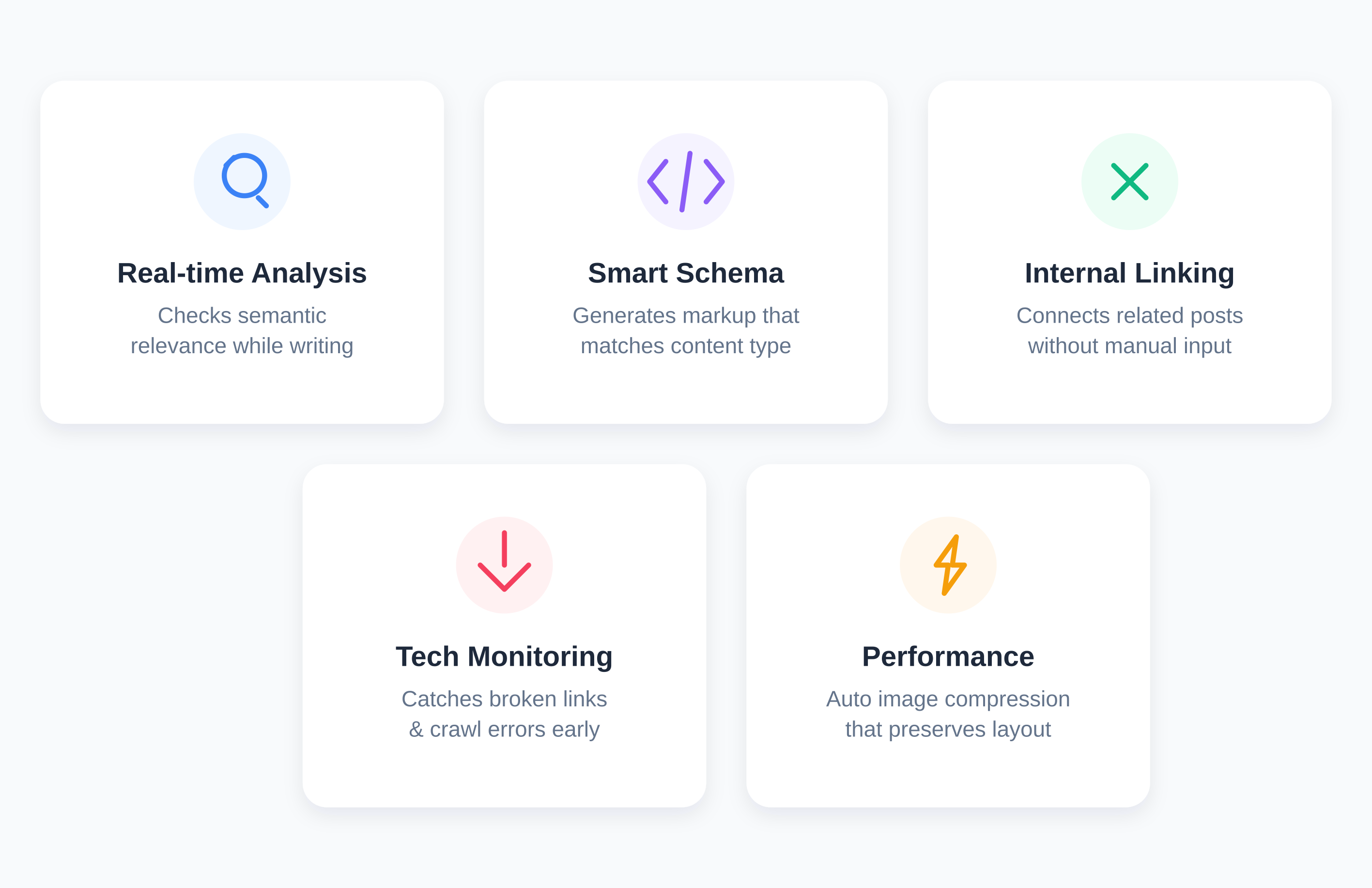
- Real-time content analysis that checks semantic relevance while you write
- Schema markup generation that actually matches your content type
- Dynamic internal linking that connects related posts without manual input
- Technical monitoring that catches broken links and crawl errors before Google does
- Performance tweaks like image compression that don't break your layout
The good ones run quietly and make thousands of small adjustments that compound. They don't just suggest they implement.
The architecture matters
If you want to spot a tool that actually works versus one that just adds bloat, look at how it's built. The decent ones operate on three layers.
The analysis layer scans your content and technical setup continuously, comparing it against search guidelines and what your competitors are doing. This isn't a one-time audit it adapts as algorithms change.
The decision layer figures out what matters most for your specific content. Not every page needs the same treatment, and smart plugins prioritize based on traffic potential and difficulty.
The implementation layer applies the changes. Rewriting title tags, restructuring headings, generating FAQ schema all without opening a settings panel.
This separation is what distinguishes actual SEO automation from tools that just generate lists of suggestions you'll never have time to implement.
Features that separate useful from useless
Not all automation helps. Looking at what teams actually used throughout 2026, a few specific features make or break these tools.
Content velocity optimization means the plugin understands you're building a content hub, not just isolated posts. It should strengthen internal linking patterns automatically as you publish.
AI search compatibility is non-negotiable. Your plugin needs to optimize for how ChatGPT and Perplexity retrieve content, not just traditional Google rankings. That means passage-level optimization and structured data that AI models can parse.
Dynamic rendering lets you serve slightly different versions for featured snippets, AI overviews, and standard listings without duplicate content problems.
Programmatic scaling support matters if you're planning to publish at volume. The right plugin handles rules across thousands of pages without choking.
Zero-impact performance is critical. The best tools do their heavy lifting server-side or during build time. If a plugin adds JavaScript weight that tanks your Core Web Vitals, it's defeating the purpose.
Traditional plugins vs. native automation
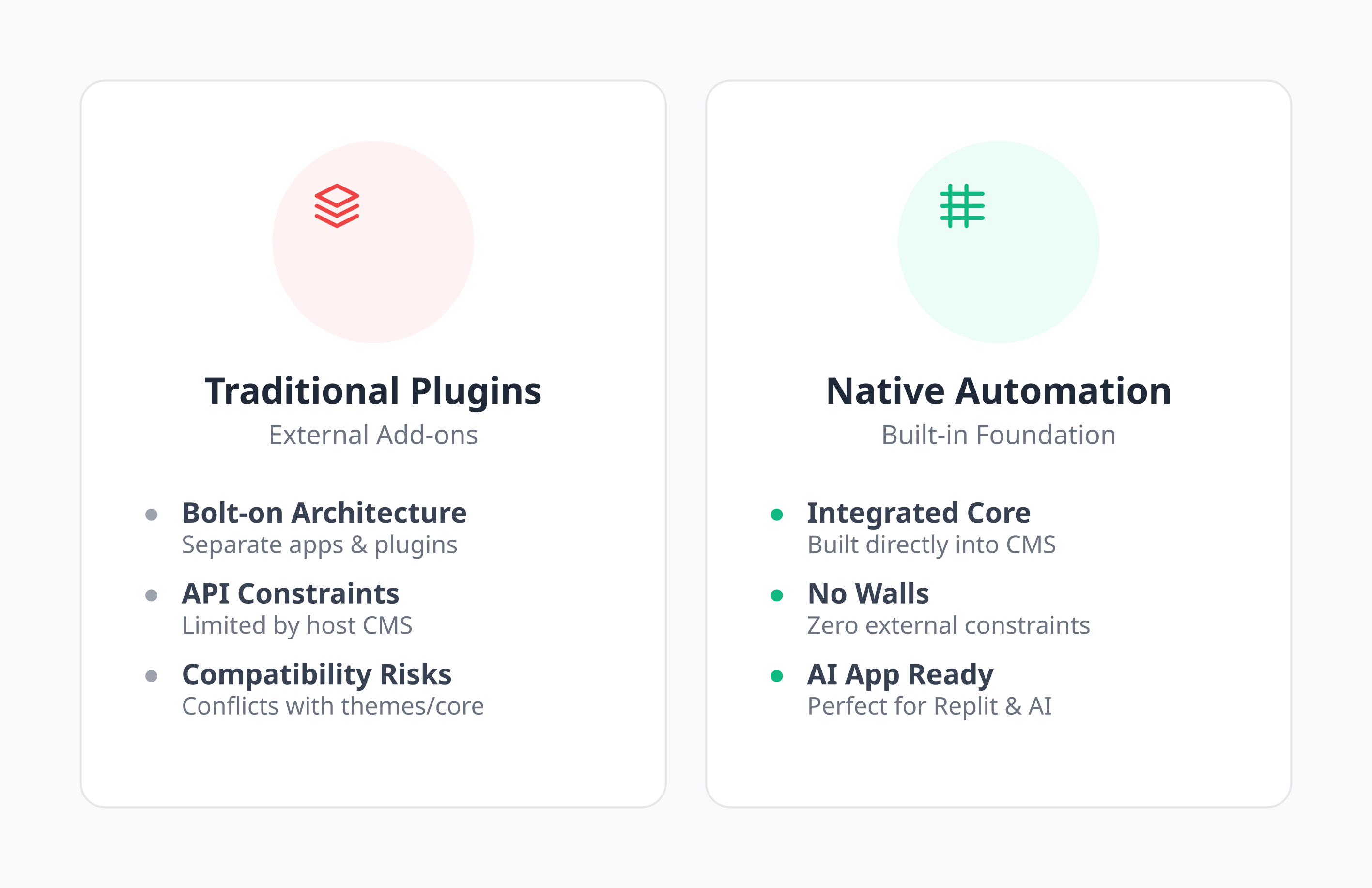
This distinction trips people up. Traditional auto SEO plugins are add-ons WordPress plugins, Shopify apps. Platform-native automation builds the SEO intelligence directly into the CMS.
Traditional plugins hit walls. They're limited by what the host CMS exposes via API. They also create compatibility nightmares with themes, other plugins, and platform updates. Every WordPress core update becomes a roll of the dice.
Native automation doesn't have these constraints. The optimization engine is part of the foundation, not bolted on.
For teams using AI-coded apps built with tools like Replit, native solutions eliminate the plugin guessing game entirely. The SEO is just part of how the platform works.
The hidden manual work
A lot of "auto" plugins are lying. They require setup that defeats the purpose.
Watch for tools that make you manually configure rules for each content type, set up schema templates by hand, or constantly update keyword targets. These are assisted manual systems, not automatic ones.
Here's the test: if you published 100 posts tomorrow, would the plugin handle all of them without additional configuration? If you hesitated, it's going to bottleneck your growth.
Workflow fit is everything
A plugin that fights your content process will eventually get abandoned. I've seen it happen repeatedly.
Editorial calendar integration means the plugin understands your strategy and prioritizes accordingly. If you're building a topic cluster, it should recognize the pattern.
Team collaboration features matter when multiple people create content. Writers need simple suggestions; specialists need deep access.
Version control isn't optional. Automatic doesn't mean invisible. You need to audit changes and roll back when something goes sideways.
API access matters for custom workflows. The plugin should expose data and accept external rules when needed.
For platforms like LeafPad that handle blog architecture specifically for AI discovery, these integrations are already in the workflow no plugin bridge required.
Performance overhead
The irony of bad SEO plugins is they can wreck your rankings while trying to improve them.
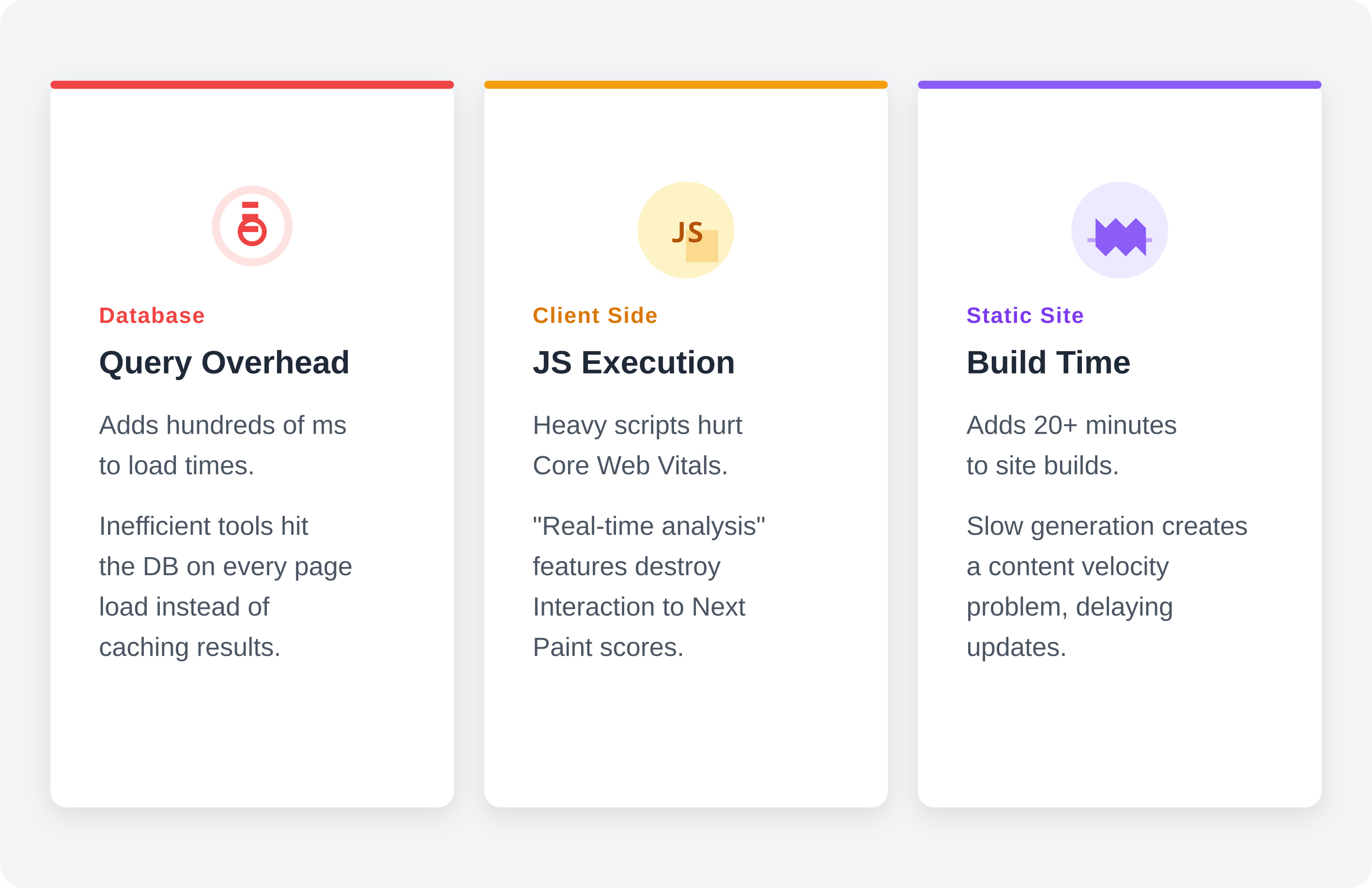
Database query overhead from poorly built tools adds hundreds of milliseconds to load times. Every automated check hits the database. Inefficient plugins hammer it on every page load instead of caching.
JavaScript execution time matters for Core Web Vitals. Plugins that load heavy client-side scripts for "real-time analysis" can destroy your Interaction to Next Paint scores.
Build time impact matters for static sites. If your plugin adds 20 minutes to builds, you've created a content velocity problem the exact thing you were trying to solve.
Good tools process at the right time: during creation or in background jobs, not on every page request.
Real impact vs. vanity metrics
Plugins love showing dashboards with "optimizations applied" and green checkmarks. These rarely correlate with actual traffic.
Ignore vanity metrics: number of optimizations, internal SEO scores, percentage of "fixed" issues. These look productive without delivering results.
Focus on external validation: organic traffic trends, ranking improvements, featured snippet wins, AI search citations.
Attribution is tricky. Rankings involve multiple factors. The best approach is comparing optimized content against a control group with different treatment.
Where this is going
Late 2026 is bringing some shifts worth watching.
Predictive optimization is moving into production systems. Next-generation tools will anticipate algorithm changes rather than reacting to them.
Cross-platform orchestration recognizes content doesn't live in one place. Future tools will coordinate optimization across blogs, social platforms, newsletters, and documentation.
Personalized rules will learn what works for your specific domain rather than applying generic SEO principles.
Real-time competitive adjustment will monitor competitor movements and adapt automatically.
Choosing based on where you are
Your stage determines your needs.
Early-stage programs need strong defaults. You don't have data for custom rules yet pick something that makes good decisions out of the box.
Scaling operations need programmatic handling across large content sets. Define rules once, apply everywhere. API access becomes important.
Mature programs need deep customization and A/B testing. You have enough history to challenge the plugin's assumptions.
The most effective solution in 2026 might not be a plugin at all. Platforms like LeafPad that build automatic SEO into their architecture often outperform bolt-ons because they can access deeper structural elements.
Keeping the human in the loop
The best implementations treat automation as leverage, not replacement.
Let the plugin handle repetitive technical work meta tags, schema, internal linking structure. This frees your team for work that requires judgment: strategy, positioning, research, relationship building.
Don't set it and forget it. Even good automation needs periodic review. Are priorities still aligned? Have algorithms shifted? Is the internal linking strategy actually supporting the clusters you're building?
Audit the automated decisions. Good plugins let you override specific choices without killing automation. Use that when you have context the algorithm lacks.
The combination of reliable automation and human strategy remains the most effective approach. Plugins eliminate tedious work. They don't eliminate the need to think.
For teams that want this foundation without plugin headaches, purpose-built platforms with native SEO automation are usually the cleaner path.
Published with LeafPad