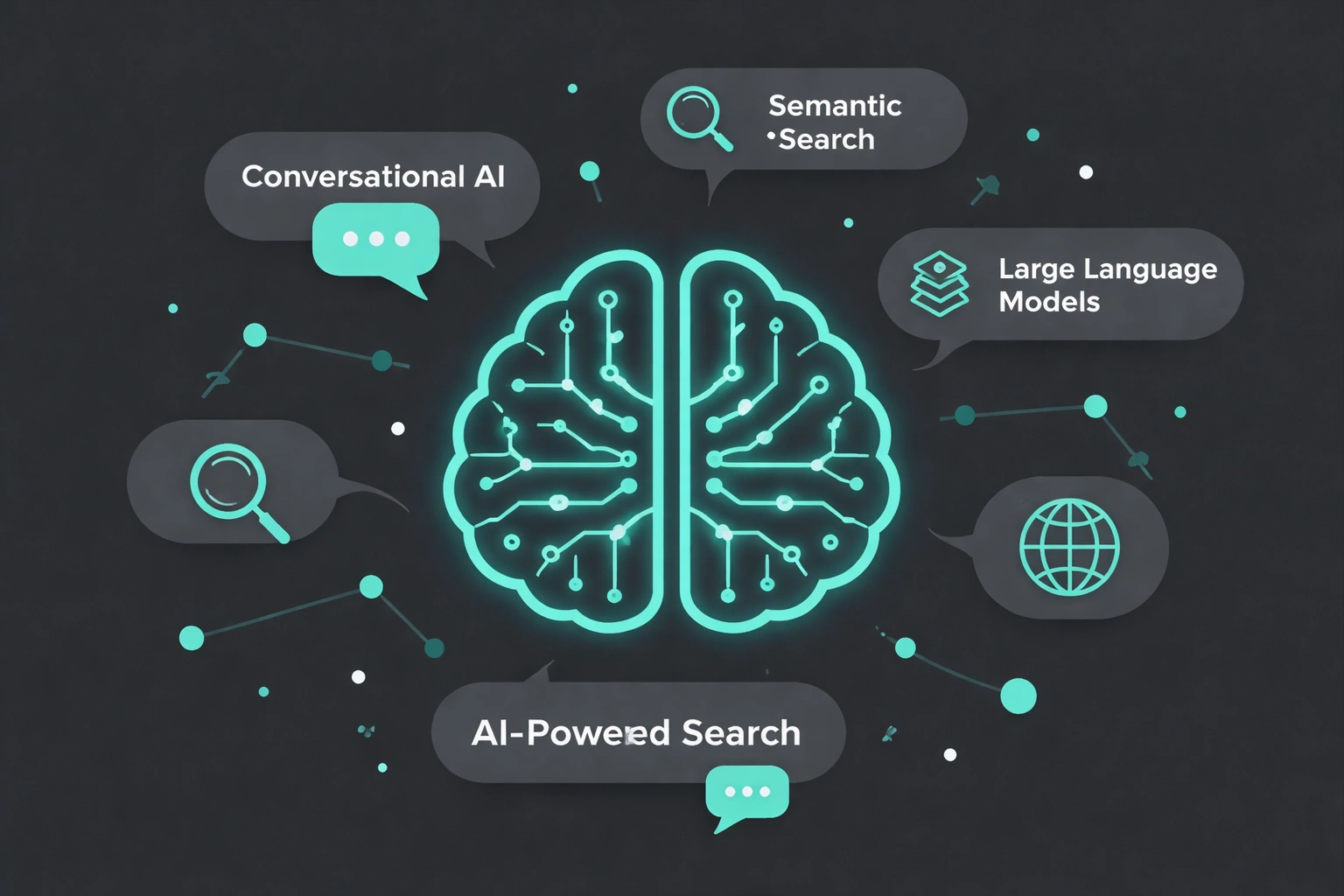
AI is doing more than helping you write content these days. It's reading, indexing, and ranking it. And if you're still optimizing for traditional search alone, you're missing half the game.
In 2026, AI keywords aren't just about what people type into Google. They're about what LLMs understand, how conversational queries are structured, and what context engines like ChatGPT, Perplexity, and Claude pull into their answers. The shift from exact-match keyword targeting to semantic relevance has changed how we build content strategies.
Here's what AI keywords actually are, why they matter more than ever, and how to find and use them to rank in both traditional and AI-powered search environments.
What Are AI Keywords?
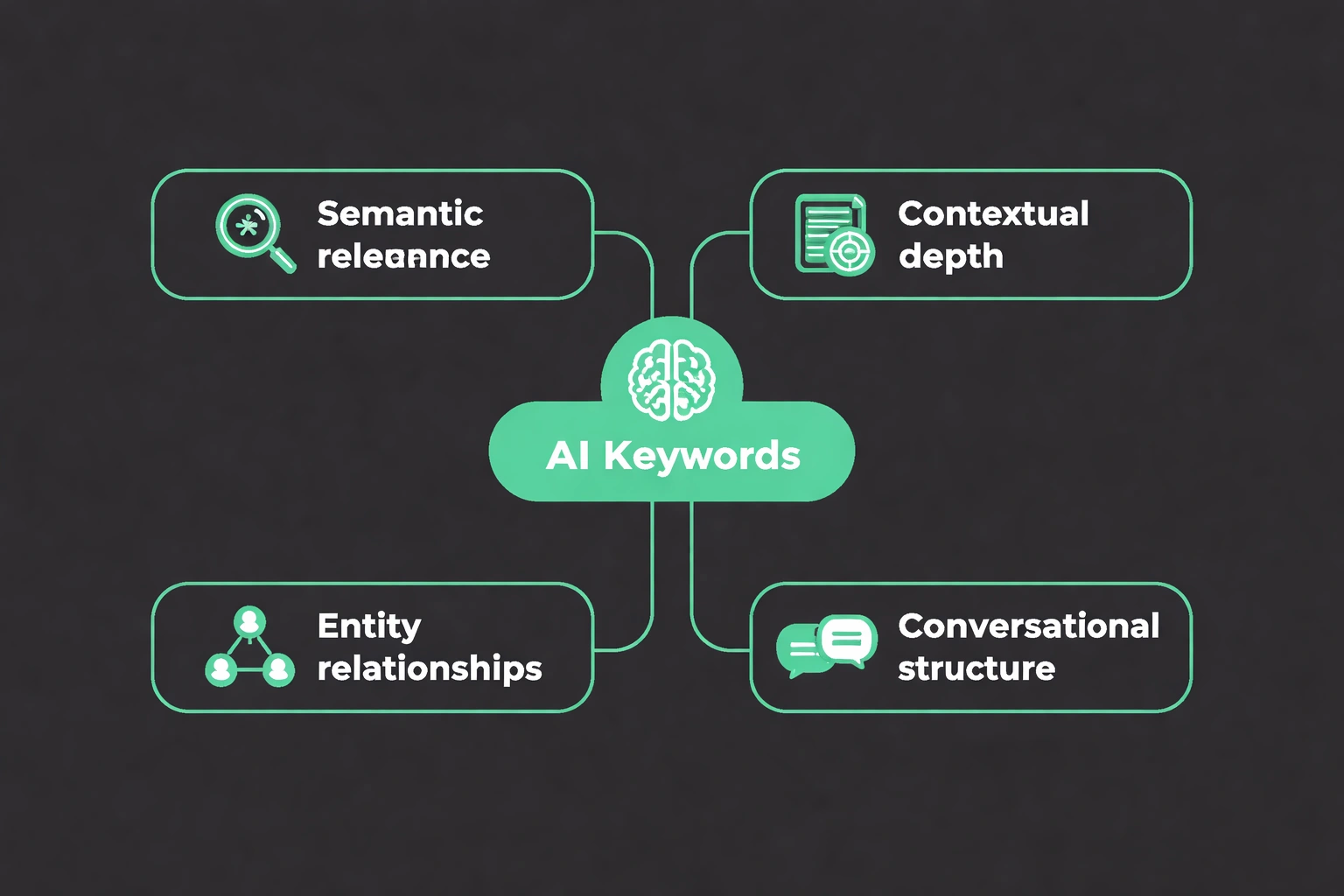
AI keywords are phrases and concepts optimized for natural language processing (NLP) systems, not just traditional search algorithms. They reflect how people ask questions conversationally, how LLMs interpret meaning, and how context-aware systems surface answers.
Unlike traditional keywords that rely on exact matches and backlink authority, AI keywords prioritize:
Semantic relevance: How closely your content matches user intent
Contextual depth: Whether your content answers follow-up questions
Entity relationships: How well you connect related topics and concepts
Conversational structure: Natural phrasing that mirrors how people actually speak
When someone asks ChatGPT "what's the best way to automate SEO for my SaaS," they're not searching for "SEO automation tools." They're looking for an answer that understands their specific context. AI keywords help your content appear in those answers.
Why AI Keywords Matter in 2026
Traditional SEO still works. But it's no longer enough.
AI-powered search experiences are growing faster than conventional search. Zero-click searches are becoming the norm, with AI providing answers directly without requiring clicks. Conversational queries are standard now, with voice search and chat interfaces framing questions naturally. Context switching is instant, and users refine searches mid-conversation expecting content that follows along. Authority comes from comprehensiveness LLMs favor content that covers topics deeply and interconnects ideas.
If your content is optimized only for keyword density and meta tags, AI systems might skip it entirely, even if it ranks on page one of Google.
This is why platforms like LeafPad are built with AI-first content structures. They help you publish blogs that are readable by both humans and LLMs, ensuring your content gets discovered no matter how people search.
How AI Keywords Differ from Traditional Keywords
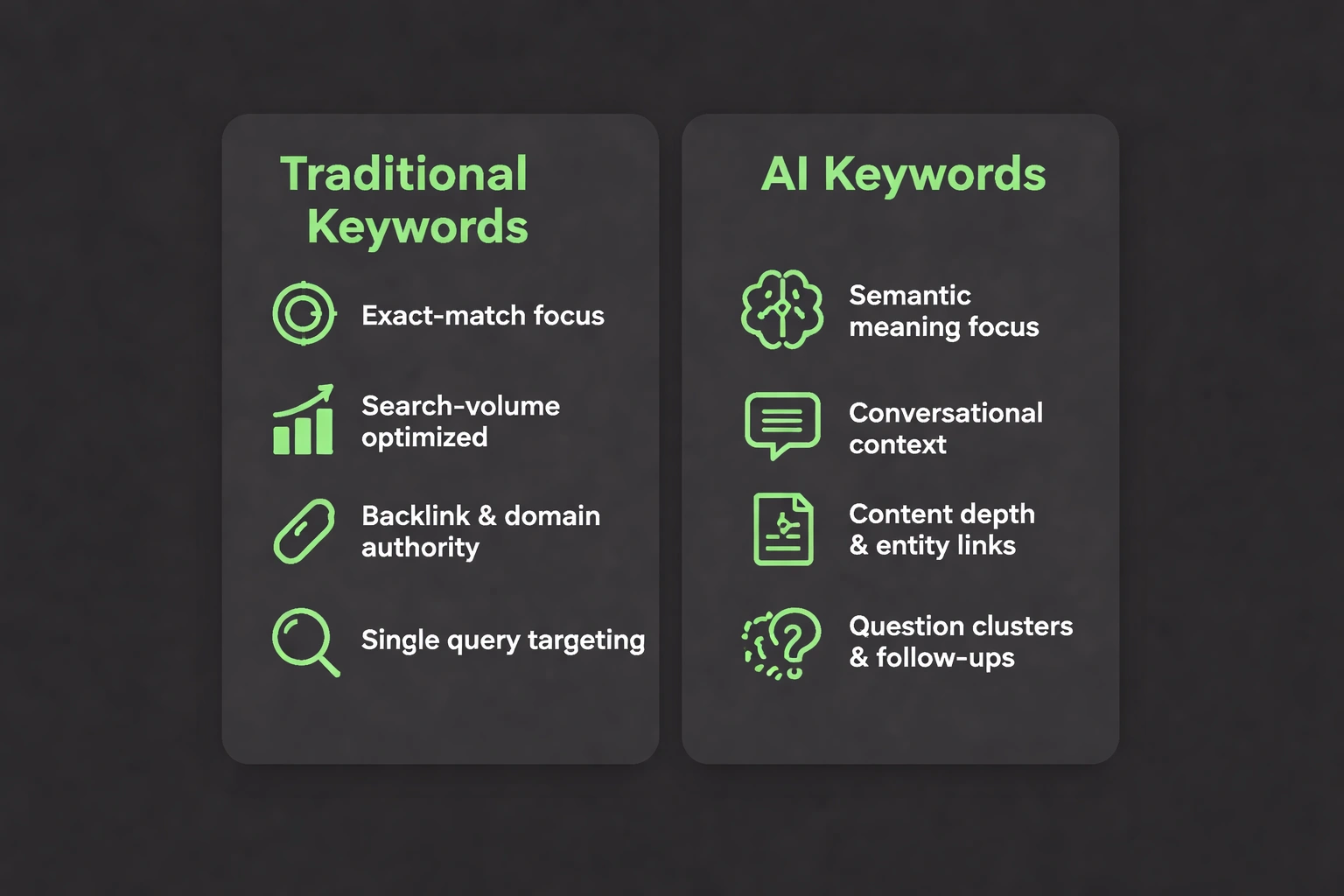
Traditional Keywords | AI Keywords |
|---|---|
Focused on exact match phrases | Focused on semantic meaning |
Optimized for search volume | Optimized for conversational context |
Relies on backlinks and domain authority | Relies on content depth and entity relationships |
Targets single queries | Targets question clusters and follow-ups |
Measured by rankings | Measured by AI citation and snippet inclusion |
Traditional keywords like "blog CMS" might get you traffic. But AI keywords like "how do I add a blog to my site without a developer" capture the real intent behind the search. That's what LLMs surface.
How to Find AI Keywords
Finding AI keywords requires a different approach than traditional keyword research. You're not just looking for high-volume terms. You're mapping out how people think, ask, and explore topics.
Use Conversational Query Tools
Tools like AnswerThePublic, AlsoAsked, and even ChatGPT itself can reveal how people phrase questions around your topic. Start with a seed keyword and ask what someone new to this would ask, what follow-up questions naturally emerge, and what related problems or concerns come up.
For example, if your seed keyword is "blog publishing," conversational queries might include "How do I publish a blog without coding?", "What's the fastest way to add blogs to my site?", and "Can I automate blog SEO?"
These aren't traditional keywords. They're intent-driven phrases that LLMs understand and rank for.
Analyze AI Search Results
Search your topic in ChatGPT, Perplexity, or Google's AI Overviews. Notice what phrases appear in the AI-generated summaries, which sources get cited, and what follow-up questions are suggested.
This reveals the semantic patterns AI systems associate with your topic. If you're not using those phrases and structures, you're invisible to AI search.
Map Entity Relationships
AI systems think in entities people, places, concepts, and how they connect. Use tools like Google's Knowledge Graph or Wikipedia's related topics to identify core entities in your niche, related concepts and subtopics, and common associations and contexts.
For example, if you're writing about automated SEO tools, related entities might include content optimization, keyword clustering, internal linking automation, and real-time indexing. Weaving these entities naturally into your content helps AI systems understand what your page is about and when to surface it.
Leverage Question-Based Structures
AI loves content that answers questions directly. Structure your content around what, how, why, when, and what are the alternatives. This mirrors how LLMs parse and extract information, making your content easier to cite.
How to Optimize Content for AI Keywords
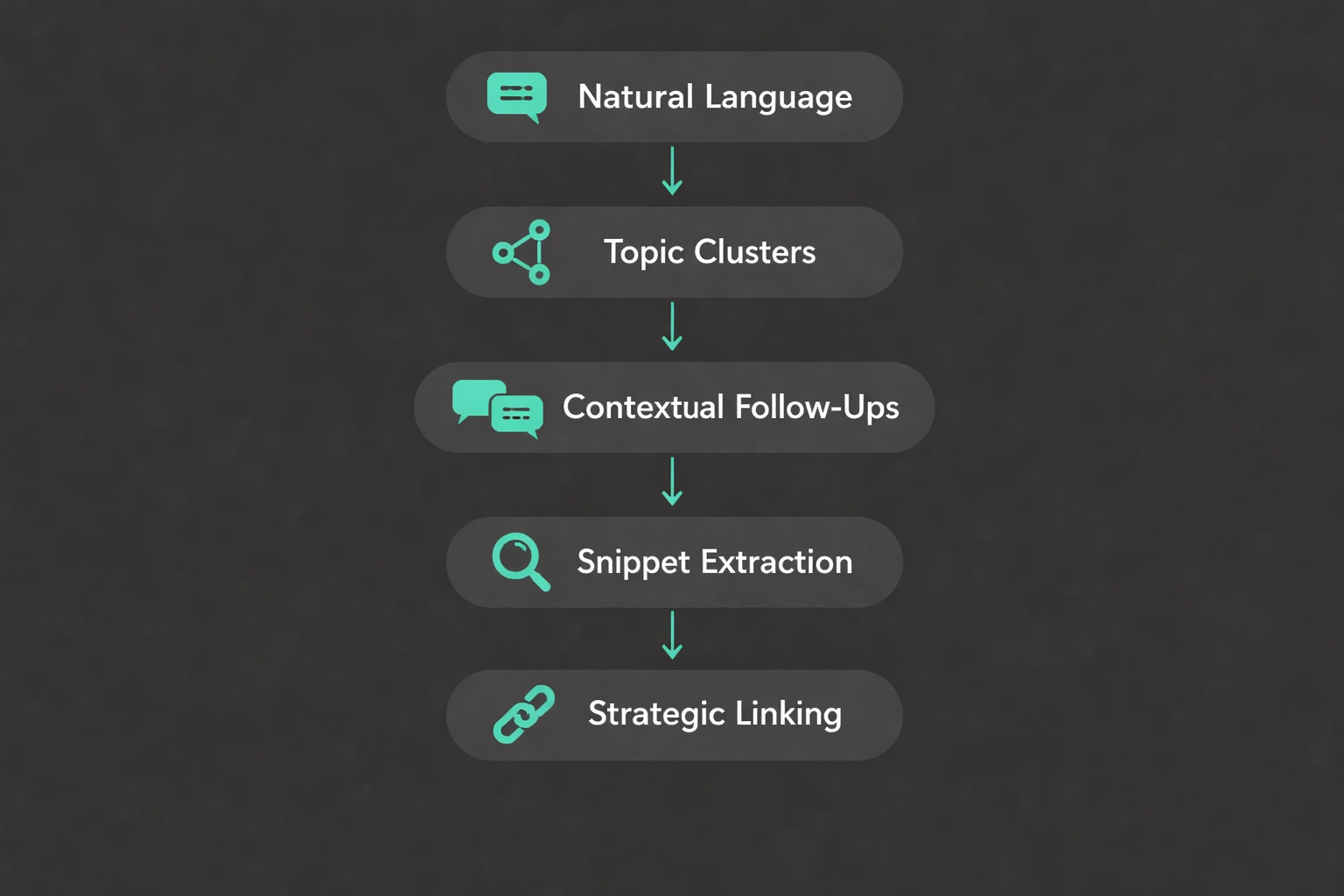
Once you've identified your AI keywords, structure your content so AI systems can understand and surface it.
Use Natural Language
Write like you're explaining the topic to a colleague, not a search engine. Avoid keyword stuffing and forced phrasing. AI systems detect and penalize unnatural language patterns.
Build Comprehensive Topic Clusters
Don't just answer one question. Answer all the related questions someone might have. Create pillar content that covers a topic deeply, then link to supporting posts that explore subtopics.
For example, a pillar post on SEO automation might link to automated keyword research systems, automatic internal linking strategies, and real-time indexing for blogs. This structure helps AI systems see your content as authoritative and worth citing.
Include Contextual Follow-Ups
AI conversations don't stop at the first answer. They flow into follow-up questions. Anticipate these and address them within your content. If you explain what programmatic SEO is, follow with why it matters, how it works, and when to use it.
Optimize for Snippet Extraction
AI systems pull answers from clear, concise sections of your content. To increase your chances of being cited, use short paragraphs of 2-3 sentences, include definition-style sentences, format lists and tables clearly, and use subheadings that mirror questions.
Link Strategically
Internal linking isn't just for SEO. It's how AI systems understand your content's context and relationships. Link to related topics that provide deeper explanations, pillar content that establishes authority, and supporting examples and case studies. Platforms like LeafPad automate this with intelligent internal linking suggestions, so your content stays interconnected without manual effort.
Common Mistakes to Avoid
If you're only targeting short-tail keywords like "SEO tools," you're missing the long-tail, conversational queries that drive AI search. Expand your keyword research to include full questions and natural phrases. AI systems also detect keyword stuffing instantly, so focus on natural language and covering the topic thoroughly. If your content exists in isolation without linking to related topics or establishing entity connections, AI systems struggle to understand its relevance. Build topic clusters and interlink strategically. And if you're not checking how your content appears in ChatGPT, Perplexity, or AI Overviews, you're blind to half your visibility. Regularly audit how AI systems interpret and cite your content.
How LeafPad Helps You Optimize for AI Keywords
AI keyword optimization isn't just about research. It's about structure, interlinking, and real-time adaptation. That's where LeafPad comes in.
LeafPad's platform includes AI-assisted content suggestions that identify semantic gaps, automated internal linking that connects related topics, real-time SEO feedback, and content topology mapping that visualizes your topic clusters. Instead of manually tracking AI keywords, LeafPad helps you structure content that naturally aligns with how AI systems interpret and rank information.
AI Keywords Are the New SEO Foundation
Traditional SEO isn't dead, but it's no longer sufficient. AI-powered search is rewriting the rules, and content that doesn't adapt will get left behind.
AI keywords aren't about gaming the system. They're about understanding how people actually search, how AI interprets meaning, and how to structure content that serves both.
If you're ready to optimize for the way people actually find information in 2026, start thinking in AI keywords and use tools like LeafPad to publish content that ranks everywhere.
Published with LeafPad