
Final rewrite
In 2026, crawling is the invisible foundation that decides whether your content exists or gets buried. While most SEO conversations obsess over keywords and backlinks, the reality is simpler: if search engines can't crawl your site efficiently, nothing else matters.
Crawling tools used to be a box-ticking exercise. You'd run a scan, fix some 404s, and move on. Now they're mission-critical. Modern crawling tools function as real-time intelligence systems that predict indexing issues, monitor algorithmic changes, and validate whether your SEO automation strategies are actually reaching search engines.
Here's the landscape in 2026, why these tools matter, and how to deploy them without overcomplicating your stack.
Why Crawling Tools Matter More Than Ever
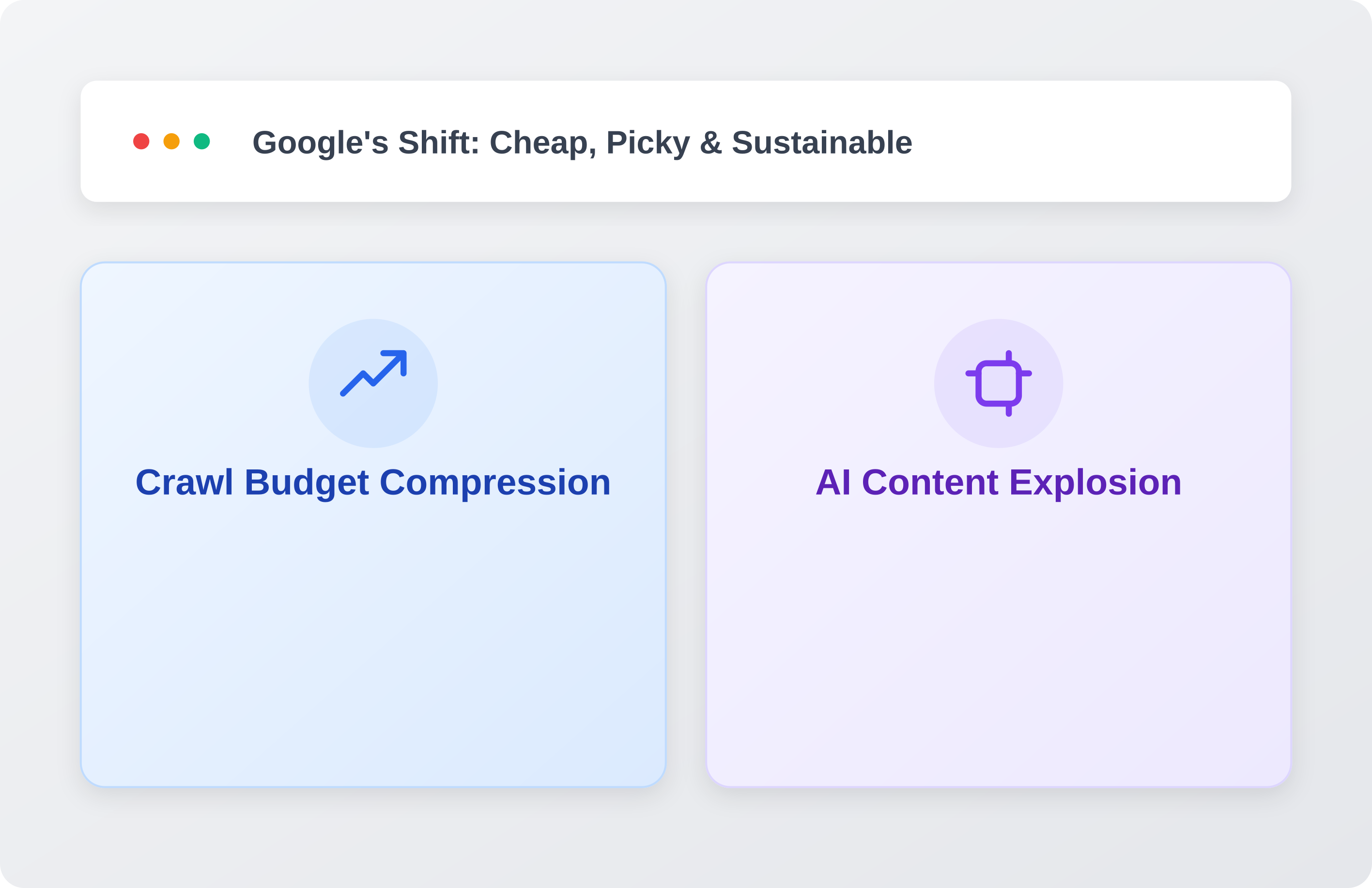
Google got picky. Actually, picky isn't the right word they got cheap. With billions of pages competing for attention and sustainability initiatives tightening crawl budgets, your site's crawlability is a legitimate competitive advantage.
A few things shifted recently:
Crawl budget compression. Google announced in late 2025 that it would reduce crawl frequency for sites with low engagement signals. Sites that don't optimize crawl efficiency get indexed slower or not at all.
AI-generated content explosion. Search engines are drowning in low-quality AI pages. Crawlers now use behavioral signals to decide whether to keep crawling a domain. If early pages signal low quality, they abandon the rest.
JavaScript rendering costs. Google can render JavaScript, but it's expensive and slow. Sites relying heavily on client-side rendering without optimization face indexing delays measured in weeks.
Passage-level indexing. Search engines index at the paragraph level now. If your crawling infrastructure can't validate that these micro-elements are accessible, you're invisible for long-tail queries.
What Modern Crawling Tools Actually Do
They've moved beyond traditional audits into continuous monitoring that integrates with your content pipeline and automated SEO tools.
Real-time crawl simulation. Modern crawlers emulate Googlebot, Bingbot, and AI crawlers (ChatGPT, Perplexity). They catch pages blocked by robots.txt, redirect chains, orphaned pages, and JavaScript rendering failures. Unlike legacy tools running weekly audits, 2026 crawlers operate continuously alerting you within minutes of deployment issues.
Crawl budget analysis. Your crawl budget is finite. These tools track which pages consume the most budget, which URLs get recrawled unnecessarily, and whether crawlers waste time on low-value pages. This data drives internal linking decisions and content consolidation.
Indexing validation. Crawling ≠ indexing. Modern tools compare crawled pages against Google Search Console data, identify pages crawled but not indexed, flag quality filter blocks, and monitor index coverage trends.
Schema validation. Critical for AI Overviews, featured snippets, and knowledge panels. Tools validate markup accuracy, JSON-LD syntax, and structured data visibility.
Mobile-first verification. Many sites still serve different content to mobile vs. desktop. Crawling tools now crawl as mobile Googlebot, compare renderings, and catch mobile-specific errors.
The Tools Worth Knowing
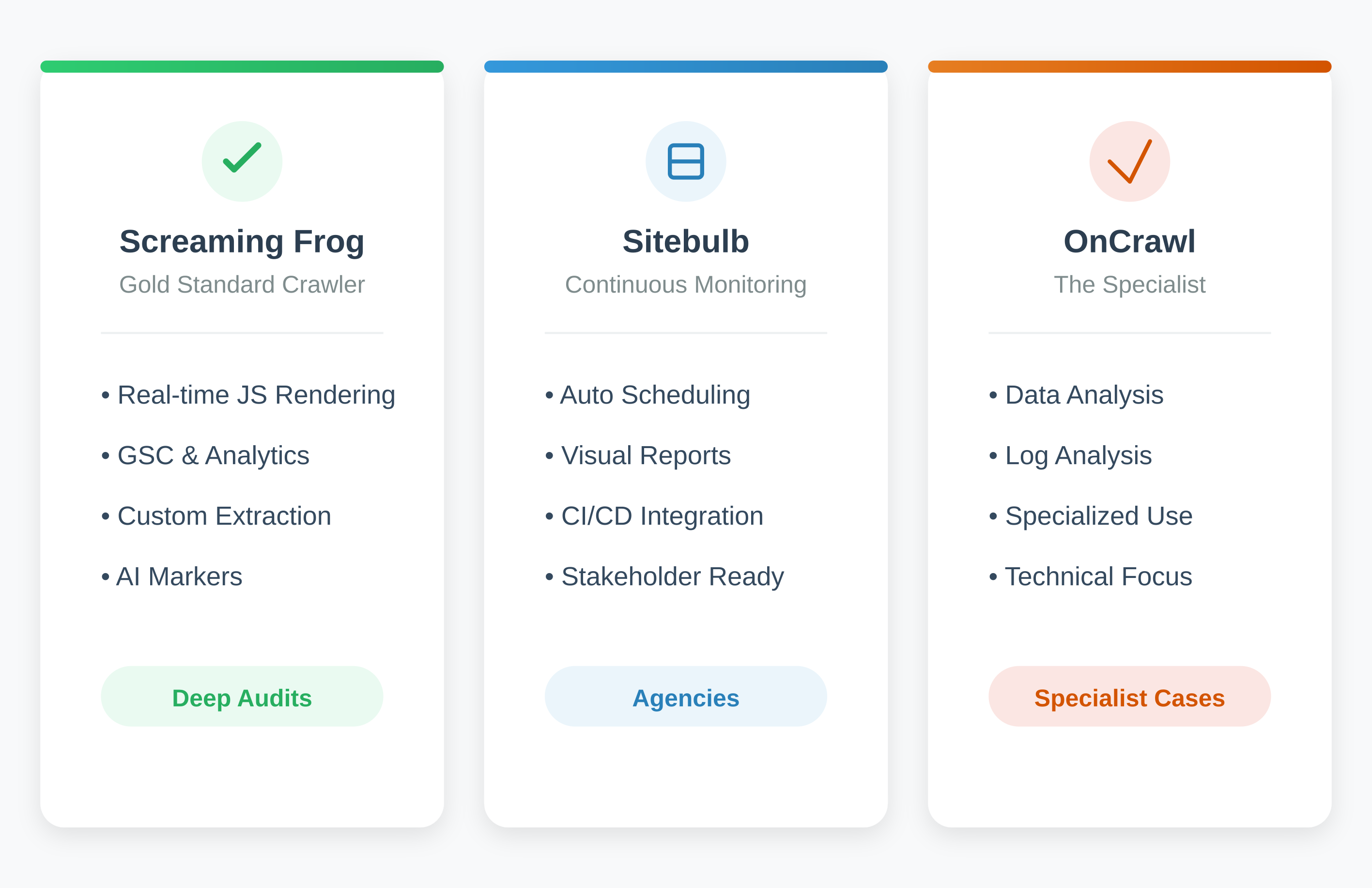
The landscape consolidated around a few dominant platforms, with specialists emerging for specific use cases.
Screaming Frog SEO Spider remains the gold standard for on-demand crawling. The 2026 version added real-time JavaScript rendering, GSC/Analytics integration, and custom extraction for AI-generated content markers. Use it for technical audits, migrations, and deep dives.
Sitebulb evolved into a continuous monitoring platform with automated scheduling, visual reports for non-technical stakeholders, and CI/CD integration. Good for agencies managing multiple clients.
OnCrawl specializes in log file analysis combined with active crawling showing exactly which pages search engines crawl, frequency patterns, and correlations between crawl activity and rankings. Built for enterprise sites with complex requirements.
Lumar (formerly DeepCrawl) targets enterprise SEO teams with multi-site crawling, custom alerting, CMS integration, and API access. Designed for organizations managing dozens or hundreds of domains.
SEMrush Site Audit integrated crawling into its broader platform. Not as deep as specialized tools, but convenient if you're already in the SEMrush ecosystem.
Botify positions itself as an enterprise SEO platform with ML-powered insights, crawl data segmented by business value, and real-time alerts. Built for teams with dedicated technical resources.
Integration with Automated Workflows
In 2026, crawling tools aren't standalone systems they're baked into automated content pipelines.
Pre-publication validation. Before content goes live, tools check internal link accessibility, schema correctness, mobile rendering, and Core Web Vitals projections. Platforms like LeafPad integrate these checks directly into publishing workflows blocking publication until crawlability requirements are met.
Post-publication monitoring. After publishing, crawlers track time to first crawl, indexing status, rendering success, and structured data recognition. This feedback loop lets teams iterate quickly.
Continuous health monitoring. Tools run in the background alerting teams to sudden crawl error spikes, new redirect chains, crawl frequency drops, and indexed page losses. Crawling shifts from periodic audit to operational monitoring.
Choosing Without Overcomplicating
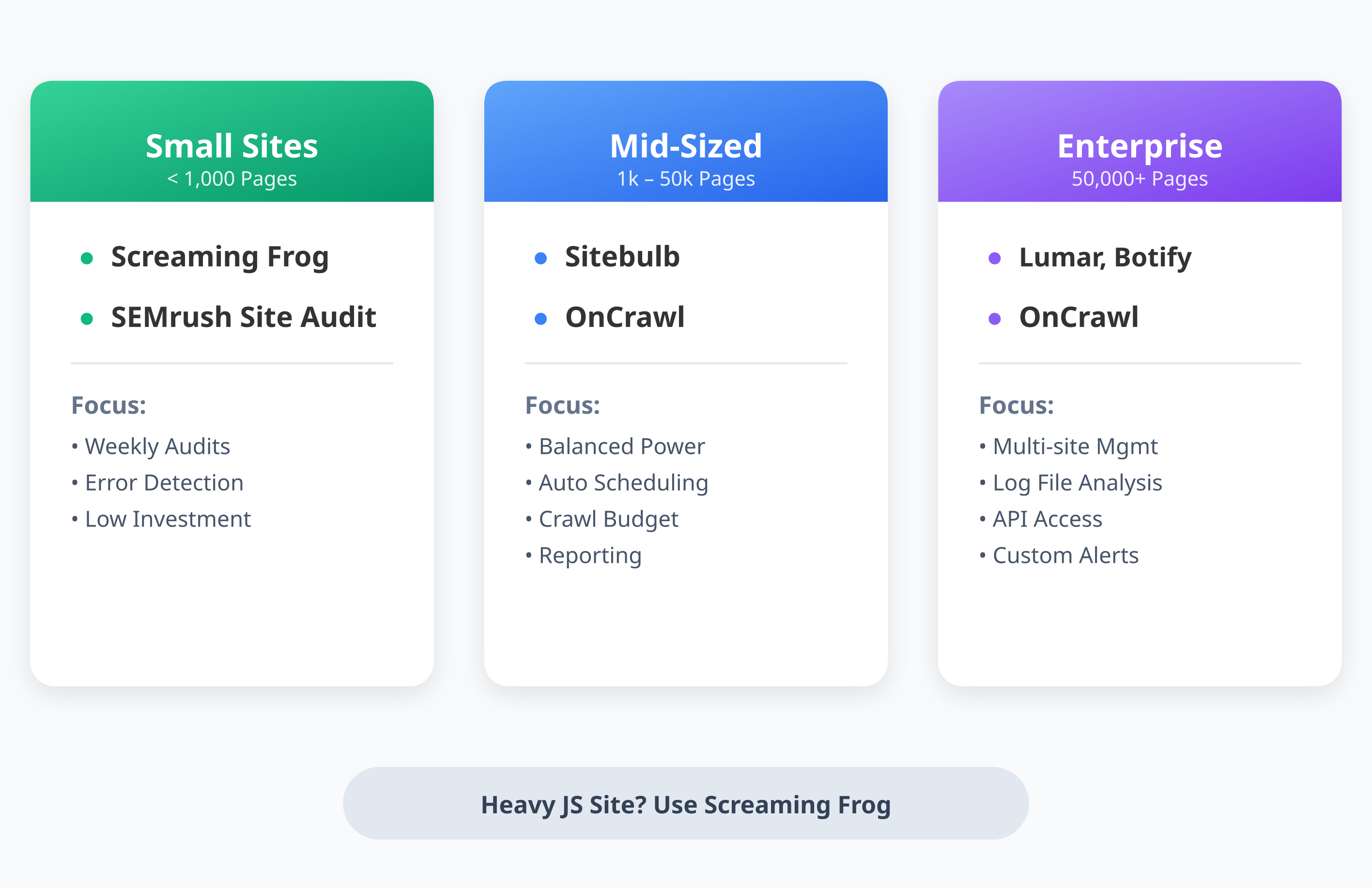
Not every site needs enterprise infrastructure.
Small sites (under 1,000 pages): Use Screaming Frog or SEMrush Site Audit for simple weekly audits and basic error detection. Don't over-invest.
Mid-sized sites (1,000–50,000 pages): Sitebulb or OnCrawl balance power with usability. You need automated scheduling, crawl budget optimization, and stakeholder-friendly reporting.
Enterprise (50,000+ pages): Lumar, Botify, or OnCrawl. You need multi-site management, log file analysis, custom alerting, and API access. The investment pays off through issue prevention.
Heavy JavaScript: Screaming Frog (with rendering) or Lumar. You need full rendering, comparison of rendered vs. raw HTML, and validation that crawlers see your content.
Programmatic SEO: OnCrawl or Botify. You need crawl budget optimization, template segmentation, duplicate content detection, and indexing rate monitoring across page types.
The Usual Suspects: Common Issues
Even with good tools, the same problems keep appearing.
Crawled but not indexed. Google reads the page but decides it's not valuable enough. Fix by improving content depth, strengthening internal links, removing near-duplicates, and adding structured data.
Slow crawl rate. Google limits visits based on server performance and perceived value. Improve response times, optimize Core Web Vitals, reduce low-value pages, and signal freshness via XML sitemaps.
JavaScript rendering failures. Critical content only appears after execution, and the renderer times out. Implement SSR or dynamic rendering. Put critical content in initial HTML. Test with Google's tools.
Orphaned pages. Pages exist but have no internal links pointing to them. Audit your structure, create topic clusters, use XML sitemaps as backup, and consider automated internal linking like LeafPad's system.
Redirect chains. Multiple hops slow crawling and waste budget. Audit chains, update internal links to final URLs, consolidate to single-hop, and monitor after site changes.
What's Next: Predictive Crawling
The 2026 cutting edge is predictive analytics. Next-generation tools use ML to predict which pages get crawled next, forecast indexing timelines, identify content patterns correlated with higher crawl frequency, and recommend optimal publication timing.
This shifts crawling from reactive diagnosis to proactive optimization. SEO automation platforms are beginning to embed these models directly into content workflows.
The Bottom Line
Crawling tools graduated from nice-to-have utilities to essential infrastructure. Sites that ignore crawlability face systematic disadvantages: slower indexing, reduced crawl frequency, lower visibility in AI search results, and wasted budget on low-value pages.
The tools are more accessible than ever. Whether you're a solo founder or an enterprise team, there's a solution that fits. The key is integration embedding crawlability into your content process rather than bolting it on afterward. Platforms like LeafPad demonstrate this by building validation directly into publishing.
If you're serious about SEO in 2026, crawling infrastructure isn't optional. It's the foundation everything else sits on.
Published with LeafPad