
SEO in 2026 has moved past manual optimization. Search algorithms process millions of signals per query, and AI systems evaluate content at a depth that makes old-school keyword stuffing feel like archaeology. The question isn't whether you need SEO tools it's whether the ones you have can actually keep up.
If you're still researching keywords by hand or writing meta descriptions from scratch, you're operating at a loss. The platforms worth using now don't just save time. They change what a small team can pull off, letting you scale organic traffic without scaling headcount.
This is what's actually working right now, how these tools differ from what came before, and which one fits your situation.
What "Automated" Actually Means Now
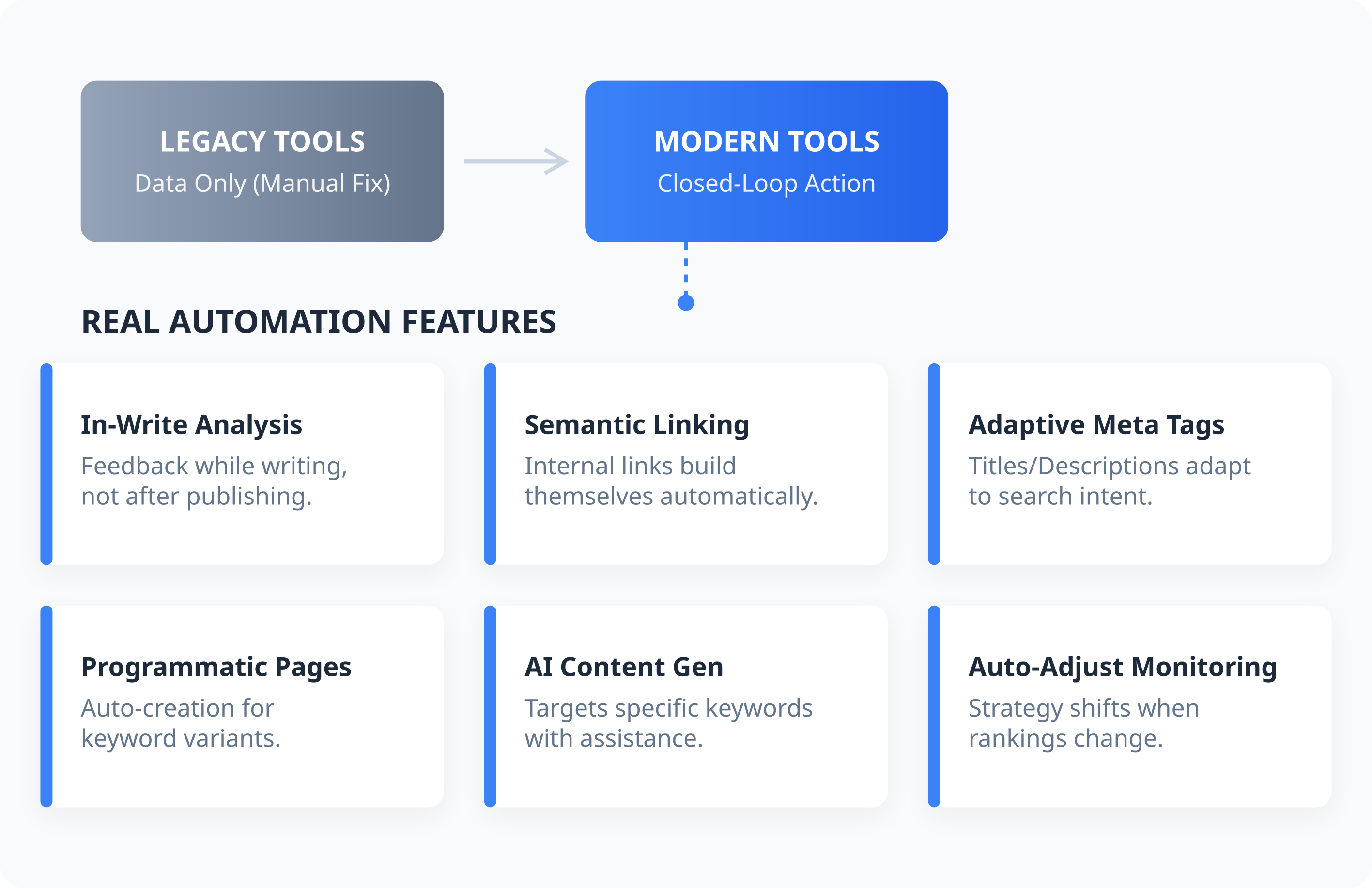
Legacy tools like Moz and SEMrush gave you data. You still had to interpret it and implement changes yourself. Modern tools close that loop.
Real automation now means:
- Content analysis while you write, not after you publish
- Internal linking that builds itself based on semantic relevance
- Meta tags that generate and adapt based on search intent
- Programmatic page creation for keyword variants
- AI-assisted content generation that targets your keywords
- Monitoring that actually adjusts when rankings shift
The useful tools don't just tell you what to do. They handle most of the implementation. For more on how this reshapes the industry, see SEO Automation in 2026: The New Standard for Scaling Traffic.
The Tools Worth Considering
LeafPad
LeafPad takes a different approach. Instead of bolting SEO onto an existing content process, it builds content creation, publishing, and optimization into one workflow.
It handles AI content creation with keyword targeting built in, internal linking across your content graph, real-time SEO scoring as you write, and programmatic SEO for location pages and product variations. It publishes under your main domain's /blogs directory, which consolidates authority. Deployment doesn't require site rebuilds.
This is for SaaS companies, content teams, and founders who want to publish optimized content without technical dependencies. The difference is the publishing-first approach. Most tools optimize what you've already made. LeafPad creates optimized content from scratch, which avoids the optimization debt that piles up when teams publish first and optimize later or never. If you're looking at alternatives to traditional CMS platforms, WordPress Alternative 2025: Why LeafPad is Lighter, Faster & Auto-Publishes Content explains the architecture.
Clearscope
Clearscope remains one of the best options for optimizing existing content against top-ranking competitors. The 2026 version has deeper semantic analysis and better integration with AI writing assistants.
It grades content against SERP competitors with real-time suggestions, recommends keywords and topics based on semantic relevance, scores readability, and integrates with Google Docs and WordPress for in-editor optimization.
This is for content teams optimizing existing articles or creating content in traditional CMS environments who want data-driven guidance without full publishing automation. The catch: Clearscope doesn't automate publishing, internal linking, or technical SEO. You still need separate tools for those.
Surfer SEO
Surfer has grown from a keyword density analyzer into a full on-page SEO platform. The 2026 updates include better AI content generation and more sophisticated SERP analysis.
The Content Editor gives real-time optimization scoring based on the top 20 SERP competitors. It generates content outlines from target keywords. The AI assistant (Surfy) generates optimized content sections. It suggests internal links based on existing content and includes a SERP Analyzer for understanding ranking patterns.
This is for SEO agencies and in-house teams managing multiple sites who need detailed on-page guidance and competitive analysis. Surfer provides excellent analysis but still requires manual implementation. The content editor helps you optimize as you write, but publishing and technical SEO need separate workflows.
Frase
Frase combines research, AI generation, and optimization into one workflow designed to speed up content production while maintaining SEO quality.
It generates AI content briefs from target keywords and SERP analysis, incorporates competitor analysis and semantic relevance into content generation, identifies "People Also Ask" opportunities, scores optimization based on top-ranking content, and includes team collaboration features for editorial workflows.
This is for content marketing teams producing high volumes of blog content, particularly for informational keywords and topic clusters. The trade-off: Frase's AI content generation can feel formulaic. It works best for drafting and research rather than final content. Human editing remains essential.
Page Optimizer Pro (POP)
POP focuses on signal optimization rather than content creation. Its automation centers on identifying and fixing technical SEO issues.
It compares on-page signals to top-ranking pages, recommends and generates schema markup, suggests title tag and meta description optimizations, identifies internal linking opportunities, and runs technical SEO audits.
This is for technical SEOs and agencies working on competitive keywords where small optimization differences move rankings. The catch: POP requires more SEO knowledge than LeafPad or Surfer. It provides data and recommendations but expects you to understand the implications.
MarketMuse
MarketMuse approaches automation from the strategic level. It helps teams identify content gaps, prioritize topics, and build comprehensive coverage across subject areas.
It plans content by identifying topic opportunities and competitive gaps, generates briefs based on topic modeling, analyzes existing content with improvement recommendations, analyzes competitive strategy, and clusters topics for building semantic authority.
This is for enterprise content teams and publishers building comprehensive topical authority across large subject areas. The limitation: MarketMuse's enterprise pricing and complexity make it overkill for smaller teams. It requires significant investment and organizational buy-in.
What Actually Matters When Choosing
Publishing Integration vs. Standalone Analysis
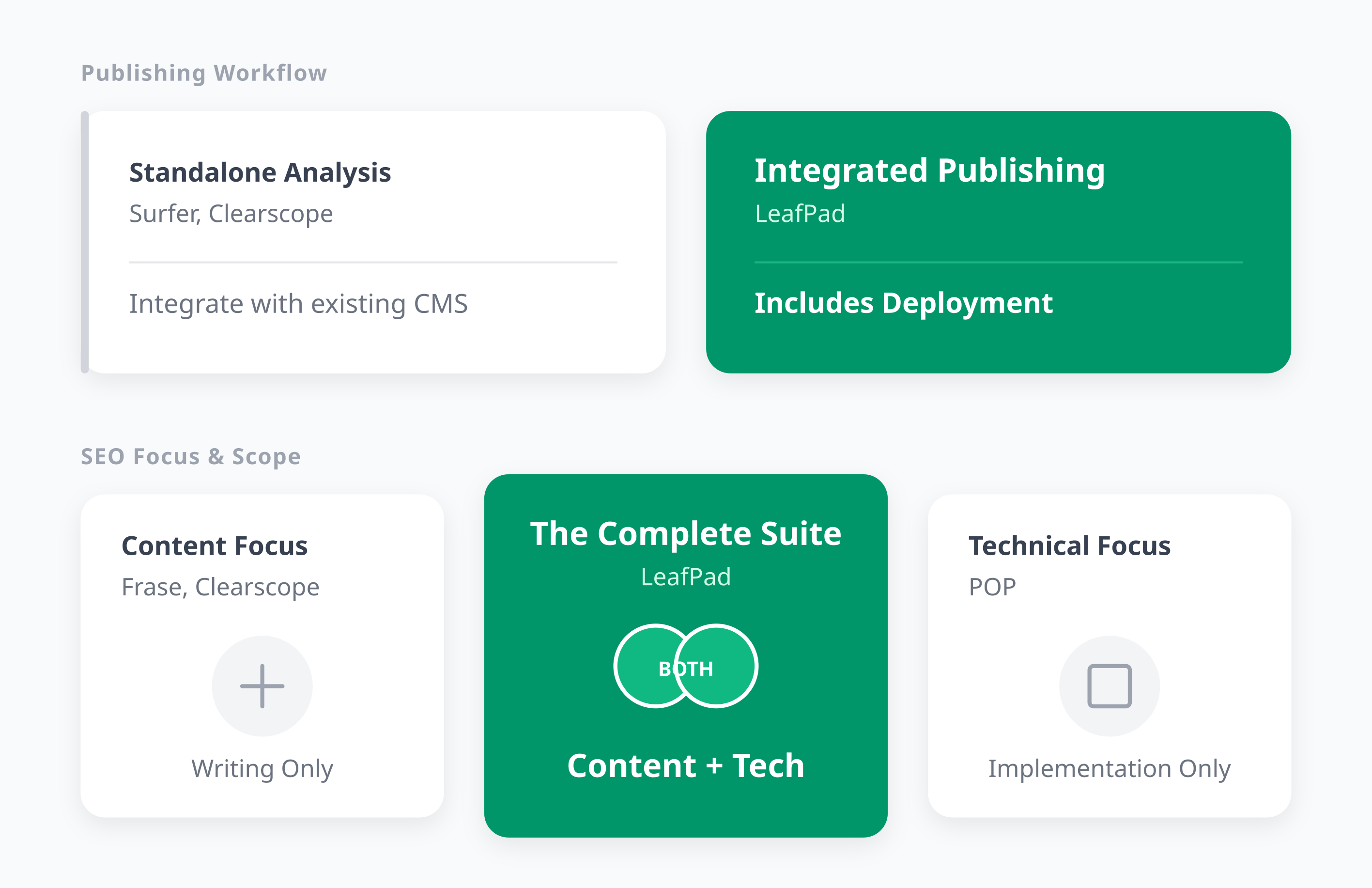
LeafPad includes content publishing in the workflow. Surfer and Clearscope integrate with existing platforms but don't handle deployment.
Do you want SEO automation that includes publishing, or do you already have a CMS you're committed to? If you're exploring how platforms compare, SEO-Automated Blog Platforms vs Traditional CMS 2026 lays out the differences.
Technical SEO vs. Content Optimization
Some tools focus on content (Frase, Clearscope). Others emphasize technical implementation (POP). LeafPad combines both.
Are your biggest gaps in content quality or technical implementation?
AI Content Generation Quality
Most modern SEO tools include AI writing, but quality varies. Some generate generic content requiring heavy editing. Others produce drafts that need only light refinement.
Will you use AI for final content, drafts, or research assistance? How much human editing are you willing to do?
Programmatic SEO Capabilities
If you need to scale content across hundreds or thousands of keyword variations location pages, product comparisons programmatic SEO automation matters.
Do you need similar content at scale, or are you primarily publishing unique articles? LeafPad handles programmatic content well; others don't support it. For teams exploring large-scale strategies, How Auto-Generated Location Pages Drive Massive Local SEO Revenue Growth shows the revenue impact.
Internal Linking Automation
Many tools suggest internal links. Few actually implement them automatically.
How important is automatic internal linking? Will you manually add links, or do you need this automated? LeafPad's approach is detailed in Automatic Internal Linking: Why Automation Wins.
Starting with Automated SEO Tools
Adopting these tools means restructuring content workflows, not just picking software.
Find your bottleneck
Where do you spend the most time? MarketMuse or Frase help with research and planning. LeafPad or Frase reduce writing time. Clearscope and Surfer speed up optimization. LeafPad automates technical elements; POP diagnoses issues.
Integrate before you scale
Get your tool working with a small batch of content before committing to high-volume production. Understand strengths and limitations. Develop editorial standards for AI-assisted content. Build trust in automation quality before scaling.
Combine automation with humans
Use automation for data analysis, repetitive optimization tasks, structural elements like meta tags and internal links, and scaling proven templates. Reserve human effort for strategic decisions, creative differentiation, quality control, and complex topics requiring expertise.
Measure what matters
Don't just track rankings and traffic. Connect SEO efforts to business outcomes. The useful tools help you understand which topics drive conversions, how organic search contributes to pipeline, and where automation delivers ROI versus where manual work still matters.
Where This Is Going
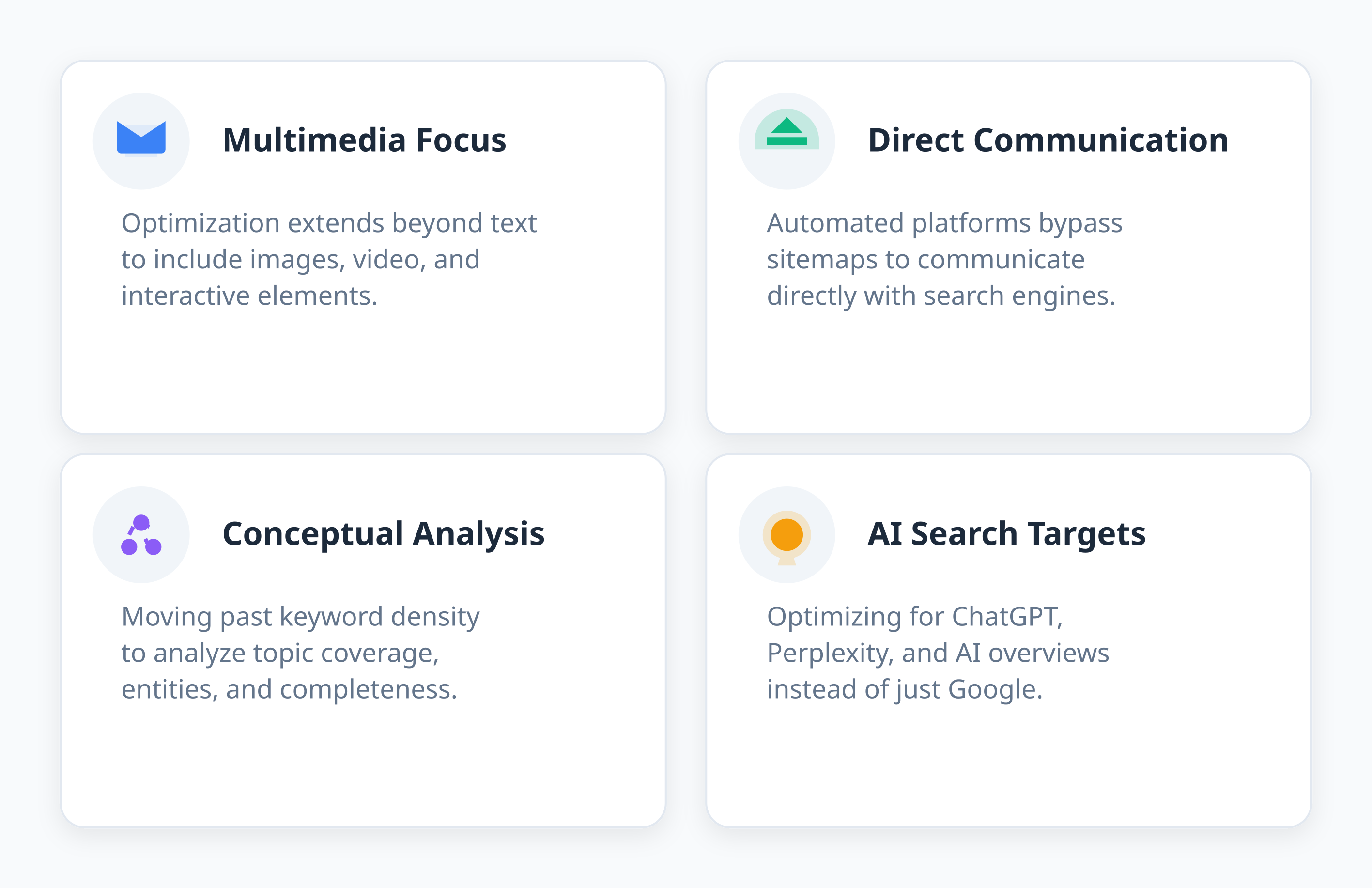
A few trends are reshaping what these tools can do:
Tools are starting to optimize images, video, and interactive elements, not just text. Rather than submitting sitemaps and waiting, automated platforms are beginning to communicate directly with search engines about new content and priority pages. Modern tools analyze topic coverage, entity relationships, and conceptual completeness rather than just keyword density. Tools now optimize for ChatGPT, Perplexity, and other AI search systems, not just Google AI Search SEO: How to Rank in ChatGPT & AI Overviews explores this. AI systems are starting to predict algorithm updates and adjust content proactively.
Which One Fits Your Situation
Choose LeafPad if you want end-to-end automation from content creation through publishing, you're building or scaling a SaaS blog, or you want to consolidate tools into one publishing-focused platform.
Choose Surfer or Clearscope if you have an established workflow and CMS you're committed to, and you primarily need optimization guidance for writers in traditional editors.
Choose Frase if you're producing high volumes of informational content and want AI assistance with research and drafting, particularly for question-focused keywords.
Choose Page Optimizer Pro if you're working on highly competitive keywords where technical optimization details move rankings, and you have in-house SEO expertise.
Choose MarketMuse if you're building comprehensive topical authority across large subject areas and have enterprise resources for strategic content planning.
The common thread: automation isn't about replacing human judgment. It's about scaling what works while eliminating repetitive tasks that slow teams down. The teams winning organic search now aren't necessarily the ones with the biggest budgets. They're leveraging automation to publish strategically optimized content faster and more consistently than competitors still optimizing manually.
Whatever you choose, the goal is the same: create content that serves user intent, communicates expertise, and earns visibility without burning out your team.
Published with LeafPad