SEO in 2026 feels different. The old playbook stuffing keywords, buying backlinks, obsessing over PageSpeed scores doesn't move the needle like it used to. Now you're dealing with two audiences: the traditional crawler and the large language model. They don't read the same way.
This guide covers what's actually working. Whether you're a founder, a marketer, or just trying to get your content seen, these are the workflows helping people rank higher and show up in AI citations without needing a full-time SEO team.
Build Domain Authority Through Consistent Publishing
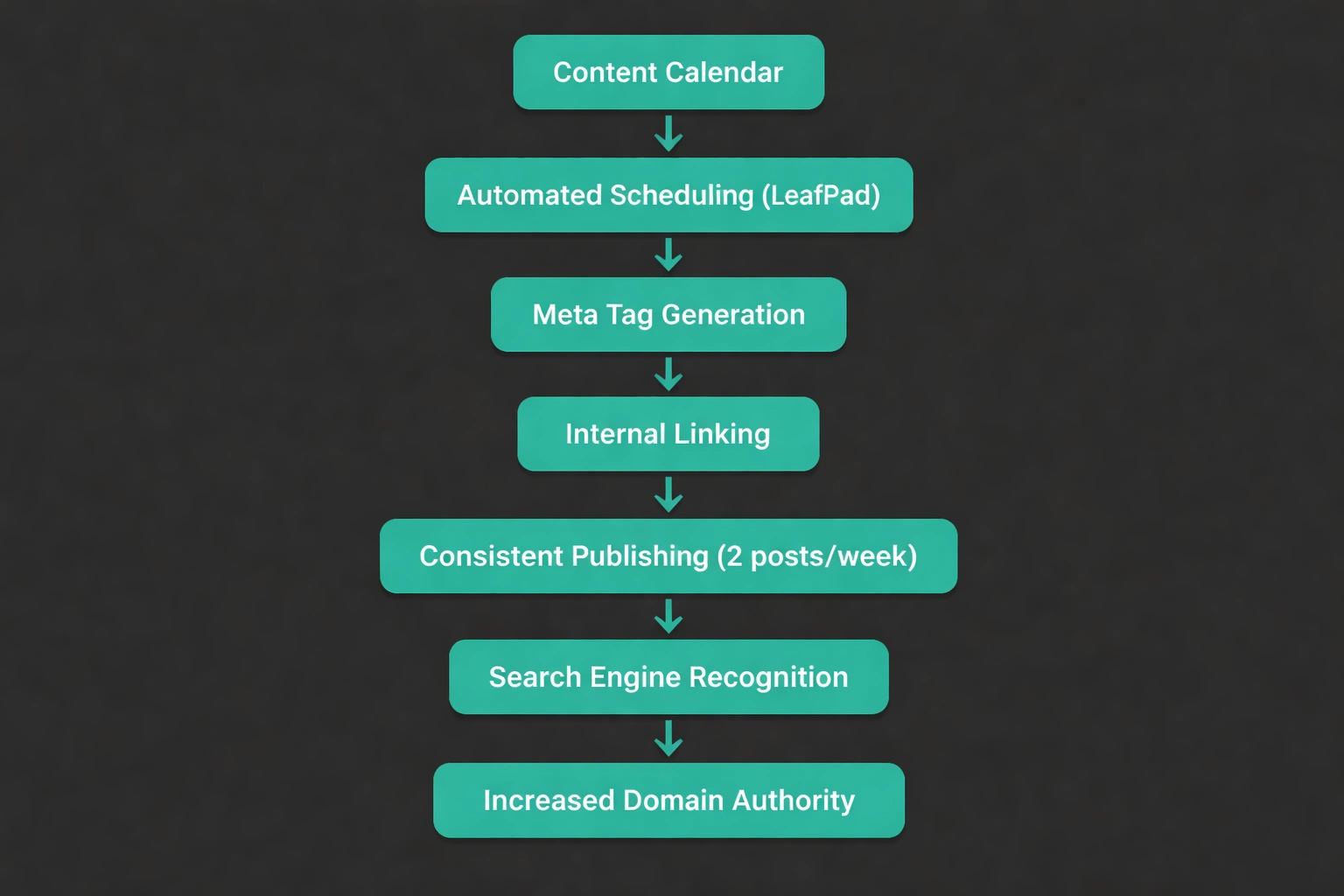
Domain authority grows when search engines see regular, high-quality updates. It’s not magic; it’s just showing up.
The best approach is a cadence you can actually sustain. Two good posts a week beats posting ten times in a single week and then vanishing for three months. Search engines reward consistency because it proves you're not just chasing trends.
I've found LeafPad's automatic publishing features helpful for maintaining momentum without burning out. The automation handles scheduling, meta tag generation, and internal linking, which removes the friction of publication so you can focus on the writing itself.
Keep an eye on how fast your new content gets indexed. Fresh domains need to publish more often initially to build trust. Established sites can maintain rankings with fewer, deeper updates.
Optimize for AI Search and Traditional SERPs Simultaneously
Search in 2026 means optimizing for Google and for AI answer engines like ChatGPT, Perplexity, and Claude. They use different discovery mechanisms, but both reward clarity, structure, and factual accuracy.
Traditional SEO needs optimized title tags, meta descriptions, and header hierarchies. AI search prioritizes passage-level relevance and content that answers questions directly without fluff.
The strategy that works for both: write for humans, but structure it for machines. Start each section with a concise 40-60 word answer to the implied question. Then expand with evidence and examples. This satisfies both ranking systems.
Implement schema markup for articles, FAQs, and how-to content. It helps you show up in featured snippets and AI answer boxes. I use LeafPad's AI citation tracking tools to monitor which content gets referenced by language models so I can optimize accordingly.
Your AI search visibility strategy should include creating llms.txt files and structuring content for easy passage extraction. These technical steps help AI systems understand context and attribute your content accurately.
Master Internal Linking Architecture
Internal links distribute authority across your site. A well-designed internal linking structure can increase organic traffic by 40-60% without a single external backlink. That's not a small number.
Every new page should link to 3-5 relevant existing pages and receive links from 2-4 established articles. This creates a web of topical relevance.
Prioritize linking to pillar content, conversion pages, and recent posts that need a ranking boost. And avoid orphan pages content with no internal links pointing to it essentially doesn't exist to search engines.
Use descriptive anchor text. "Guide to local SEO strategies" works better than "click here" or exact-match keyword stuffing. Natural anchors pass more value and risk fewer penalties.
LeafPad's automatic internal linking system analyzes your content library to suggest contextually relevant connections. This eliminates the manual hunt for links while keeping patterns natural.
Track internal link performance by watching how authority flows through your architecture. Pages receiving more internal links generally rank faster, especially when those links come from topically related content.
Conduct Strategic Keyword Research for 2026
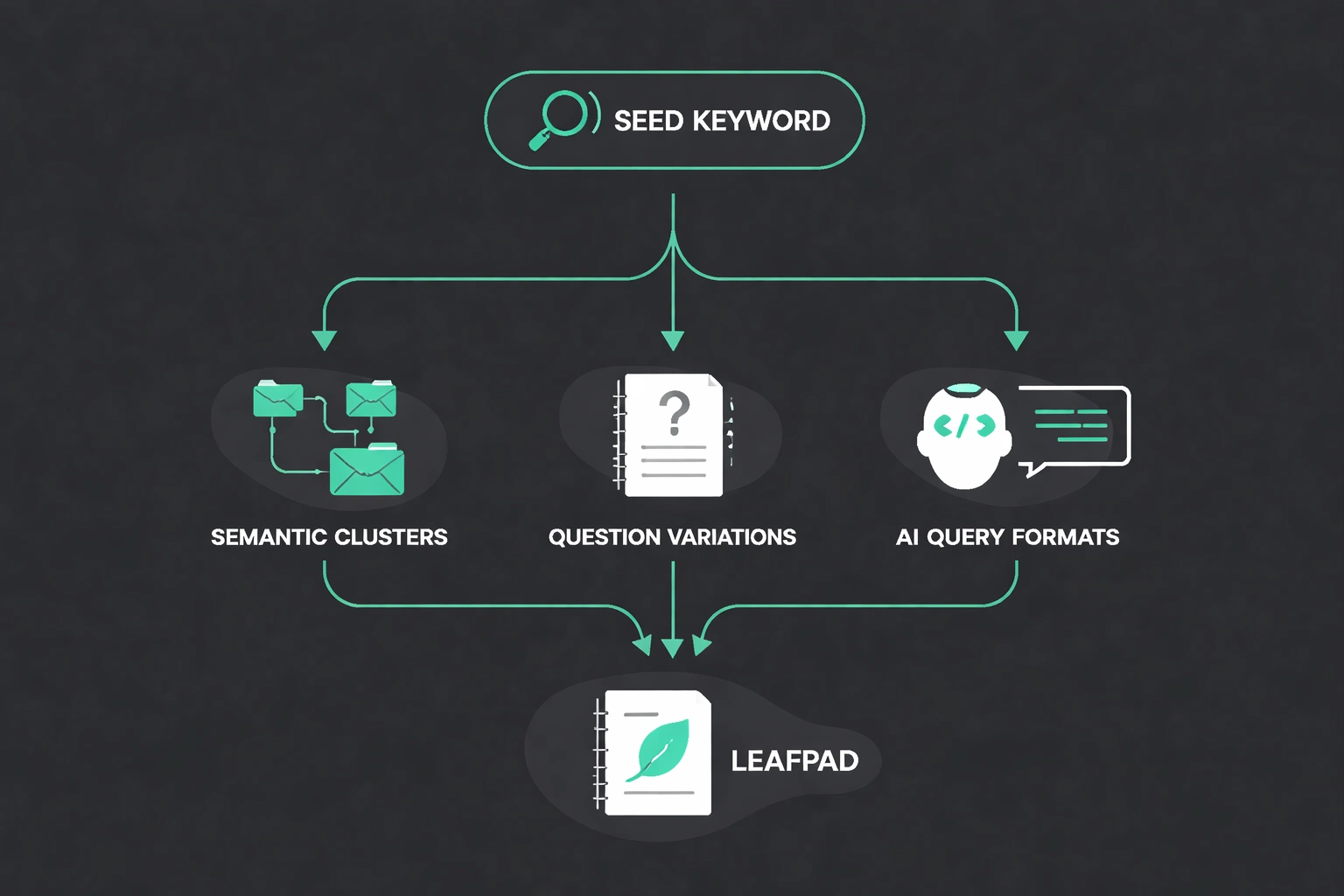
Keyword research in 2026 goes beyond search volume and competition scores. You have to consider semantic clusters, question patterns, and AI query formats. Modern engines understand intent, not just exact phrases.
Start with seed keywords relevant to your niche. Expand into question variations, comparisons, and problem-solving formats. "How to improve local rankings" and "local SEO strategy guide" target the same intent but capture different traffic.
Use LeafPad's keyword research tools to identify semantic clusters groups of related terms that collectively define a topic. Targeting clusters builds topical authority faster than chasing individual keywords.
Analyze intent by looking at what's currently ranking. Are they tutorials? Comparisons? Product pages? Match your format to what users actually want.
Don't ignore conversational query patterns from voice search and AI assistants. Queries like "what's the best way to optimize for local search" need different structures than traditional keyword searches.
Look at search volume trends over time. Keywords gaining momentum offer better opportunities than declining terms, even if current volume is lower. Position early on rising trends.
Implement Real-Time Content Refresh Strategies
Content decay the gradual loss of rankings as information becomes outdated affects every site. Statistics change, best practices evolve, competitors publish newer resources.
Establish a content audit schedule. Review existing posts quarterly. Update statistics, refresh examples, add new sections.
Focus your energy on posts that used to rank well but dropped, high-potential keywords where you rank on page two, and conversion-focused content. Don't waste time refreshing low-performing content that never gained traction.
When updating, modify the introduction to reflect current context. Expand sections that rank for additional keywords. Add internal links to newer content. These signals show search engines the page is actively maintained.
Use LeafPad's content refresh features to track which posts need updates based on ranking changes and traffic trends. This ensures no valuable content silently dies while you focus on new publication.
Technical refresh signals matter too. Update publication dates for substantial revisions. Regenerate meta descriptions. Validate structured data.
Automate SEO Workflows Without Sacrificing Quality
Manual SEO involves dozens of repetitive tasks: research, meta tag writing, internal link insertion, schema markup, scheduling, tracking. Automation eliminates the grunt work while preserving quality.
The key distinction: automate the process, not the creativity. Let systems handle technical implementation meta tags, link suggestions, scheduling while humans handle strategy, writing, and editorial judgment.
LeafPad's automated SEO tools handle real-time optimization tasks that used to consume hours weekly. The platform analyzes content as you write, suggests improvements, and implements technical requirements automatically at publication.
Set up automated indexing monitoring. Track how quickly new content gets discovered. Slow indexing often points to crawl budget or authority issues.
Use content calendar automation to maintain consistent publishing without manual scheduling overhead. Plan themes quarterly, create drafts monthly, let automation handle timing.
If you serve multiple geographic markets, monitor automated local SEO performance. Programmatic location pages need consistent optimization that can't be managed manually at scale.
Structure Content for Maximum Discoverability
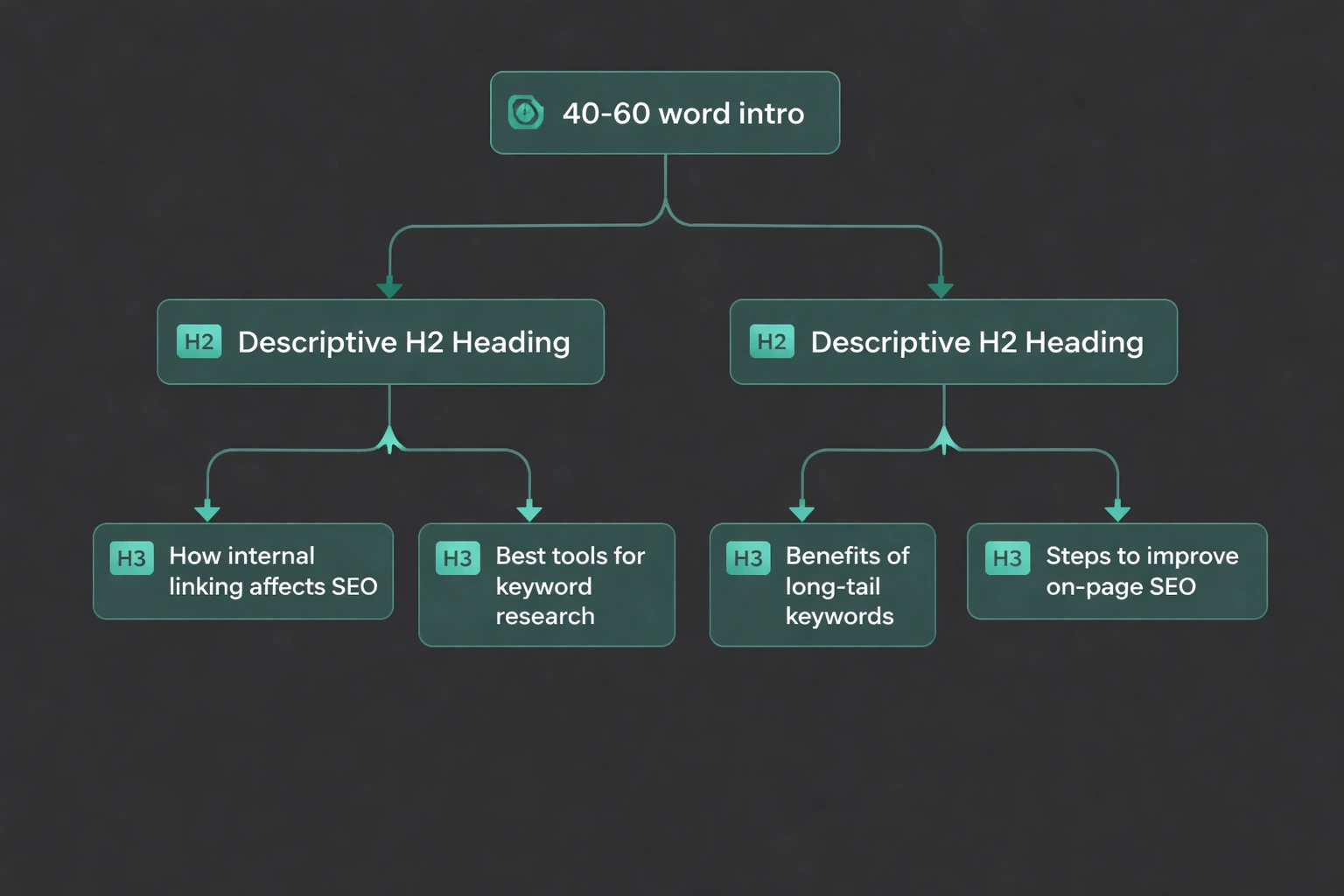
Content structure determines how search engines interpret and rank your pages. Well-structured content gets extracted for featured snippets, AI citations, and rich results.
Start every article with a 40-60 word paragraph that directly answers the primary query. This opening should make sense quoted in isolation because AI systems often extract exactly these passages for answer boxes.
Use descriptive H2 and H3 headings. "How internal linking affects SEO" works better than vague labels like "Strategy" or "Implementation." Descriptive headings help readers and algorithms understand organization.
Keep paragraphs under 4 sentences whenever possible. Dense text blocks reduce readability and make passage extraction harder for AI systems. Shorter paragraphs create natural breaking points for featured snippets.
Include structured data markup for articles, FAQs, and how-to content. It helps search engines understand context and qualifies you for enhanced search result displays.
Break complex topics into bulleted or numbered lists. Lists create scannable content that performs well in traditional search and AI answer generation. They also increase chances of position-zero featured snippet placement.
Measure What Actually Drives Growth
SEO metrics in 2026 extend beyond rankings and traffic. You need to track AI citation frequency, conversion attribution, and content lifecycle performance. Vanity metrics feel good but don't correlate with business outcomes.
Track these core metrics monthly: organic traffic growth, keyword ranking improvements, pages indexed vs. published, conversion rates from organic channels, and AI citation frequency.
Use proper measurement frameworks that connect SEO activities to revenue. Traffic growth means nothing if visitors don't convert. Focus on qualified traffic that matches your ideal customer.
Monitor direct vs. search traffic patterns to understand how brand awareness and SEO compound. Direct traffic growth often indicates successful SEO building long-term audience relationships beyond search dependence.
Track content performance over extended timeframes. Quality content typically takes 3-6 months to reach ranking potential. Premature optimization or abandonment wastes resources.
Measure AI citation frequency using specialized tracking tools that monitor when language models reference your content. This emerging metric indicates authority in AI-powered search systems.
Choose Modern Tools That Scale With You
The tools you choose determine workflow efficiency, insight quality, and implementation speed. Legacy tools built for 2020 SEO create friction with modern tactics.
Look for platforms offering automated internal linking, AI-powered content optimization, real-time indexing monitoring, and semantic keyword research. These features eliminate manual work while improving output quality.
Integrated platforms outperform point solutions for most teams. Managing separate tools for writing, optimization, publishing, and analytics creates friction and data silos. Unified platforms like LeafPad consolidate workflows while maintaining specialized capabilities.
Evaluate tools based on time savings. A tool with 100 features you'll never use provides less value than one handling your top five time-consuming tasks automatically. Focus on eliminating bottlenecks first.
Consider modern alternatives to legacy platforms built for outdated SEO paradigms. Tools designed for 2026 search natively support AI optimization and automated workflows.
Prioritize tools offering transparent pricing without hidden fees for essential features. Per-seat charges and usage limits create budget unpredictability as you scale.
Build Systems That Compound Over Time
The most effective search engine tip for 2026: think in systems, not tactics. Individual optimizations deliver temporary improvements. Systematic approaches create compounding growth.
Design content workflows that improve with scale. Each new post should strengthen existing content through internal links, topical clustering, and keyword expansion. This builds topical authority that helps all related content rank better.
Establish editorial standards that ensure consistent quality regardless of who creates content. Style guides, templates, and review processes prevent quality degradation as you increase frequency or add team members.
Document what works through experimentation and analysis. Successful tactics become repeatable processes. Failed experiments provide learning without permanent damage.
Use programmatic SEO techniques to scale proven content formats across keyword variations, locations, or use cases. Manual creation can't achieve the volume needed to dominate comprehensive keyword landscapes.
Invest in content infrastructure that removes publishing friction. The easier it is to create, optimize, and publish, the more consistently you'll execute your strategy. Consistency drives compounding returns.
Search engine success in 2026 comes from understanding modern ranking systems, implementing efficient workflows, and building content libraries that serve both human readers and AI discovery mechanisms. These tips provide the foundation for sustainable organic growth regardless of algorithm changes or new competitors.
Published with LeafPad