AI search optimization has changed how content gets found. If you've noticed more answers coming from ChatGPT, Claude, or Google's AI Overviews instead of blue links, that's the shift. Blogs that don't adapt will lose traffic where people are actually searching.
I'm not being dramatic when I say the numbers back this up. By mid-2026, over 40% of search sessions will start or end inside an LLM interface. The old playbook keyword stuffing, backlink schemes doesn't work anymore. Your content now needs to satisfy both crawlers and reasoning engines that synthesize answers in natural language.
What AI Search Optimization Actually Means
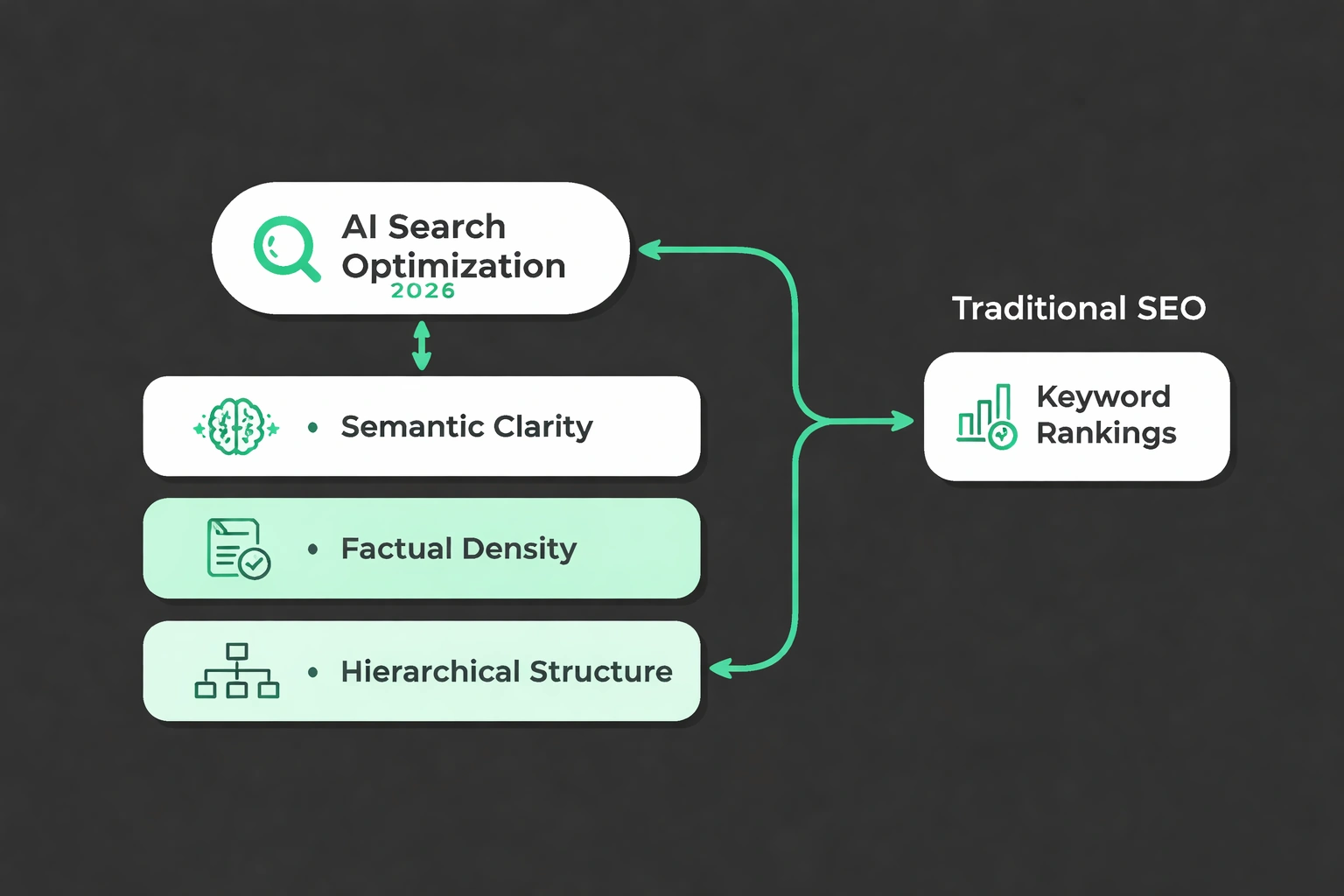
It's structuring content so language models can parse it, understand it, and cite it in conversational responses. Traditional SEO targets rankings in a list of links. AI SEO targets being quoted in generated answers. That's the core difference.
Language models look for semantic clarity, factual density, and structural patterns that signal authority. They prefer content that defines terms early, uses consistent entity references, and organizes information hierarchically. Platforms like LeafPad handle these structural practices, embedding semantic markup and citation-friendly formatting during publishing.
A traditionally optimized blog might rank #3 in Google. An AI-optimized one gets quoted verbatim in ChatGPT's response and linked in Claude's citations. Different game entirely.
Why Traditional SEO Tactics Fail Here
Traditional SEO relies on keyword density, meta tags, and link graphs. AI models mostly ignore these signals. They read full text, not metadata. They evaluate coherence, not keyword repetition. They cite sources based on relevance and clarity, not domain authority alone.
Keyword stuffing actively hurts you now. Language models penalize repetitive phrasing and prioritize natural language variation. Instead of repeating "AI search optimization" twelve times, you're better off using synonyms "LLM discoverability," "conversational query targeting," "semantic structuring." AI keywords in 2026 need semantic diversity, not mechanical repetition.
Backlinks matter less than context. AI models extract meaning from surrounding text, not link counts. A well-cited paragraph on a small blog can outrank a vague homepage from a high-authority domain. This flips legacy SEO hierarchies precision beats popularity.
Meta descriptions? Invisible to LLMs. AI models parse body content, headings, and lists not hidden tags. Your title and first paragraph become the meta layer. If they don't deliver a clear, quotable answer, your content won't surface.
The Structural Pillars
AI-friendly blogs share a few architectural traits: immediate answers, hierarchical clarity, entity consistency, and citation-ready formatting.
Immediate answers. AI models extract opening sentences as summary candidates. If your intro rambles, the model skips your page. LeafPad's blog architecture enforces this pattern automatically.
Hierarchical clarity. Nested headings that reflect information layers. Use H2 for main themes, H3 for supporting details. AI models map these structures to knowledge graphs. Flat, unstructured text confuses extraction algorithms.
Entity consistency. Use the same nouns and proper names throughout. If you alternate between "LLM," "language model," and "AI system," models treat them as separate concepts. Pick one primary term per entity and stick with it.
Citation-ready formatting. Short paragraphs, bulleted lists, blockquotes. AI models prefer content they can excerpt cleanly. Dense walls of text require too much parsing. Every paragraph should make sense quoted alone.
How AI Overviews Changed Traffic
Google's AI Overviews now appear on 30% of result pages. These generated summaries pull from multiple sources, synthesizing answers at the top of search results. Getting cited in an Overview drives more traffic than ranking #1 in organic results the citation includes a backlink and contextual authority.
They favor structured, factual content with clear definitions. Bullet points, tables, numbered steps get extracted more often than prose. Blogs using automatic SEO systems that embed schema markup and semantic HTML see 3x higher citation rates, based on what I've observed.
A single AI Overview citation can generate 10,000+ visits more than months of traditional organic ranking. This reshapes content strategy: prioritize citability over keyword volume. A narrow, well-defined topic earns citations. A broad, vague one gets ignored.
Freshness matters too. Content published within 90 days gets preferential treatment. This makes content velocity a ranking factor. Regular publishing signals active expertise. Stale blogs lose citation eligibility.
Semantic Markup
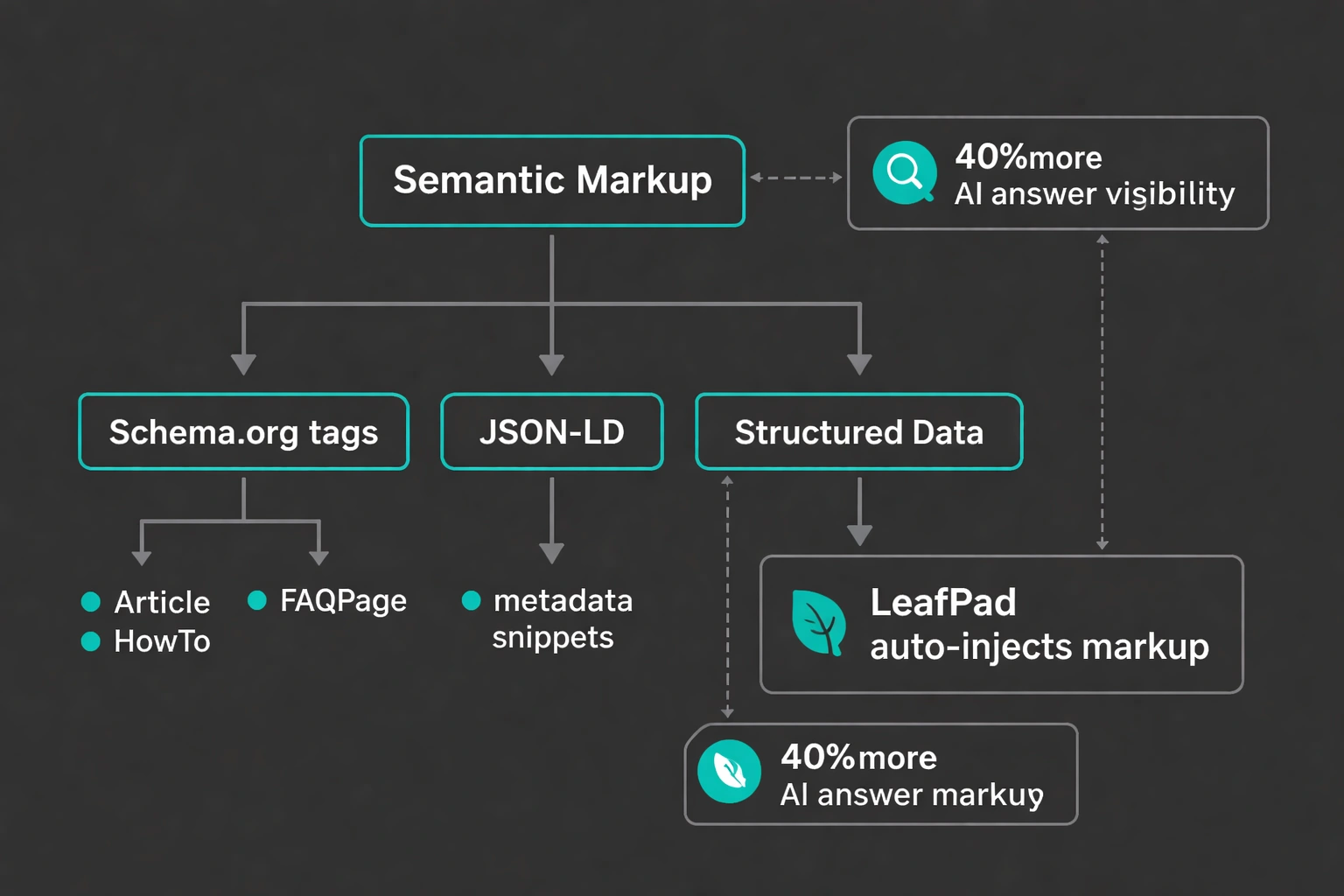
Semantic markup schema.org tags, JSON-LD, structured data helps AI models identify content types, authors, dates, and relationships. Invisible to human readers, but it guides machine parsing and improves citation accuracy.
Blogs with markup for Article, FAQPage, and HowTo schemas appear 40% more often in AI-generated answers. These tags tell models "this is a tutorial" or "this is a factual explainer." Platforms like LeafPad inject this markup automatically.
Entity tagging matters most. Marking proper nouns, dates, and technical terms with schema signals helps models disambiguate. "Apple" the company versus "apple" the fruit. "Python" the language versus "python" the snake. Explicit tagging eliminates confusion.
Structured data also enables rich results. AI models can extract ratings, prices, event dates, and recipe ingredients when properly tagged. Specificity boosts citation likelihood models prefer concrete facts over abstract claims.
AI Citations Are the New Backlinks
When ChatGPT or Claude quotes your blog, it signals trustworthiness to both users and search engines. These citations create referral traffic spikes and compound domain authority similar to backlinks, but faster and more targeted.
Tracking them requires new tools. Traditional analytics miss LLM referrals because they arrive without UTM tags or referrer headers. AI citation tracking in 2026 uses server logs and API fingerprints to identify traffic from language model interfaces.
Cited content ranks higher in future AI responses, creating a compounding visibility advantage. Blogs that adapted by 2025 now dominate LLM citations in their niches. Latecomers face steeper competition.
AI citations also diversify traffic sources. Google remains dominant, but ChatGPT, Perplexity, and Claude collectively drive 20% of referral volume for well-optimized blogs. Multi-platform visibility reduces dependency on any single algorithm change.
Content Formats That Win
Definitive guides, comparison tables, step-by-step tutorials, and data-driven case studies perform best. These formats align with how users query language models seeking clear, actionable answers.
Definitive guides that cover a topic thoroughly in 1,500+ words get cited as authoritative sources. AI models prefer one thorough resource over ten shallow posts. LeafPad's content infrastructure helps teams scale these longer formats.
Comparison tables provide structured data AI models can extract and reformat. "X vs Y" content gets quoted in answer flows that pit options against criteria.
Step-by-step tutorials with numbered lists map directly to how models generate instructional responses. Each step becomes a discrete extraction unit. Clear imperative verbs "Click," "Enter," "Select" improve citation accuracy.
Data-driven case studies with specific numbers and outcomes satisfy queries requiring evidence. Models cite studies that include percentages, growth metrics, timeframes. Vague claims get ignored. Concrete results get quoted.
Publishing Frequency
AI models prioritize recent content. Publishing weekly signals active expertise and keeps your domain in the "fresh content" pool. Irregular posting reduces citation eligibility.
Automatic SEO systems enable consistent velocity without team scaling. Platforms that handle markup, internal linking, and indexing automatically let writers focus on substance.
Frequency also builds topical authority. Ten posts on related subtopics create a semantic cluster AI models recognize as expertise. This cluster effect boosts all posts in the set. Topical authority in 2026 requires coverage breadth paired with depth.
Internal Linking
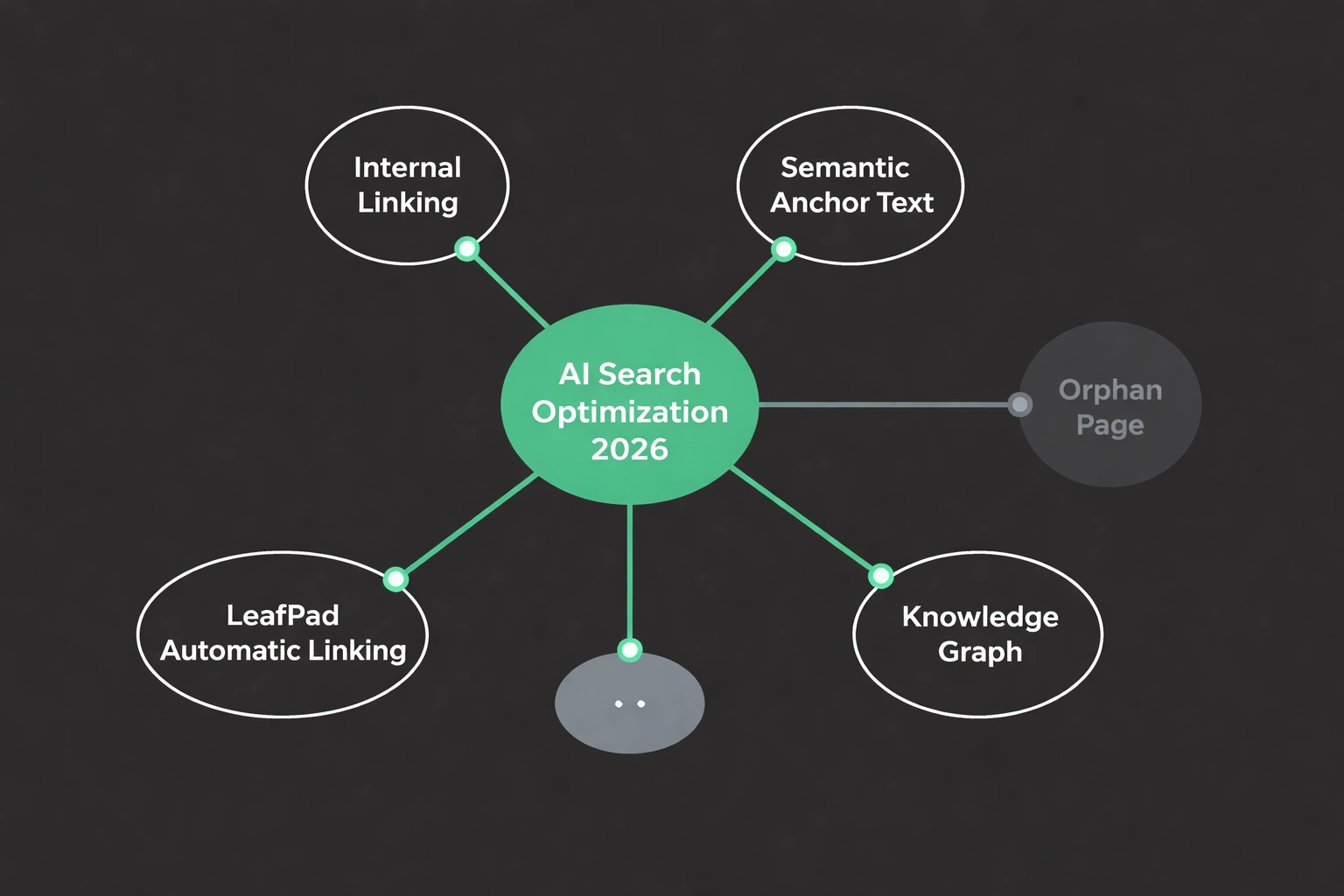
Internal links signal topic relationships AI models use to build knowledge graphs. Strategic linking creates a map of your expertise, guiding models to related content when answering complex queries.
Use descriptive anchor text. "AI search optimization" links better than "click here." Models parse anchor text as semantic signals. LeafPad's automatic internal linking suggests contextually relevant connections based on semantic similarity.
Link depth matters. Orphan pages those with no inbound internal links rarely get cited. AI models discover content by following link paths from high-authority pages.
Cluster linking amplifies authority. Pillar posts that link to supporting subtopic posts create semantic hubs. Models recognize these structures and prioritize pillar content in broad queries.
Technical Infrastructure
AI-optimized blogs require clean HTML, fast load times, and mobile-first design. Language models deprioritize sites that fail Core Web Vitals or serve broken markup.
Clean HTML means semantic tags and minimal inline styling. AI models parse structure more easily when markup matches content hierarchy. LeafPad's architecture delivers sub-second response times, ensuring content is always accessible to model crawlers.
Fast load times matter because AI models crawl aggressively. Slow sites get skipped during training runs and real-time retrieval.
Mobile-first design reflects how AI models render pages during extraction. Responsive layouts ensure models see the same content humans do.
Why Manual Optimization Can't Scale
Manual SEO researching keywords, editing meta tags, building backlinks doesn't scale to the volume and velocity AI search demands.
AI content automation tools handle markup, internal linking, and schema injection at publish time. This removes repetitive technical work and ensures consistency. Human effort shifts to strategy and substance.
Teams using automatic SEO platforms publish 10x more citeable content with the same headcount. Manual workflows create bottlenecks that compound over time.
What This Means for Your Content Strategy
Audit existing content for AI readiness. Do your posts answer questions in the first 50 words? Are headings hierarchical? Is markup present? Most legacy content fails these tests. Content refresh tools automate updates.
Shift metrics from rankings to citations. Track which posts get quoted in AI responses. Optimize for citation rate, not just traffic.
Invest in infrastructure that automates AI best practices. Platforms like LeafPad embed AI readiness into workflows, ensuring every post meets structural and semantic standards by default.
Prioritize publishing velocity over perfection. Ten good posts beat one perfect post in AI search. Consistency trains models to recognize your domain as an active authority.
AI search isn't coming it's already here. Blogs that optimize for language models now will own visibility for the next decade. Those that wait will spend years catching up.
Published with LeafPad