
AI content automation supposedly eliminates 85% of manual SEO tasks. Whether that number is precise or not, the reality is close enough: three-person marketing teams are publishing at a speed that used to require fifteen people. Tools like LeafPad use natural language processing and real-time optimization to turn content cycles that took weeks into same-day work.
If you're still resisting automation, you're losing. The gap opened up in 2024 and it hasn't closed. You fall behind on velocity, coverage, and visibility while burning budget on repetitive tasks that software handles better.
What "content automation" actually means in 2026
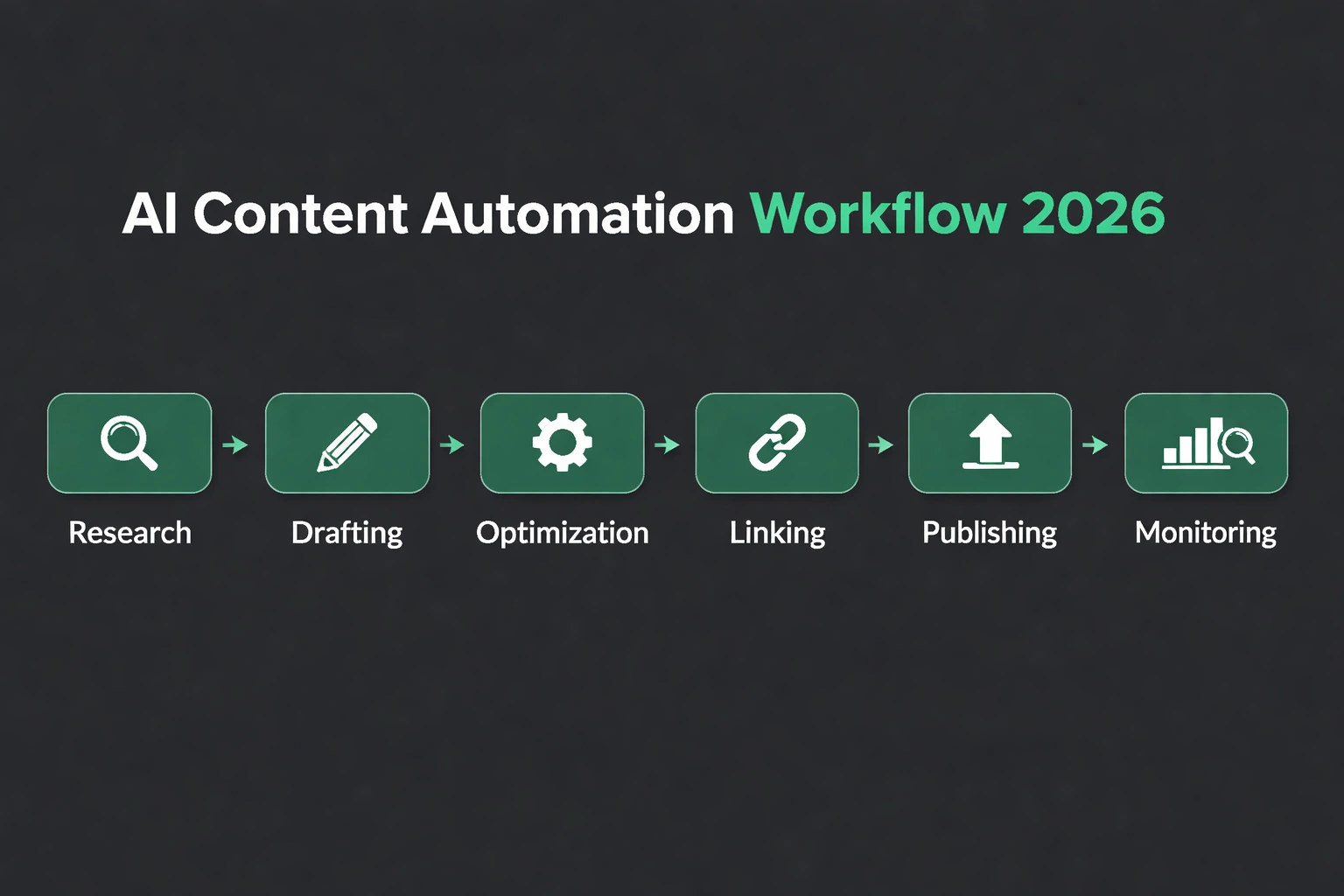
We aren't talking about tools that suggest keywords. Modern platforms handle the workflow end-to-end: research, drafting, optimization, linking, publishing, and monitoring.
These systems plug into programmatic SEO frameworks. A single strategist can build topic clusters across hundreds of keywords. The machine handles structure, meta tags, schema, and cross-linking. You handle strategy and quality control.
The distinction matters. Old SEO software gave recommendations. New software executes them and adjusts in real-time when algorithms change.
Why traditional teams can't keep up
The bottleneck in traditional workflows is handoffs. Writer drafts, editor revises, SEO optimizes, designer formats, developer publishes. Each step costs time and creates friction.
Automation collapses these stages. AI blog generators produce drafts that already meet technical specs. Automatic internal linking maps topical relationships across your library in milliseconds. Auto-publish features deploy without a developer touching the CMS.
A traditional five-person team might publish fifteen posts a month. An automated system with two strategists? Fifty posts, higher consistency, lower cost. The math gets lopsided fast.
Smaller teams benefit most. Automation removes the need for a minimum viable team size. A solo founder can execute strategies that used to require a department.
The four layers teams actually use
Research automation handles discovery and analysis without the spreadsheet grind. Systems find gaps and prioritize topics by opportunity score. Keyword research tools now suggest content strategies mapped to user journey stages, not just individual terms.
Production automation generates drafts aligned with search intent. The systems understand semantic relationships, so coverage is comprehensive. They structure content for featured snippets and apply proper heading hierarchies before you review.
Technical automation implements on-page SEO without developer involvement. Meta description generators, SEO title generators, and schema systems ensure pages meet specs. Internal linking algorithms distribute authority strategically.
Distribution automation publishes content, submits sitemaps, and tracks performance. Content calendars manage schedules. Content refresh systems update aging content automatically.
These layers compound. Research feeds production, which triggers technical optimization, leading to distribution. The integration kills the context-switching that slows everyone down.
What humans actually do now
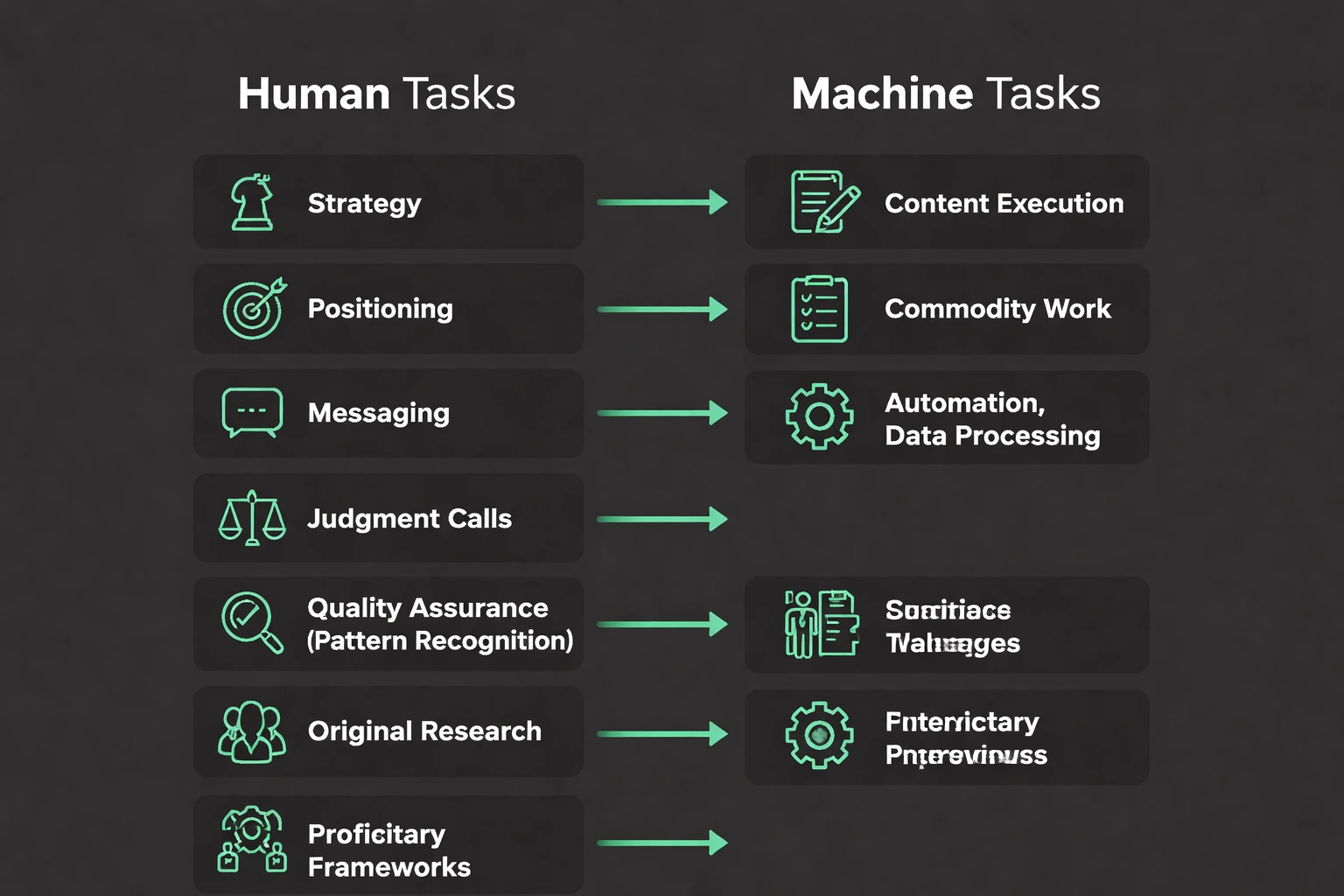
Strategy is the main contribution. You define positioning, approve messaging, and make judgment calls on sensitive topics. Machines execute. You direct.
Quality assurance shifts from line-editing to pattern recognition. You audit samples for brand voice and accuracy, then correct systematic issues across all content instead of fixing pieces one by one.
Original research, interviews, and proprietary frameworks remain human territory. Automation can't do them. These contributions become more valuable because the machine handles the commodity work.
Performance analysis gets more interesting when you aren't stuck in the weeds. You actually have time to interpret trends and adjust for market shifts.
The math
A traditional content team costs about $180,000 annually and produces 180 optimized posts. An automated system costs $3,000 a year. Add one strategist at $90,000, and you produce 600 posts at higher technical quality.
Per-post cost drops from $1,000 to $155. Output increases 233%. Quality improves because systems apply optimization consistently, whereas writer expertise varies.
Time-to-impact is faster too. Traditional teams need three months to recruit and ramp up. Automation deploys in days. In markets where search position equals revenue, that matters.
Maintenance favors automation even more. Updating 500 posts for an algorithm change takes a system hours. A traditional team needs months. AI content automation maintains freshness at scales manual teams can't match.
Where it goes wrong
Over-automation produces technically correct content nobody wants. You need topical authority goals, not just volume.
Under-integration treats automation like a drafting assistant. You generate drafts but route them through traditional approval workflows. You lose the velocity advantage.
Quality abdication is when you assume human judgment isn't needed. Teams publish without review, damaging brands with generic output. Automation amplifies strategy; it doesn't replace it.
Tool proliferation is adopting multiple tools that don't integrate. You manually transfer data between systems. You just recreated the fragmentation you tried to escape.
How LeafPad handles integration
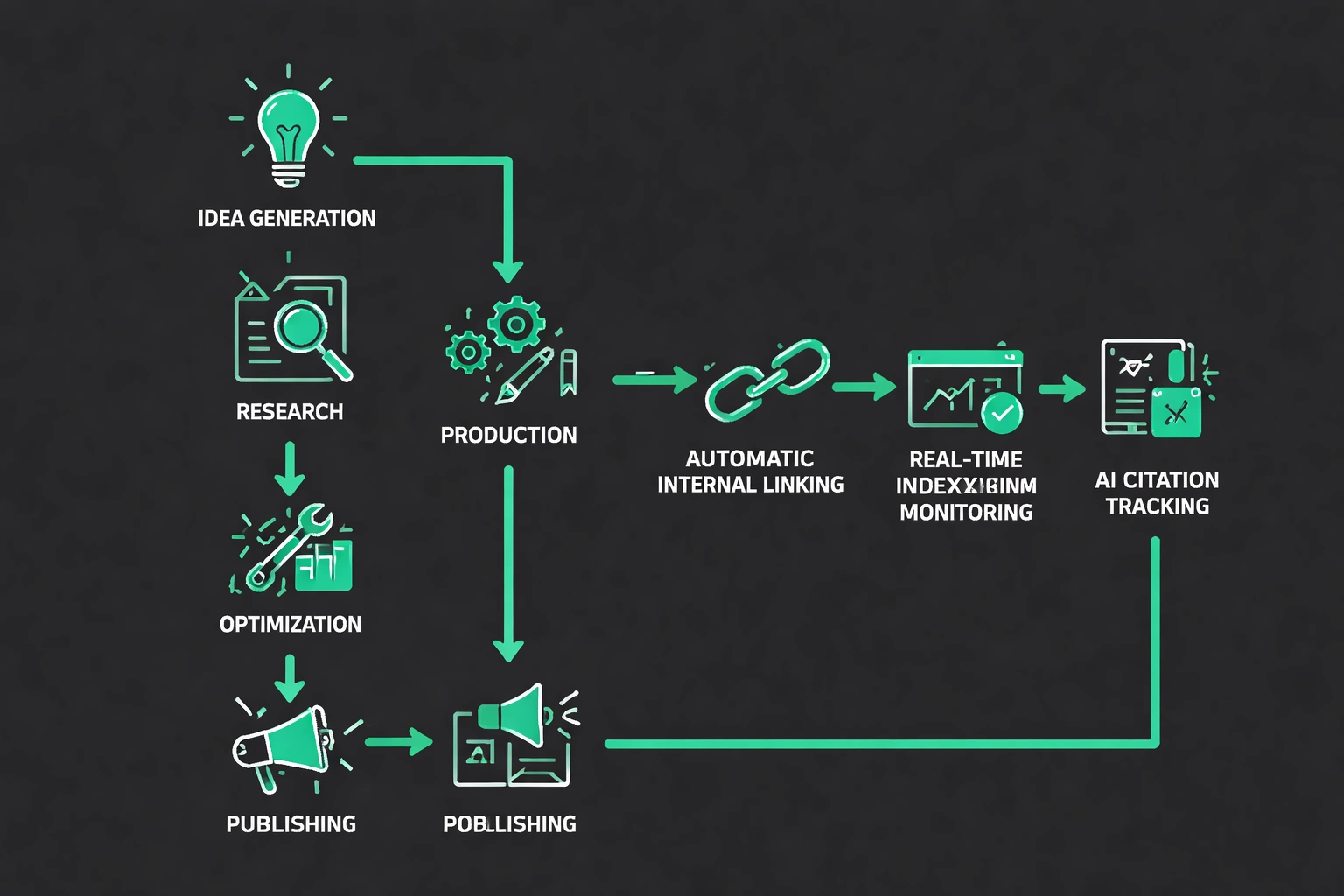
Platforms like LeafPad combine research, production, optimization, and publishing into one workflow. Content moves from idea to production without manual exports.
The automatic internal linking system analyzes your content graph to find linking opportunities. It considers the complete map, not just what the author remembers.
Real-time indexing monitoring tracks whether content enters search indexes. Traditional workflows publish and hope. Automated systems verify and resubmit if necessary.
AI citation tracking monitors how LLMs reference your content. As AI search visibility grows, knowing if ChatGPT or Claude cites you matters as much as traditional rankings.
What to measure
Content velocity tracks published volume relative to team size. Successful automation increases this ratio 4-10x.
Technical consistency measures what percentage of content meets specs on first publish. Automated workflows hit 95%+. Manual operations hover around 60-70%. Use SEO automation tools to enforce standards.
Time-to-traffic measures days from publication to organic sessions. Automation should reduce this.
Topical authority signals measure whether your domain is becoming authoritative. Watch featured snippets, related questions, and AI Overview citations.
A practical adoption roadmap
Start with topic clusters that have clear commercial intent. Automation works best when success is quantifiable. Don't start with thought leadership that needs original perspectives.
Implement production automation first for immediate velocity gains. Use blog outline generators and AI article tools to establish workflows before adding complexity.
Add technical automation once production stabilizes. Implement automatic SEO systems to handle meta tags and internal linking.
Scale distribution automation when you're publishing consistently. Content calendars help at dozens of posts per month. Earlier than that, they add complexity without benefit.
Why this shift is permanent
Content automation is a capability shift, not a trend. The underlying tech LLMs, semantic analysis, optimization keeps improving. Teams adopting now gain compounding advantages.
Search engines reward velocity and freshness. Algorithms see regularly updated libraries as domain expertise signals. Manual operations can't match the cadence.
Economic pressure guarantees adoption accelerates. Companies can't justify legacy costs when competitors produce better output for less. The market pushes everyone toward efficiency.
The question isn't whether to adopt. It's how fast you can implement compared to competitors. Early adopters build authority that becomes harder to challenge later. The window for automated SEO advantages closes as niches mature.
Human creativity, strategy, and judgment remain essential just channeled differently. Lean teams combining human strategy with automated execution will outperform large teams doing manually what machines now do better.
Published with LeafPad