On-page SEO is the stuff that lives on your website. The code, the words, the images, the internal links. It is the only part of SEO you completely control, unlike the chaotic world of backlinks and off-page authority.
In 2026, on-page SEO determines whether AI systems like ChatGPT cite your content or ignore it. It determines if Google features you in an AI Overview. It's not really about keywords anymore it's about structure. It's about semantic clarity. It's about formatting answers so both humans and language models can read them. Here is what actually works right now.
What On-Page SEO Actually Includes
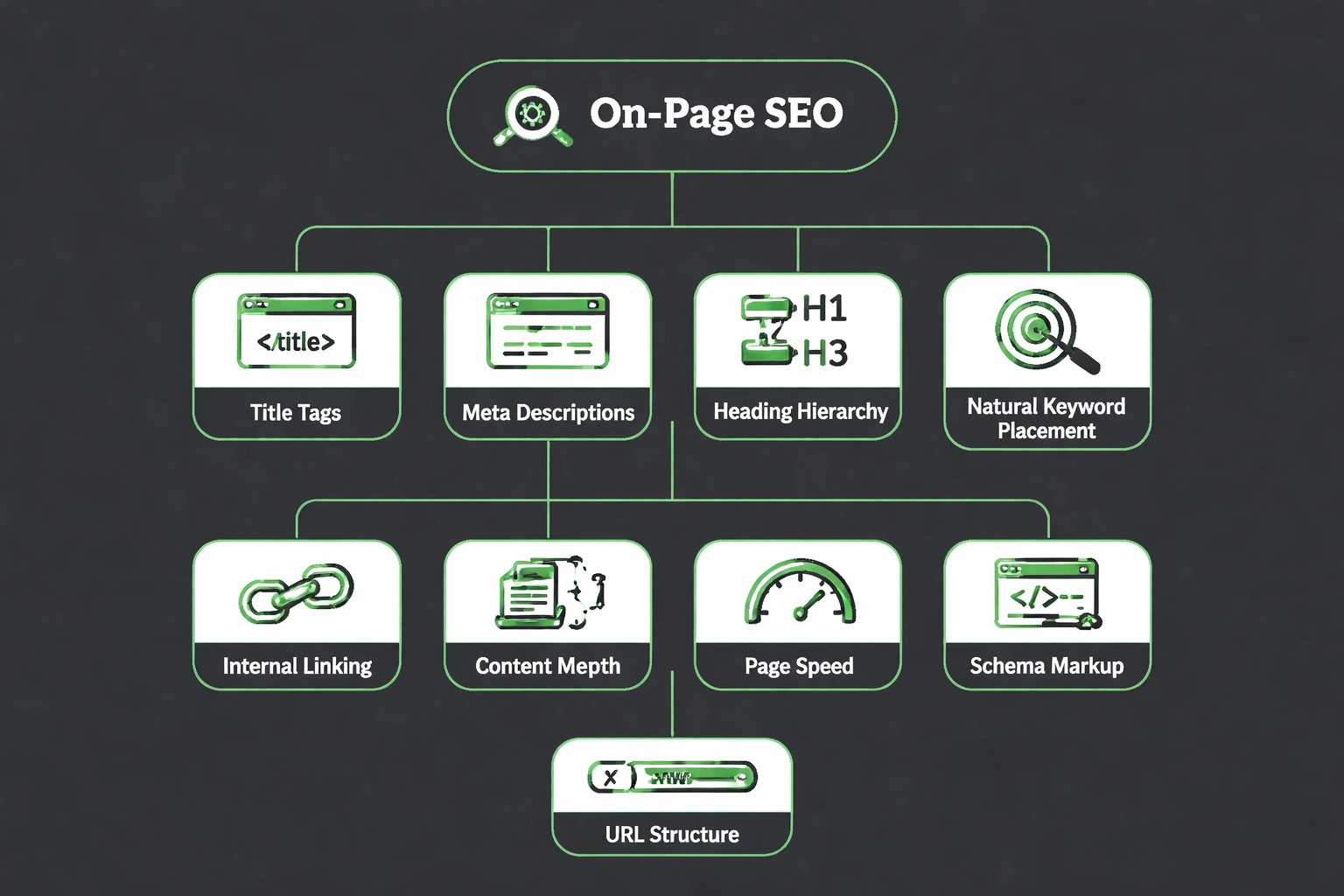
This is everything inside your own fences. The HTML, the content architecture, the interface.
The core components are things like title tags and meta descriptions that summarize the page, a heading hierarchy (H1, H2, H3) that makes sense, keywords placed naturally in the text, and internal links that connect the dots. You also need to worry about content depth, page speed, schema markup, and URL structure.
These pieces don't work in isolation. A killer title won't save thin content. Great writing won't rank if your site crawls. LeafPad's automatic SEO system handles a lot of these technical factors during publication, which frees teams up to worry about the substance instead of the checklist.
Why On-Page SEO Matters More in 2026
Search engines have moved past just reading pages they read passages now. Google's BERT and MUM models understand semantic relationships. Large language models scrape your HTML to generate answers for users who never bother to click through.
This shift changes the priorities.
Structure creates advantage. If you organize content with clear headings, definition lists, and tables, AI systems extract it more reliably. Context beats density. Keyword stuffing fails because models check if you actually answered the semantic question, not just if you used the words. Natural language that covers subtopics wins.
Signals also compound. A page with proper schema, fast load times, strong internal links, and readable HTML sends consistent quality signals. Search engines reward that coherence with better visibility, especially in featured snippets and AI summaries. LeafPad's AI search optimization framework builds this structure automatically during generation.
Title Tags and Meta Descriptions
Title tags tell search engines and users what a page is. They show up in search results, browser tabs, and social shares.
Keep titles between 50 and 60 characters to avoid truncation. Place primary keywords near the beginning. Write for humans first clickbait titles erode trust even if they boost clicks temporarily.
Meta descriptions don't directly impact rankings, but they influence click-through rates, which certainly matter. Write 150 to 160 characters that expand on the title. Give a reason to click. Use active voice.
If you want to save time, LeafPad's SEO title generator and meta description generator produce optimized options based on target keywords.
Heading Structure and Content Hierarchy
Headings organize content for readers and crawlers. H1 tags signal the primary topic. H2 and H3 tags break content into sections that search engines can index separately.
Follow a simple logic: Use exactly one H1 per page, matching or closely related to the title tag. Structure H2s as main sections answering distinct subtopics. Use H3s to dive deeper into H2 concepts, not to introduce new ideas. Don't skip levels jumping from H2 to H4 confuses the hierarchy.
Proper hierarchy helps Google understand which sections answer which queries. This enables passage ranking, where a single section of a long article ranks for a specific long-tail keyword. LeafPad's blog architecture system automatically structures content with this semantic logic.
Keyword Placement and Semantic Coverage
Primary keywords should appear naturally in the title tag and H1, the first 100 words of body content, at least one H2 heading, image alt text where relevant, and the URL slug.
But placement alone doesn't rank content anymore. Semantic coverage matters more. If you are writing about "on-page SEO," you must also cover related concepts like schema markup, Core Web Vitals, internal linking, and meta tags. Search engines expect comprehensive answers.
LSI (Latent Semantic Indexing) keywords terms related to your primary keyword prove you understand the topic. Use tools like LeafPad's LSI keyword generator to identify these terms and incorporate them naturally.
Avoid keyword density formulas. Modern NLP models detect forced repetition. Write clearly, define terms when needed, and use synonyms where they improve readability.
Internal Linking Strategy
Internal links distribute authority across your site and help search engines understand relationships between pages. They also keep users clicking, which improves engagement signals.
You need descriptive anchor text that tells users and crawlers what the linked page covers. You need logical connections between topically related pages. You need depth distribution that pushes authority to important but buried pages. Links should appear naturally within body content, not shoved in footers.
LeafPad's organic internal linking algorithm automates this by analyzing semantic relationships across your content library. It suggests links that strengthen topical authority clusters, which scales the process without manual audits.
Linking to high-authority pages early in your content can also improve crawl efficiency. Google prioritizes crawling pages that receive internal links from other indexed pages.
Content Quality and Depth
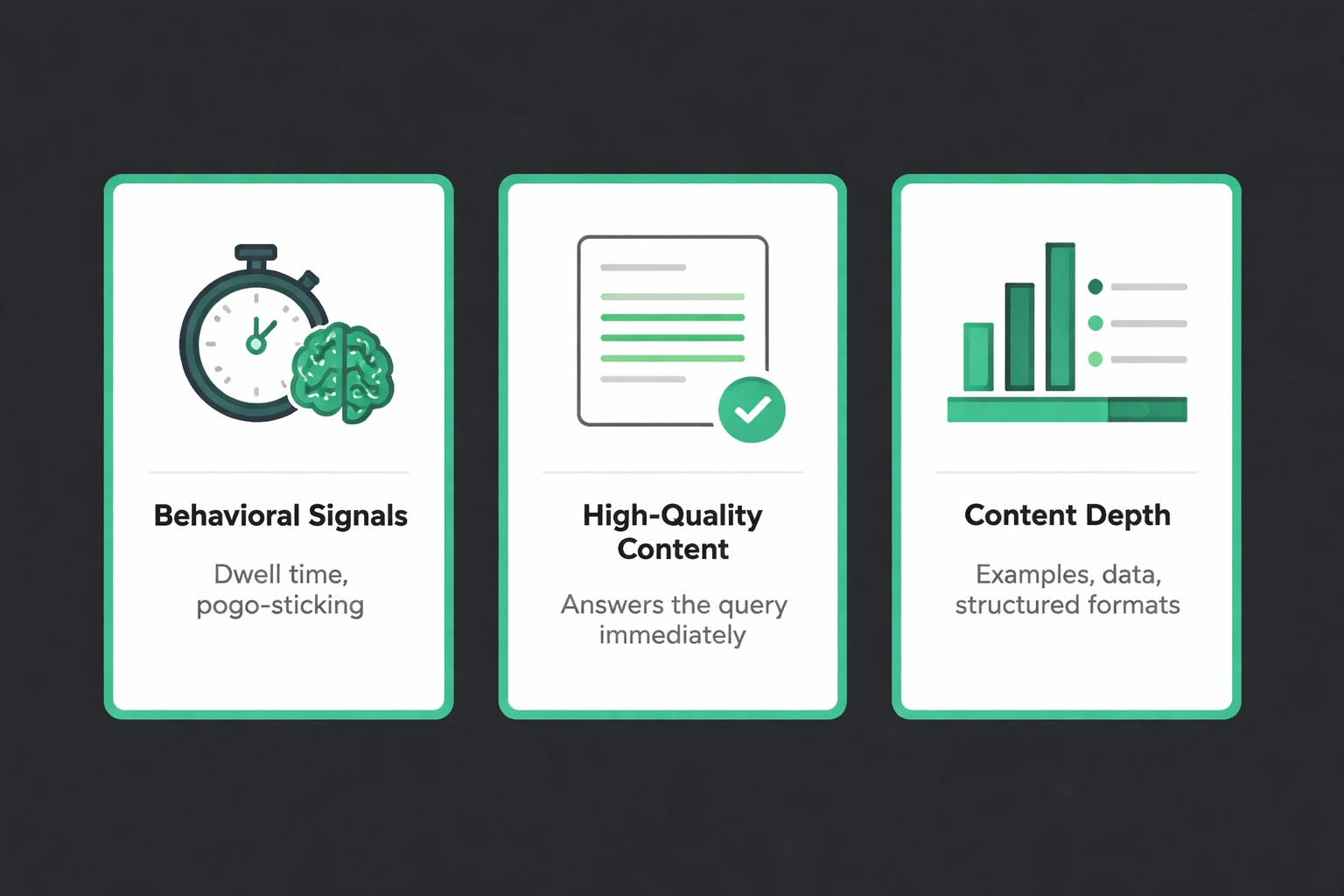
Content quality determines whether users stay or bounce back to search results. Google measures this through behavioral signals like dwell time, pogo-sticking, and subsequent query refinement.
High-quality content answers the query completely in the first 100 words. It provides depth beyond what competitors cover. It uses examples, data, and structured formats like tables or lists. It matches user intent informational, navigational, or transactional. It maintains readability with short paragraphs and subheadings.
Content depth is not about word count. It is about topic exhaustiveness. A 600-word article that covers all subtopics outranks a 2,000-word piece that repeats the same point.
LeafPad's AI content automation generates drafts that hit semantic completeness targets by analyzing top-ranking pages and identifying missing subtopics.
Core Web Vitals and Page Speed
Core Web Vitals measure user experience through three metrics. Largest Contentful Paint (LCP) measures how quickly main content loads target under 2.5 seconds. First Input Delay (FID) measures how fast the page responds to interaction target under 100 milliseconds. Cumulative Layout Shift (CLS) measures how much content shifts during load target under 0.1.
These metrics affect rankings directly. Slow pages lose positions even with great content. In 2026, mobile performance matters more than desktop because most searches happen on phones.
Optimize by compressing images with modern formats like WebP. Lazy-load images and videos below the fold. Minimize JavaScript execution time. Use a content delivery network (CDN) for static assets. Enable browser caching for repeat visitors.
LeafPad publishes content with optimized images and minimal JavaScript, ensuring blogs inherit your main site's performance profile. Learn more about technical SEO infrastructure.
Schema Markup and Structured Data
Schema markup is code that helps search engines understand entities, relationships, and attributes on your page. It powers rich snippets, knowledge panels, and AI-generated answers.
Common schema types for blogs include Article schema, which defines headline, author, publish date, and featured image. FAQ schema marks up question-answer pairs for featured snippet eligibility. Breadcrumb schema shows content hierarchy in search results. Person or Organization schema establishes authorship and brand identity.
Schema doesn't directly boost rankings, but it increases visibility in enhanced search features. Pages with FAQ schema often appear in "People Also Ask" boxes. Article schema can trigger rich results with thumbnails and publish dates.
LeafPad automatically applies appropriate schema to all published content based on content type and structure.
URL Structure and Slug Optimization
URLs should be short, descriptive, and keyword-rich. They appear in search results, browser bars, and social shares.
Use hyphens to separate words, not underscores or spaces. Keep slugs under 60 characters when possible. Include primary keywords naturally. Avoid unnecessary parameters or session IDs. Maintain consistent depth prefer /blogs/topic over /category/subcategory/topic.
Clean URLs improve click-through rates because users trust them more. They also make internal linking easier since anchor text and URL often align semantically.
LeafPad's permalink generator creates SEO-friendly slugs based on title analysis, stripping stop words and optimizing length automatically.
Image Optimization and Alt Text
Images enhance content but can slow pages if not optimized. They also provide ranking opportunities through image search and alt text.
Compress files without visible quality loss. Use descriptive file names with keywords, like on-page-seo-checklist.png. Write alt text that describes the image for screen readers and crawlers. Specify width and height attributes to prevent layout shift. Implement lazy loading for images below the fold.
Alt text should describe what the image shows while naturally including relevant keywords. Avoid keyword stuffing write for accessibility first, SEO second.
LeafPad's image resizer tool automatically compresses and formats images during upload.
How AI Search Changes On-Page Optimization
Large language models like ChatGPT and Claude cite content based on clarity, structure, and semantic completeness. Traditional SEO tactics like exact-match keywords matter less than answer-first formatting.
AI-friendly content includes direct answers in the first paragraph, definition lists for technical terms, comparison tables that LLMs can extract, step-by-step numbered instructions, and clear attribution and source links for credibility.
LeafPad's AI citation tracking monitors which content formats earn mentions in AI-generated responses, helping you optimize structure for maximum visibility.
On-Page SEO Checklist for 2026
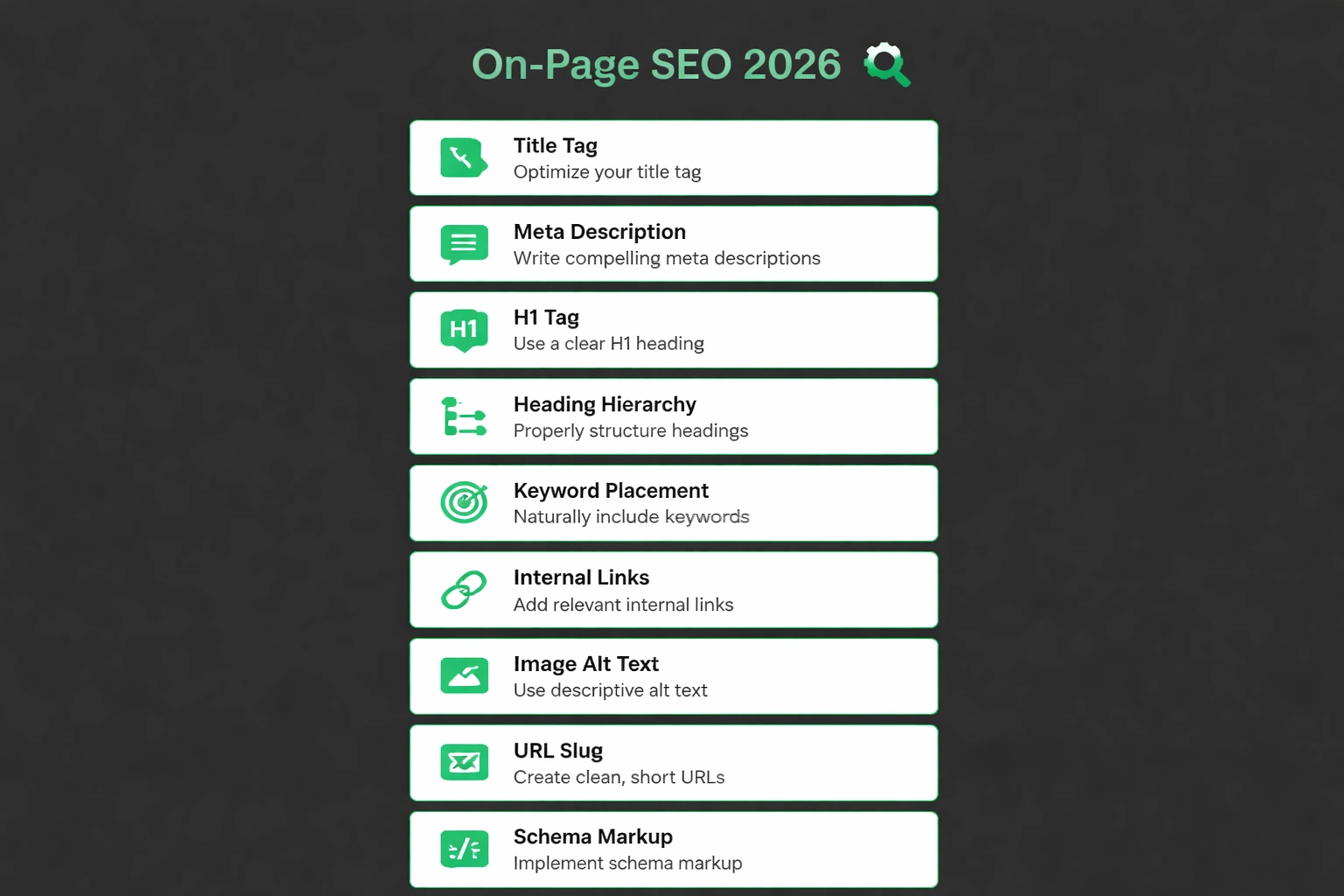
Before publishing any page, verify the title tag includes primary keyword and stays under 60 characters. Check that the meta description summarizes content in 150-160 characters. Ensure the H1 matches title intent and uses primary keyword. Confirm H2 and H3 headings create logical content hierarchy. Make sure the primary keyword appears in first 100 words naturally. Check that internal links connect to 3-5 related pages with descriptive anchors. Verify images include descriptive alt text and are compressed. Ensure the URL slug is short, descriptive, and keyword-rich. Confirm schema markup matches content type. Check that the page loads in under 2.5 seconds on mobile. Make sure content answers the query completely in the first section.
LeafPad's automatic SEO system handles most of these checks during publication, flagging issues before content goes live.
Common On-Page SEO Mistakes to Avoid
Thin content that restates competitors without adding value fails to rank. Aim for comprehensive coverage of subtopics, not just word count.
Keyword stuffing destroys readability and triggers spam filters. Use keywords naturally where they fit semantic context.
Ignoring search intent by writing for the wrong stage of the buyer journey will hurt you. Informational queries need guides, not sales pages.
Broken internal links waste crawl budget and create dead ends. Audit links quarterly and fix broken connections.
Missing mobile optimization loses mobile-first index priority. Test pages on real devices, not just desktop browsers.
Duplicate content across pages dilutes authority and confuses crawlers. Consolidate similar pages or use canonical tags appropriately.
LeafPad's content refresh system identifies outdated or underperforming pages and suggests specific improvements.
Measuring On-Page SEO Performance
Track organic traffic growth to specific pages using Google Search Console. Watch average position changes for target keywords with rank tracking tools. Monitor click-through rates from search results via GSC performance reports. Check dwell time and bounce rate in Google Analytics 4. Measure Core Web Vitals scores in PageSpeed Insights. Track AI citation frequency through manual monitoring of ChatGPT, Perplexity, and other tools.
Compare before-and-after metrics when you update pages. Changes in structure, keyword placement, or internal linking should show measurable impact within 2-4 weeks.
LeafPad's SEO metrics dashboard consolidates these signals in one view.
On-Page SEO vs Off-Page SEO
On-page SEO focuses on elements you control. Off-page SEO involves external signals like backlinks, brand mentions, and social shares.
Both matter, but on-page work comes first. Great content with poor technical implementation won't rank. Perfect technical setup with thin content won't either. Balance both, but prioritize on-page fundamentals before chasing links.
Internal linking bridges on-page and off-page by distributing authority you've earned externally across your site. LeafPad's internal linking strategy automates this distribution based on topical relevance.
How LeafPad Automates On-Page SEO
LeafPad handles on-page optimization automatically during content creation and publication.
It generates titles and meta descriptions based on keyword analysis. It structures headings to follow semantic hierarchy rules. It suggests internal links connecting related content. It applies schema markup based on content type. It optimizes images with compression and alt text prompts. It ensures mobile-first rendering and Core Web Vitals compliance.
This automation saves approximately 780 hours per year compared to manual optimization workflows. Learn more about automatic SEO architecture.
Getting Started with On-Page Optimization
Start by auditing your highest-traffic pages. Identify gaps in structure, keyword coverage, or internal linking. Fix one element at a time and measure impact before moving to the next.
For new content, build on-page SEO into your workflow from the start. Use blog templates that enforce proper heading hierarchy, include internal linking prompts, and guide keyword placement naturally.
If you're managing multiple blogs or scaling content production, consider platforms like LeafPad that automate technical SEO checks and let teams focus on substance over checklists. On-page optimization should support great writing, not replace it.
Published with LeafPad