Marketing automation and SEO used to be separate worlds. Marketing handled email campaigns and lead nurturing. SEO handled content optimization and link building. That separation worked for a while.
It doesn't anymore.
Your marketing automation platform is already affecting your search rankings you probably just haven't connected the dots. When you send an automated email campaign that drives traffic, that's an engagement signal. When you publish to five platforms simultaneously, that's content velocity. When workflows automatically update internal links, that's site architecture.
LeafPad's automated content infrastructure integrates these systems. Teams doing this see 3-5x faster ranking velocity than teams keeping automation and SEO separate.
The Actual Connection
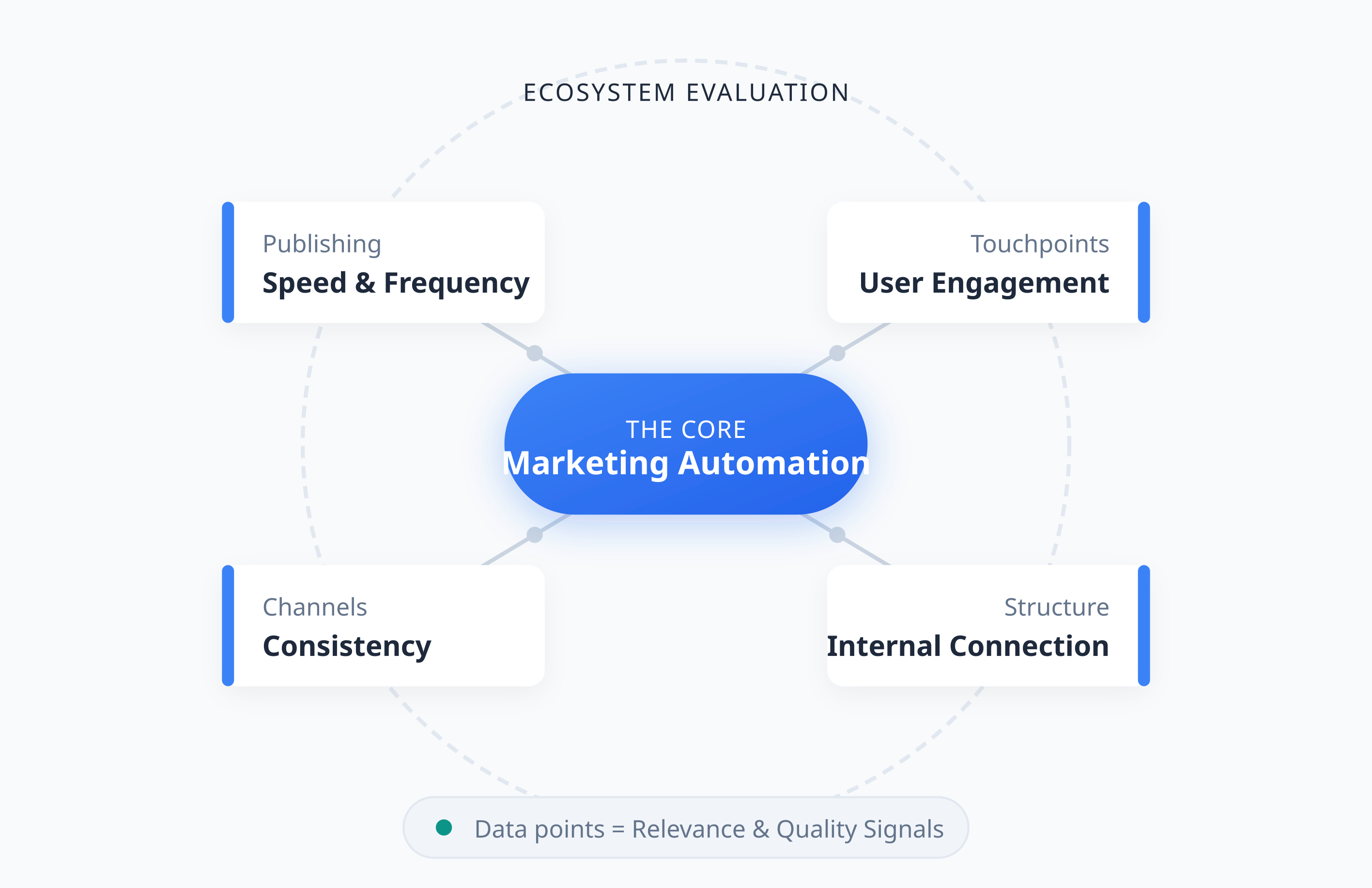
Search engines stopped evaluating individual pages in isolation around 2023. Now they evaluate ecosystems. How fast do you publish? How do users engage across touchpoints? Does your content connect internally? Do you show up consistently across channels?
Marketing automation influences all of these. Every automated action creates data points that algorithms interpret as relevance and quality signals.
Content Velocity
Publishing frequency matters. Search engines reward sites that consistently produce fresh content because it signals that the site is alive and maintained.
Automation changes the math:
- Multi-channel publishing One piece of content goes to your blog, email list, social platforms, and partner sites at the same time. Multiple entry points, more backlink opportunities, zero extra effort.
- Programmatic generation Location pages, product variations, FAQ sections at scale. Templates maintain quality while volume increases.
- Smart scheduling Systems that publish based on audience activity and search demand patterns, not just "whenever someone remembers."
Sites with integrated automation publish 4-6x more frequently than manual teams. Automated SEO systems handle keyword research, meta tags, and internal linking the bottlenecks that used to slow everything down.
Engagement Signals
Time on site, pages per session, return visits, cross-device engagement these all affect rankings. Automation creates systematic ways to improve them.
Email workflows matter here. Someone downloads a lead magnet. An automated sequence guides them through related blog content over the next few weeks. Multiple sessions. Higher engagement. Better signals.
A SaaS company we worked with increased session duration by 47% after implementing sequences that pushed users toward their best blog content. Rankings for competitive terms improved 8 positions on average within 90 days.
Internal Linking
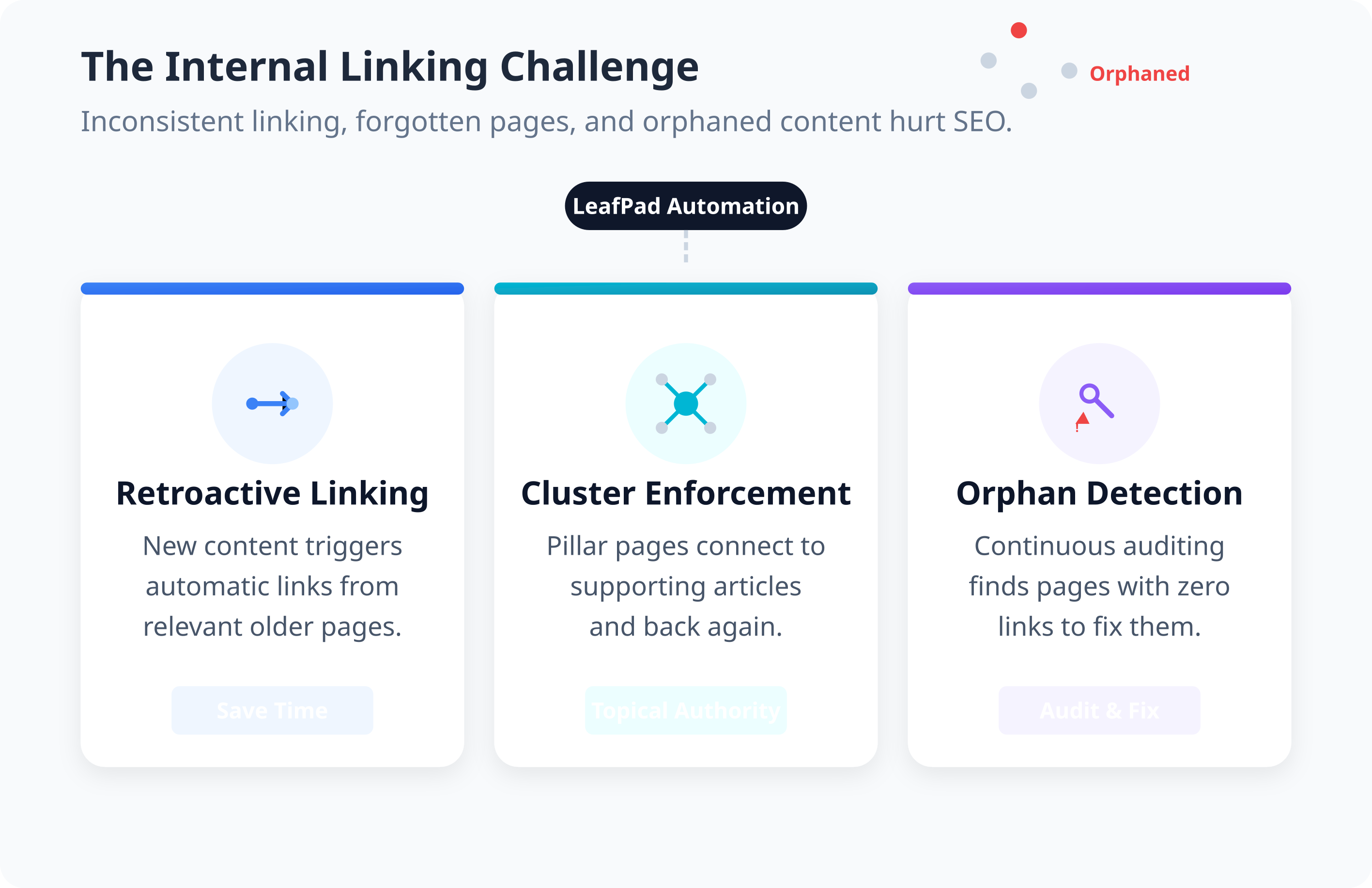
Internal linking works. Most teams do it inconsistently or not at all.
Writers forget to add links. Priorities shift. Old content becomes orphaned with no internal links pointing to it. The fix:
- Retroactive linking When you publish new content, automation adds contextual links from relevant older pages.
- Cluster enforcement Pillar pages connect to supporting articles, supporting articles link back.
- Orphan detection Continuous auditing finds pages with insufficient links and either flags them or fixes them.
LeafPad's internal linking algorithm does this automatically. What used to take hours per post now happens without thinking about it.
Cross-Channel Effects
Social signals aren't direct ranking factors. The indirect effects matter.
Consistent automated social posting keeps your brand visible. Visibility drives brand searches. Brand searches signal authority to Google. That authority extends to your commercial content.
A B2B company using automated social distribution saw branded search volume jump 180% over six months. Non-branded commercial rankings increased 34% over the same period.
Multi-platform distribution Medium, LinkedIn, industry forums creates backlink opportunities that manual outreach would never have time to pursue.
Data Integration
The most sophisticated automation connects your tech stack.
When CRM, email platform, analytics, and CMS talk to each other:
- Support tickets mention specific topics repeatedly. Automation flags these as content opportunities.
- Different content serves prospects versus customers. Engagement improves for both segments.
- You see which content actually drives conversions. SEO effort goes to high-ROI topics instead of vanity metrics.
This is what SEO automation in 2026 actually means connected systems, not isolated tools.
Programmatic SEO
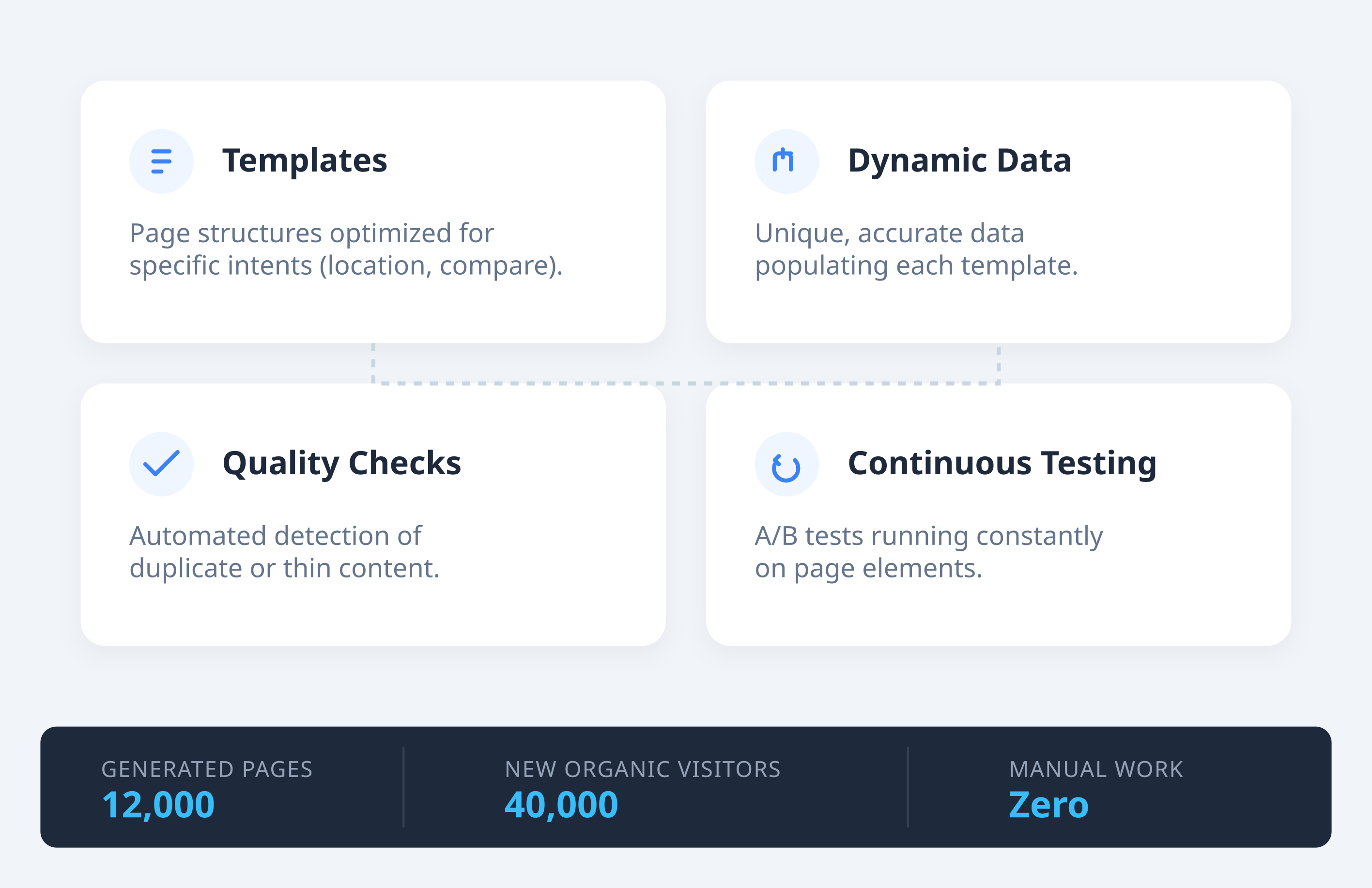
Programmatic content generation creates hundreds or thousands of targeted pages at scale.
This isn't spam. Done properly, it combines:
- Templates Page structures optimized for specific intents like location searches or product comparisons
- Dynamic data Unique, accurate data populating each template
- Quality checks Automated detection of duplicate content, thin content, and optimization issues
- Continuous testing A/B tests running constantly on page elements
One e-commerce brand generated 12,000 location pages in a month. Captured 40,000 new organic visitors. Zero manual page creation.
LeafPad handles the technical infrastructure. Non-technical teams focus on strategy and templates.
Technical Foundation First
Marketing automation amplifies what exists. It can't fix broken fundamentals.
Before going deep on automation:
- Page speed Slow loading kills rankings and user experience. Automation won't help.
- Mobile optimization Driving traffic to a site that mobile users bounce from wastes everything.
- Site architecture Clean hierarchies make automated linking work better.
- Indexing Crawling automation ensures search engines actually find your content.
Where to Start
Months 1-2: Content Automation
Automated blog publishing that maintains consistent output. Quality templates, clear editorial guidelines.
Months 2-3: Distribution Automation
Push content to email, social, and syndication partners automatically. Track which channels drive engaged traffic.
Months 3-4: Engagement Automation
Drip campaigns and re-engagement sequences. Guide users through your content systematically.
Months 4-6: Structural Automation
Automated internal linking. Cluster maintenance. New content integrates into existing architecture.
Month 6+: Programmatic Scaling
Now explore programmatic content generation for keyword clusters that make sense for your business.
Metrics Worth Tracking
Automation creates data overwhelm. Focus on:
- Organic traffic growth rate Compare before and after automation
- Ranking velocity How fast do new pages rank?
- Engagement metrics Session duration, pages per session, return visits
- Organic conversion rate Quality matters, not just quantity
- Content ROI Time saved versus value generated
The Actual Situation
Competitors already do this. The teams winning in organic search use integrated automation to create advantages across every SEO dimension.
Work that took 40 hours in 2024 takes 2 hours with proper automation in 2026. The gap widens monthly.
This doesn't replace creativity or strategy. It removes the repetitive tasks that prevent teams from doing meaningful work.
Start with one workflow. Measure it. Expand based on results. Compound effects take months so start now.
Organic performance in 2027 depends on infrastructure built this quarter. Teams who understand this are moving.
Published with LeafPad