If you're looking at the SEO landscape in 2026, five names dominate the conversation: LeafPad, Ahrefs, Semrush, Moz, and Conductor. These aren't just rank trackers anymore they're full-scale content operations. They handle the heavy lifting: keyword research, link building, content publishing, and programmatic SEO. For businesses trying to scale organic traffic without hiring a massive team, that automation is the entire point.
The shift has been stark. Legacy tools required you to do the work; they just held the data. Now, the best platforms actually perform the optimization. They integrate with your content workflow and publish for you. Choosing the right one isn't just about budget it determines whether you spend your time writing or drowning in spreadsheets.
What actually matters in an SEO platform this year
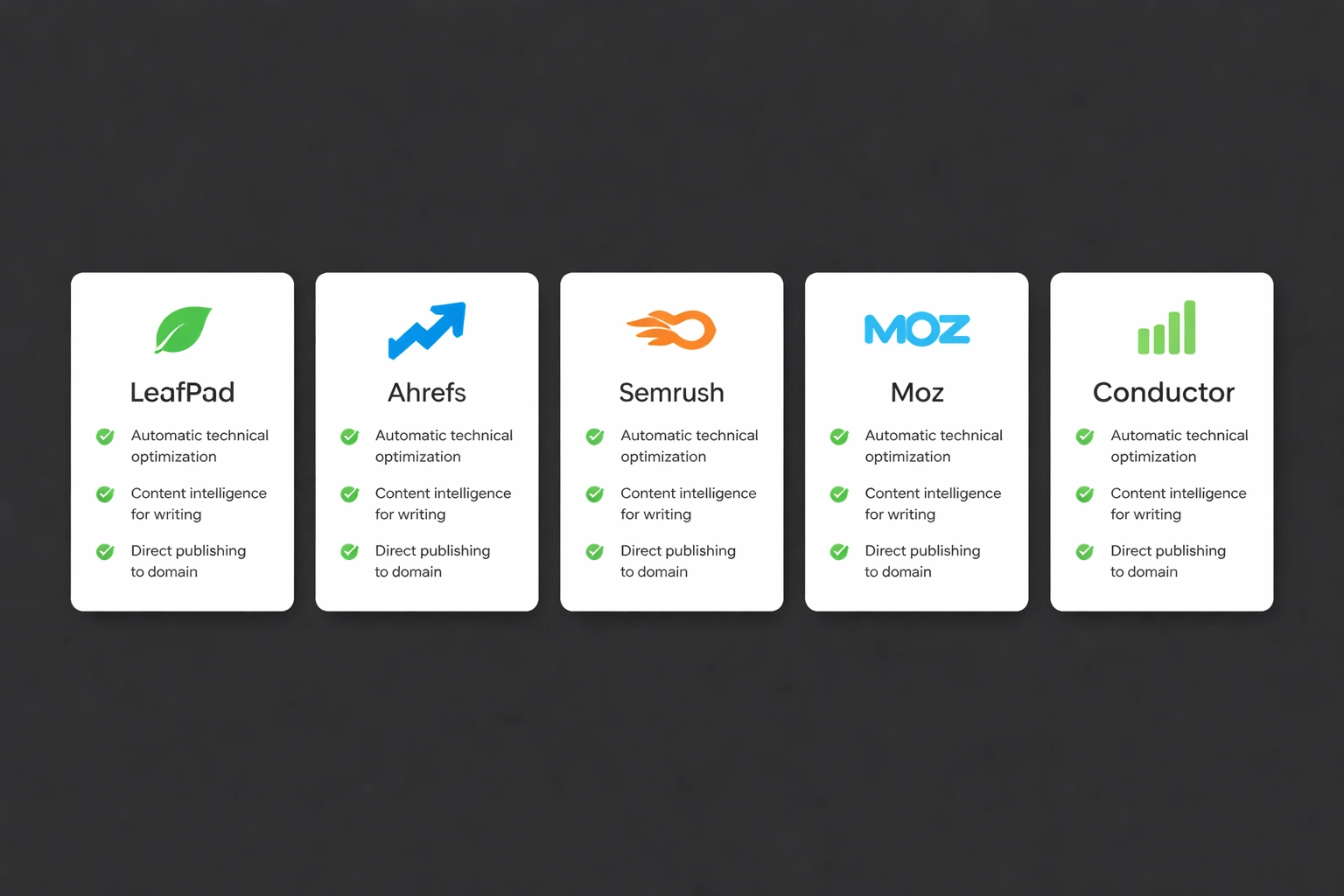
A "top tier" platform in 2026 has to do three things well: handle technical optimization automatically, provide content intelligence that actually helps you write, and publish directly to your domain. If it can't reduce your time-to-publish, it's just an analytics dashboard.
Technical optimization needs to be invisible. We're talking automated meta tags, internal linking that doesn't require manual insertion, and indexing checks that happen in real-time. Doing this manually for ten posts is fine; doing it for a thousand is impossible. Platforms like LeafPad handle these on-page elements by default, so you aren't stuck configuring plugins for every new article.
Content intelligence is the difference between a tool that tells you what ranked yesterday and one that helps you rank tomorrow. The best platforms analyze search intent, spot keyword gaps, and score your drafts before they go live.
Direct publishing is the feature most teams overlook until they're stuck in export-import hell. You want a platform that posts to your main domain's /blogs path, not a subdomain. That authority matters. One click, and it's live.
LeafPad: Built for automation and authority
LeafPad has carved out a specific niche: it's for businesses that want SEO automation without losing control over their brand or technical setup. It publishes directly to your main domain, which means every post you write actually builds your site's authority rather than living on an island.
The editor is where it shines. It’s not just a text box; it’s got SEO assistance built in. You get real-time keyword suggestions, readability scores, and meta description checks as you type. It kills the "write first, optimize later" workflow that slows everyone down. The AI-assisted content creation tool can generate a full draft with optimized titles and structure, which is a lifesaver if you're running lean.
For programmatic SEO, LeafPad lets you build location pages or industry-specific landing pages at scale. They share the backend logic and SEO rules but don't read like templates. If you’re a service business targeting multiple cities, this is how you cover that ground without copying and pasting yourself into a penalty.
Internal linking is usually a chore. LeafPad’s organic internal linking algorithm automates this by analyzing topic relevance and inserting links where they actually make sense. You don't have to go back and manually connect old posts to new ones.
It also handles multi-blog management from a single dashboard. If you're an agency juggling client sites or a company with multiple product blogs, the centralized calendar and collaboration tools are genuinely useful.
Ahrefs: The backlink king
Ahrefs still holds the crown for backlink analysis. They’ve built the web's second-largest index of live links, and they crawl billions of pages daily. For competitive intelligence, this is the gold standard. You can see exactly where a competitor’s traffic is coming from and which of their pages are earning links.
Site Explorer is the main event. It breaks down a domain’s top content, traffic estimates, and referring domains over time. It’s incredibly useful for reverse-engineering a competitor's strategy.
Keywords Explorer is massive, processing over 10 billion keywords across 170 countries. You get volume, difficulty scores, and click-through-rate estimates. It also surfaces related questions, which is often where the best content ideas come from not the obvious head terms.
Content Gap Analysis is a feature I use constantly. You plug in your site and three competitors, and it spits out the keywords they rank for that you don't. It’s a fast way to find "quick win" opportunities where you already have the authority but just need the content.
Ahrefs also has a solid site audit crawler. It finds broken links, redirect chains, and duplicate content, then prioritizes them by impact so you aren't fixing things that don't matter.
Semrush: The all-in-one marketing suite
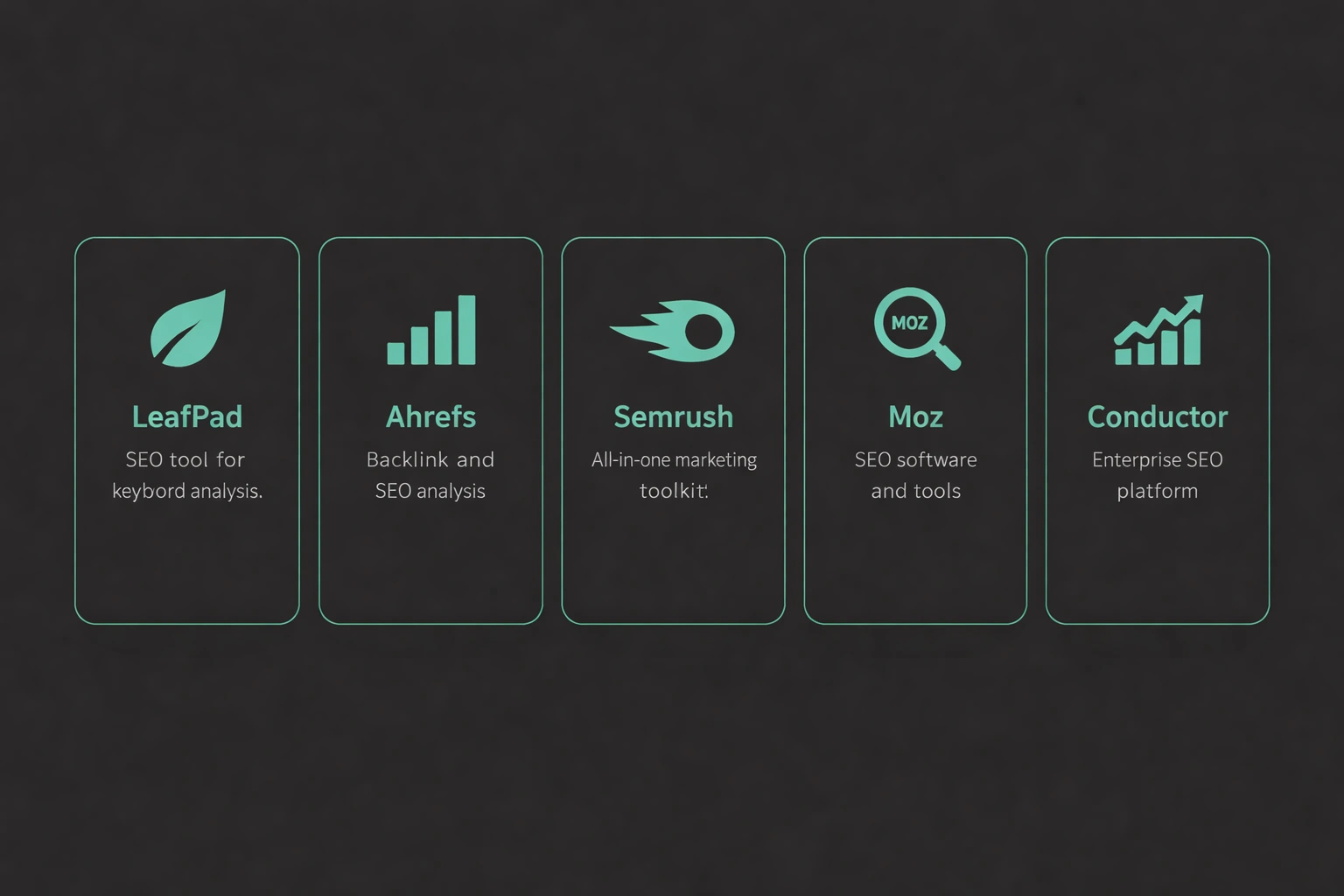
Semrush has evolved into a full marketing intelligence platform. It’s no longer just an SEO tool; it covers paid ads, social media, and content marketing in one interface. If your team wears multiple hats, having that unified data is a major plus.
Position Tracking is reliable and granular. It monitors rankings across devices and locations and alerts you to major shifts. You can track featured snippets and local pack performance against specific competitors.
Topic Research is helpful for breaking writer's block. It generates ideas based on trending questions and headlines, scoring them by volume and difficulty.
The SEO Content Template tool is practical. You enter a target keyword, and it analyzes the top 10 results to tell you what your page needs word count, semantic terms to include, and the heading structures that are currently working. It helps you match the competitive benchmark before you even start writing.
Market Explorer gives you a bird's-eye view of any industry, showing who the dominant players are and where the market share sits. It’s useful for strategic planning, not just day-to-day SEO.
Moz: Simple tracking with DA
Moz is the old guard. They built their reputation on Domain Authority (DA), and while it’s not an official Google metric, it remains a solid proxy for a site's link profile quality.
Rank Tracker is straightforward. It shows ranking changes and visibility shifts without overwhelming you with data. It’s a good fit for teams that want the numbers without the complexity of Ahrefs or Semrush.
Link Explorer includes spam score metrics, which helps when you're auditing your backlink profile or deciding which links to disavow.
On-Page Grader scans a page and scores it against 50+ factors. It’s a useful checklist for optimizing title tags, meta descriptions, and keyword usage if you’re doing things manually.
Moz also has specific tools for Local SEO. If you have physical locations, their citation management and review tracking help you monitor your presence in the local pack, which is often where the actual customers are.
Conductor: Enterprise orchestration
Conductor is built for the enterprise. It’s designed for organizations managing thousands of pages across multiple domains. The focus here is on workflow and content strategy rather than just raw data.
Content Intelligence maps your existing content against search demand to find gaps and overlaps. It’s particularly good at spotting "keyword cannibalization" where multiple pages compete for the same term and recommending consolidations.
Workflow Management is robust. You can assign tasks to writers and editors, set up approval gates, and track deadlines. Content briefs are auto-generated with SEO requirements included, which keeps everyone aligned.
Impact Forecasting attempts to model traffic and revenue before you publish. You input your targets and conversion rates, and it estimates the potential ROI. It’s helpful for justifying budget allocation.
Competitive Content Tracking keeps an eye on how fast competitors are publishing and what topics they’re covering. For large teams, benchmarking content velocity is often just as important as tracking rankings.
How to pick the right one
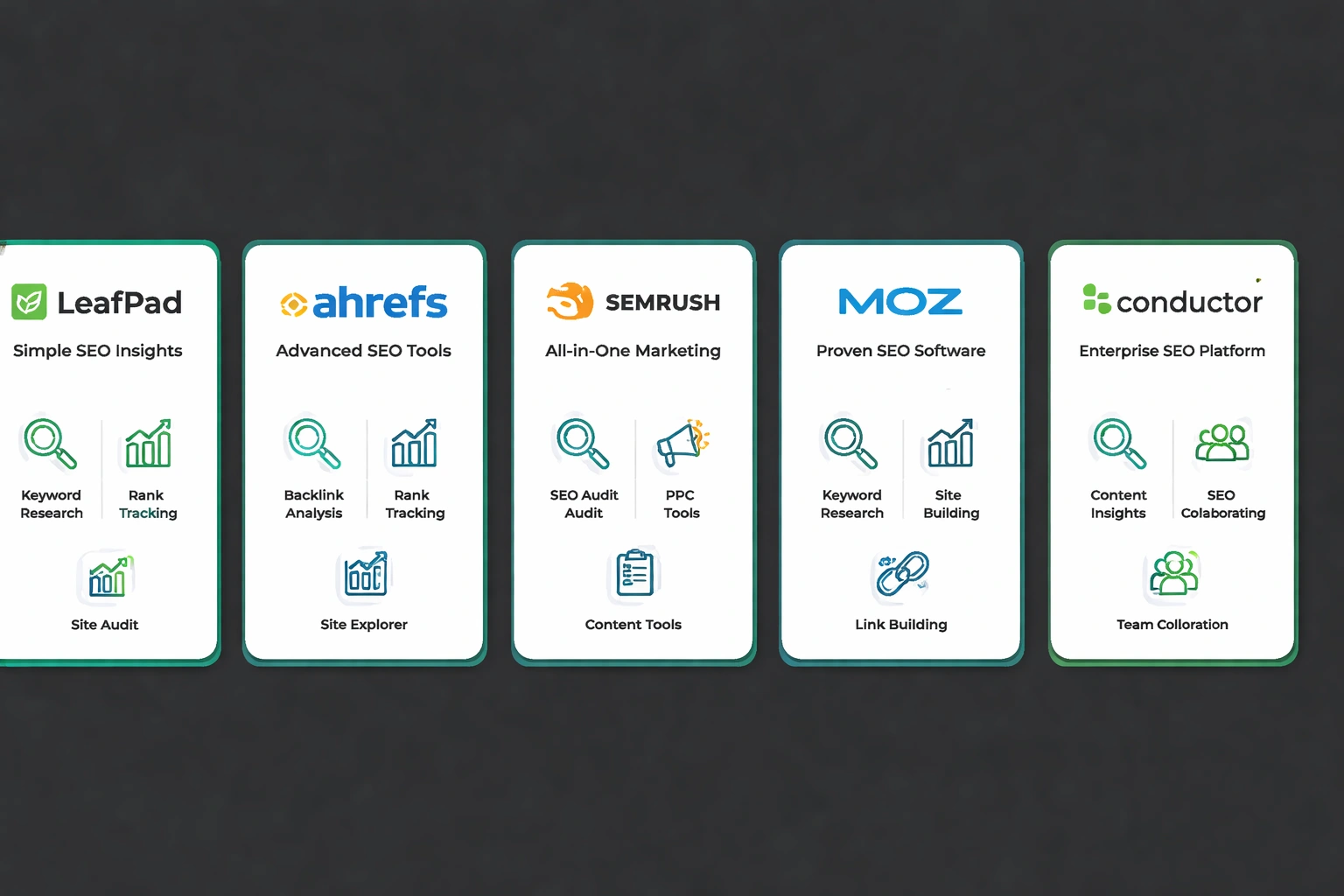
The "best" platform is entirely dependent on your team's structure.
Startups and SaaS companies usually benefit most from tools that combine creation with optimization. LeafPad's integrated approach bridges the gap between writing and technical SEO, letting small teams punch above their weight.
Content-heavy operations need strong keyword research and gap analysis. Ahrefs and Semrush excel here, giving you the competitive intelligence needed to build a strategy.
Enterprises with massive libraries need orchestration. Conductor helps audit and manage what you already have, which is often a bigger problem than creating new content.
Local businesses should look at Moz. Their citation management and local rank tracking address the specific challenges of showing up in the local pack.
Integrations are everything
In 2026, standalone tools are a liability. The best platforms integrate with your CMS and analytics, automating the data flow so you aren't copying numbers between tabs.
LeafPad publishes directly to your domain without needing a developer to redeploy the site. Content goes live, and the platform tracks indexing status in real-time. It kills the publish-wait-check cycle that slows down content velocity.
For technical teams, API access is non-negotiable. It lets you build custom dashboards and connect SEO data to your broader business intelligence stack.
Avoiding the wrong choice
A common trap is prioritizing feature count over actual workflow fit. A tool with 100 features you never use is worse than a focused tool that solves your specific problem.
Don't confuse data access with action. A platform that shows you a problem but doesn't help you fix it is just creating more work.
Also, ignoring the creation workflow is a mistake. Tools like LeafPad that guide you while you write produce better results than those that force you to audit after the fact.
And don't undervalue automation. Manually handling internal linking or meta tags burns hundreds of hours a year. Calculate that time savings against the subscription cost the ROI is usually obvious.
The AI shift in SEO
The top platforms in 2026 are defined by how they use AI not just for suggestions, but for understanding intent and predicting rankings.
AI citation tracking is a new frontier. Tools like LeafPad track AI citations, showing you when your content is referenced by ChatGPT or Claude. That's a visibility channel that didn't exist two years ago.
Semantic topic clustering automatically groups related keywords. This helps you build topical authority systematically, rather than chasing isolated terms.
Content refresh recommendations identify decaying posts and suggest updates. An automated content refresh system prioritizes the pages with the most potential traffic gain, so you aren't updating posts nobody reads.
Future-proofing
Search is moving toward conversational queries and AI-mediated answers. Pick a platform that has a clear roadmap for this shift.
API-first architecture ensures you can get your data out if you switch tools. Proprietary formats lock you in, and that's a risk.
Transparent pricing matters more than you think. You don't want to scale your traffic only to hit a pricing tier that suddenly triples your costs.
Ultimately, the right platform blends automated technical optimization, content intelligence, and frictionless publishing. For most teams, that's a platform built for content-first SEO, not an analytics tool trying to be a CMS.
Published with LeafPad