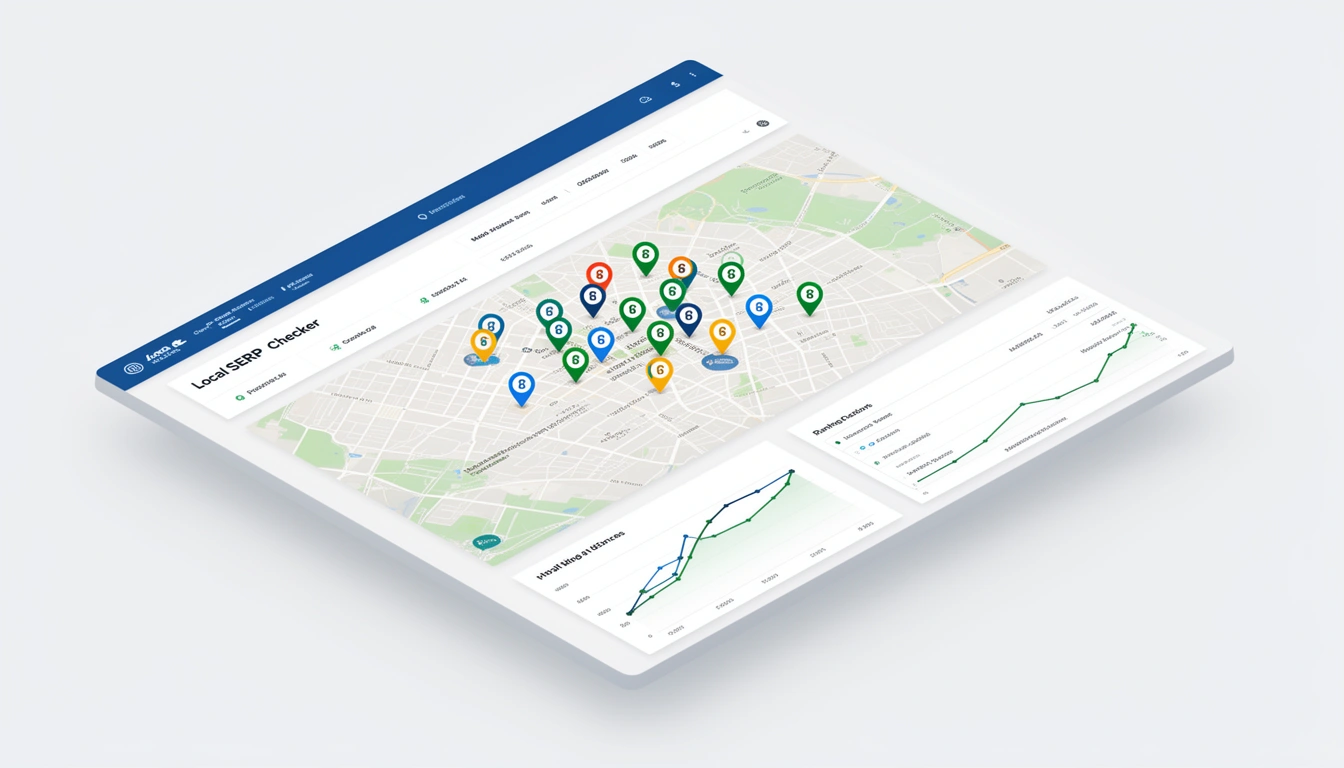
Local SERP checkers have become essential tools for businesses targeting geographic-specific keywords. Whether you run a dental practice in Austin or a plumbing service across multiple cities, understanding where you rank in local search results determines your visibility to potential customers.
In this guide, we'll break down what local SERP checkers are, why they matter in 2026, and how to choose the right one for your business.
What is a Local SERP Checker?
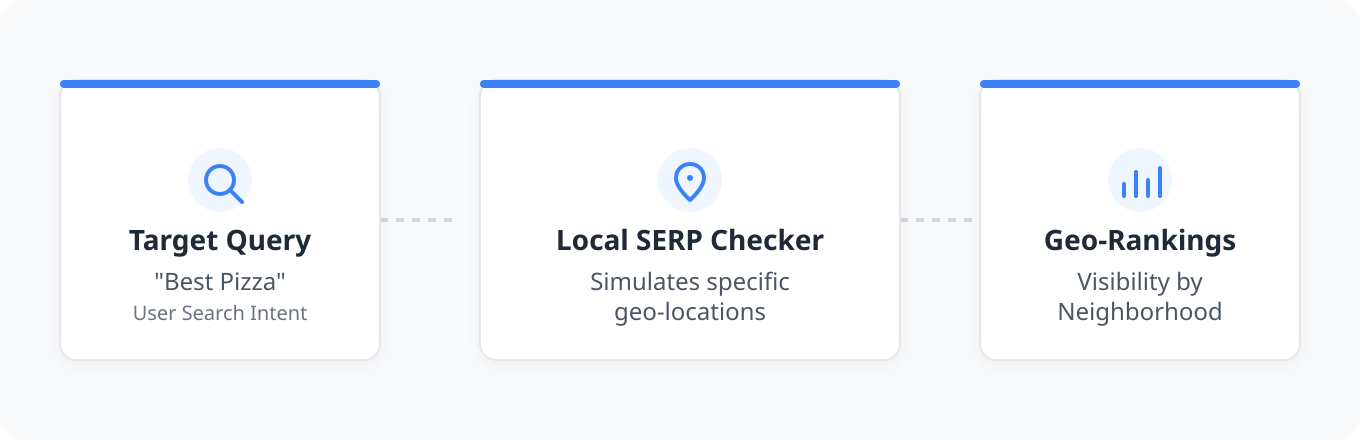
A local SERP checker is a specialized tool that tracks your website's rankings in search engine results pages (SERPs) for location-specific queries. Unlike standard rank trackers, these tools simulate searches from specific geographic locations to show exactly where your business appears for local searches.
For example, if you're a restaurant in Chicago, a local SERP checker can show you where you rank for "best pizza near me" when someone searches from different Chicago neighborhoods not just from your office location.
Why Local SERP Tracking Matters in 2026
Google's local search algorithms have become increasingly sophisticated. In 2026, local SEO ranking factors include proximity, review velocity, and even real-time foot traffic data. Without accurate SERP tracking, you're flying blind.
Here's why tracking matters:
Location-based variations: Your ranking can differ dramatically between neighborhoods in the same city
Competitive intelligence: See which competitors dominate specific service areas
Campaign measurement: Track the ROI of your automated local SEO efforts
Quick issue detection: Catch ranking drops before they impact revenue
Key Features of Effective Local SERP Checkers
Not all SERP checkers are created equal. The best tools for local businesses include these capabilities:
Hyperlocal Tracking
The ability to check rankings from specific zip codes, neighborhoods, or even exact coordinates. This is crucial for businesses with multiple locations or those targeting specific service areas.
Map Pack Monitoring
Tracking your position in Google's Local Pack (the map results that appear at the top of local searches) is just as important as organic rankings. The best tools show both.
Mobile vs Desktop Results
Since most local searches happen on mobile devices, your SERP checker should differentiate between mobile and desktop rankings they're often different.
Competitor Tracking
See where competitors rank for the same keywords across different locations. This reveals market gaps and opportunities.
Historical Data
Access to ranking history helps you identify trends, seasonal patterns, and the impact of algorithm updates or your SEO changes.
How Local SERP Checkers Work
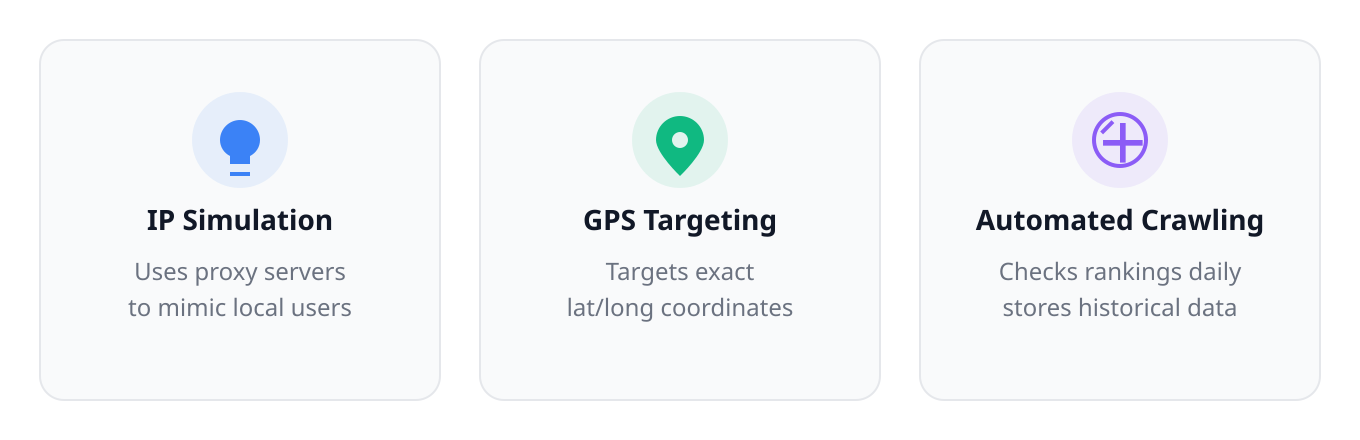
Local SERP checkers use a combination of technologies to simulate searches from specific locations:
IP-based location simulation: Tools use proxy servers or IP addresses from target locations to mimic a local user's search experience.
GPS coordinate targeting: More advanced tools can simulate searches from exact latitude/longitude coordinates for precision tracking.
Automated crawling: These tools regularly check rankings (daily, weekly, or on-demand) and store historical data for trend analysis.
Choosing the Right Local SERP Checker
Your choice depends on your business size, budget, and tracking needs. When evaluating options, consider:
Number of locations: Multi-location businesses need tools that scale efficiently
Keyword volume: How many local keywords do you need to track?
Reporting needs: Will you need white-label reports for clients or stakeholders?
Integration: Does it connect with your existing SEO stack?
Budget: Pricing varies widely from free tools to enterprise solutions
For more guidance on selecting tools, check out our comprehensive best local rank tracker tools guide.
Common Pitfalls to Avoid
Even with the right tools, these mistakes can skew your data:
Not accounting for personalization: Google personalizes results based on search history. Make sure your tool uses "clean" searches without personalization bias.
Checking too frequently: Obsessively checking rankings multiple times per day wastes resources. Daily or weekly tracking is sufficient for most businesses.
Ignoring "near me" queries: These hyper-local searches behave differently than city-level keywords and require separate tracking.
Only tracking top positions: If you're ranking on page 2 or 3, that data is still valuable for measuring progress toward page 1.
Using SERP Data to Improve Local Rankings
Tracking is only valuable if you act on the insights. Here's how to use your SERP data strategically:
Identify ranking gaps: Find high-value keywords where you rank on page 2 these are low-hanging fruit for optimization.
Analyze competitor patterns: What's working for competitors who outrank you? Look at their content, reviews, and citation patterns.
Measure campaign impact: Track ranking changes after major updates to your Google Business Profile or website content.
Prioritize location expansion: Identify geographic areas where you have weak visibility but strong potential demand.
The Role of AI in Modern Local SERP Tracking
In 2026, AI has transformed how SERP checkers work. Modern tools use machine learning to:
Predict ranking fluctuations before they happen
Automatically identify correlation between ranking changes and specific actions
Generate optimization recommendations based on SERP analysis
Detect anomalies that might indicate penalties or technical issues
These AI-powered insights help businesses make data-driven decisions faster than ever before.
Automating Local SEO with Blog Content
While SERP checkers help you track performance, combining them with automated content creation can accelerate your local SEO results. Publishing location-specific blog content consistently helps you rank for more local keywords over time.
Platforms like LeafPad make it easy to publish SEO-optimized content at scale, helping you dominate local SERPs across multiple locations without the traditional time investment.
Final Thoughts
A reliable local SERP checker is non-negotiable for any business serious about local search visibility. By choosing the right tool and acting on the data it provides, you can systematically improve your local rankings, outmaneuver competitors, and drive more qualified traffic to your business.
The key is to view SERP tracking not as a vanity metric, but as actionable intelligence that informs your broader local SEO strategy. Combined with consistent optimization and quality content, it becomes a powerful component of sustainable local search dominance.
Published with LeafPad