Single-page SEO is exactly what it sounds like: optimizing one standalone URL to rank for a primary keyword cluster. You aren't building a blog, managing a knowledge base, or threading internal links between fifty articles. You are putting all your chips on one page.
This is the right move when you're launching a micro-SaaS landing page, running a specific campaign, or testing market fit before you commit to a full content ecosystem. It lets you compete in search results without the overhead of a full site build.
Why Single-Page SEO Is Different From Traditional Site SEO
Most SEO advice assumes you're building a content fortress pillar pages, cluster topics, and internal links distributing authority across hundreds of URLs. Single-page SEO ignores that. You have one HTML document. You can't spread keyword risk across a site map, and you don't get the freshness boost that comes from publishing new blog posts weekly.
This changes the math:
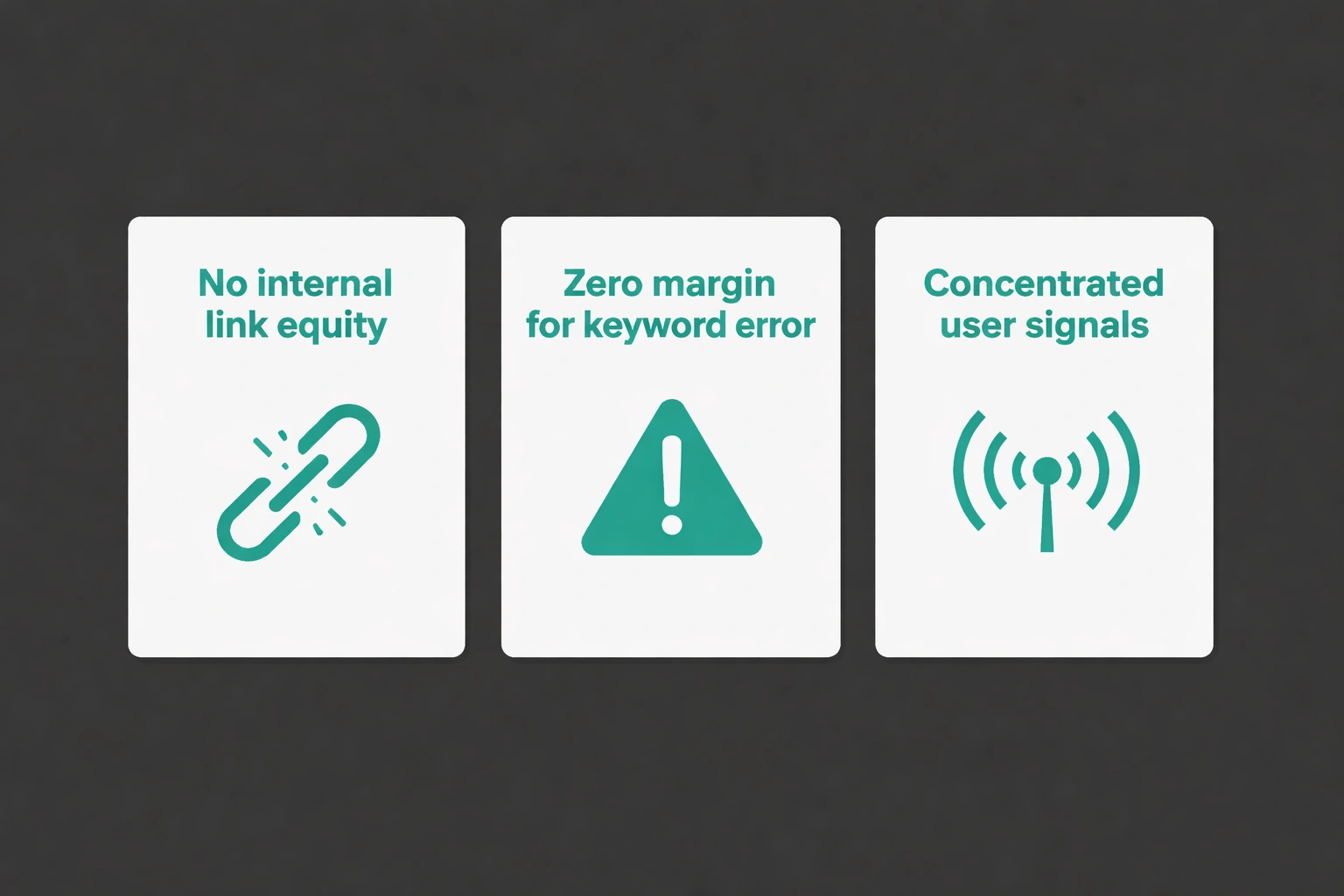
- No internal link equity: There are no other pages to link to. You can't pass authority around.
- Zero margin for keyword error: You rank for your target term with this URL or you don't rank at all.
- Concentrated user signals: Your bounce rate, dwell time, and conversion data all hit one URL. There's nowhere to hide.
- Depth vs. readability: You can't offload nuance to a "learn more" article. You have to balance depth and scanability on a single page.
This constraint forces you to be precise. Every heading and paragraph has to earn its keep.
When Single-Page SEO Makes Strategic Sense
Don't build a ten-page site if one will do the job. Single-page SEO is for situations where speed and focus matter more than topical authority.
Use it for:
- MVP landing pages: You're validating a product idea and need organic traffic before building a full docs site.
- Local service pages: A plumber in Austin targeting "emergency pipe repair Austin" doesn't need 50 blog posts. One strong service page wins that SERP.
- Event pages: A one-time conference or product launch where the page gets retired after the event.
- Affiliate reviews: A single deep-dive comparison like "[Product] vs [Product] 2026" that monetizes through affiliate links.
- Case studies: Freelancers or agencies showcasing one signature project.
For these scenarios, investing in programmatic content collections or an editorial calendar adds complexity you don't need.
Core Optimization Layers for a Single-Page Strategy
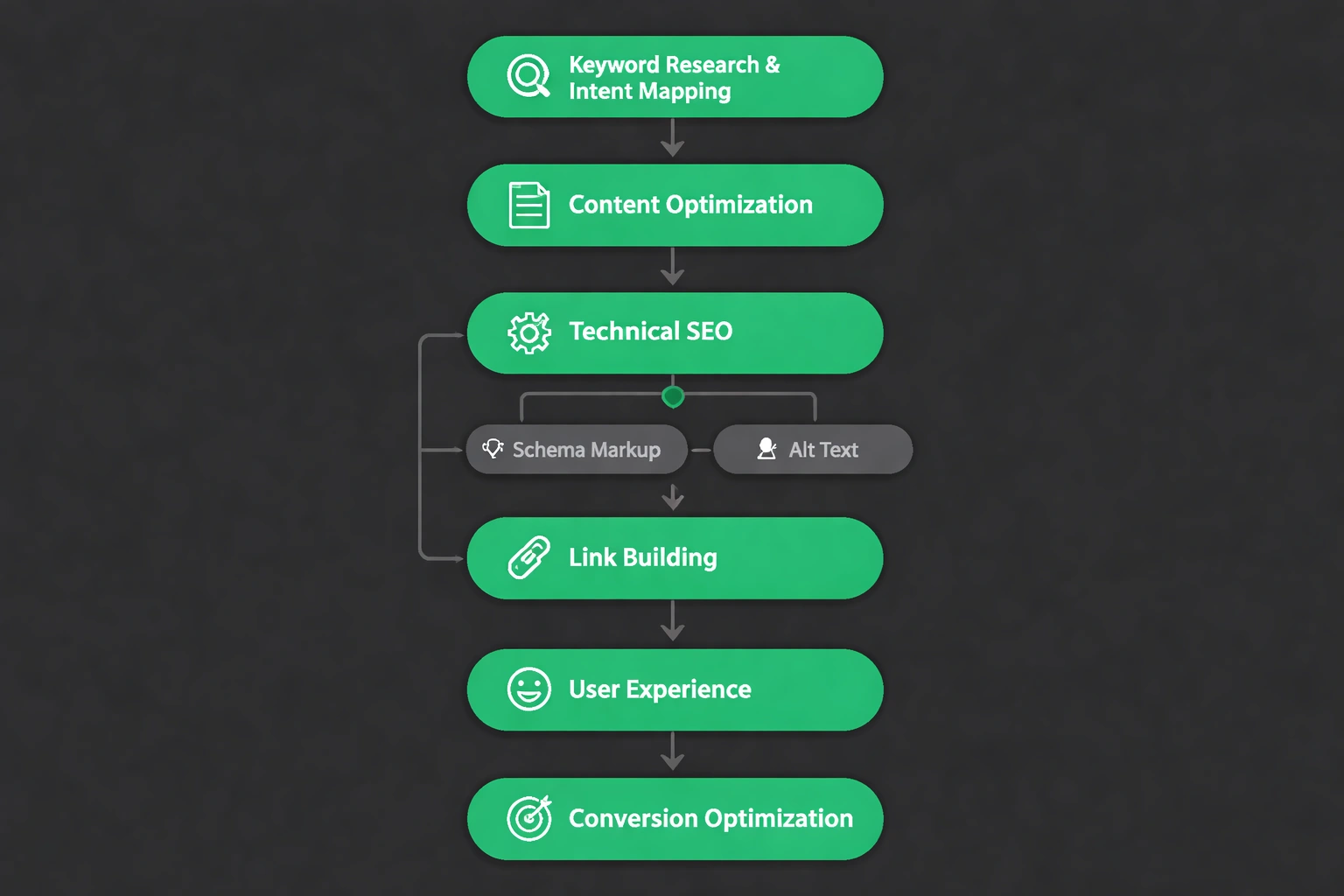
Since you're concentrating every SEO signal onto one URL, missing a single element like schema markup or alt text can cost you the ranking.
1. Keyword Research and Intent Mapping
Pick one primary keyword with clear intent, then find 3-5 semantic variants that support the same goal. Use a tool like LeafPad's keyword research module to find long-tail modifiers and question-based queries.
Example stack for a SaaS landing page:
- Primary: "AI meeting transcription software"
- Variants: "automatic meeting notes AI", "transcribe Zoom calls with AI", "AI note-taking for teams"
- Questions: "how does AI transcription work", "best AI meeting assistant 2026"
2. Content Structure and Readability
Answer the primary query in the first 60 words. Then expand. Use H2 subheadings to answer specific sub-queries. This "micro-cluster" approach mirrors how AI models parse content for AI search visibility.
A reliable structure looks like this:
- Hero: Answer the primary query in 40-60 words.
- Problem/solution: Why this exists and who it helps.
- Features: 3-5 H2 sections, each tackling a benefit or use case.
- Social proof: Testimonials or metrics.
- FAQ: 5-8 questions targeting long-tail queries (good for featured snippets).
- CTA: Clear next step.
3. On-Page Technical Elements
There is no second page to compensate for technical mistakes. You have to get the basics perfect.
Run through this list:
- Title tag: Primary keyword in the first 5 words. Under 60 characters.
- Meta description: Optimize for click-through rate. 140-155 characters.
- H1 tag: One per page. Matches intent. Contains the primary keyword.
- Header hierarchy: Logical H2-H3 structure.
- Image alt text: Descriptive. Includes keywords where relevant.
- Schema markup: FAQ, HowTo, or Product schema depending on your page type.
- Mobile: Responsive, fast, and thumb-friendly.
- Core Web Vitals: LCP under 2.5s, FID under 100ms, CLS under 0.1.
Use LeafPad's SEO automation tools to audit these in real time.
4. External Link Acquisition
Without internal links, backlinks are your lifeblood. Focus on earning links from relevant sources industry blogs, directories, niche forums.
Tactics that work:
- Digital PR: Pitch your page as a resource to journalists.
- Expert roundups: Contribute quotes and request a link.
- Resource page outreach: Get listed on "[Your Industry] resources" pages.
- HARO: Answer journalist queries with a link.
- Guest posts: Write for complementary blogs and link back in the bio or body.
Five links from authoritative niche domains will beat 50 low-quality directory submissions every time.
5. User Engagement and Conversion Signals
Google watches user behavior. If visitors bounce after three seconds, your rankings will suffer regardless of how good your SEO is. Design for engagement.
Reduce friction:
- Above the fold: State your value proposition immediately. No scrolling required.
- Scannable: Use bullets, short paragraphs, and visual hierarchy.
- Interactive: Embed calculators, demos, or videos to keep people on page.
- Exit-intent: Trigger a final offer when they try to leave.
- Live chat: Answer objections in real time.
A page that keeps visitors for 90 seconds and converts 5% of them will outrank a page with identical SEO but a 70% bounce rate.
How AI Search Models Change Single-Page SEO in 2026
AI search engines (ChatGPT, Perplexity, Google AI Overviews) don't just match keywords. They parse meaning and prioritize direct answers. Your content must satisfy both traditional crawlers and AI citation criteria.
What AI looks for:
- Passage-level precision: Each section should be a standalone answer an LLM could quote.
- Q&A format: Use FAQ schema and question-based subheadings.
- Source attribution: Link to authoritative sources when making claims.
- Conversational tone: Write for how people speak, not just how they type.
Track which passages get cited most by AI tools and adjust your structure accordingly.
Measuring Success: Metrics That Matter
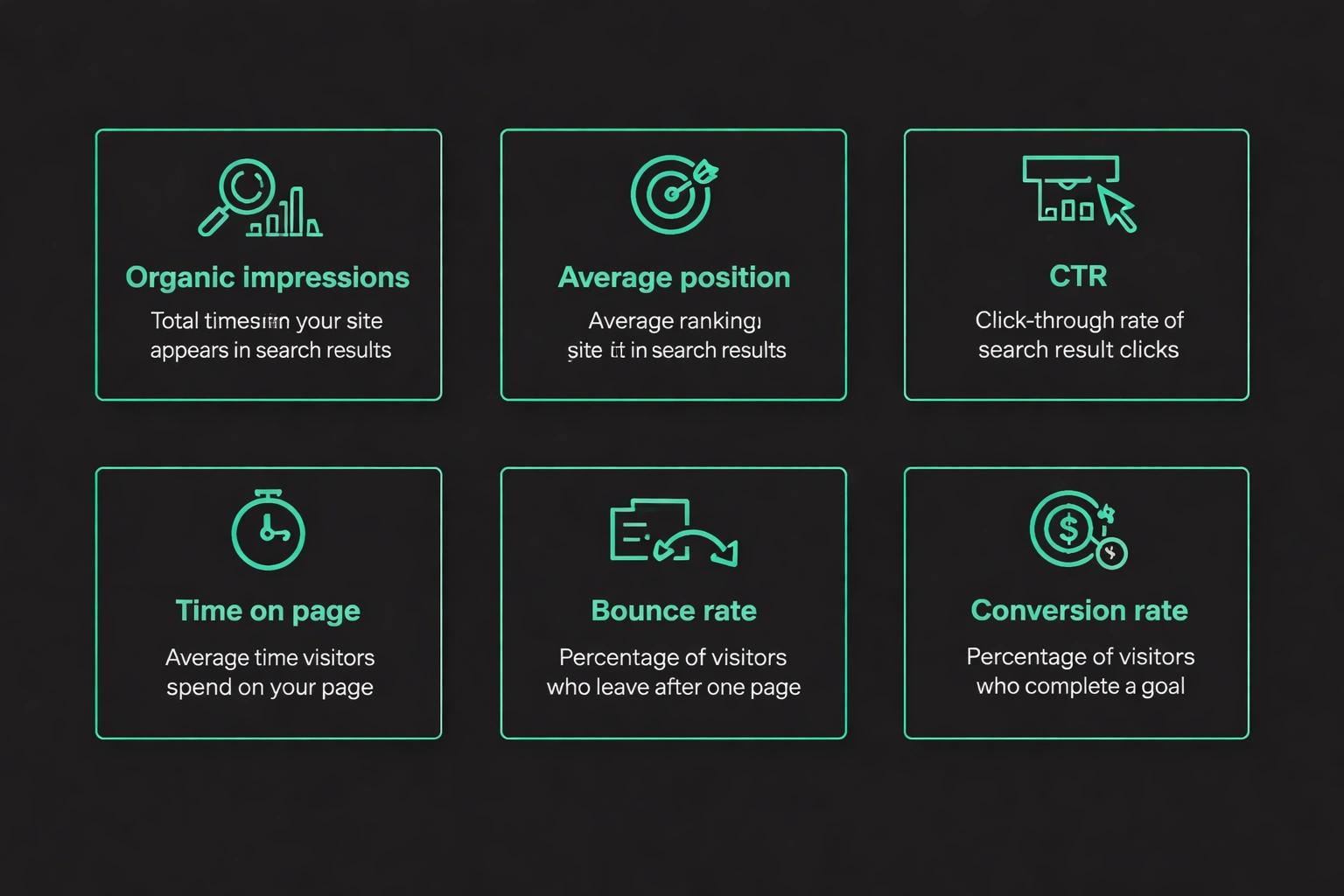
You're measuring one URL against one goal. Ditch the dashboard meant for 100-page sites.
Focus on these:
| Metric | Why It Matters | Target |
|---|---|---|
| Organic impressions | Are you showing up? | 10,000+/month for competitive terms |
| Average position | Where do you sit? | Top 5 for primary keyword |
| CTR | Are people clicking? | 5-8% for positions 3-5; 15%+ for #1 |
| Time on page | Do they care? | 90+ seconds (info), 45+ (commercial) |
| Bounce rate | Did you answer the query? | Under 50% |
| Conversion rate | Did they act? | 3-5% (leads), 1-2% (sales) |
Use LeafPad's index checker to confirm indexing, then check positions weekly. If you aren't ranking in 4-6 weeks, fix your targeting or get better backlinks.
Common Single-Page SEO Mistakes
It is easy to mess this up by applying multi-page logic to a single page.
Avoid these traps:
- Keyword stuffing: Cramming variants into one URL triggers over-optimization penalties.
- Thin content: 400 words won't rank for anything competitive. Aim for 1,200+ words of actual depth.
- Ignoring mobile: 70%+ of search is mobile. If it breaks on a phone, it won't rank.
- No clear CTA: If they don't know what to do next, they leave.
- Skipping schema: No structured data means no rich results and fewer AI citations.
- Set and forget: A static page loses freshness. Update it quarterly with new stats or examples using LeafPad's content refresh module.
Tools and Workflows
Don't do this manually. Automate the tracking, schema generation, and optimization. LeafPad handles this in one dashboard.
Useful tools:
- Keyword research: Find primary and semantic keywords.
- SEO title generator: Build click-worthy titles.
- Meta description generator: Write descriptions that drive clicks.
- Snippet generator: Generate schema markup.
- Grammar checker: Clean up the prose.
- Internal linking analyzer: Check your strategic external links.
When to Transition From Single-Page to Multi-Page SEO
Single-page SEO works until you hit a ceiling. When you've validated the market and need more traffic than one page can provide, it's time to build a content marketing strategy.
Expand when:
- You're stuck on page 1 but can't crack the top 3.
- Competitors with content hubs are stealing your traffic.
- Users need more information than one page can hold.
- You have 10+ related keywords worth targeting.
- You have the budget to support ongoing content.
Treat your original page as the pillar and build cluster content around it. Use LeafPad's blog CMS to publish under /blogs so authority compounds on your main domain.
Single-page SEO isn't a compromise. It's a strategic choice that works if you have the discipline to execute it correctly. Focus on what matters, strip out the bloat, and measure everything against your conversion goal.
Published with LeafPad