Here's the uncomfortable truth about SEO in 2026: if you're still writing for keyword density, you're basically whispering into the void. Google and the big AI models ChatGPT, Claude, Gemini don't just match strings of text anymore. They parse meaning. Semantic context is what separates the content they actually surface from the stuff they ignore entirely.
What Semantic Context Actually Means
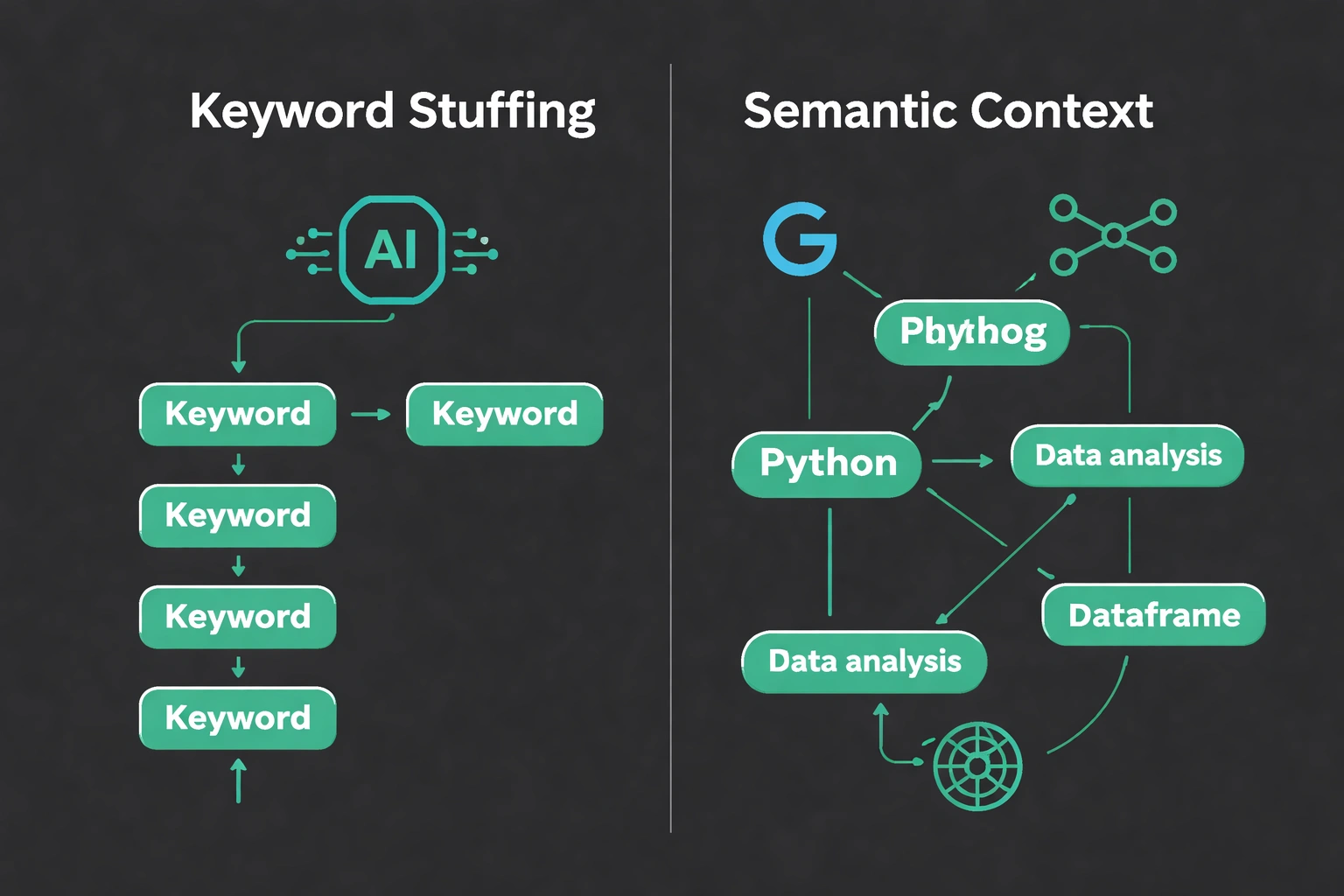
Semantic context is just the web of relationships between concepts on a page. If I say "Python" next to "pandas" and "dataframe," you know I'm talking about programming, not a snake. Search engines and LLMs figure this out through entity recognition and how often certain terms show up together.
Old-school SEO treated keywords like isolated targets. You stuffed "best running shoes" into a title and hoped for the best. Semantic systems look at the whole neighborhood of words.
Google's knowledge graph has worked this way since 2012. The difference now is that generative AI does the exact same entity extraction before it answers a user. If your content doesn't establish what it's about immediately, you're invisible to both.
Why Google Rewards Disambiguated Content
Google ranks pages that remove ambiguity early. Period. Think about a page titled "Local SEO Blog: Complete Strategy Guide for 2026." If the first paragraph immediately defines local SEO and names the main entities Google Business Profile, citations, reviews Google can categorize it instantly. If you bury the context under vague intros, the algorithm has to guess. Guessing usually means lower confidence in your ranking.
This is why I pay attention to real-time readability scoring. LeafPad's editor, for example, flags vague openings and forces you to name entities before you hit publish. You can see how it works in the LeafPad AI Blog Generator, which builds semantic clarity into drafts from the first sentence.
Why ChatGPT Cites Some Sites and Ignores Others
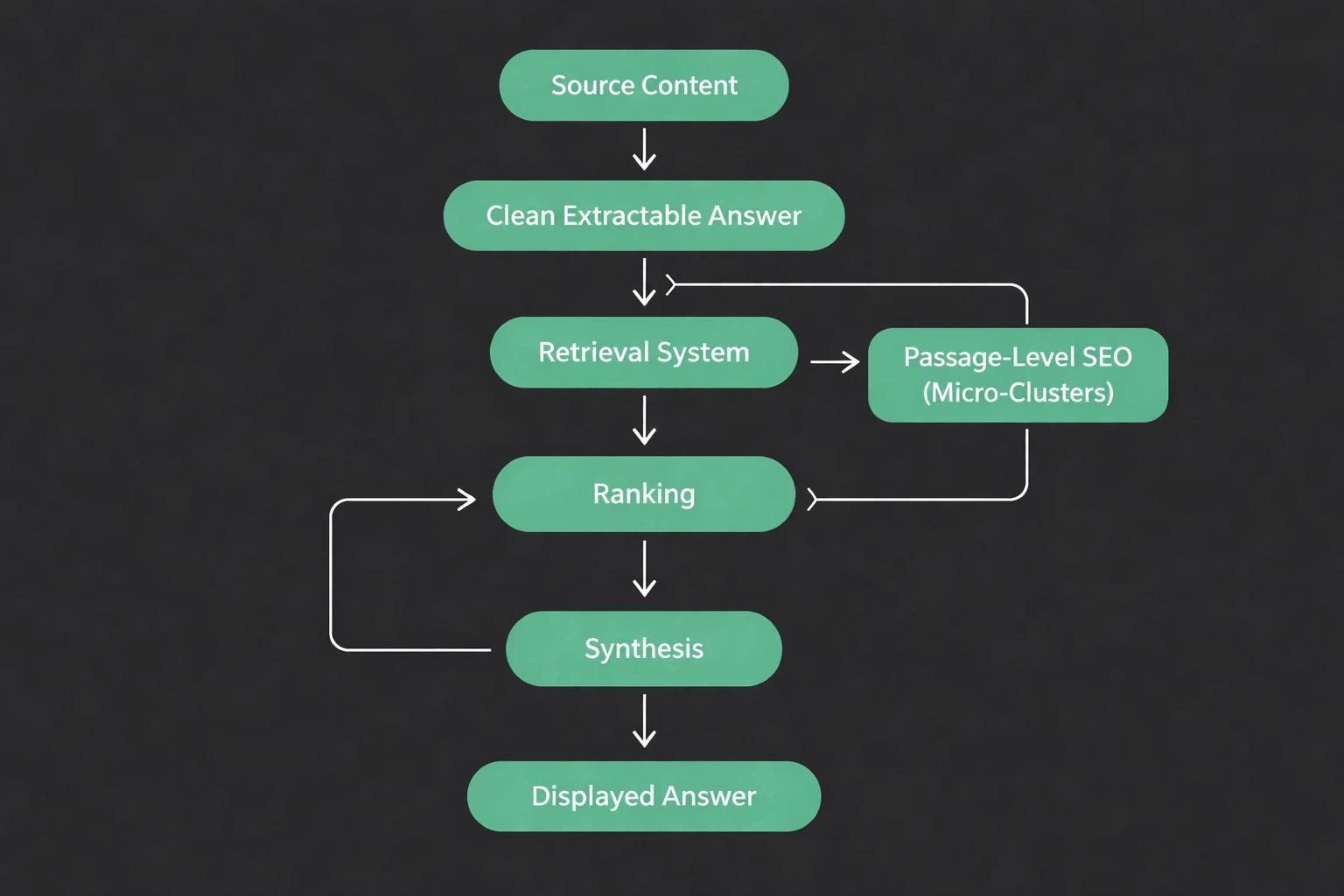
ChatGPT cites sources that hand it clean, extractable answers. Short, self-contained passages with clear subject-verb-object structure. If you bury your point in a rambling paragraph, you're getting skipped.
LLMs don't browse the web like you and I do. They use retrieval systems that pull passages, rank them, and synthesize an answer. If a passage can't stand on its own as a complete thought, it dies in that retrieval step. That's the whole idea behind Passage-Level SEO: Micro-Clusters That Rank in 2026 breaking content into quotable chunks so you actually survive the synthesis.
Here's a simple breakdown of what gets cited versus what gets ignored:
| Factor | Gets Cited by ChatGPT | Gets Ignored |
|---|---|---|
| Opening paragraph | Direct, self-contained answer | Vague intro, "in this article" phrasing |
| Entity clarity | Named entities early and often | Pronouns and generic references |
| Sentence structure | Subject-first, under 25 words | Long, clause-heavy sentences |
| Data support | Specific numbers, tables | Unsupported claims |
| Internal structure | Clear H2s answering sub-questions | Wall-of-text sections |
Curious if AI crawlers even see your site? The AI Citation Tracking tool shows which of your pages pop up in LLM responses and which are basically invisible.
The Overlap Between Google Ranking and AI Citation Signals
Google and AI citation signals overlap more than most marketers want to admit. Both like clear entities, logical structure, and evidence. Both hate vague framing and keyword stuffing.
This is why optimizing for AEO no longer means throwing traditional SEO out the window. They've basically merged. A page written with tight semantic structure tends to perform well in both classic SERPs and AI-generated answers. We go deeper into this in AEO 2026: Optimizing for AI Search Engines.
Where they diverge is freshness. Google still leans on backlinks and domain authority. LLM retrieval cares way more about how recent and clear your content is. That's why Domain Freshness Signals: Why They Control SEO in 2026 is worth a read if you're trying to win in both places.
How Internal Linking Builds Semantic Context
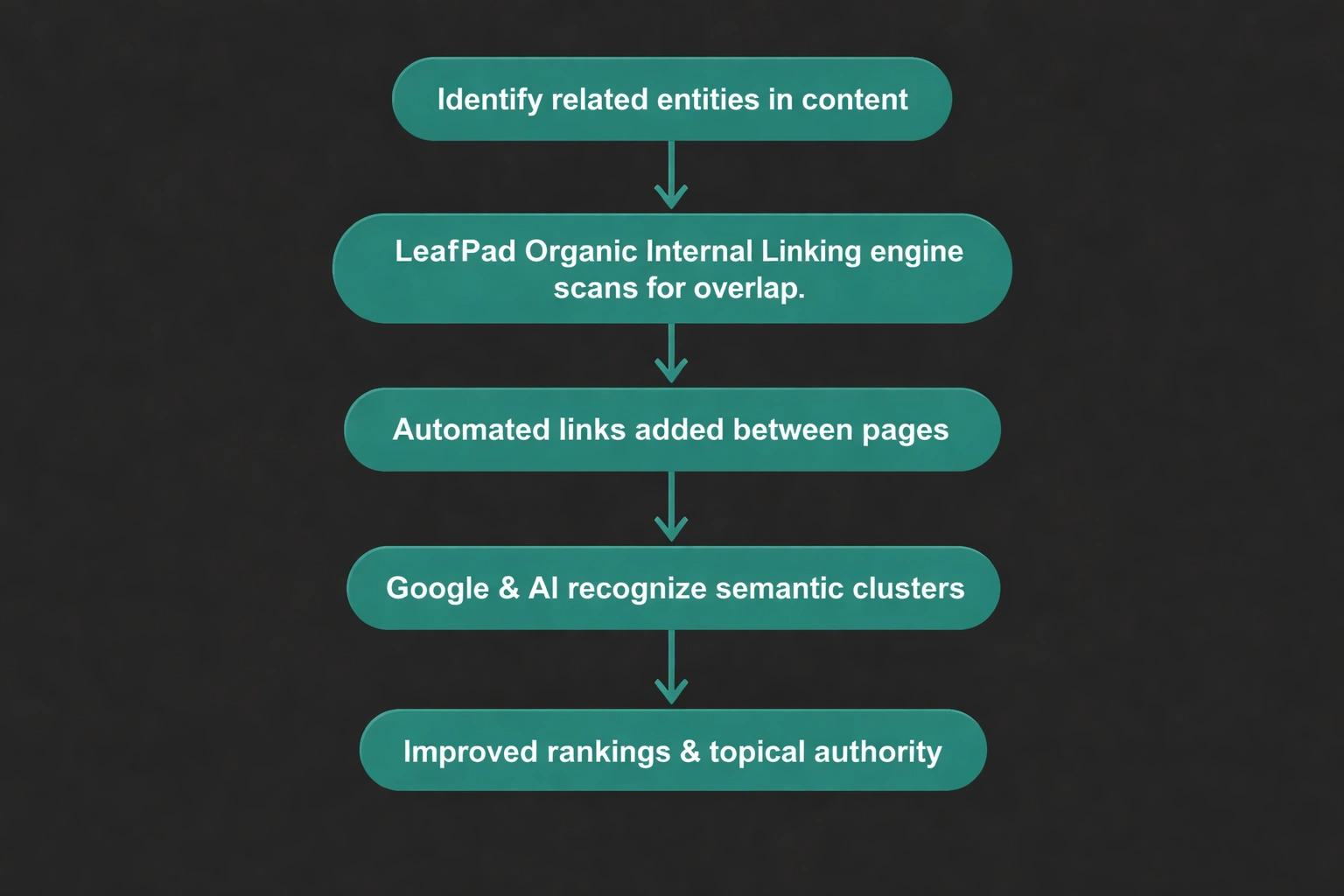
Internal linking is shockingly underused. When you link "local SEO" to a page about Google Business Profile optimization, you're literally teaching the crawler that these concepts belong together.
Doing this manually is a pain, especially on large blogs. Automated tools like LeafPad's Organic Internal Linking engine scan for entity overlap and add the links for you. The payoff is real. Google sees a coherent topic cluster, and AI systems see passages that reinforce each other. Without this, you might rank for random keywords, but you'll never build the topical authority needed for AI citation.
Structured Data and Semantic Signals Machines Trust
Structured data is just handing the answer key to the machine. Schema markup for articles, FAQs, and local businesses removes the guesswork. It's the fastest way to improve semantic context without rewriting everything.
And in 2026, schema isn't optional. It just isn't. Google's AI Overviews pull heavily from it. Google AI Overview 2026: SEO Strategies for Visibility covers how to win those spots; marked-up pages consistently beat unmarked ones in AI Overviews and featured snippets. For local businesses, this means review schema and business attributes. Google My Business Description SEO Guide for 2026 pairs structured data tips with plain-language entity descriptions, hitting the meaning from both sides.
Practical Steps to Strengthen Semantic Context Today
The fastest way to improve semantic context is to audit what you already have. Read your top ten pages. Can a stranger tell exactly what the page is about from the first two sentences? If not, rewrite it.
A few things worth running through:
- Name the main entity in the first sentence of every page and section.
- Break long paragraphs into passages that could stand alone as an answer.
- Link conceptually related pages. Tools like Organic Internal Linking do this without the manual hassle.
- Run pages through a Keyword Density Analyzer to catch over-optimization that muddies the meaning.
- Use the LSI Keyword Generator to find related terms that reinforce what you're actually talking about.
- Check indexing status with the Index Checker to make sure pages are even being crawled.
Small teams often assume semantic optimization requires deep technical skill. It doesn't. It just requires the discipline to be clear. Platforms built for Local SEO Marketing Agency Software Guide 2026 are starting to bake these checks right into the publishing workflow, which takes the manual burden off your plate.
The Bottom Line
Semantic context isn't a niche enterprise thing anymore. It's the difference between getting cited and getting ignored. Both Google and ChatGPT reward clarity and entity precision. The sites winning in 2026 treat every page like a set of quotable answers connected by internal links and schema. The sites losing are still writing for keywords instead of meaning. If you're restructuring your strategy around this, start with your pricing page workflow and audit tools, then work out through the rest of your blog.
Published with LeafPad