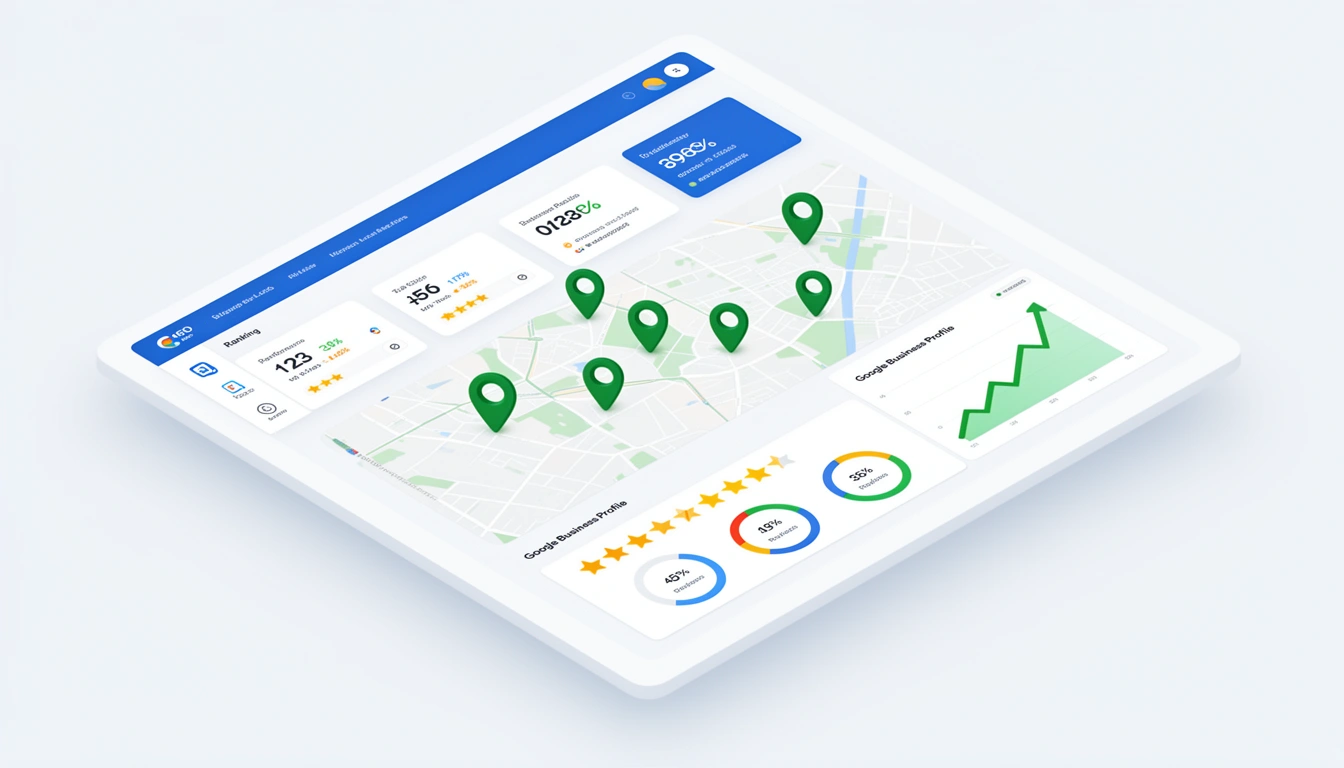
Local SEO marketing agencies face a unique challenge in 2026: managing campaigns across dozens or hundreds of client locations while maintaining quality, consistency, and measurable results. The right software stack can mean the difference between scaling profitably and drowning in manual work.
This guide breaks down the essential software categories, features, and selection criteria that local SEO agencies need to deliver exceptional results without burning out their teams.
Why Standard SEO Tools Fall Short for Local Agencies
Traditional SEO platforms were built for single-site optimization. Local agencies need fundamentally different capabilities:
- Multi-location management: Track 50+ locations per client across different cities
- White-label reporting: Client-facing dashboards with agency branding
- Granular tracking: Monitor rankings for "near me" and geo-specific keywords
- Citation management: Automate directory submissions across hundreds of platforms
- Review monitoring: Aggregate feedback from Google, Yelp, Facebook, and industry-specific sites
Without purpose-built tools, agencies spend 15-20 hours per week on tasks that software should handle automatically.
Core Software Categories for Local SEO Agencies
1. Rank Tracking and Visibility Monitoring
Local rank tracking differs dramatically from traditional SEO monitoring. You need software that:
- Checks rankings from specific ZIP codes and neighborhoods
- Tracks Google Map Pack positions separately from organic results
- Monitors mobile vs. desktop performance (crucial for local searches)
- Alerts you to sudden drops in visibility
For a comprehensive breakdown of the best options, check out our complete guide to local rank tracker tools for 2026.
2. Citation and Listing Management
Managing business listings across 50+ directories manually is impossible at scale. Modern citation software should:
- Scan existing listings for inconsistencies
- Submit to major aggregators (Neustar, Acxiom, Factual)
- Update information across networks in bulk
- Provide citation accuracy scores
Many agencies have moved away from legacy platforms toward more flexible alternatives. See our analysis of BrightLocal competitors and alternatives in 2026 for modern options that better serve agency workflows.
3. Review Management Platforms
Reviews directly impact local rankings and conversion rates. Your software should:
- Aggregate reviews from all major platforms in one dashboard
- Send automated review request campaigns
- Alert clients to new reviews requiring responses
- Track sentiment trends over time
Understanding how reviews influence rankings is critical. Our guide on Google Reviews for SEO in 2026 explains the ranking mechanics in detail.
4. GBP (Google Business Profile) Management
Google Business Profile remains the foundation of local SEO. Agency software must enable:
- Bulk posting to multiple locations
- Q&A monitoring across all client profiles
- Photo management and optimization
- Insights reporting with year-over-year comparisons
5. Audit and Reporting Tools
Agencies need to demonstrate value through clear, comprehensive reporting:
- Automated monthly reports showing ranking changes, review growth, and traffic
- Customizable white-label templates
- Competitive benchmarking against local competitors
- Audit tools that identify technical issues affecting local visibility
Learn more about specialized local SEO audit tools built for agencies.
Essential Features for Agency-Grade Software
When evaluating local SEO software, prioritize these agency-specific capabilities:
Client Management
- Separate workspaces for each client
- User permission controls (client view vs. agency admin)
- Bulk operations across multiple locations
- API access for custom integrations
Scalability
- Pricing that doesn't explode as you add locations
- Ability to track 1,000+ locations without performance degradation
- Team collaboration features (assignments, notes, task management)
White-Label Capabilities
- Custom branding on all client-facing materials
- Your domain for client portals
- Branded mobile apps (advanced platforms)
Automation
- Scheduled reporting delivery
- Automated citation building workflows
- Review request campaigns
- Rank checking on custom schedules
Integration with Content and Technical SEO
Local SEO doesn't exist in isolation. Your software stack should connect with:
- Content platforms: Publish location-specific blog content automatically
- Analytics tools: Tie local rankings to actual traffic and conversions
- CRM systems: Connect leads to specific local campaigns
- Social media: Coordinate posts with GBP updates
For agencies managing content at scale, automated publishing becomes essential. Discover how automated local SEO systems can scale rankings across locations without proportional increases in labor.
Pricing Models and ROI Considerations
Local SEO software typically follows these pricing structures:
- Per-location pricing: $5-20/month per location tracked
- Tiered agency plans: $200-1,000/month for unlimited locations with feature restrictions
- Enterprise custom pricing: Negotiated rates for 500+ locations
Calculate ROI by measuring:
- Hours saved on manual tasks (worth $50-150/hour for skilled labor)
- Client retention improvement (reducing churn by 10% often justifies significant software investment)
- Capacity increase (how many more clients can you serve with the same team?)
Building Your Agency Tech Stack in 2026
Most successful agencies use 3-5 specialized tools rather than trying to find one platform that does everything:
- Core platform: Handles rank tracking, citations, and reporting
- GBP management: Specialized tool for Google Business Profile
- Review platform: Dedicated review monitoring and generation
- Content system: Automated publishing for programmatic SEO
- Audit tool: Technical SEO and competitor analysis
The key is ensuring these tools integrate well or share data through common formats (CSV exports, API connections, Zapier automation).
Future-Proofing Your Software Selection
With AI rapidly changing local search, prioritize software vendors who:
- Have published roadmaps showing AI feature development
- Offer API access so you can build custom AI workflows
- Update ranking algorithms to match Google's local search changes
- Add support for new platforms as they emerge
The local SEO software landscape will continue evolving rapidly through 2026. Agencies that build flexible, integrated tech stacks will outperform those locked into legacy platforms that can't adapt.
Making the Final Decision
Before committing to any platform:
- Run parallel trials: Test 2-3 options with real client data
- Involve your team: The software won't deliver ROI if your team hates using it
- Review contract terms: Avoid long-term commitments until you've validated the platform
- Calculate total cost: Include training time, migration effort, and ongoing management
The right local SEO marketing agency software transforms how you deliver services moving from labor-intensive manual work to strategic oversight of automated systems. As client expectations for transparency and results continue rising, agencies without proper software infrastructure will struggle to compete on both service quality and profitability.
Published with LeafPad