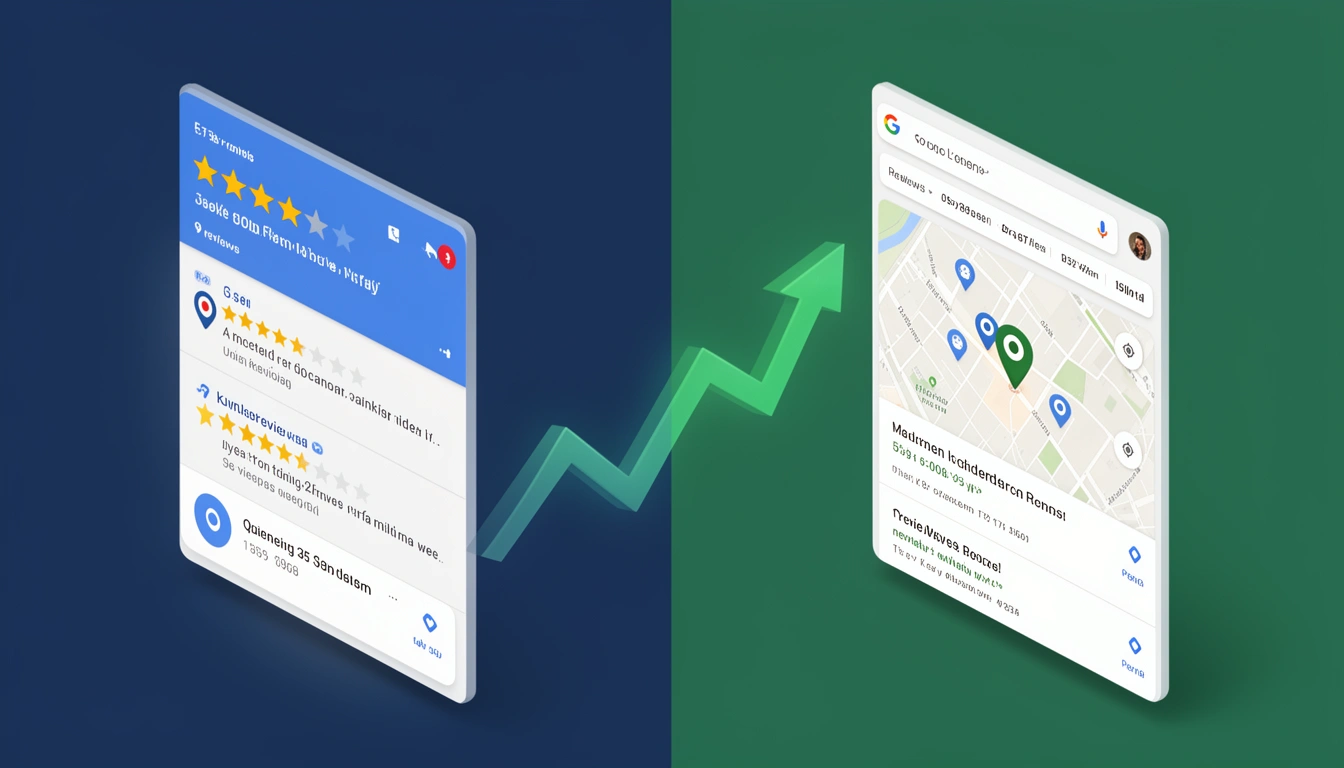
Why User Reviews Matter for Local Search
Most local businesses focus on keywords and backlinks. Those are fine. But reviews specifically Google reviews are often an overlooked ranking signal. They're not just for social proof. They directly affect where you show up in local search.
How Reviews Move the Needle
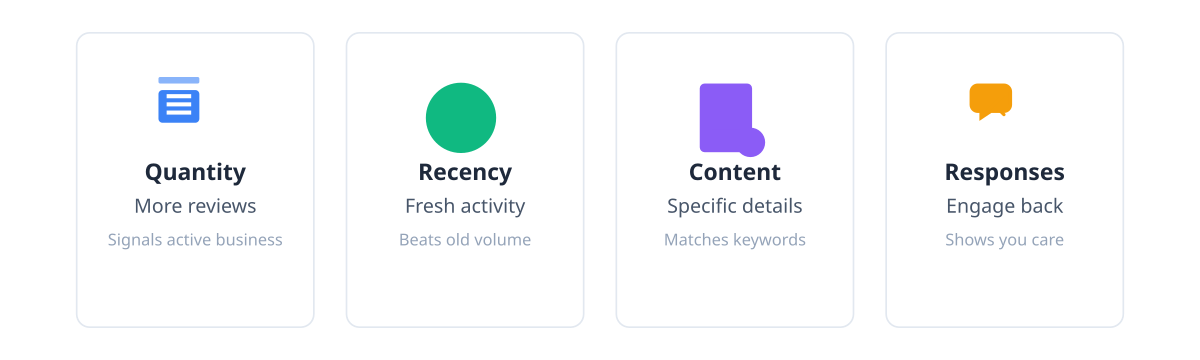
Google's local algorithm weighs hundreds of factors. Reviews are near the top.
Quantity matters. More reviews usually correlate with higher local pack rankings. It signals to Google that a business is active and legitimate.
Recency counts, too. A business with ten new reviews this month will often outrank one with fifty reviews from two years ago. Google cares that you're open and engaging with people now.
Content helps. A review that says "Great AC repair in Austin" gives Google more to work with than "Good job." Those details help match you to relevant searches.
And responses matter. Replying to reviews good or bad shows Google you're an active manager. It's an engagement signal.
For multi-location strategies, our Automated Local SEO: Scale Rankings Across Locations goes deeper.
Where Reviews Show Up
Google Business Profile
Your profile is the anchor. Reviews heavily influence your spot in the "local 3-pack" at the top of search results. Data suggests they account for about 15-20% of the ranking weight there. If a competitor has 200 reviews and you have 20, they have a head start.
Voice and AI Search
In 2026, AI assistants parse reviews to answer queries like "best pizza near me." They scan for quality comments, menu mentions, and sentiment. Rich, detailed reviews make you a candidate for AI recommendations. Our AI SEO guide explains the mechanics.
"Near Me" Queries
"Near me" searches are common. Google prioritizes businesses with strong review profiles for these because reviews validate quality. See our guide on How to Rank for Near Me Searches.
Getting Reviews (The Right Way)
Passive hope isn't a strategy. You need a process.
Ask at the right time. Request a review right after a purchase or service, when satisfaction is highest. A follow-up text or email within 24-48 hours works best.
Remove friction. Send a direct link to your Google review page. Every extra click loses people. Texts usually outperform emails for local businesses.
Train your staff. A simple in-person ask works wonders: "If you enjoyed your experience, we'd love a quick review on Google."
Keep a Steady Flow (Velocity)
Google likes consistency. Five reviews a month for six months looks healthier than 30 reviews in one week followed by silence.
Set monthly targets based on volume. A restaurant might aim for 20-30; a B2B service might aim for 5-10.
Different customers need different touches. High-value clients might need a personal email; high-volume retail customers respond better to automated texts.
Make the Content Count

"Good job" is fine. "Great AC repair in Austin" is better.
When you ask for reviews, prompt specifics. Try: "If you have a minute, we'd love to hear about your experience with [service] or working with [team member]."
This gives Google keyword-rich context.
Respond to Everything
Aim for a 100% response rate. Thank people for positive reviews. Address negative ones professionally. Your responses are indexed, so you can naturally include keywords: "Thanks for choosing [Business Name] for your [service] needs in [city]."
A well-handled negative review can actually build trust. It shows you're responsive, not just defensive.
Don't Ignore Other Platforms
Google is king, but others matter.
Facebook Reviews still carry weight for some demographics.
Industry sites like Yelp, TripAdvisor, or Healthgrades drive traffic and secondary signals.
Better Business Bureau listings build trust.
Our Local Search Listings Guide covers platform management.
Technical Details
Use schema markup. This lets Google display star ratings in search results, which can lift click-through rates by 20-35%.
Display reviews on your site. Widgets or feeds keep your site content fresh and add user-generated text.
Watch competitors. If their reviews frequently mention "fast service," that's a keyword opportunity for you.
Mistakes That Backfire

Buying reviews. Google catches this. The penalty isn't worth the risk.
Ignoring negatives. Silence looks like apathy. Always respond.
Bribing for positivity. You can ask for feedback. You cannot pay for positive reviews. That violates policy.
Not monitoring. Set alerts. Aim to respond within 24-48 hours.
What to Track
- Reviews per month
- Average rating over time
- Response rate and speed
- Local pack rankings for target keywords
- Google Business Profile insights
- Traffic from local search
Our Local Search Engine Optimization Tools Guide lists tools to track these efficiently.
How LeafPad Helps
Reviews are one half of the equation. Consistent, local content is the other.
LeafPad helps you publish location-specific blog content. You don't need technical skills. You answer questions, and we build the content infrastructure that supports your review strategy.
Start Today
Reviews aren't optional. They're a core ranking factor.
Set up a process to ask for them. Respond to every one. Keep them coming.
Use LeafPad to handle the content side. Together, you cover the bases that drive local visibility.
Published with LeafPad