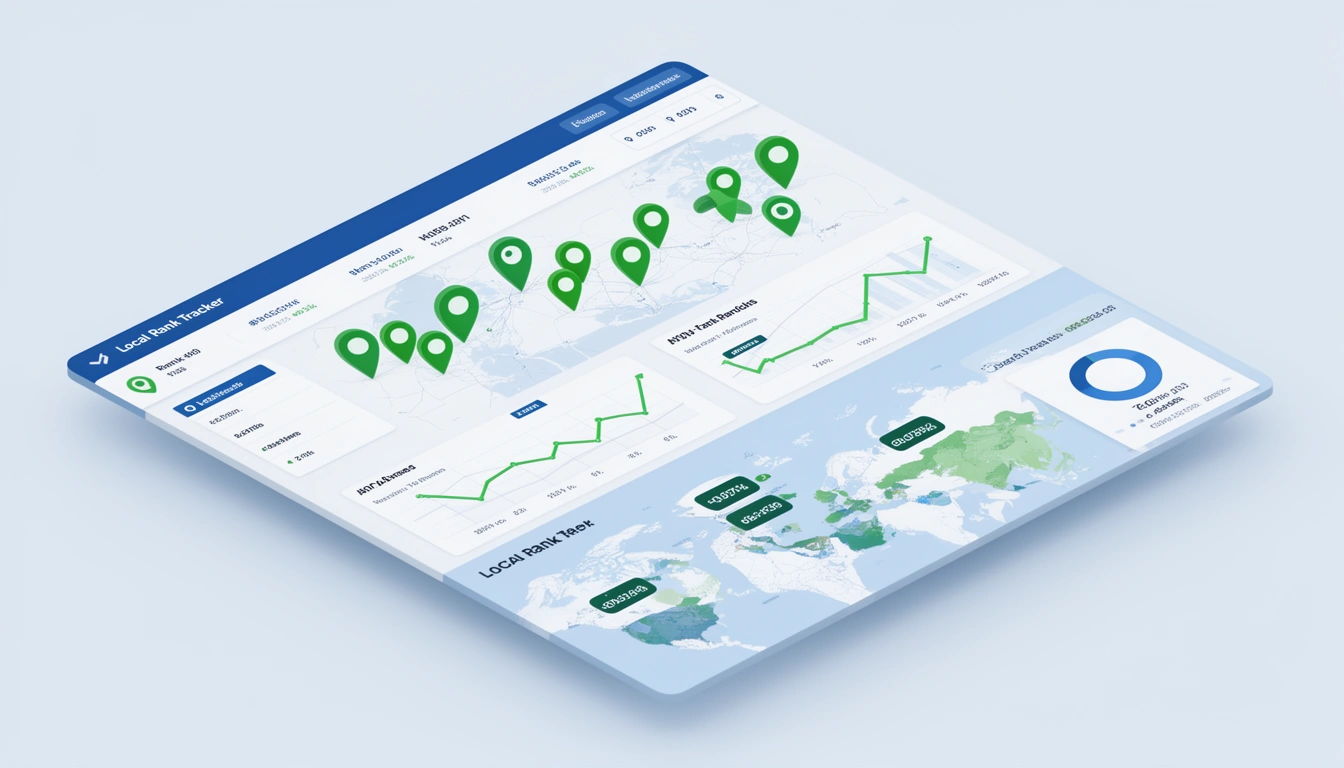
Local businesses need to know where they stand in search results across different locations. A local rank tracker monitors your business's position in search engines for specific keywords in targeted geographic areas, giving you the data needed to measure SEO performance and outmaneuver competitors.
Unlike traditional rank tracking that shows generic national results, local rank tracking reveals how your business appears in searches performed from specific cities, neighborhoods, or even street-level locations. This precision is critical because Google shows different results based on the searcher's location what ranks #1 in downtown Chicago might not even appear on page one in a Chicago suburb.
Why Local Rank Tracking Matters in 2026
Local search behavior has evolved dramatically. With AI-powered search results and personalized local packs dominating SERPs, businesses can't rely on gut feelings about their visibility. Local rank trackers provide concrete data showing:
- Geographic performance gaps: Which locations show strong rankings versus areas needing attention
- Competitor positioning: Who's outranking you and where they're winning
- Keyword opportunities: Which local search terms drive visibility and which need optimization
- GMB impact: How your Google Business Profile affects map pack rankings
- Trend analysis: Ranking fluctuations over time across all service areas
For businesses serving multiple locations, manual checking becomes impossible. A local rank tracker automates this process, providing daily or weekly snapshots of your local search presence.
How Local Rank Trackers Work
Local rank tracking tools use geo-specific search simulations to check rankings. They query search engines from designated locations, recording where your business appears for target keywords. Advanced trackers distinguish between:
Organic local results: Standard search results influenced by location signals
Map pack rankings: The top 3 businesses shown in Google's local map results
Near me queries: Location-triggered searches like "coffee shop near me"
The best local rank trackers pull data from multiple grid points within a city, providing granular visibility into how rankings shift across neighborhoods. This micro-level tracking reveals opportunities that city-wide averages miss.
Essential Features to Look For
When evaluating local rank tracking solutions, prioritize these capabilities:
Multi-location tracking: Monitor rankings across all service areas from one dashboard. Essential for businesses with multiple locations or service regions.
Map pack visibility: Track positions in Google's local 3-pack separately from organic results, since these drive the majority of local clicks.
Competitor benchmarking: Compare your rankings against specific competitors to identify competitive gaps and opportunities.
Mobile vs desktop tracking: Mobile local searches often show different results than desktop, requiring separate tracking.
Reporting automation: Scheduled reports showing ranking changes, trends, and alerts for significant movements.
For detailed comparisons of specific tools, check out our guide on best local rank tracker tools for 2026.
Integrating Rank Data with Your Local SEO Strategy
Raw ranking data only becomes valuable when you act on it. Connect your local rank tracker findings to concrete optimization efforts:
Identify underperforming locations: When certain service areas show weak rankings, investigate local citation consistency, Google Business Profile optimization, and location-specific content gaps.
Optimize for ranking keywords: Double down on keywords where you rank positions 4-10, as these represent the easiest wins for moving into higher visibility zones.
Address ranking drops quickly: Set up alerts for significant ranking decreases, allowing you to diagnose and fix issues before they impact traffic.
Validate optimization impact: After making changes to your local SEO strategy, use rank tracking to measure effectiveness and ROI.
Many businesses also use rank tracking data alongside review monitoring to understand the correlation between review velocity and ranking improvements.
Common Local Rank Tracking Mistakes
Even with powerful tools, businesses often undermine their tracking efforts through these errors:
Tracking too many keywords: Focus on 10-20 high-value local keywords per location rather than hundreds of irrelevant terms. Quality over quantity yields actionable insights.
Ignoring search intent: Track keywords that match actual customer search behavior, not just terms with high volume.
Inconsistent check-ins: Rankings fluctuate daily. Weekly or monthly tracking provides better trend data than sporadic checking.
Forgetting mobile rankings: Over 70% of local searches happen on mobile devices. Desktop-only tracking misses the majority of your audience.
Not tracking competitors: Your absolute ranking matters less than your position relative to competitors. Always track 3-5 key competitors.
Automated Local SEO and Rank Tracking
The future of local SEO combines rank tracking with automated optimization. Rather than manually analyzing ranking data and implementing changes, modern platforms connect tracking insights directly to content updates and technical fixes.
For businesses managing local SEO across multiple locations, automated local SEO systems pair rank tracking with programmatic content generation, ensuring each location has optimized pages that respond to ranking data in real-time.
This integration eliminates the gap between knowing your rankings and doing something about them the tracking system identifies opportunities, and the automation executes the optimization.
Getting Started with Local Rank Tracking
Begin your local rank tracking strategy with these steps:
- Define your service areas: List all cities, neighborhoods, or regions you want to monitor
- Select target keywords: Choose 10-15 core keywords per location that reflect actual customer searches
- Choose your tracking tool: Select a platform matching your budget and feature requirements
- Set baseline rankings: Capture initial rankings to measure future progress
- Establish reporting cadence: Schedule weekly or bi-weekly rank reports for consistent monitoring
- Connect to optimization: Create a workflow linking ranking insights to content and technical improvements
Local rank tracking transforms local SEO from guesswork into a data-driven growth channel. By understanding exactly where you stand across all service areas, you can allocate resources strategically, outmaneuver competitors, and capture more local search traffic that converts into customers.
The businesses winning local search in 2026 aren't guessing they're tracking, measuring, and optimizing based on real performance data.
Published with LeafPad