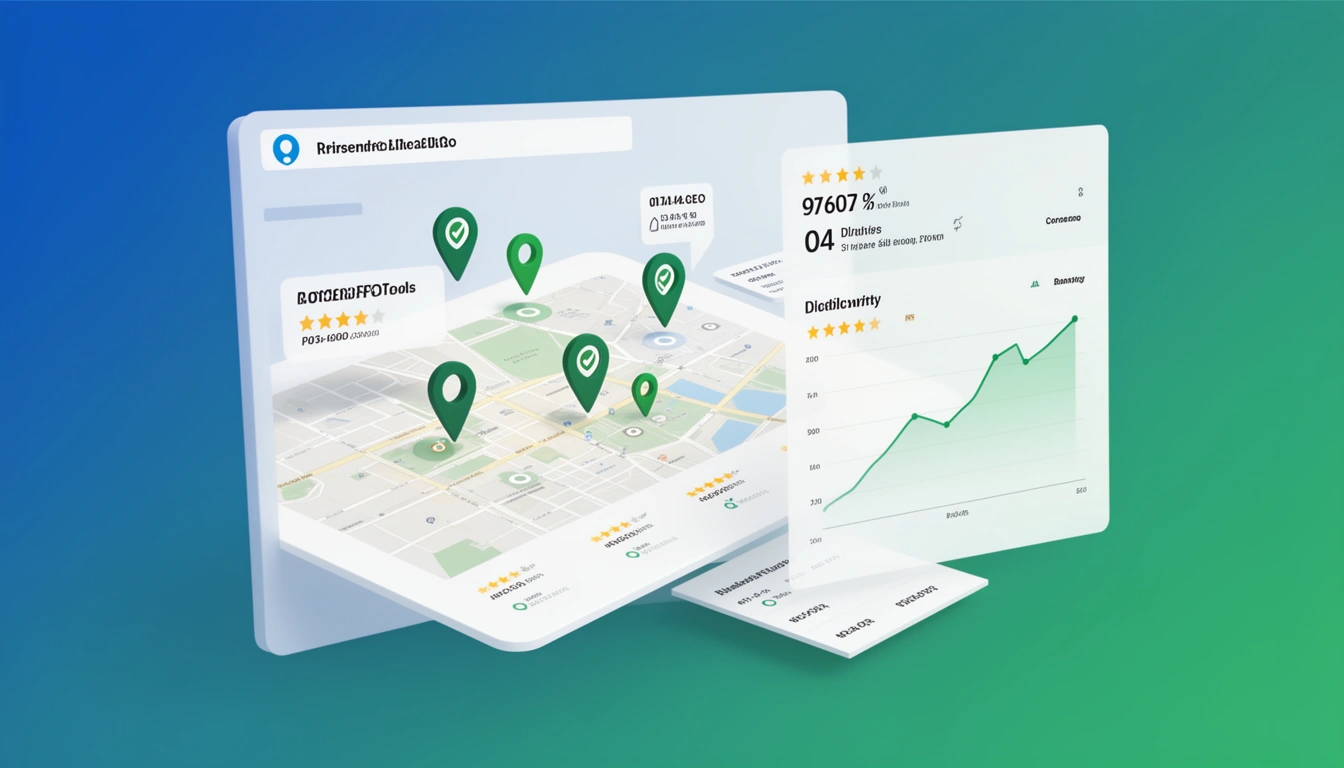
Local businesses face a unique challenge in 2026: competing for visibility in an increasingly AI-driven search landscape where traditional SEO tactics no longer guarantee results. Whether you're managing a single location or scaling across multiple cities, the right local search engine optimization tools can mean the difference between dominating your market and disappearing into obscurity.
This guide breaks down the essential tools every local business needs to rank higher, attract more customers, and automate the tedious work that traditionally consumed hours of manual effort.
Why Local SEO Tools Matter More Than Ever in 2026
Google's search algorithms now prioritize hyper-local relevance, real-time signals, and user intent matching. AI overviews and ChatGPT-powered search results have changed how customers discover local businesses. Without the right tools monitoring your performance, managing citations, and optimizing your presence, you're essentially flying blind.
Local SEO tools automate critical tasks like tracking rankings across different locations, monitoring competitor movements, managing review responses, and ensuring your business information stays consistent across hundreds of directories. For businesses serious about automated local SEO at scale, these tools are non-negotiable.
Rank Tracking Tools for Local Search
Understanding where you rank for critical "near me" and location-specific keywords is foundational to any local SEO strategy. Modern rank trackers go beyond simple position monitoring they track local pack rankings, map placements, and mobile vs. desktop differences.
Look for tools that offer grid-based tracking (monitoring rankings from multiple geographic points), competitor comparison features, and integration with Google Business Profile insights. The best platforms update rankings daily and can track thousands of keywords across multiple locations simultaneously.
For businesses managing multiple locations, choosing the right solution is critical. Our comprehensive guide on best local rank tracker tools for 2026 covers the top options with detailed feature comparisons.
Google Business Profile Management Platforms
Your Google Business Profile remains the cornerstone of local search visibility. Management tools help you optimize every element from business descriptions and categories to photos, posts, and review responses.
Advanced platforms offer bulk editing for multi-location businesses, automated post scheduling, review monitoring with sentiment analysis, and insights dashboards that highlight performance trends. Some tools even use AI to suggest optimization improvements based on top-performing competitors in your category.
If you're working on optimizing your Google Business Profile description, dedicated management tools can A/B test different versions and track which language drives more clicks and conversions.
Citation Management and Directory Listing Tools
Consistent NAP (Name, Address, Phone) information across hundreds of online directories signals trustworthiness to Google and other search engines. Citation management tools automate the tedious process of submitting, updating, and monitoring your business listings.
These platforms scan the web for existing citations, identify inconsistencies, and push corrections across major directories like Yelp, Yellow Pages, Bing Places, and industry-specific platforms. Some tools also monitor for duplicate listings that can dilute your SEO authority.
For budget-conscious businesses, there are several free alternatives to premium citation tools that still deliver solid results for single-location businesses.
Review Management and Reputation Tools
Online reviews directly impact local search rankings and customer decisions. Review management tools centralize feedback from Google, Facebook, Yelp, and industry-specific platforms into a single dashboard.
The best solutions offer automated review request workflows, sentiment analysis, competitor review monitoring, and templated responses that maintain brand voice while speeding up reply times. Some platforms even integrate with your CRM to trigger review requests after specific customer interactions.
Reviews aren't just about reputation they're a powerful ranking factor. Understanding how Google reviews impact SEO helps you prioritize this aspect of your local strategy.
Local SEO Audit and Competitive Intelligence Tools
Competitive analysis tools reveal what's working for top-ranking competitors in your market. They analyze on-page optimization, backlink profiles, citation quality, review volume and ratings, and content strategies.
Advanced platforms provide gap analysis showing opportunities where competitors rank but you don't, keyword suggestions based on local search volume, and alerts when competitors make significant changes to their strategies.
These insights are invaluable when you're trying to improve your local search visibility in competitive markets.
Local Content and Schema Markup Tools
Creating location-specific content at scale requires tools that can generate, optimize, and publish pages without manual duplication. Programmatic SEO platforms enable businesses with multiple locations to create unique, valuable pages for each service area.
Schema markup generators help you implement LocalBusiness structured data, ensuring search engines understand your business type, location, hours, and services. Proper schema implementation increases your chances of appearing in rich results and knowledge panels.
All-in-One Local SEO Platforms
For businesses wanting a unified solution, all-in-one platforms combine rank tracking, citation management, review monitoring, and reporting into a single interface. These tools reduce the complexity of managing multiple subscriptions and provide holistic performance views.
Popular options include BrightLocal, Whitespark, and Local Viking, though the market has evolved significantly. If you're evaluating these platforms, comparing BrightLocal competitors and alternatives helps identify which solution best fits your needs and budget.
Choosing the Right Tools for Your Business
The ideal local SEO tool stack depends on your business size, number of locations, budget, and technical capabilities. Single-location businesses can often succeed with a combination of free tools and one paid platform, while multi-location enterprises need robust automation and reporting.
Start by identifying your biggest pain points: Is it tracking rankings? Managing reviews? Keeping citations consistent? Prioritize tools that solve your most pressing challenges first, then expand your stack as you scale.
For businesses focused on content-driven local SEO growth, integrating your local search tools with a modern blogging platform like LeafPad creates a powerful combination automated technical SEO paired with scalable, location-specific content that drives organic traffic and builds domain authority.
The Future of Local SEO Tools
As we move deeper into 2026, expect local SEO tools to incorporate more AI-powered features: predictive analytics forecasting ranking changes, automated content generation for local pages, voice search optimization, and deeper integration with AI search platforms like ChatGPT and Google's AI Overviews.
The businesses that win local search in the coming years will be those that embrace automation, leverage data-driven insights, and maintain consistent optimization efforts across all local search signals. The right tools don't just save time they unlock growth opportunities that manual efforts simply can't match.
Published with LeafPad