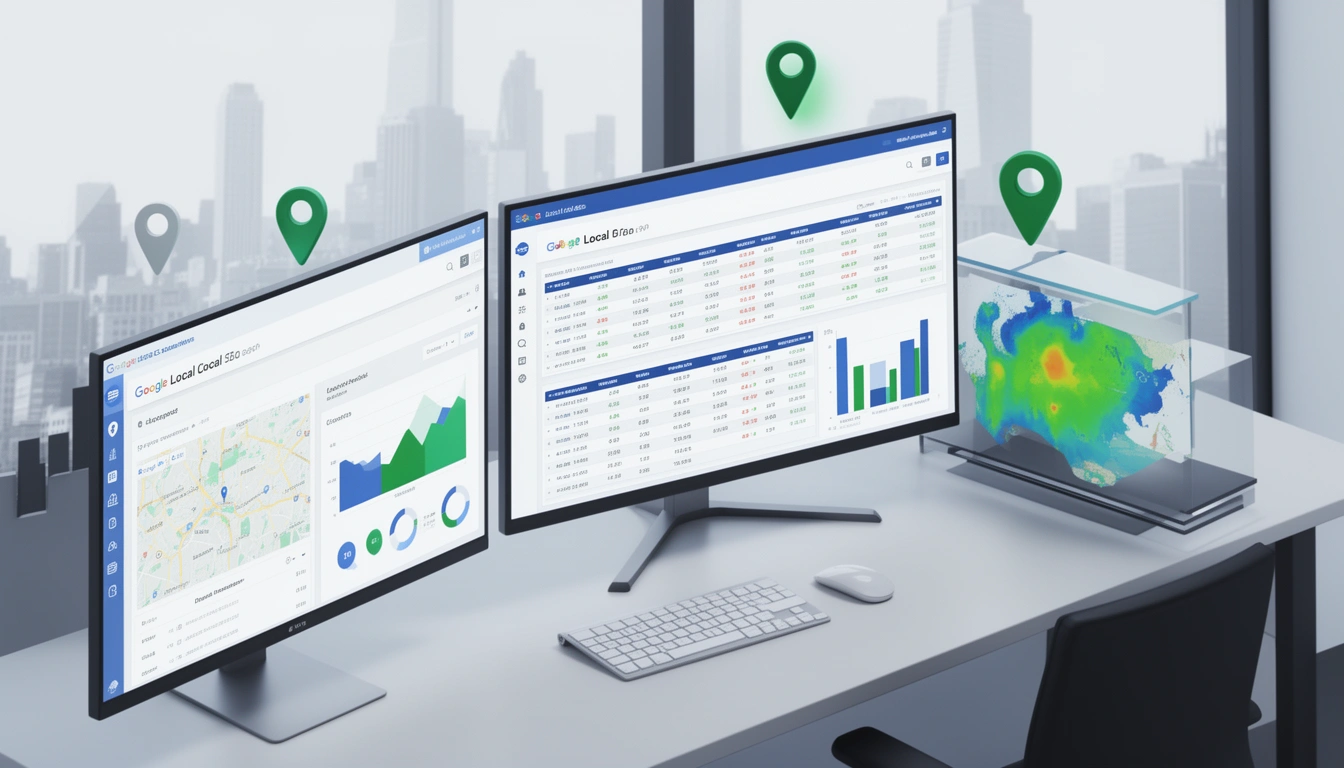
Local SEO research is the foundation of every successful local ranking strategy. Whether you're optimizing for one location or scaling across hundreds, understanding your market, competitors, and customer behavior determines whether you dominate local search results or get buried on page three.
In 2026, local SEO research has evolved beyond basic keyword tools and Google Maps checks. It now involves AI-powered insights, real-time competitor tracking, and automated data collection that can scale across multiple locations simultaneously.
Why Local SEO Research Matters in 2026
Local search behavior has fundamentally changed. Users now expect hyper-specific results that match their exact location, intent, and context. Google's algorithms prioritize businesses that demonstrate deep local relevance through citations, reviews, content, and engagement signals.
Without proper research, you're essentially guessing what your local customers want and hoping Google notices. With systematic research, you build a data-driven strategy that targets the exact queries your customers use, outmaneuvers competitors, and captures high-intent local traffic.
Step 1: Define Your Geographic Targeting
Start by mapping exactly which locations matter for your business. This isn't just about cities it includes neighborhoods, postal codes, and service areas. For multi-location businesses, create a complete inventory of every location that needs optimization.
Document each location's unique characteristics: population density, competition levels, average customer demographics, and local search volume. This foundational data informs every subsequent research decision and helps prioritize which locations get attention first.
Step 2: Identify Local Search Intent Patterns
Local search intent differs significantly from general SEO. Users searching locally often include modifiers like "near me," city names, neighborhoods, or phrases like "open now" and "best in [location]."
Research the specific language your local customers use by analyzing:
- Google autocomplete suggestions for your service + location combinations
- "People Also Ask" sections in local search results
- Local forum discussions and community social media groups
- Customer service inquiries and common questions
- Voice search patterns (increasingly conversational and location-specific)
This intent research reveals the exact questions and needs your content must address to rank and convert.
Step 3: Analyze Local Competitors Systematically
Competitor research in local SEO requires identifying who actually ranks for your target keywords in each specific location. Your competitors may differ by neighborhood, not just by city.
For each location, identify the top 5-10 businesses ranking for your core keywords. Analyze their:
- Google Business Profile optimization (categories, attributes, posts, Q&A)
- Review quantity, velocity, and response patterns
- Citation presence across major directories
- Local content strategies and blog topics
- Backlink profiles from local sources
- Social media engagement and local community presence
Tools like local rank trackers can automate this monitoring across multiple locations, saving hundreds of hours of manual checking.
Step 4: Build Your Local Keyword Database
Local keyword research combines service terms with geographic modifiers. Start with your core services, then expand with location-specific variations.
For each location, research:
- Primary keywords: [service] + [city]
- Neighborhood variations: [service] + [neighborhood/district]
- Near me queries: [service] + near me
- Specific intent: best [service] in [location], affordable [service] [city]
- Emergency/immediate need: [service] open now, 24-hour [service] [location]
Track search volume, competition levels, and ranking difficulty for each keyword variation. This database becomes your content roadmap and optimization checklist.
Step 5: Research Local Citation Opportunities
Citations (mentions of your business name, address, and phone number) remain critical local ranking factors. Research where your competitors are listed and which directories dominate your industry and location.
Identify:
- Industry-specific directories relevant to your niche
- Local chamber of commerce and business association listings
- Geographic-specific directories for your service areas
- Niche platforms where your target customers search
If you're managing multiple locations, consider citation management tools that can automate and scale this research process.
Step 6: Audit Google Business Profile Performance
Your Google Business Profile generates mountains of data about how customers find and interact with your listing. Research this data systematically to understand:
- Which search queries trigger your profile
- How customers interact (website clicks, calls, direction requests)
- Photo engagement and which images perform best
- Comparison data against similar businesses in your area
This first-party data from Google reveals exactly what's working and what needs improvement in your local presence. Use these insights to refine your Google Business Profile optimization strategy.
Step 7: Research Review Signals and Sentiment
Reviews impact both rankings and conversions. Research review patterns for your business and competitors to understand what drives visibility and trust.
Analyze:
- Review velocity (how frequently new reviews appear)
- Rating distribution and average scores
- Keywords mentioned in review text
- Common complaints and praise themes
- Response rates and quality from businesses
Understanding how reviews influence rankings helps prioritize review generation and management in your local SEO strategy.
Step 8: Map Local Content Opportunities
Content marketing for local SEO requires addressing location-specific topics that demonstrate local expertise and relevance.
Research content gaps by identifying:
- Local events, news, and community topics related to your industry
- Neighborhood-specific guides and resources
- Local customer success stories and case studies
- Location-specific FAQ content addressing common questions
- Comparative content ("Service A vs Service B in [City]")
This research informs your editorial calendar and helps you create content that ranks for local queries while demonstrating community connection.
Step 9: Analyze Local Link Building Opportunities
Local backlinks signal geographic relevance and authority. Research which local websites link to competitors and which could realistically link to your business.
Identify:
- Local news sites and media outlets
- Community organizations and nonprofits
- Local business partnerships and suppliers
- Chamber of commerce and industry associations
- Local bloggers and influencers
- Event sponsors and community involvement opportunities
Prioritize opportunities that provide both link value and genuine community connection.
Step 10: Monitor and Update Your Research Continuously
Local search landscapes shift constantly. New competitors emerge, customer behavior evolves, and Google's algorithms update regularly.
Establish a research cadence:
- Weekly: Monitor ranking changes and competitor activity
- Monthly: Review Google Business Profile insights and search console data
- Quarterly: Refresh keyword research and competitor analysis
- Annually: Comprehensive audit of all local SEO factors
Automated tools and platforms can handle much of this ongoing research, especially when managing multiple locations. Businesses scaling automated local SEO across locations need systems that continuously gather and analyze this data without manual intervention.
Turn Research Into Rankings
Local SEO research isn't valuable until it informs action. The businesses that dominate local search in 2026 don't just collect data they systematically apply insights to optimize every ranking factor.
Your research reveals exactly where opportunities exist: the keywords to target, the content to create, the citations to build, and the optimizations that will move the needle. The question isn't whether to do local SEO research it's whether you'll do it systematically enough to outrank competitors who are already executing these strategies.
Start with one location, master the research process, then scale across every market you serve. The data you uncover today becomes the rankings you dominate tomorrow.
Published with LeafPad