SEO text tools are basically spell-checkers for search rankings. They scan your content, flag where you’re thin on keywords, and handle the meta tags most writers forget about. By August 2026, they’ve moved from "nice to have" to standard issue for anyone publishing at scale.
Writing for search used to be a guessing game. You’d write what felt right, publish, and hope something stuck. These tools cut the guesswork by giving you feedback while you type. Whether you’re a solo founder or running content for a growing SaaS, knowing which tools actually matter saves serious time every week.
What Is an SEO Text Tool, Exactly?
It’s software that evaluates your content against ranking factors and suggests fixes. It checks keyword usage, sentence structure, readability, and metadata. The point is simple: help you write something humans read and algorithms reward.
Most tools fall into familiar buckets. Some just analyze, scoring your draft against competitors. Others generate text, drafting headlines or full paragraphs. A third group handles technical details meta tags and linking that writers often skip.
LeafPad tries to combine all three in one editor, but standalone tools still have their place:
- Keyword density analyzers catch over-optimization or thin usage
- Readability scorers measure complexity and flow
- Meta description generators write snippet text automatically
- Headline generators test titles for click potential
- Grammar checkers catch errors that hurt credibility
If you want to experiment without a subscription, LeafPad's free tools directory has standalone versions of most of these. No signup required for basic use.
Why SEO Text Tools Matter More in 2026
Search engines and AI models judge content quality with way more precision than two years ago. Google’s systems and LLM-based search assistants both reward clear, structured, semantically rich writing. They ignore keyword-stuffed pages.
The shift toward AI search optimization has changed what "good content" means. It’s not about hitting a keyword count anymore. You have to answer questions clearly enough that an AI model can extract and cite your content directly.
This is why semantic SEO is the dominant framework now. Tools that only check keyword frequency are gathering dust. The ones that matter analyze:
| Old Focus (2020-2023) | New Focus (2026) |
|---|---|
| Keyword count | Semantic relevance |
| Word count minimums | Answer completeness |
| Exact-match anchors | Natural internal linking |
| Meta tag stuffing | Snippet-worthy clarity |
| Generic readability scores | Passage-level structure |
Passage-level structure is the big one. Our guide on passage-level SEO explains why individual sections now compete for visibility on their own, not just as part of the whole page.
The Core Features Every SEO Text Tool Should Have
A good SEO text tool does more than count keywords. It checks structure, tone, and intent alignment simultaneously. Without these combined checks, you’re optimizing for signals that don’t move rankings anymore.
Here’s what actually matters:
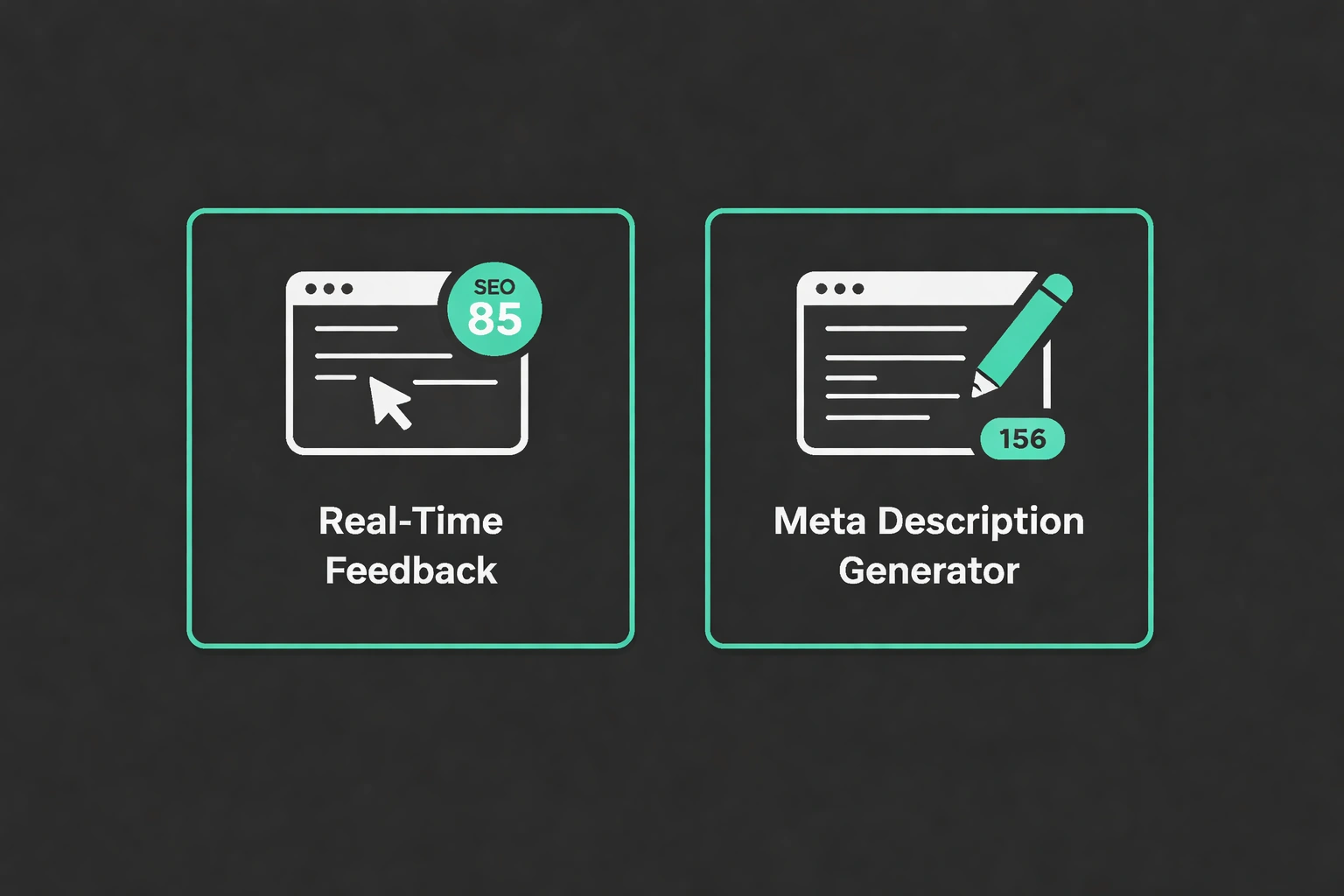
1. Real-time feedback Getting an SEO score after you publish is pointless. Tools like LeafPad's editor score content as you type, working like a grammar checker tuned for search visibility.
2. Meta description and title generation Writing a compelling meta description under 160 characters is harder than it sounds. The meta description generator and SEO title generator tools handle this, testing variations for click-through potential.
3. Keyword density without over-optimization The keyword density analyzer keeps you out of two ditches: thin content that ignores the keyword and stuffed content that reads like garbage.
4. Internal linking suggestions Good tools recommend internal links based on relevance. This is the core of how organic internal linking builds topical authority over time. LeafPad's dedicated internal linking feature handles this automatically across your blog.
5. Snippet and structured data preview Seeing your content as a search result before publishing helps you adjust headlines and descriptions. The snippet generator tool previews this instantly.
AI-Generated Text vs. AI-Assisted Text: Know the Difference
AI-generated tools produce full drafts with almost no human input. AI-assisted tools enhance human writing without replacing the writer. That distinction is huge for quality and search performance in 2026.
Fully AI-generated content tends to read flat when unedited. Search engines and readers are getting better at spotting it. AI-assisted tools keep a human voice while automating the boring stuff: formatting, meta tags, keyword balance.
LeafPad leans toward assisted workflows. The platform can draft a post via its AI blog generator, but the real value comes from editing that draft with the built-in SEO scoring. This fits the philosophy behind content velocity, where publishing frequency matters but not at the cost of quality.
A few practical tips:
- Use AI drafts as a skeleton, not the final product
- Run every AI draft through a readability and grammar pass
- Add original examples, data, or opinions the AI can’t generate
- Check keyword targeting against actual search intent, not just volume
How SEO Text Tools Fit Into a Bigger Content System
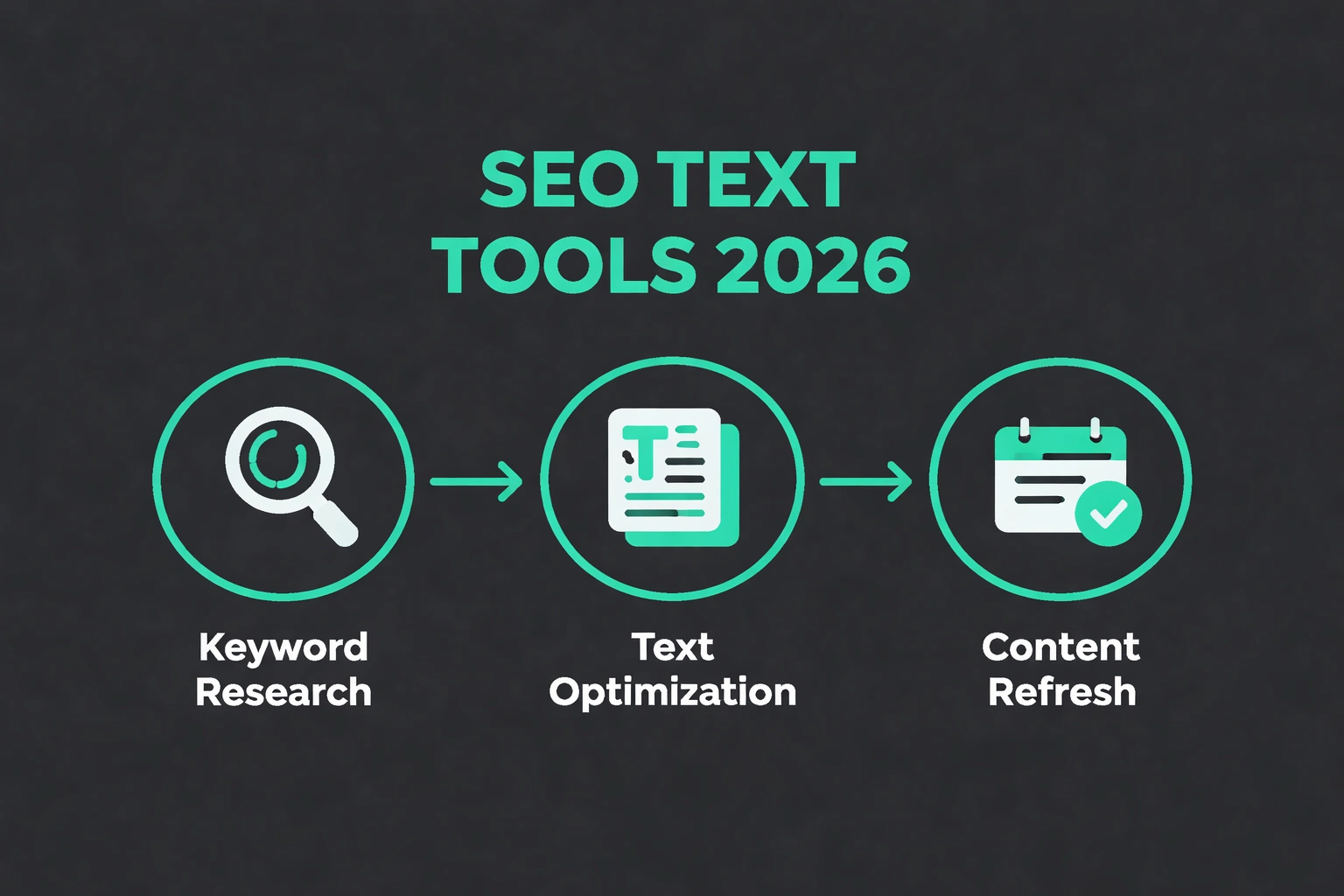
SEO text tools work best as one piece of a larger pipeline. Writing optimized text means little if the page isn’t indexed, linked internally, or refreshed as trends shift.
This is where most solo writers and small teams drop the ball. They optimize a post beautifully, then never touch it again. Meanwhile, content refresh strategies show that updating existing content often beats writing new posts from scratch.
A complete system typically includes:
- Keyword research before writing see LeafPad's keyword research tool for automated discovery
- Text optimization during drafting the SEO text tool layer
- Publishing automation to avoid manual bottlenecks, covered in our auto-publish feature
- Scheduling and planning via a content calendar
- Ongoing refresh cycles to keep older posts competitive
Skip any of these and the system suffers. A perfectly optimized paragraph on a page with no internal links, indexed months late, still won’t rank.
Choosing the Right SEO Text Tool for Your Workflow
Picking a tool depends on your volume, team size, and how much manual control you want. Solo bloggers need different features than agencies managing dozens of clients.
Ask yourself:
- How much content are you publishing weekly? High-volume publishers need automation, not manual scoring.
- Do you write alone or with a team? Collaboration features matter for agencies and marketing teams.
- Is your priority traditional SEO or AI search visibility? Tools optimized for AI citations differ from purely traditional keyword tools.
- Do you need standalone tools or a full platform? Free tools work for occasional use; growing blogs benefit from integrated systems.
If you’re comparing platforms rather than single-purpose tools, it’s worth checking how LeafPad stacks up against alternatives like Jasper AI, Copy.ai, and Scalenut. Each handles the generation-versus-optimization balance differently.
The Bottom Line
SEO text tools are now the backbone of modern content strategy. The best ones combine real-time analysis, AI assistance, and structural guidance without replacing the writer’s judgment. As search shifts toward semantic understanding and AI-driven answers, tools focused on clarity and completeness will outlast the ones still counting keywords.
Start small if you’re unsure where to begin. Try a headline generator or blog outline generator on your next post and see if it saves time. Then build outward into a fuller system as your content needs grow.
Published with LeafPad