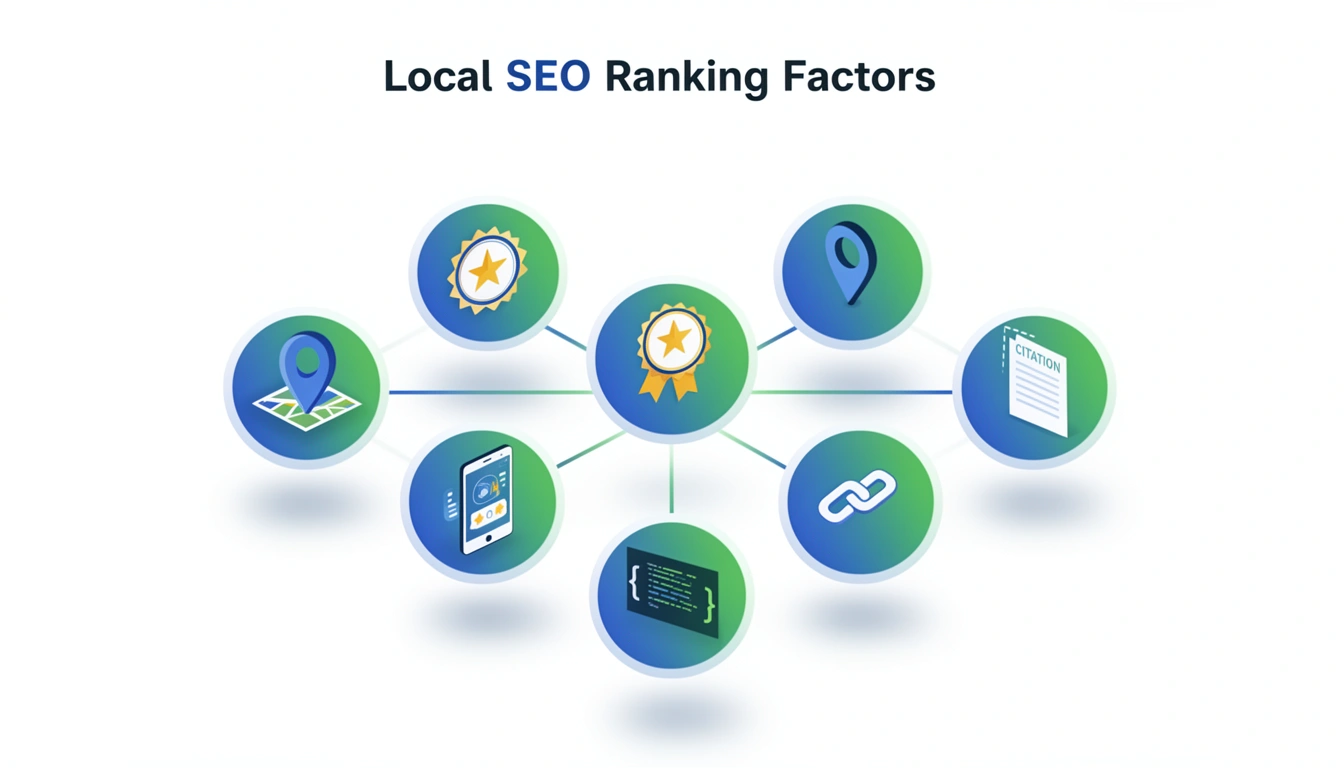
Local SEO success in 2026 isn't about guessing what works it's about understanding the ranking factors that Google and AI search engines prioritize. Whether you're optimizing a single location or scaling across hundreds of markets, knowing which signals matter most can transform your visibility in local search results.
This guide breaks down the critical local SEO factors that determine rankings, how they've evolved, and actionable strategies to leverage them for maximum impact.
Why Local SEO Factors Changed in 2026
Local search has undergone significant transformation. AI-powered overviews, conversational search, and real-time business data now influence how customers discover local businesses. Traditional signals like citations still matter, but search engines now prioritize user intent, engagement metrics, and authentic business signals over manipulable tactics.
The rise of AI search tools like ChatGPT and Perplexity has also created new ranking pathways. These platforms pull from structured data, reviews, and authoritative content making technical optimization more important than ever.
The 7 Core Local SEO Ranking Factors
1. Google Business Profile Optimization
Your Google Business Profile (GBP) remains the foundation of local SEO. Completeness, accuracy, and activity level directly impact rankings. Key elements include:
- Business information accuracy: NAP (Name, Address, Phone) consistency across all platforms
- Category selection: Primary and secondary categories that match your core services
- Business description: Optimized descriptions with relevant keywords and location context
- Photos and videos: Regular visual updates showing your business, products, and team
- Posts and updates: Weekly content that signals active management
2. Review Quality and Velocity
Reviews have evolved beyond simple star ratings. Google analyzes review recency, response rate, sentiment, and keyword relevance. The algorithm now understands context reviews mentioning specific services or product names carry more weight for related searches.
Review velocity matters significantly. Consistent new reviews signal an active, legitimate business. Businesses earning 5-10 reviews monthly typically outrank competitors with higher ratings but stagnant review growth.
3. On-Page Location Signals
Your website must clearly communicate location relevance through:
- Location-specific content: Service area pages, city landing pages, and localized blog content
- Structured data markup: LocalBusiness schema, aggregate review markup, and service schema
- Embedded maps: Google Maps integration showing your location(s)
- Local keywords: Natural inclusion of city, neighborhood, and regional terms
For businesses with multiple locations, each should have a unique, optimized landing page with distinct content not duplicate templates.
4. Citation Consistency and Distribution
Citations mentions of your business name, address, and phone number across directories remain a trust signal. However, quality now outweighs quantity. Focus on:
- Core aggregators: Ensure accuracy on data platforms like Localeze, Neustar, and Foursquare
- Industry-specific directories: Niche platforms relevant to your business type
- Local chambers and associations: Regional business organizations
- NAP consistency: Exact matching across all platforms (including punctuation and abbreviations)
5. Proximity and Physical Location
Searcher proximity to your business remains one of the strongest ranking factors, especially for mobile searches. You can't change your physical location, but you can optimize around it:
- Service area optimization: Clearly define and optimize for your entire service radius
- Neighborhood content: Create content targeting specific neighborhoods you serve
- Near me optimization: Structure content to capture proximity-based searches
6. Behavioral Signals and Engagement
Google tracks how users interact with your business listing:
- Click-through rates: How often users click your listing versus competitors
- Website visits: Traffic from your GBP to your website
- Direction requests: Users getting directions to your location
- Call volume: Phone calls initiated from your listing
- Booking actions: Reservations or appointments made through GBP
These engagement metrics signal relevance and quality to Google's algorithm. Listings that generate high engagement typically rank higher, even with fewer reviews than competitors.
7. Link Authority and Content Quality
Traditional SEO factors still influence local rankings. Quality backlinks from local news sites, chambers of commerce, and industry organizations boost authority. Regular content marketing targeting local topics and questions establishes topical relevance.
For businesses scaling local SEO, automated content systems can maintain freshness across multiple locations without manual overhead.
Emerging Factors in AI Search Discovery
AI search engines introduce new ranking considerations:
- Conversational content: Answer-focused content that addresses specific questions
- Structured data richness: Comprehensive schema implementation for AI parsing
- Source authority: Citations and mentions in AI-training datasets
- Real-time data: Current hours, availability, and inventory information
How to Prioritize Local SEO Factors
Not all ranking factors deserve equal attention. Prioritize based on your current state:
New businesses: Focus first on GBP completeness, citation building, and review generation. These foundational elements establish legitimacy.
Established businesses: Emphasize engagement optimization, content creation, and review velocity. You've built the foundation now drive differentiation.
Multi-location businesses: Implement systematic processes for consistency while maintaining location-specific customization. Automation becomes essential at scale.
Measuring Factor Impact
Track which factors move the needle for your specific market:
- Ranking tracking: Monitor position changes for target keywords across locations
- GBP insights: Analyze search queries, discovery sources, and user actions
- Conversion tracking: Connect search visibility to actual business outcomes
- Competitive analysis: Identify where competitors outperform you on specific factors
Automating Local SEO Factor Optimization
Manual optimization across multiple ranking factors and locations doesn't scale. Modern local SEO demands systematic approaches:
- Content automation: Generate location-specific content at scale while maintaining quality
- Review management: Automated request systems that maintain consistent review flow
- Citation monitoring: Automated scanning for inconsistencies and correction opportunities
- Schema implementation: Programmatic structured data across all location pages
For SaaS companies and agencies managing local SEO for multiple brands or locations, platforms like LeafPad enable scaled content operations without compromising SEO quality.
Common Local SEO Factor Mistakes
Avoid these optimization pitfalls:
- Keyword stuffing: Over-optimizing business descriptions and content with location keywords
- Fake reviews: Soliciting inauthentic reviews damages long-term credibility
- Duplicate content: Using identical content across multiple location pages
- Neglecting mobile: Failing to optimize for mobile-first indexing and user experience
- Inconsistent NAP: Slight variations in business information across platforms
The Future of Local Ranking Factors
Looking ahead, expect continued emphasis on authenticity and user experience. AI detection will identify manipulative tactics more effectively, while genuine engagement signals gain importance. Businesses that focus on actual customer experience reflected in reviews, repeat visits, and social signals will outperform those chasing algorithmic shortcuts.
Real-time data integration will also expand. Search engines increasingly pull live information like current wait times, inventory availability, and dynamic pricing into search results.
Taking Action on Local SEO Factors
Start with a systematic audit of your current performance across all seven core factors. Identify gaps where you significantly underperform competitors, then prioritize improvements based on implementation effort versus expected impact.
For businesses operating across multiple locations or service areas, invest in systems that ensure consistency while allowing localization. Manual processes inevitably create gaps as you scale.
Local SEO in 2026 rewards businesses that understand not just what ranking factors exist, but how to optimize them systematically and authentically. The winners won't be those who game the system, but those who build genuine local authority through consistent execution across every signal that matters.
Published with LeafPad