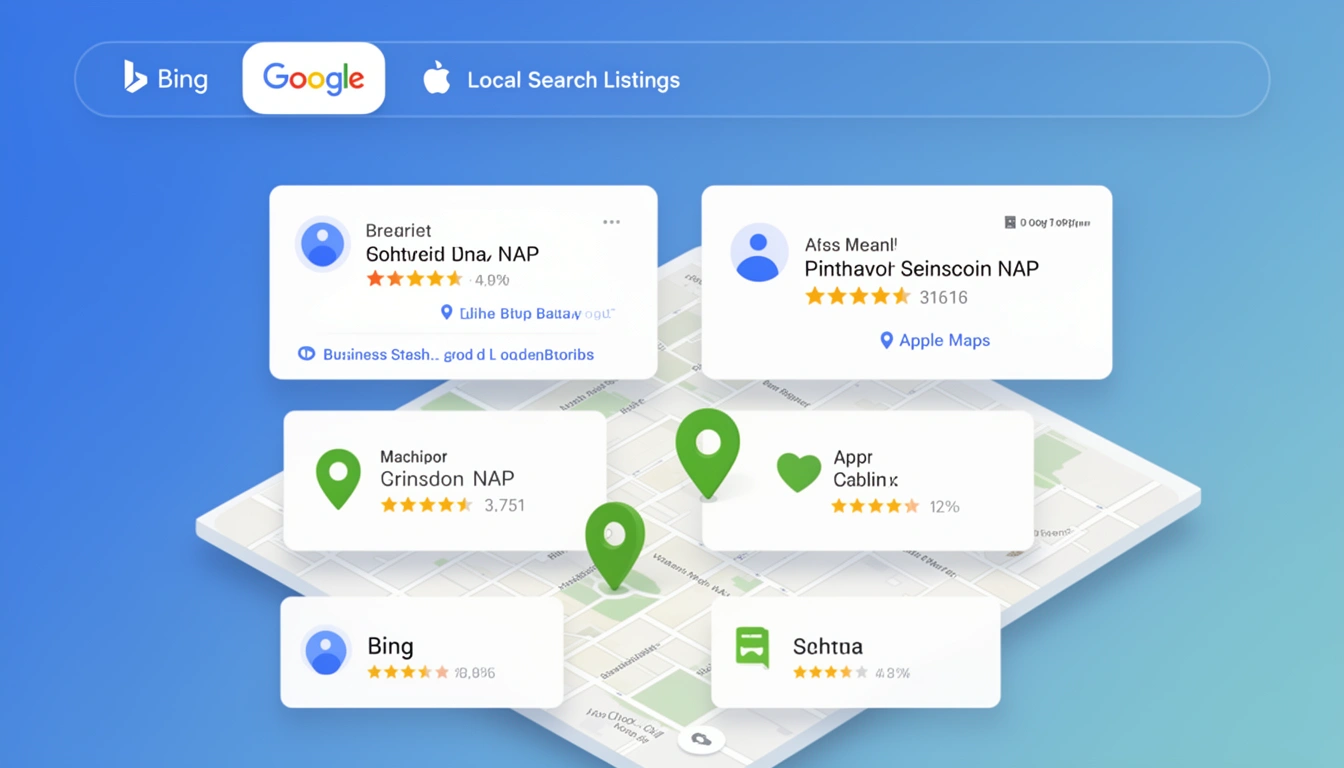
Local search listings are the foundation of how customers discover businesses in their area. Whether someone's searching for "pizza near me" or "plumber in Seattle," these listings determine who appears, where they rank, and ultimately who gets the call.
In 2026, managing local search listings has become more complex yet more critical than ever. With AI-powered search, voice queries, and evolving platform requirements, businesses need a strategic approach to claim, optimize, and maintain their presence across dozens of platforms.
What Are Local Search Listings?
Local search listings are online profiles that display your business information across search engines, directories, maps, and review sites. They typically include:
- Business name, address, and phone number (NAP)
- Operating hours and service areas
- Categories and business descriptions
- Photos and videos
- Customer reviews and ratings
- Website and social media links
The most important listing is your Google Business Profile (formerly Google My Business), but platforms like Bing Places, Apple Maps, Yelp, Facebook, and industry-specific directories all play crucial roles in local visibility.
Why Local Search Listings Matter in 2026
Local search has evolved dramatically. According to recent data, 76% of people who search for something nearby visit a business within 24 hours. But visibility isn't automatic it requires consistent, accurate listings across the web.
Trust and Verification Signals
Search engines use listing consistency as a trust signal. When your business information matches across Google, Bing, Apple Maps, and major directories, algorithms view your business as legitimate and authoritative. Inconsistencies create confusion and can suppress your rankings.
AI Search Integration
AI-powered search tools like ChatGPT, Perplexity, and Google's AI Overviews now pull data from local listings to answer questions. If your information is incomplete or inaccurate, you won't appear in these AI-generated recommendations a growing source of customer discovery.
Mobile and Voice Search Optimization
With mobile searches dominating local queries and voice assistants becoming primary search interfaces, complete and structured listing data ensures your business appears when customers ask "what's open near me" or "best coffee shop nearby."
Core Platforms for Local Search Listings
While there are hundreds of potential listing sites, focus your efforts on these high-impact platforms first:
Google Business Profile
The most critical listing. Your Google Business Profile controls your appearance in Google Search, Google Maps, and the local pack. Optimization includes crafting an SEO-optimized business description, selecting precise categories, uploading high-quality photos, and actively managing Google reviews.
Bing Places for Business
Often overlooked but increasingly important as Microsoft integrates Bing into AI tools and Windows search. Bing Places feeds data to Apple Maps in some regions and powers Cortana voice results.
Apple Maps
Essential for reaching iPhone users who default to Apple Maps. Claim your listing through Apple Business Connect to control how your business appears to millions of iOS users.
Facebook Business Page
Beyond social engagement, Facebook serves as a directory that appears in search results. Complete profiles with accurate hours, location, and contact information improve discoverability.
Industry-Specific Directories
Depending on your business type, platforms like Yelp (restaurants, services), Healthgrades (medical), Avvo (legal), or TripAdvisor (hospitality) can drive significant traffic and influence local rankings through citation building.
Building a Local Search Listing Strategy
Step 1: Audit Existing Listings
Start by discovering where your business already appears online. Search for your business name, address, and phone number to identify existing listings. Many businesses have duplicate or outdated profiles they don't know exist.
Step 2: Standardize Your NAP
Choose one consistent format for your Name, Address, and Phone number. Use this exact format across every platform. Even minor variations ("Street" vs "St" or "Suite 100" vs "#100") can confuse search algorithms.
Step 3: Claim and Verify All Major Platforms
Systematically claim your business on Google, Bing, Apple Maps, and relevant directories. Complete the verification process for each typically via postcard, phone, or email. Verified listings rank higher and allow you to manage information directly.
Step 4: Optimize Each Profile Completely
Don't just claim and forget. Fill out every available field:
- Write detailed, keyword-rich business descriptions
- Select all relevant categories (primary and secondary)
- Add high-quality photos (exterior, interior, products, team)
- List all services or products offered
- Include attributes (wheelchair accessible, outdoor seating, etc.)
- Keep hours updated, including holidays
Step 5: Monitor and Maintain Consistency
Local listings require ongoing management. Update hours for holidays, add new photos regularly, respond to reviews promptly, and monitor for duplicate listings that might split your visibility.
Common Local Listing Mistakes to Avoid
Inconsistent Information: The fastest way to hurt local rankings is having different phone numbers, addresses, or business names across platforms.
Incomplete Profiles: Partially filled profiles signal low quality to search engines. Complete every section available.
Ignoring Reviews: Listings with regular review responses rank higher and convert better than those with unanswered reviews.
Using P.O. Boxes: Most platforms require physical addresses. P.O. boxes can get your listing suspended.
Keyword Stuffing Business Names: Adding keywords to your official business name violates guidelines and can result in penalties.
Automating Local Listing Management
For businesses operating in multiple locations, manually managing listings becomes impractical. Automated local SEO strategies enable you to scale listing management across dozens or hundreds of locations efficiently.
Modern platforms allow you to push updates to multiple directories simultaneously, monitor listing accuracy across the web, and receive alerts when information changes unexpectedly. This automation ensures consistency while saving hundreds of hours compared to manual management.
Measuring Local Listing Performance
Track these metrics to understand how your listings perform:
- Search Appearance: How often your business appears in local search results
- Discovery Searches: Searches where users didn't already know your business name
- Actions Taken: Website clicks, direction requests, phone calls from listings
- Photo Views: Engagement with your visual content
- Review Velocity: Rate of new reviews compared to competitors
Use local rank tracking tools to monitor your position in search results for target keywords across different locations and platforms.
The Future of Local Search Listings
As we move through 2026, several trends are reshaping local search listings:
AI-Generated Recommendations: AI tools increasingly synthesize listing data to provide recommendations, making complete, accurate information more important than ever.
Visual Search Integration: Platforms are prioritizing businesses with rich visual content photos, videos, and virtual tours.
Sustainability and Social Attributes: New listing attributes around sustainability practices, DEI commitments, and social responsibility are influencing consumer choices.
Messaging Integration: Direct messaging through listings is becoming a primary customer contact method alongside phone calls.
Getting Started Today
Local search listings aren't optional they're the digital foundation of local business discovery. Start by claiming your Google Business Profile, then expand systematically to other major platforms. Improving your local search visibility requires consistent effort, but the returns in customer discovery and revenue make it one of the highest-ROI marketing activities available.
Whether you manage one location or hundreds, treating your local search listings as strategic assets not just directory entries will separate you from competitors still approaching local search casually. The businesses that invest in complete, consistent, and optimized listings today will dominate local search results tomorrow.
Published with LeafPad