
When I first looked into SEO, I was convinced I needed to buy expensive software just to get Google to notice my site. Turns out, you don't. You just need to understand how search engines read your site and actually stick with it over time.
Most people who search "seo for beginners" end up drowning in jargon and conflicting advice. I remember how overwhelming it was. You just need a clear plan and a bit of consistency. This guide breaks SEO down into simple, actionable steps anyone can follow, whether you're launching a blog, a small business site, or a side project.
What does SEO actually mean for beginners?
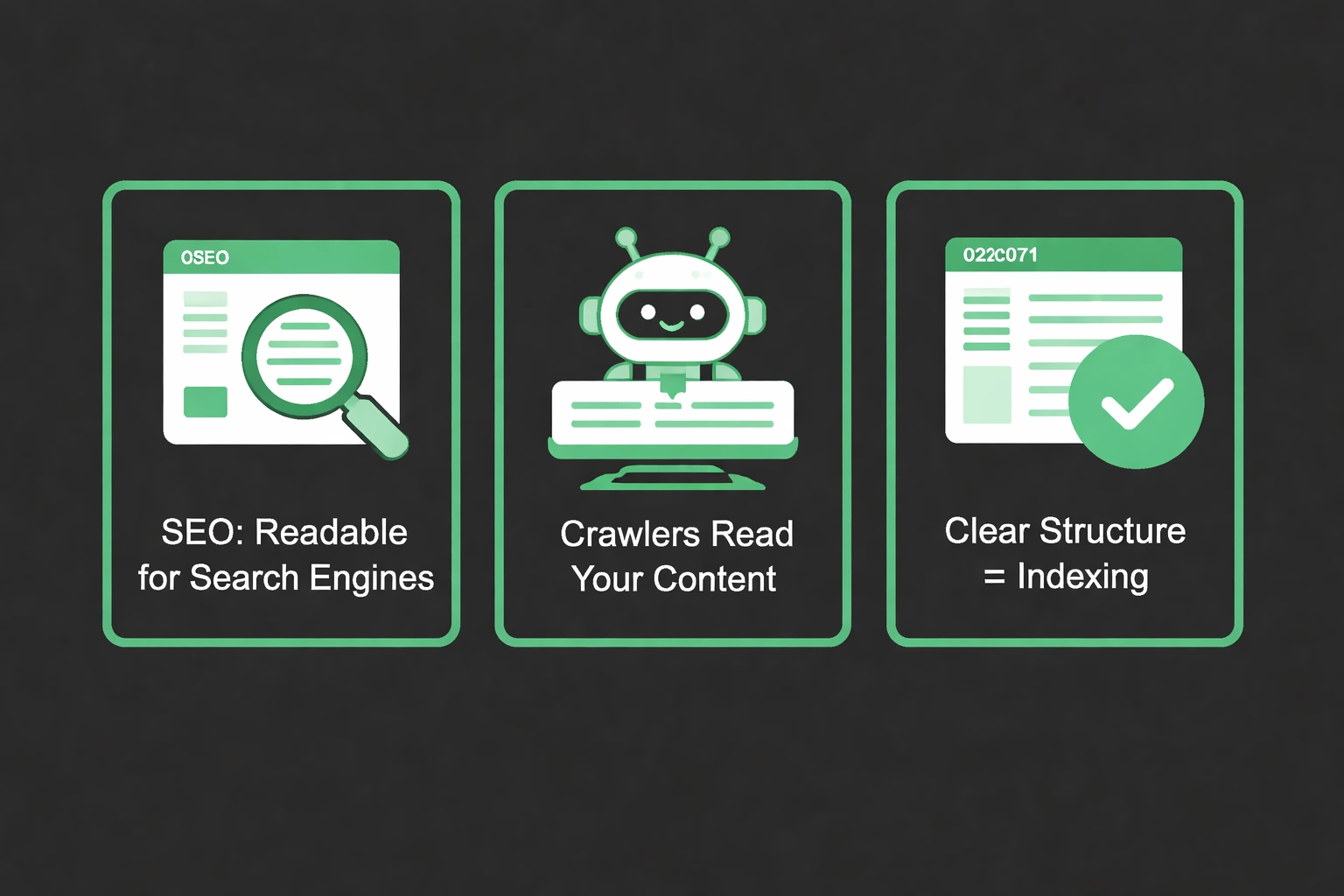
SEO is just making your site readable for search engines. Google sends out bots (crawlers) to read your content, structure, and links to figure out what your page is about. If your site is a mess, they leave. If it's clear, they index it. You don't need coding skills. Understanding a few core principles gets you further than any expensive tool.
If you want to get into the weeds of writing clearly for this, Understanding SEO Writing: Clarity & Strategy for Beginners is a good read alongside this.
The three pillars you actually need to know
SEO usually breaks down into three areas: Technical, On-Page, and Off-Page.
Technical SEO is just making sure search engines can crawl your site. People skip it because it sounds intimidating, but it's mostly just site speed, mobile-friendliness, and clean structure.
On-page SEO is your content and structure. This is where you'll spend most of your time because you actually control it.
Off-page SEO is about backlinks from other sites. It's a low priority early on because you can't force people to link to you.
| Pillar | What it covers | Beginner priority |
|---|---|---|
| Technical SEO | Site speed, mobile design, crawlability | Medium |
| On-Page SEO | Content, headings, keywords, meta tags | High |
| Off-Page SEO | Backlinks, mentions, social signals | Low (early on) |
Start with on-page SEO first. It's the fastest way to see improvement without needing outside help.
Keyword research: where to start
Keyword research is finding the exact words people type into search engines. You should focus on long-tail keywords, which are phrases with three or more words. They bring in more specific traffic and are less competitive than broad terms.
Trying to rank for "shoes" as a beginner is nearly impossible. But "best running shoes for flat feet" has far less competition and attracts people ready to make a decision. Tools help speed this up. LeafPad's keyword research feature spots these opportunities automatically, saving you hours of guessing.
A simple process looks like this:
- Brainstorm topics related to your niche
- Search those topics in Google and note autocomplete suggestions
- Check the "People also ask" boxes for related questions
- Pick keywords with clear search intent, not just high volume
- Group similar keywords into content clusters
Don't stuff keywords into sentences unnaturally. Search engines have gotten smart enough to penalize that behavior.
Writing content that ranks
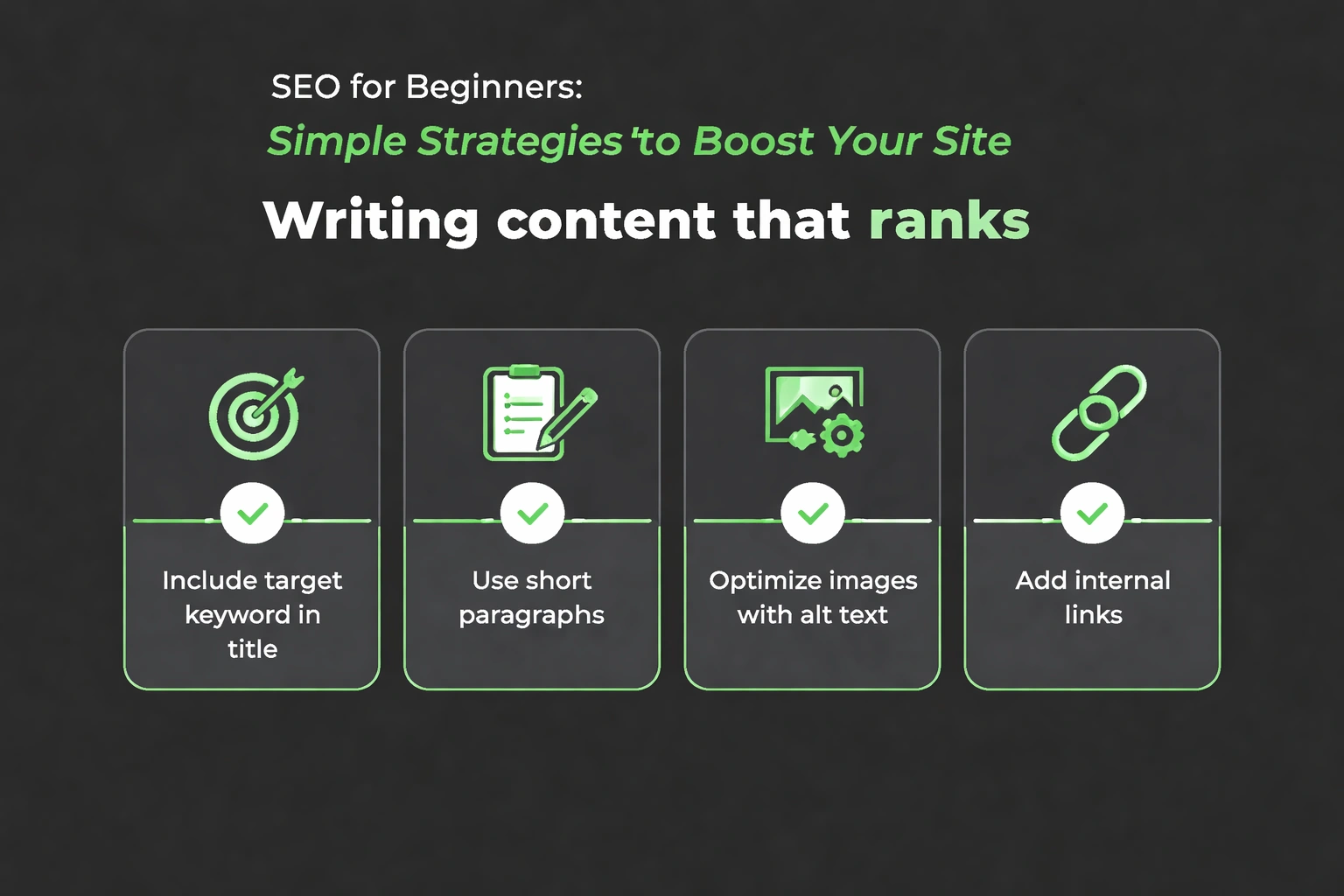
Content ranks when it answers the searcher's question clearly and completely. Write for actual humans. Google's algorithms are getting better at rewarding real expertise, so trying to game the system with keyword stuffing doesn't work anymore.
Structure matters just as much as substance. Use short paragraphs, descriptive subheadings, and bullet points to break up dense information. Nobody reads walls of text.
Here's a quick checklist for every post:
- Include the target keyword in the title and first paragraph
- Use one keyword-focused H1 and multiple relevant H2s
- Keep sentences short and paragraphs under five lines
- Add internal links to related pages on your site
- Include a meta description under 160 characters
The meta description generator tool simplifies that last step if you're stuck. For a full guide on structuring SEO content, see SEO Content Writing Basics 2026: Structure & Clarity.
Mistakes I see beginners make
Most people starting out make the same handful of mistakes. Recognizing these early saves months of wasted effort.
- Ignoring search intent: Writing about a keyword without understanding what searchers actually want
- Targeting bad keywords: Going after terms too competitive for a new site
- Skipping internal links: Not connecting related pages, which weakens your site structure
- Forgetting mobile users: Publishing content that looks broken on phones
- Publish and forget: Never updating old posts as information changes
A simple fix for that last point is checking your content refresh options periodically. Old content updated regularly will outperform stale pages, even if the original was well-written.
Tools that won't take a week to learn
You don't need enterprise software to get started. Free and lightweight tools handle most early SEO tasks just fine. The goal is to remove friction, not add complexity.
A few beginner-friendly tools worth trying:
- Free AI SEO Tools: a collection of no-cost tools for quick SEO tasks
- SEO Title Generator: helps craft click-worthy, keyword-rich titles
- Keyword Density Analyzer: checks whether keyword usage feels natural or forced
- Blog Outline Generator: structures posts before you even start writing
- Grammar Checker: catches errors that hurt readability and trust
These tools remove the guesswork that usually stops beginners from publishing consistently.
Measuring progress without overthinking it
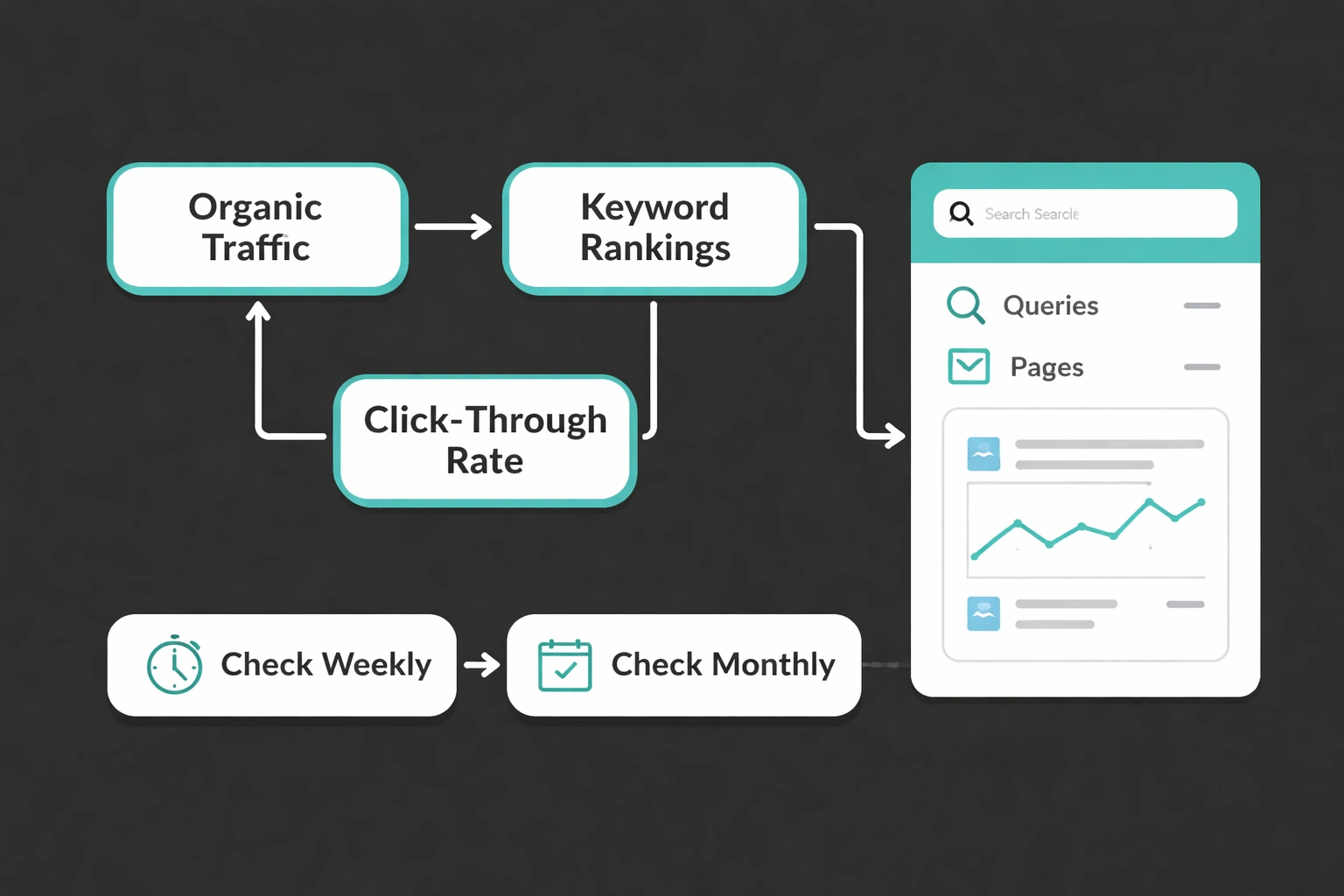
Track a small set of metrics rather than obsessing over every data point available. Focus on organic traffic, keyword rankings, and click-through rate. These three numbers will tell you if your efforts are working.
Google Search Console is free and gives you everything needed to start. It shows which queries bring visitors to your site and how your pages perform over time. Check it weekly at first, then monthly once patterns stabilize.
Don't expect fast results. SEO for beginners is a long game. Most new sites take three to six months before seeing meaningful traffic growth. Patience matters more than perfection here.
Building a simple routine
A repeatable routine beats sporadic bursts of effort every time. Beginners who publish consistently, even just once a week, tend to outperform those who publish in large batches and then go quiet.
A basic weekly routine might look like this:
- Research one new keyword or topic idea
- Write and publish one optimized post
- Update one older post based on new information
- Check Search Console for ranking changes
- Add internal links between related posts
If you're also thinking about which platform to build this routine on, the guide on Choosing an SEO-Friendly CMS: Avoid Plugins & Technical Debt explains why the right foundation matters before you scale content production.
Where to go from here
SEO for beginners isn't about mastering every tactic overnight. It's about building small, consistent habits. Researching keywords, writing clear content, and tracking what works. Start simple, stay consistent, and let the fundamentals compound over time.
For a broader look at how SEO writing tools and strategies fit together, the SEO Text Tools 2026: AI-Powered Content Optimization Guide offers a complete overview worth bookmarking as your next step.
Published with LeafPad