Good content writing in 2026 isn't magic. It's structure, clarity, and knowing what your reader actually wants. The basics haven't changed as much as people think. Keyword stuffing is dead, sure, but you still need to put the right words in the right places. If your sentences are a mess, no AI tool is going to save you.
I see founders skip this constantly. They chase automation hacks before they can write a decent paragraph. It doesn't work. You can have the best AI SEO tools in the world, but if the output reads like a robot wrote it, you're wasting your time.
What counts as SEO content?
It's pretty simple: write something that answers a question well enough that Google wants to show it. You're not trying to trick an algorithm. You're trying to be the answer.
This is more relevant now because search engines and LLMs are looking for semantic completeness, not just keyword matches. LeafPad's guide on semantic SEO gets into the weeds on this, but the gist is that context beats raw keyword repetition.
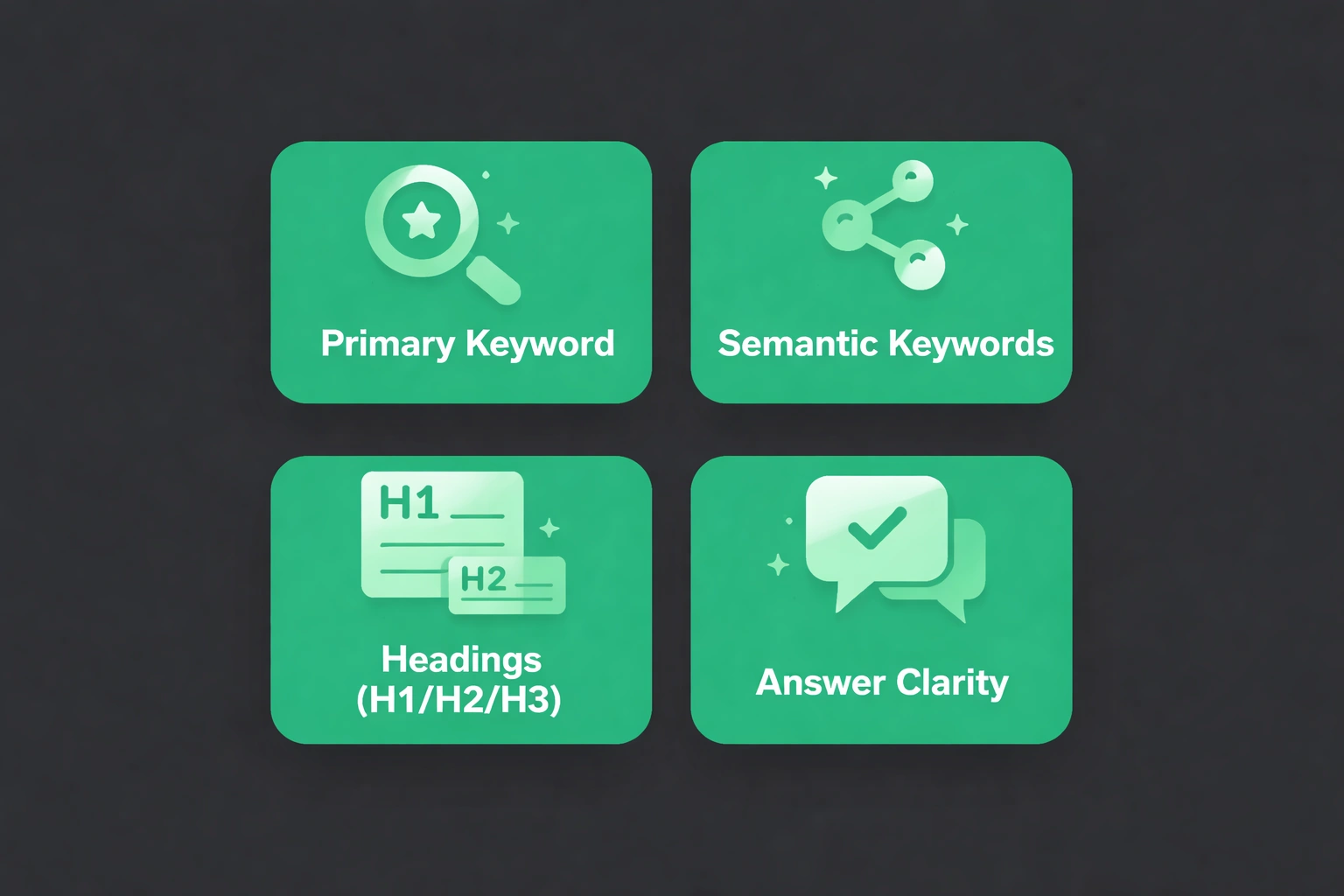
You still need the basics, though:
- A primary keyword that actually appears in your title and body
- Related terms and concepts (semantic keywords)
- Headings that make sense (H1, H2, H3)
- Paragraphs that don't drag on forever
- Links to other stuff you've written
Why sentence structure matters
If your sentences are hard to read, people leave. They don't write to tell you. They just bounce.
Short, subject-first sentences work best. They reduce cognitive load. Readers scan them faster. Search engines parse them more accurately.
Don't bury your subject. "Because rankings depend on multiple factors, writers should focus on clarity" is weaker than "Writers should focus on clarity because rankings depend on multiple factors." This matters for AI search engines, too when they pull passages for citations, they grab the direct stuff. LeafPad's AI search visibility guide has more on this.
Look at the difference:
| Weak | Strong |
|---|---|
| "In order to rank well, content must be optimized" | "Content must be optimized to rank well" |
| "It is important that headings are used correctly" | "Headings organize content and improve scannability" |
| "There are many factors that affect readability" | "Readability depends on sentence length and structure" |
The strong versions put the subject first and cut the fluff. This helps readability scores and makes it easier for AI tools to quote you.
Placing keywords without stuffing them
Your keywords should be visible to search engines but invisible to readers. Put the primary keyword in the title, the first paragraph, one subheading, and the meta description. Don't jam it into every other sentence.
Density matters, but it's not the whole story. LeafPad's keyword density analyzer is useful for catching over-optimization before you hit publish. Somewhere between 0.5% and 1.5% usually feels natural.
You also need semantic variations. If the topic is "SEO content writing basics," terms like "readability," "on-page optimization," and "content structure" should show up. Tools like the LSI keyword generator can help find these if you're stuck.
Structure for scannability
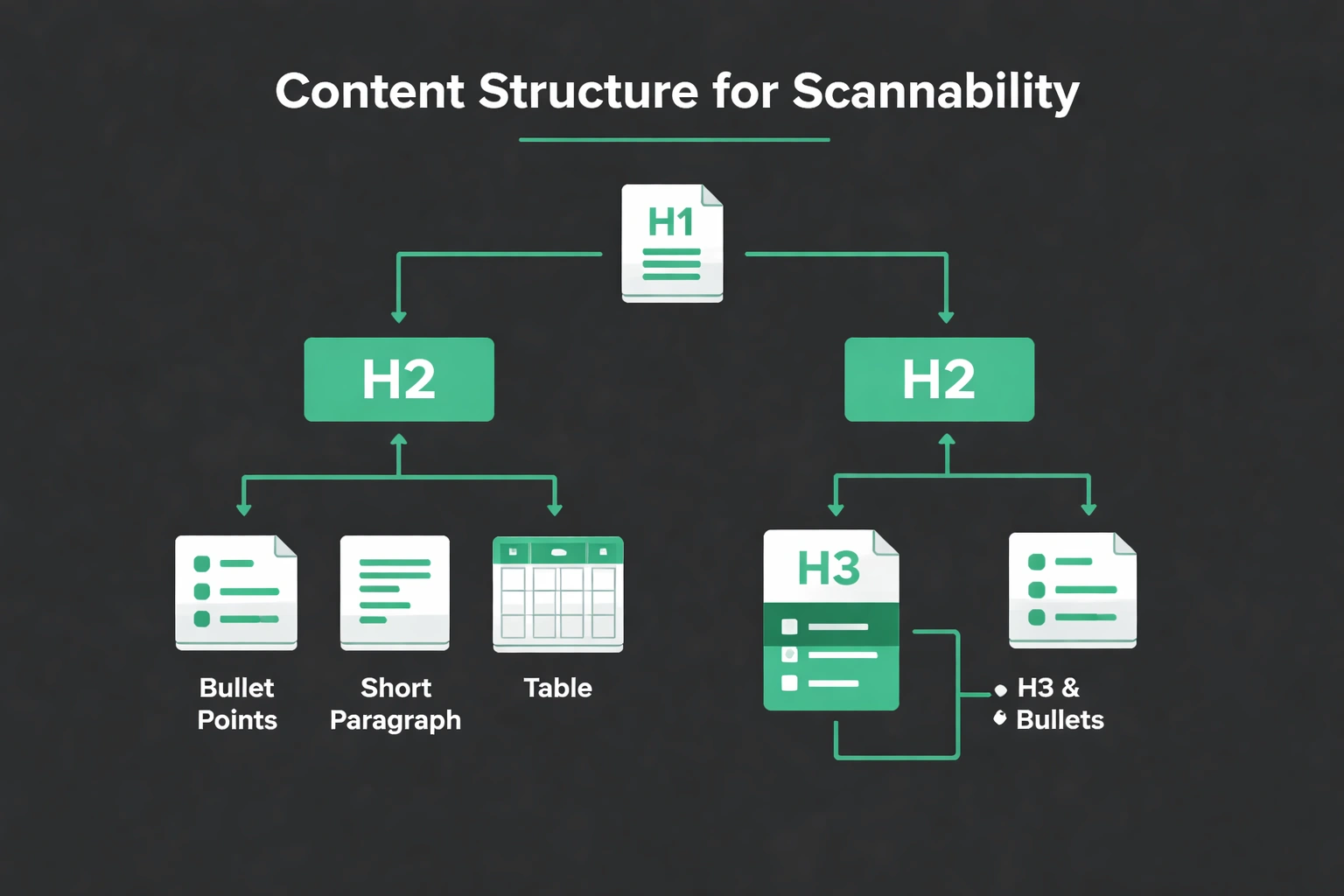
Structure is how readers find value quickly. Break text into short paragraphs. Use bullets and tables. Signal topic shifts with H2s and H3s.
Most people don't read every word. They scan headings and decide if it's worth their time. A clear structure drops your bounce rate. It also helps AI models like ChatGPT and Claude find relevant passages to cite.
If structure is a struggle, LeafPad's blog outline generator builds a skeleton before you write. It keeps the flow logical and maps headings to search intent.
Meta descriptions and titles
These are your first impression in search results. A good title gets the click. A clear meta description tells them they're in the right place.
Put your primary keyword near the start of the title. Keep it under 60 characters so it doesn't get cut off. Meta descriptions should be under 155 characters and use active language.
LeafPad's SEO title generator and meta description generator can automate this, testing variations for length and keyword placement. It's a small thing that adds up when you're publishing a lot.
Internal linking
Internal links tie your content together. Every post should link to a few related pages. It helps readers find more of your stuff, and it helps search engines understand your site's structure.
Search engines use these links to figure out topic relationships and page importance. Readers use them to stay on your site longer. LeafPad's organic internal linking guide explains how this works in practice.
A simple rule: link to your pillar content, link to relevant how-to guides, and link to tools that help the reader take the next step.
Using AI without sounding like one
AI tools are useful for drafts. They are terrible at judgment. You still need a human to check if the tone is right and the meaning is clear.
A lot of AI-assisted content sounds robotic because the writer skipped the fundamentals we're talking about here sentence structure, natural keywords, clear headings. LeafPad's SEO text tools guide goes deeper on fitting AI into a workflow without losing your voice.
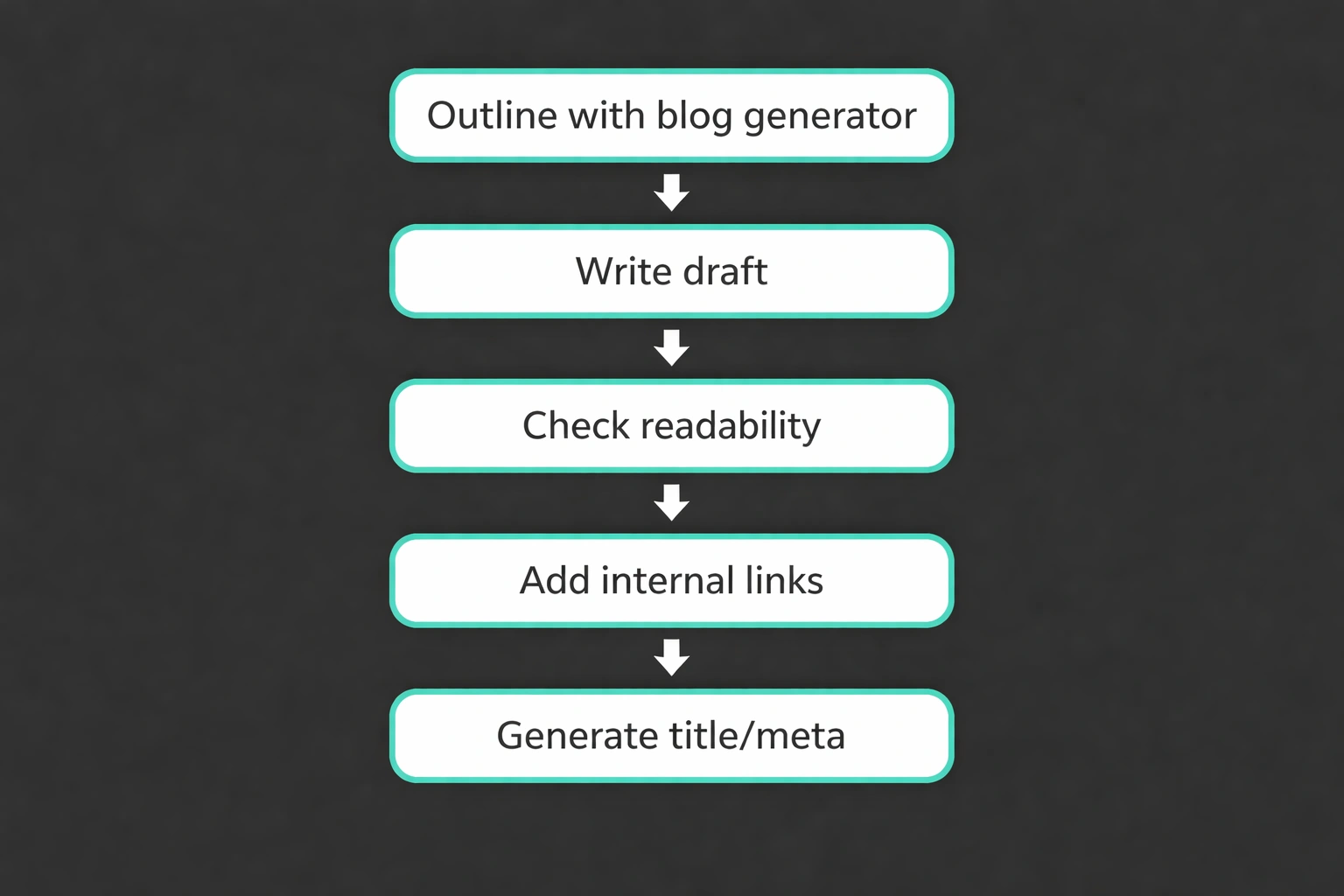
A decent workflow:
- Outline with a blog outline generator.
- Write a draft. Focus on clarity, not keywords.
- Check readability and keyword density.
- Add internal links.
- Generate title and meta description options.
- Proofread. Make sure it sounds like you.
Grammar and readability checks
Grammar mistakes kill credibility. Readers notice typos and awkward phrasing, no matter how well-optimized the content is.
Run every post through a grammar checker before publishing. LeafPad's grammar checker tool catches things spell-check misses, like subject-verb agreement and passive voice overuse. Passive voice usually weakens the sentence.
Readability tools flag long sentences, too. Aim for an average under 20 words. Mix in some shorter ones for rhythm. It keeps readers from getting fatigued.
Pulling it together
SEO content writing comes down to structure, natural keyword placement, and internal linking. Algorithms change, but those fundamentals don't.
If the volume of SEO advice online feels overwhelming, just start with the basics. Platforms like LeafPad are built to help you apply these consistently without needing a technical background.
Whether it's your first post or your five-hundredth, the basics are what actually work. Clarity, structure, and genuine value for the person reading. That's it.
Published with LeafPad