
"SEO writing meaning" is a clunky phrase, but people search for it because they're confused. That confusion costs traffic. SEO writing means creating content structured and optimized so search engines can understand it and rank it. It's a blend of keyword strategy and readability algorithms need to parse it, humans need to want to read it. I'll break this down for absolute beginners.
Get this wrong early, and you'll waste months on content nobody finds. Most newcomers fall into one of two camps: they either stuff keywords until the text reads like gibberish, or they ignore SEO entirely and assume "good writing" will magically rank. Neither works. Understanding what SEO writing actually is saves you from both traps.
What Does SEO Writing Actually Mean?

SEO writing is writing designed to rank in search results without alienating the people reading it. You're balancing three things: what the searcher typed (intent), where you put your keywords (placement), and whether it's pleasant to read (readability).
The goal isn't to trick Google. It's to answer a question clearly enough that Google trusts you as the best answer.
A common misconception is that SEO writing is just "adding keywords everywhere." That stopped working years ago. Modern search engines including the AI-powered ones popping up everywhere look at context, structure, and user behavior. A page that answers a question thoroughly, in plain language, usually beats a page stuffed with exact-match phrases. If you're unsure, tools like the free AI SEO tools available now can help you check if your writing feels natural or forced.
SEO Writing vs Regular Writing: The Core Difference
Regular writing focuses on the reader. SEO writing adds a second reader: the search engine. This means you have to think about structure, headings, and keyword intent before you start typing.
Here's the breakdown:
| Aspect | Regular Writing | SEO Writing |
|---|---|---|
| Audience | Human reader only | Human reader + search engine |
| Structure | Flexible, freeform | Headings, short paragraphs, scannable |
| Keywords | Incidental | Intentional, research-based |
| Goal | Express ideas | Rank + satisfy search intent |
| Length | Varies by topic | Often matches top-ranking competitors |
Both styles value clarity. The difference is that SEO writing treats clarity as a ranking factor. Beginners who get this early avoid writing "pretty" content that never sees the light of day.
Why SEO Writing Matters for Beginners Specifically
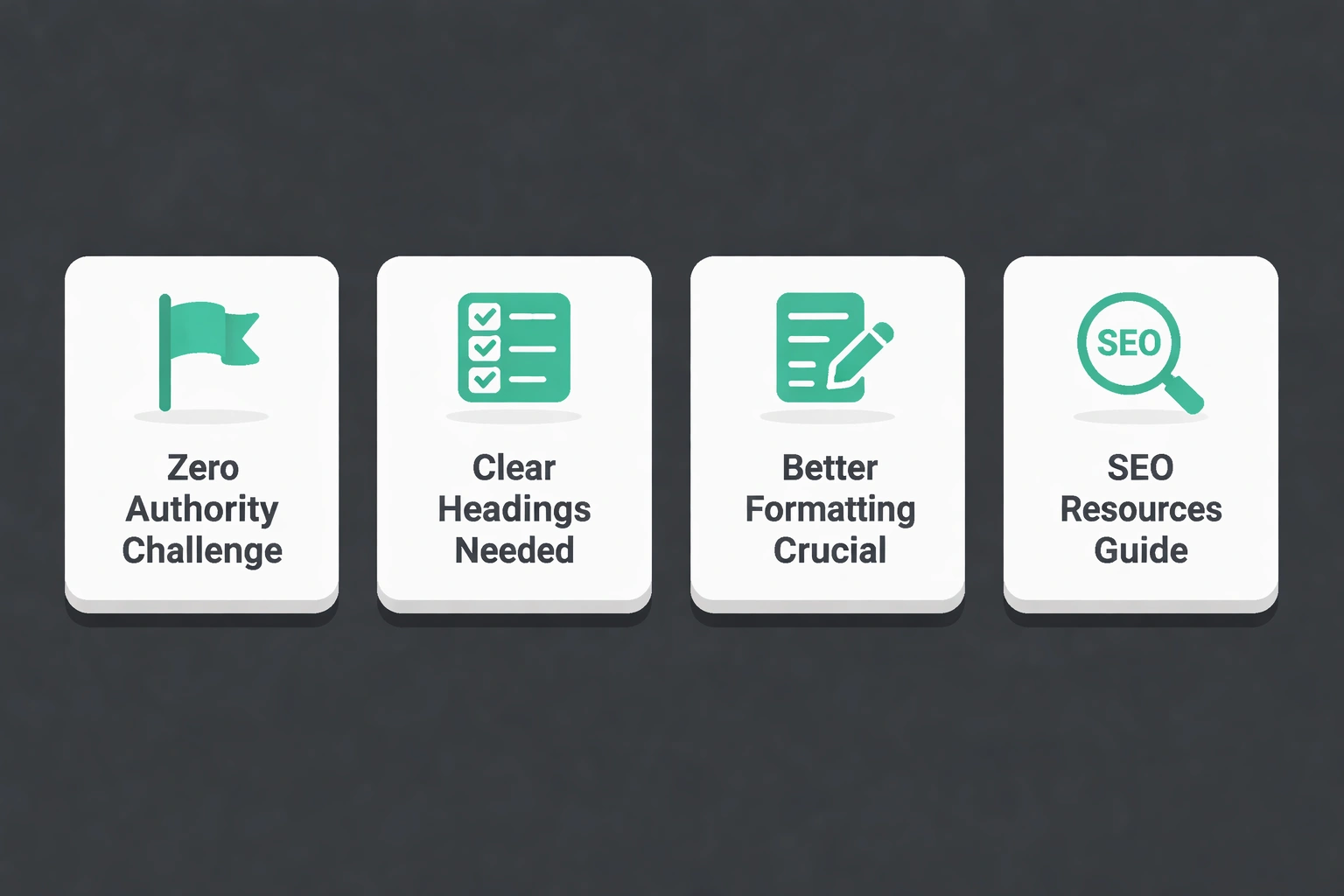
Beginners need SEO writing more than established writers because they start with zero authority. A brand-new blog has no backlinks, no history, and no reputation. Well-structured SEO writing is the only lever you fully control from day one.
Think about it. An established site can rank a mediocre article because Google trusts the domain. You don't get that benefit. Every post has to work harder clearer headings, tighter answers, better formatting. Resources like SEO Content Writing Basics 2026: Structure & Clarity exist for this exact reason. Knowing what SEO writing is isn't enough; you have to apply it correctly, every time.
The Core Components of SEO Writing
"SEO writing meaning" makes more sense when you look at the actual building blocks. You don't need to memorize dozens of ranking factors. These five cover most of what matters for a first blog post.
- Search intent alignment matching what the searcher actually wants, not just the literal keyword
- Keyword placement using target phrases in titles, headers, and naturally in the body
- Readability short sentences, simple words, logical flow
- Structure headings, bullet points, scannable formatting
- Meta elements titles and descriptions that summarize the page accurately
Each piece supports the others. A perfectly placed keyword means nothing if the sentence around it is a mess. You can use an SEO title generator and a meta description generator to handle the technical side while keeping your energy focused on writing clearly.
Common Misconceptions Beginners Have About SEO Writing
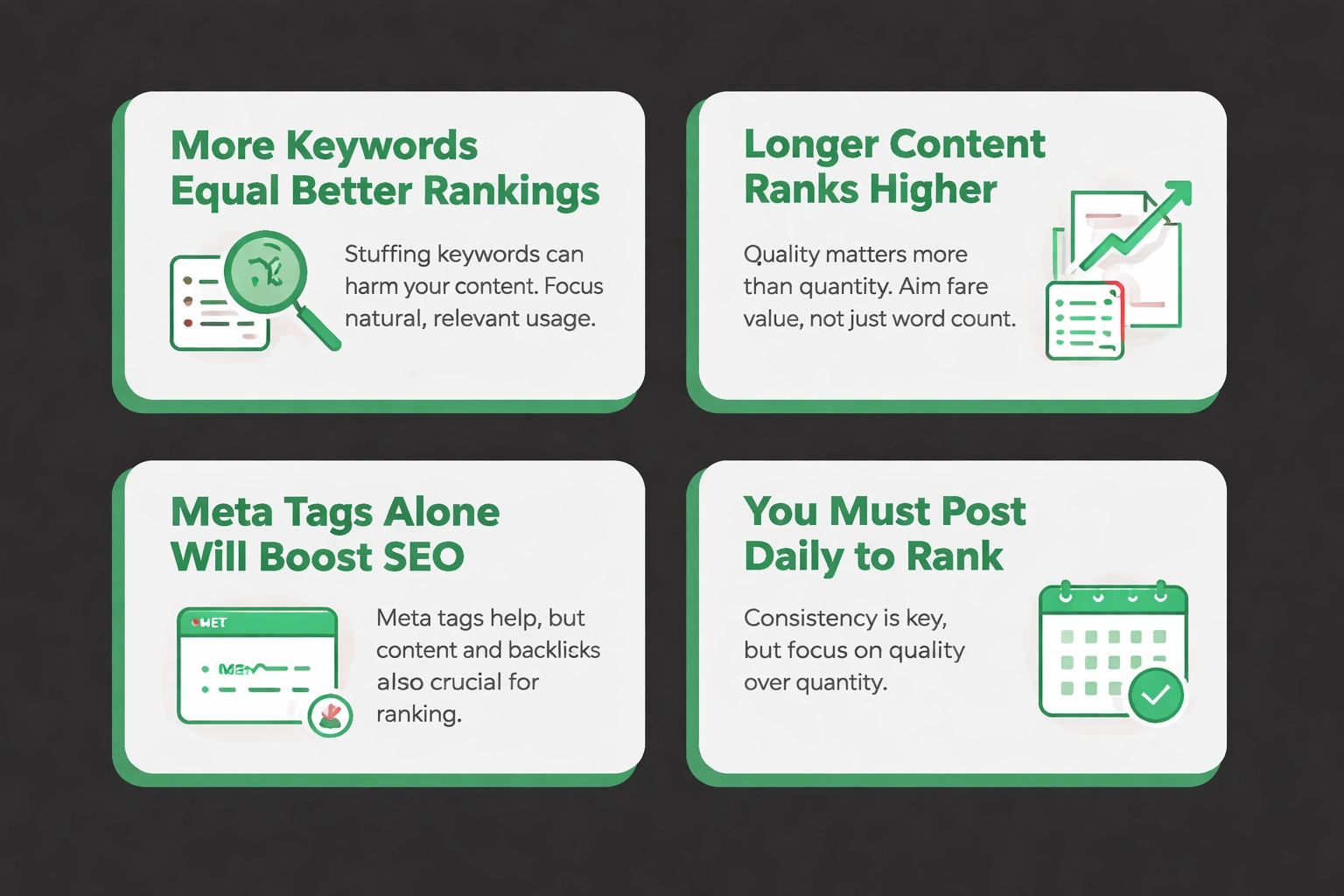
Most bad SEO advice comes from outdated blog posts that still rank for some reason. Beginners often believe keyword density percentages matter, or that longer content automatically ranks higher. Neither is true.
Here are the myths worth dropping immediately:
- "More keywords equal better rankings." Google penalizes unnatural repetition now.
- "Longer is always better." Length should match the search intent, not a word count goal.
- "SEO writing sounds robotic." Good optimized content should read naturally. If it sounds off, rewrite it.
- "You need to be a technical expert." Basic formatting and clear language handle most of the heavy lifting.
- "SEO writing is separate from good writing." They're the same skill, just with extra intent.
Drop these myths early and you'll write better, faster. The Modern SEO Copywriting Guidelines 2026: Clarity & Structure article explains how clarity itself is now a ranking signal, which drives this point home.
A Simple Beginner Framework for SEO Writing
Beginners do better with a repeatable framework than a list of rules. This four-step process works for almost any blog post: research, outline, draft, refine. Do it in this order. Don't write first and try to optimize later.
Step 1: Research the keyword and intent. Use a keyword research tool to confirm search volume and see what searchers actually expect.
Step 2: Outline before writing. Map out headings first. This keeps the structure logical from the start.
Step 3: Draft with the reader in mind. Write plainly. Explain it like you're talking to a smart friend who's new to the topic.
Step 4: Refine using tools. Run the draft through a grammar checker and check readability before you hit publish.
This removes the guesswork. Beginners often skip step one and jump to drafting, ending up with content that misses the point entirely.
How AI Tools Simplify SEO Writing for Beginners
AI tools handle a lot of the technical heavy lifting that used to scare off new writers. You can generate structured drafts, get keyword suggestions, and check readability without hiring an SEO consultant. This lowers the barrier to entry considerably.
Platforms like the AI blog generator let you produce SEO-aligned drafts and then personalize the voice yourself. The AI handles structure; you add the expertise and authenticity. That combination usually beats fully manual or fully automated writing.
But AI assistance doesn't replace understanding. If you grasp the meaning of SEO writing, you get more value from these tools because you know what to check and what to throw away.
Putting SEO Writing Into Practice
Understanding SEO writing meaning is useless if you don't apply it. Start with one blog post. Use the framework above. Measure the results. Consistency beats perfection in the early stages.
If you're ready to build a publishing habit, checking out LeafPad's features page or comparing pricing options can help smooth out the production process. The broader SEO Text Tools 2026 guide ties these skills together into a full strategy worth reading once you're comfortable with the basics.
SEO writing isn't some dark art reserved for experts. It's a learnable process built on clarity, intent, and structure. Three things you can practice on your very next post.
Published with LeafPad