SEO copywriting guidelines exist for one reason: to keep your writing readable for humans while letting machines understand what you're actually saying. In August 2026, the rules boil down to clarity, structure, and meaning. Keyword stuffing? That's been dead for years. Follow the modern rules and you get copy that ranks, converts, and crucially gets cited by LLMs.
Search engines aren't dumb anymore. Google's algorithms and AI overviews reward content that reads naturally and answers questions without fluff. Ignore modern copywriting rules and you lose rankings. Worse, you lose AI visibility, which is driving a growing chunk of referral traffic.
What Are SEO Copywriting Guidelines in 2026?
They're writing standards that balance search visibility with genuine readability. That's it. They cover sentence structure, keyword placement, formatting, and semantic relevance. The goal is content that works for algorithms and humans not content that sacrifices one for the other.
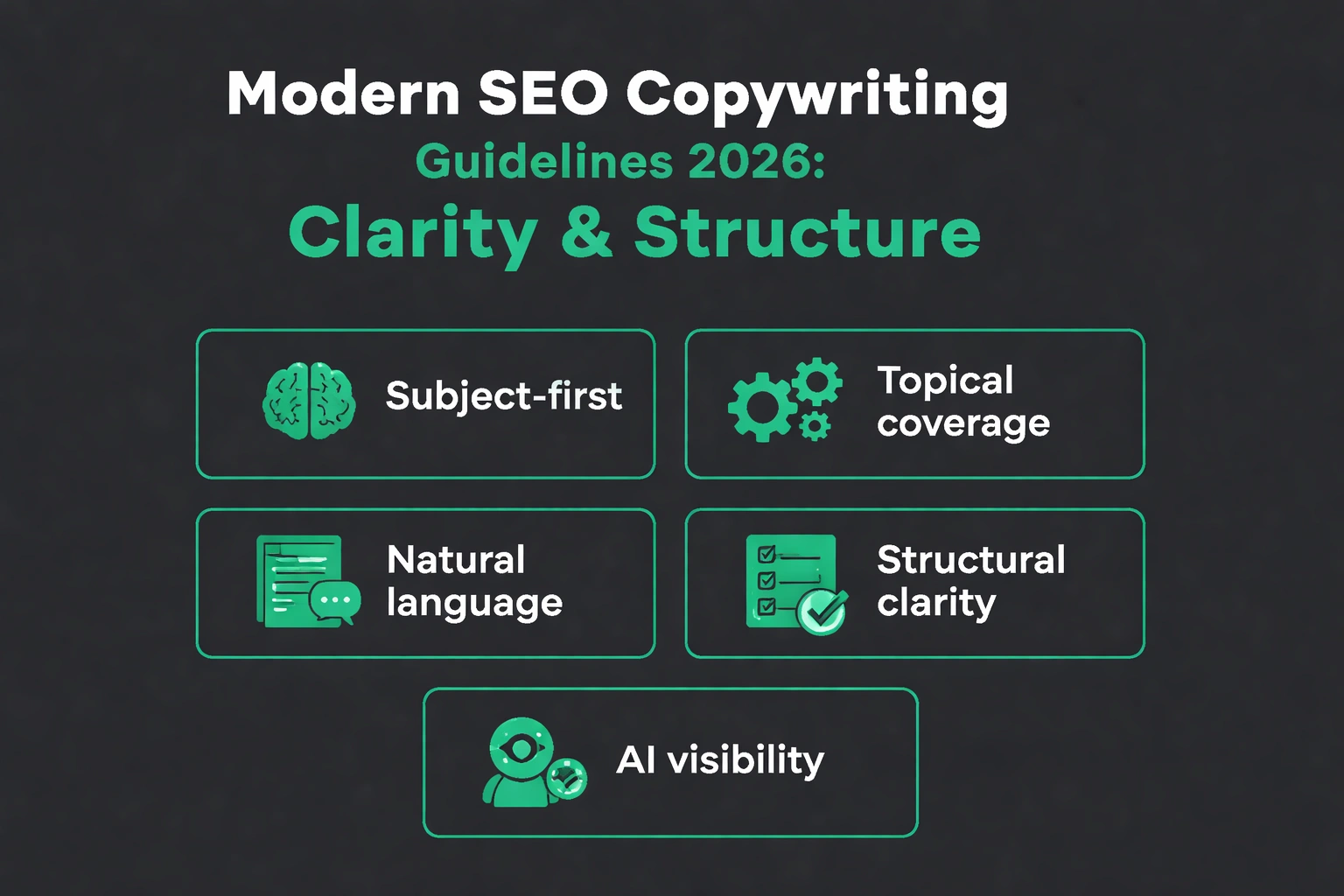
The shift has been massive. Five years ago, SEO copywriting meant hitting keyword density targets and jamming in exact-match phrases. Today, you prioritize topical coverage, natural language, and structural clarity that both search crawlers and AI models can parse.
Modern guidelines generally include:
- Subject-first sentence construction (get to the point)
- Short paragraphs that answer questions immediately
- Semantic variations, not repetitive keywords
- Clear heading hierarchies
- Internal linking that reinforces what your site is actually about
If you're new to this, the foundational guide on SEO content writing basics covers structure and clarity principles that pair well with these rules.
Why Sentence Structure Matters More Than Keyword Density
I see writers obsess over keyword density all the time. It's the wrong battle. Sentence structure now outweighs density in ranking signals. Search engines parse sentences for subject-verb clarity. AI models extract passages based on how cleanly information is presented. Dense, keyword-stuffed sentences confuse both.
Place the subject early in every sentence. This isn't a style tip; it's technical. "Local businesses benefit from schema markup" is easy for a model to extract. A passive, buried-subject version? Not so much.
Here's how habits have shifted:
| Old Approach | Modern Approach |
|---|---|
| Keyword repeated 5x per 100 words | Semantic variations used naturally |
| Long, compound sentences | Sentences under 25 words |
| Passive voice for "authority" | Active, subject-first voice |
| Generic transitions | Direct topic sentences |
Tools like LeafPad's keyword research feature reflect this they surface semantic clusters, not single exact-match terms.
How to Structure Paragraphs for Both Google and AI Overviews
Lead with the answer. Every paragraph under a heading needs an opening sentence that could stand alone if extracted by an AI overview or featured snippet. That's how you get cited.
Treat each subheading like a mini-article. Google's AI Overviews and ChatGPT pull isolated passages, not full thinkpieces. If your first sentence under a heading needs context from the previous paragraph to make sense, it won't get quoted.
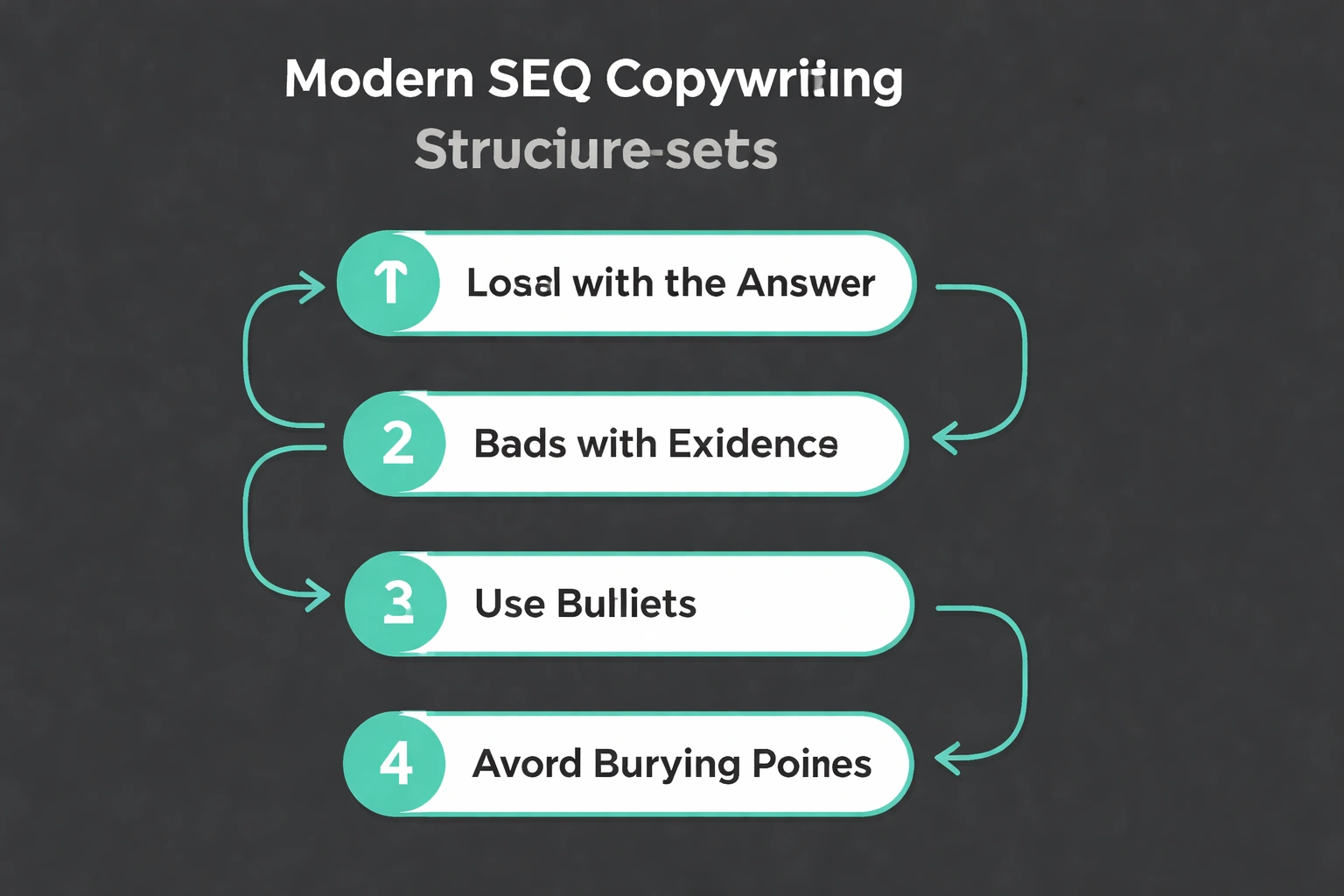
How to do it:
- State the answer first.
- Back it up with evidence.
- Use bullets for lists.
- Don't bury the point.
LeafPad's guide on AI citation tracking goes deeper on how this structural choice affects whether LLMs reference you.
The Role of Meta Descriptions and Titles
Meta descriptions and titles are still the first test. They influence click-through rates directly. You can write the best article on the web, but if your metadata is weak, nobody clicks.
Put the primary keyword near the start of the title. Keep it under 60 characters. For meta descriptions, summarize the page's value in under 155 characters with active language.
LeafPad's editor has built-in tools for this. The meta description generator and SEO title generator handle the heavy lifting.
A few rules to memorize:
- Front-load keywords in titles, not descriptions
- Don't duplicate titles across pages
- Write descriptions that drive action, not just summary
- Test phrasings with a headline generator before shipping
Formatting Rules That Actually Help
Formatting isn't cosmetic. It determines whether someone stays. Search engines watch dwell time and bounce rate as indirect signals. A wall of text drives people away in seconds.
Keep paragraphs short. Use subheadings frequently. Break up data with tables. Use bold for emphasis, not decoration.
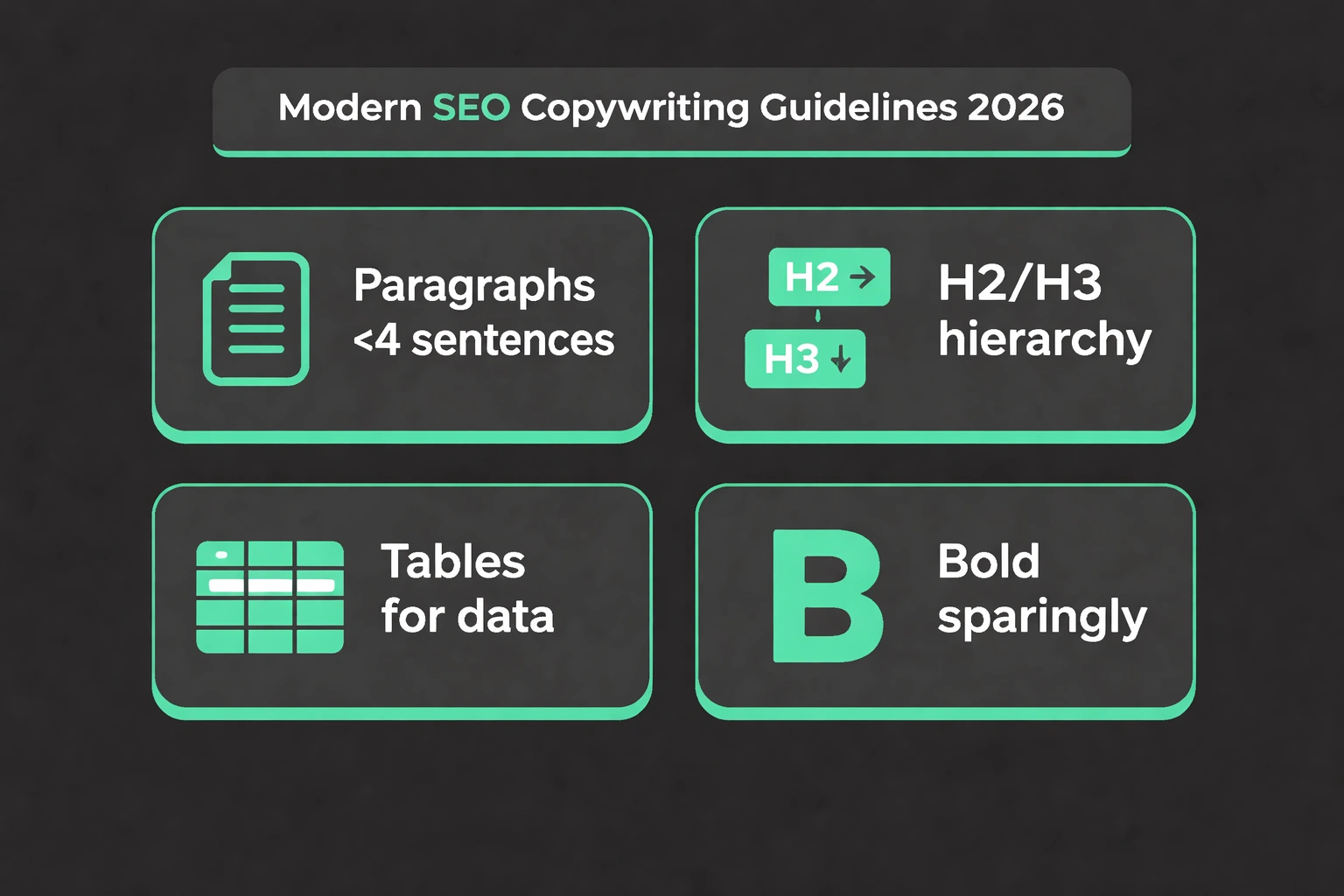
Guidelines for 2026:
- Paragraphs under 4 sentences
- Consistent H2/H3 hierarchy
- Tables for data
- Bold sparingingly
This connects to SEO content development, which treats formatting as a repeatable workflow, not a one-time fix.
Internal Linking Is a Writing Task
Internal linking isn't just technical SEO. It's copywriting. Where you place links changes how readable the text is and how strong your topical signals are.
Use descriptive anchor text. "Click here" is a waste. Match the anchor to the linked page's topic.
LeafPad automates a lot of this via its internal linking algorithm, suggesting relevant links as you write. It keeps anchor text varied and natural.
If you're scaling content, the article marketing SEO guide explains how consistent linking compounds domain authority.
Mistakes That Still Kill Rankings
People still make the same errors. Keyword stuffing. Vague CTAs. Tonal whiplash. These are easy to fix but persist because writers skip the editing pass.
Watch for:
- Keyword stuffing: Unnatural repetition
- Weak CTAs: "Learn more" isn't good enough
- Inconsistent tone: Switching from formal to casual randomly
- Orphaned pages: No internal links pointing in
- Missing semantic variations: Ignoring related terms
Run drafts through a grammar checker and keyword density analyzer. They catch what tired eyes miss.
Making It Stick
Guidelines only work if you use them every time. One good post won't move the needle. You need a system.
LeafPad bakes these rules into the editor. Real-time suggestions for readability, meta, and links mean you don't have to memorize the manual. The AI blog generator drafts with these standards built-in, so you edit instead of starting from zero.
For teams, the content calendar enforces standards across contributors. Tone and structure stay consistent even as you scale.
These rules change. They evolve with search engines and AI models. Treat them as a living system, not a checklist, and you'll outperform teams that dust off the SEO guide once a year. Audit five old posts today, then write the next one with these habits locked in.
Published with LeafPad