
Article marketing SEO used to mean blasting the same keyword-stuffed article across fifty directories. That's dead. In 2026, the play is publishing targeted articles on your own domain to build authority in one place stop handing your ranking power to third-party sites. LeafPad's SEO text tools hub covers the toolkit, but the strategy is the main thing.
Google cares more about domain-level trust than isolated backlinks now. That shift broke the old playbook. Founders still chasing guest posts on random sites usually see worse results than those publishing on their own /blogs directory.
What Article Marketing SEO Actually Means in 2026
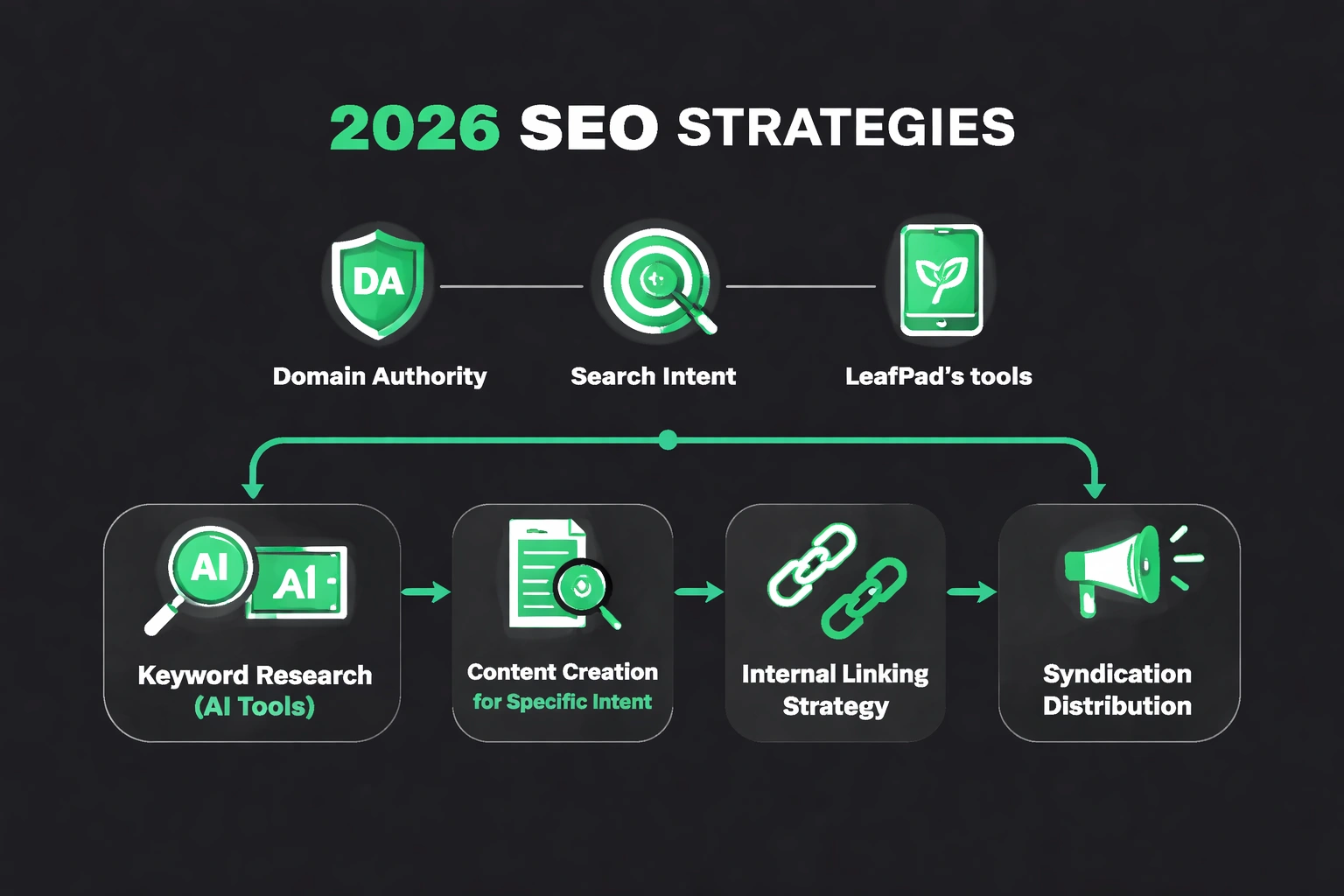
It's writing articles specifically to rank for a keyword. Not brand storytelling targeted content designed to capture search intent and traffic.
Ten years ago, you could submit the same piece to dozens of directories. Panda and Penguin killed that. Now it's one article, one domain, one intent. You distribute through internal linking and syndication, not duplication. Tools like LeafPad's keyword research engine help figure out which queries need dedicated articles versus which fit existing pages.
Why Article Marketing Still Works When Done Right
Search engines still reward consistent publishing on trusted domains. The mechanism works; the bar is just higher. It fails when articles are thin, duplicated, or live on subdomains disconnected from your main site.
Look at the difference. Company A puts ten articles monthly on blog.company.com a subdomain search engines often treat as separate. Company B publishes under company.com/blogs. Six months later, Company B typically outranks Company A for the same keywords. That's why LeafPad uses domain-first architecture, detailed in the SEO content writing basics guide.
The Old vs. New Article Marketing Playbook
| Old Approach (2015-2020) | Modern Approach (2026) |
|---|---|
| Mass directory submissions | Single-domain publishing |
| Keyword stuffing | Semantic keyword clustering |
| Generic 500-word posts | 1,200+ word intent-matched articles |
| Manual link building | Internal linking automation |
| One-time publish and forget | Scheduled refresh cycles |
Building an Article Marketing SEO Strategy That Scales
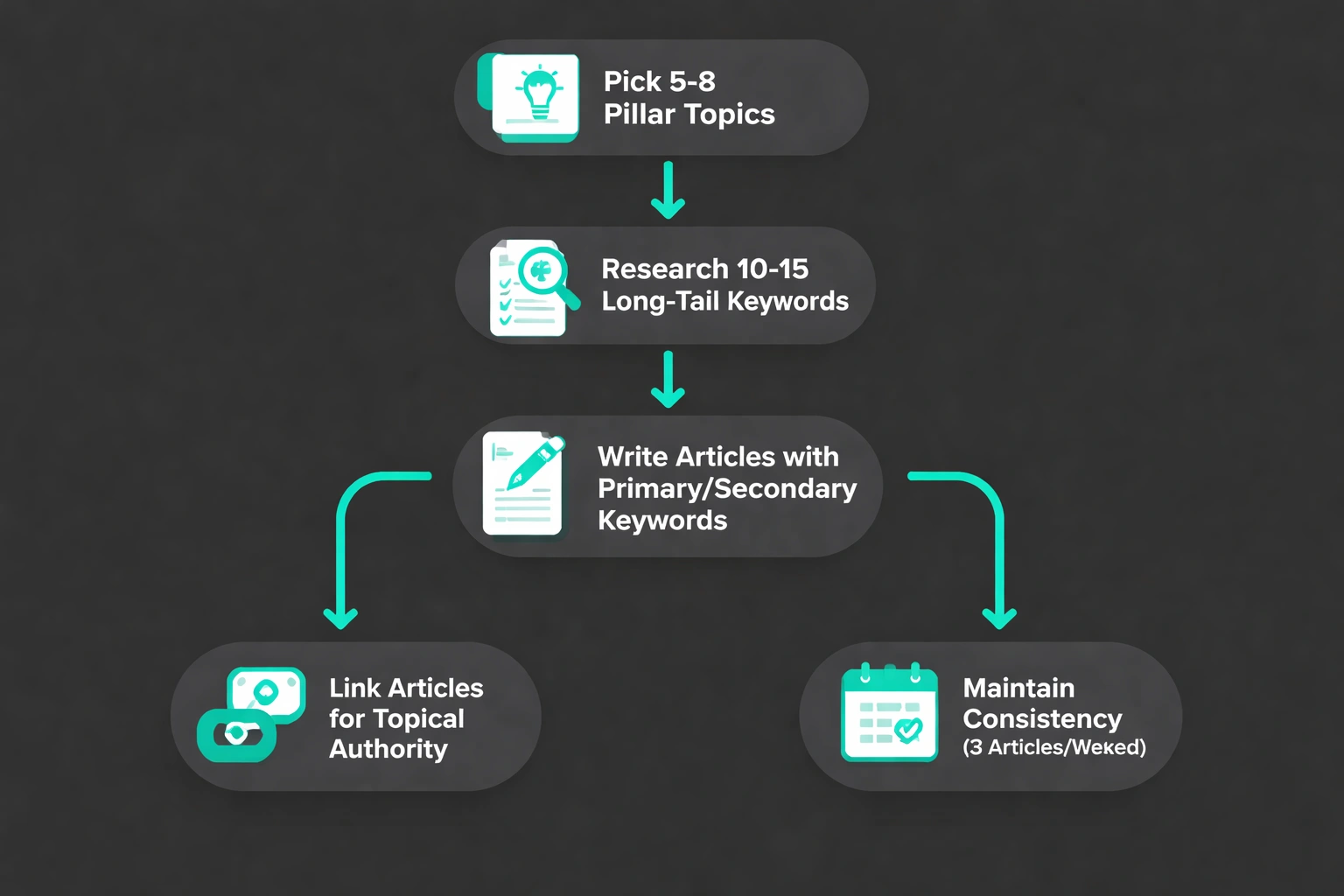
You can't scale on one viral post. You need a calendar. Consistency beats intensity three solid articles weekly beats a monthly dump because freshness signals matter.
Map your niche into pillar topics first. Then write supporting articles answering specific sub-questions. This pillar-cluster model used at LeafPad is how topical authority actually builds. Link everything together so crawlers can find it.
The workflow:
- Pick 5-8 pillar topics for your core offering
- Find 10-15 long-tail keywords per pillar using keyword research tools
- Write articles targeting one primary keyword and 2-3 secondary terms
- Schedule them with a content calendar
- Interlink everything using internal linking automation
- Refresh old content quarterly via content refresh workflows
Where AI Fits Into Article Marketing SEO
AI handles the boring stuff: outlines, meta descriptions, titles. It doesn't replace judgment. Writers shift from typing to editing and strategy.
Research and structure now take more time than drafting. A typical workflow uses LeafPad's SEO title generator for headlines and the meta description generator for snippets. Saves hours of formatting.
Scale needs automation. LeafPad's auto-publish queues articles without manual deployment. Cadence is a ranking signal, and manual uploads slow you down.
Common Article Marketing Mistakes to Avoid
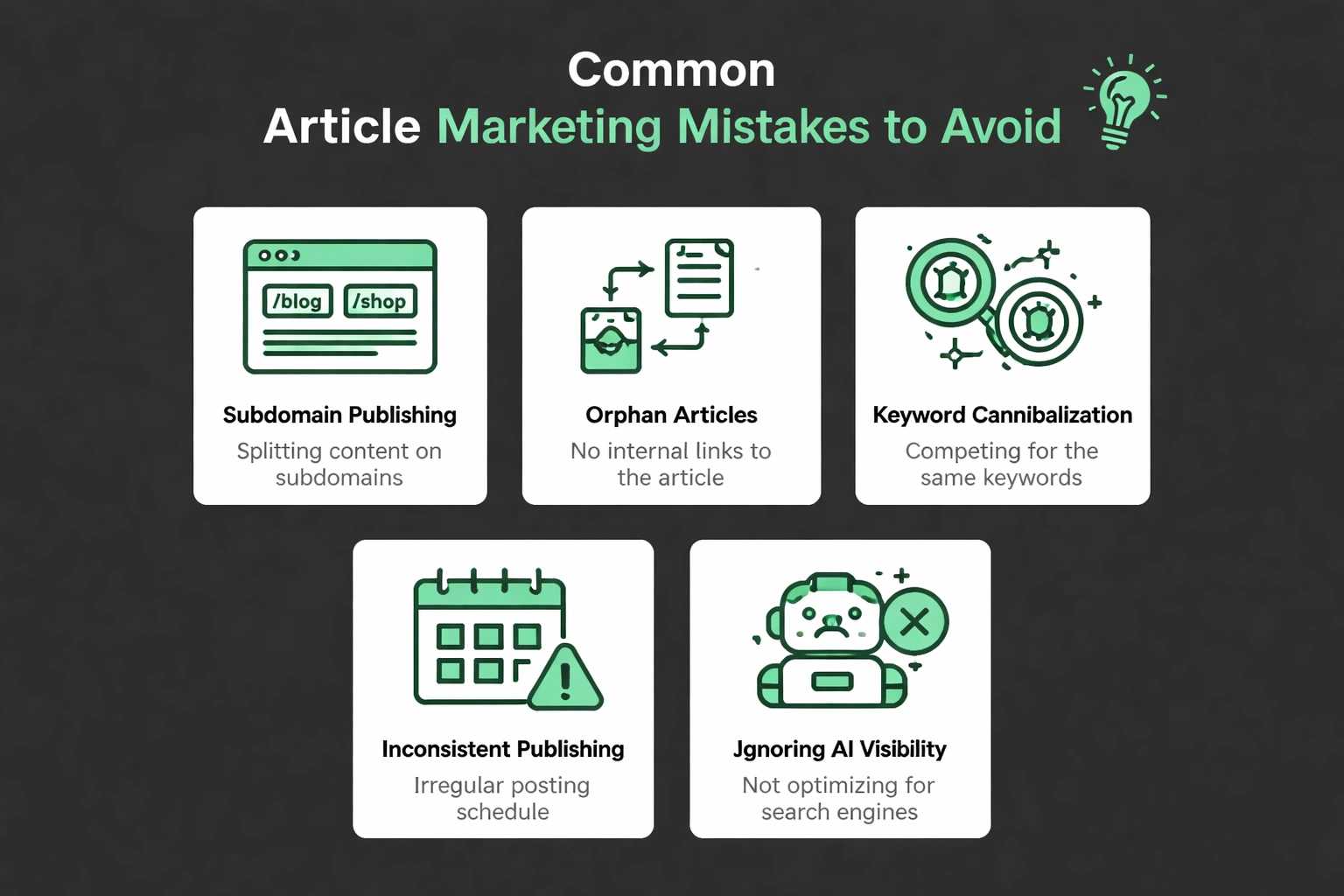
Most failures are distribution problems, not writing problems. Great content on the wrong domain structure wastes effort.
Mistakes I see repeatedly:
- Subdomain publishing splits authority
- Orphan articles no links in or out
- Keyword cannibalization multiple articles targeting the same query
- Inconsistent publishing bursts followed by silence
- Ignoring AI search visibility writing only for traditional SERPs, not AI citations
Fixing this usually isn't rewriting. Move content to the main domain, add links, set a realistic schedule.
Measuring Article Marketing SEO Performance
Track organic traffic, ranking movement, and link acquisition over 90-day windows. Word count and publish frequency are vanity metrics.
Three things matter:
- Ranking velocity how fast new articles hit page one
- Internal link equity flow are pillar pages gaining strength?
- AI citation frequency are you showing up in AI answers?
Mature programs check this monthly and pivot toward clusters showing momentum. Static annual plans ignore what the data tells you.
Getting Started Without a Content Team
You don't need a staff. Solo founders run effective programs with AI drafting and structured tools. The technical barrier is gone.
Platforms like LeafPad solve the subdomain problem by default everything goes to /blogs on your main domain. With keyword suggestions and linking built-in, one person can handle 2-3 posts weekly.
If you're debating DIY vs. platform, check LeafPad's pricing to see what managed workflow costs versus cobbling together your own stack.
Final Thoughts
Article marketing SEO in 2026 rewards owning your domain, maintaining cadence, and using AI for efficiency. Link farming is out. Relevance, structure, and internal linking are still king. For going deeper on structuring articles, the SEO content writing basics guide is where to go next.
Published with LeafPad