Most teams still treat their blog like a creative side project rather than a growth engine. They publish a post here and there, forget about it, and then wonder why traffic stalled. In 2026, SEO content development isn't just writing articles. It's building a repeatable system that plans, writes, optimizes, and maintains content at scale. You want compounding organic visibility, not sporadic traffic spikes. That gap between treating content as a pipeline versus a writing habit is exactly why most blogs plateau.
What is SEO content development, exactly?
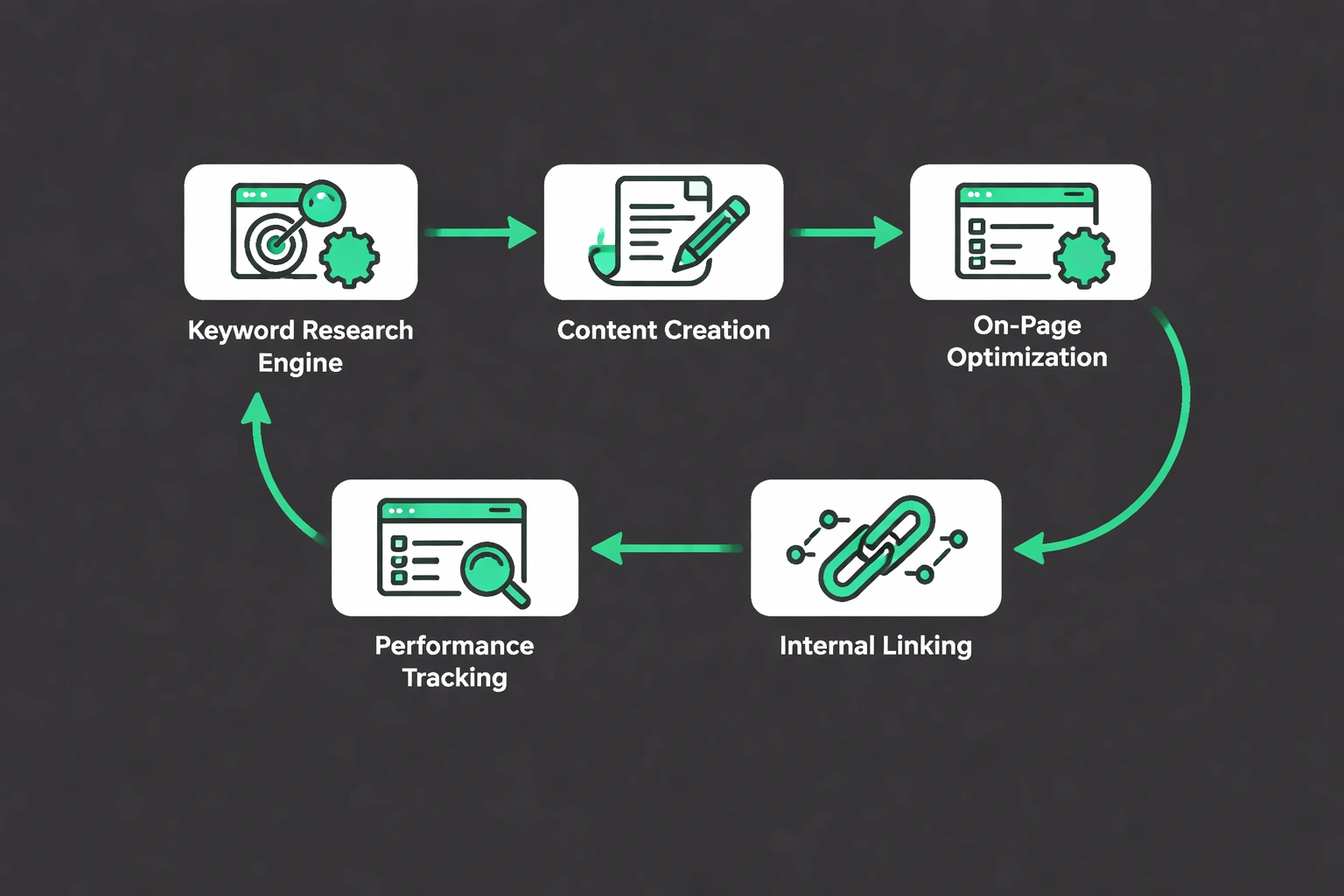
People throw the term "SEO content development" around a lot, but it really just means the end-to-end process of researching, creating, optimizing, and maintaining content so it actually ranks and converts. We're talking keyword strategy, drafting, on-page structure, internal linking, and performance tracking. A single blog post is just an output. Content development is the pipeline that produces dozens of outputs consistently, built on keyword data instead of guesswork. Tools like the keyword research engine and automated keyword research systems are the entry point. They feed the pipeline with validated demand signals before anyone writes a word.
The four stages of a real content development pipeline
A working pipeline moves content through four distinct stages: research, drafting, optimization, and maintenance. Most failed content strategies don't fail at stage one. They fail at stage three or four. Here's how it usually breaks down:
| Stage | Core Activity | Common Tool |
|---|---|---|
| Research | Keyword and intent mapping | Keyword Research |
| Drafting | AI-assisted or human writing | AI Blog Generator |
| Optimization | Structure, meta, linking checks | Meta Description Generator |
| Maintenance | Refreshing stale content | Content Refresh |
If you treat this as a linear checklist instead of a loop, you end up with a graveyard of unoptimized posts. Agencies skip the maintenance stage entirely, which is exactly why their clients' blogs plateau after six months.
Why keyword research still comes first
Everyone has AI writing tools now, but keyword research is still the foundation. If you don't have validated demand data, you're just building content on assumptions. Honestly, this is the single biggest predictor of whether a piece will rank or not. Before drafting starts, you need to answer three things: what are people actually searching, what intent sits behind that search, and what's already ranking for it. Skipping this step is why so many AI-generated posts flop. They're well-written but aimed at nothing. LeafPad's automated keyword research system pairs volume data with intent classification, which matters way more than raw search volume. Pair that with the LSI keyword generator to cover semantic variations naturally, and you avoid the keyword-stuffing patterns search engines penalize.
Structure and clarity aren't optional
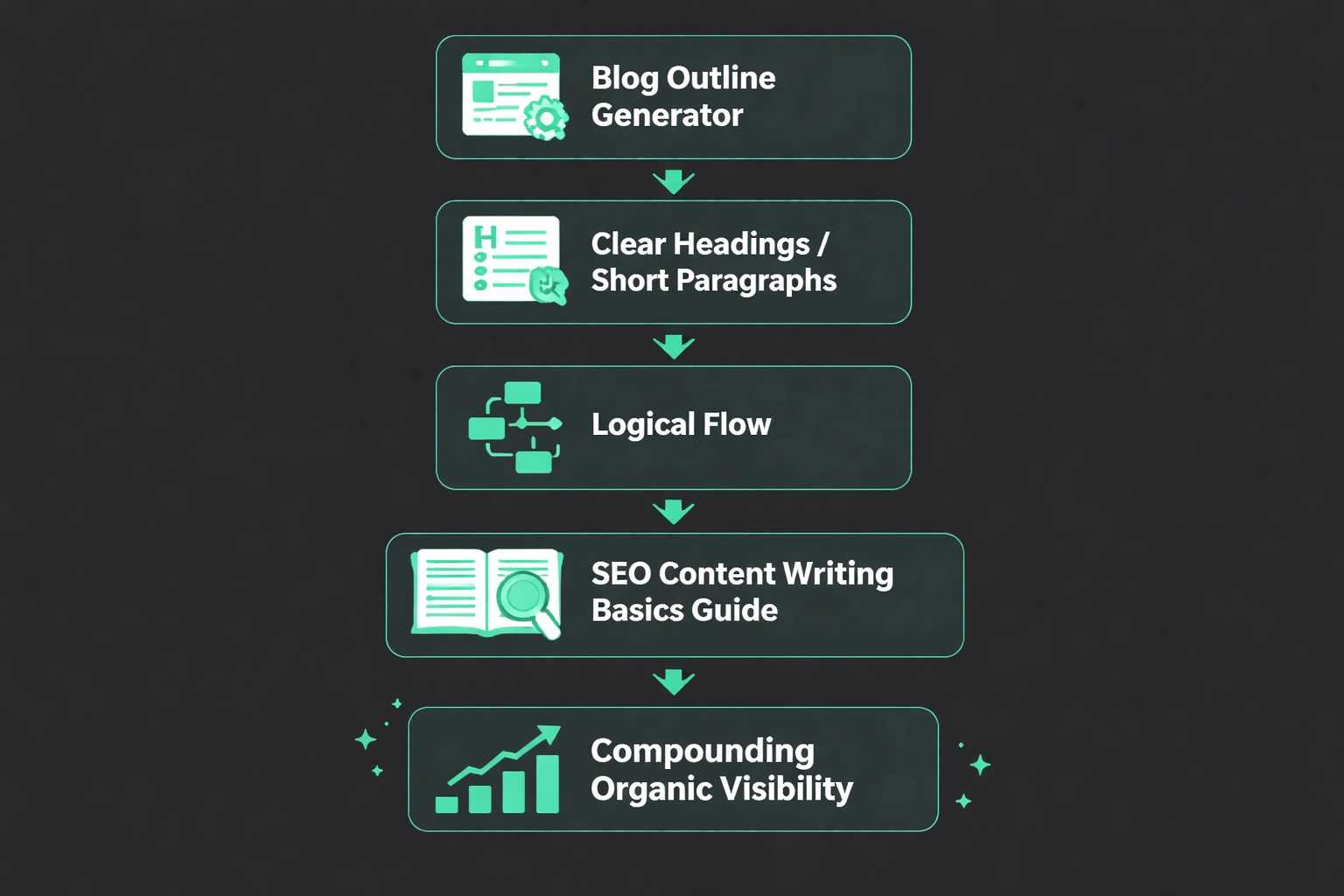
Content structure dictates whether readers and search engines can actually parse a piece. Clear headings, short paragraphs, and logical flow aren't cosmetic choices; they're ranking factors. You can have the best research in the world, but if the structure is a mess, you lose both engagement and crawlability. We cover this in depth in the sibling guide SEO Content Writing Basics 2026: Structure & Clarity, which breaks down heading hierarchy and readability scoring. The short version: use the blog outline generator before drafting, not after. If you write a wall of text and try to retrofit headers later, you usually end up with awkward breaks that don't match the actual flow of the argument.
AI drafting without losing your voice
AI-assisted drafting speeds up content development significantly, but only if you pair it with actual editorial oversight. Raw AI output leans toward generic phrasing and shallow examples. The better approach is to use AI for structure and speed, then layer in specific data, brand voice, and original insight. Platforms like LeafPad's AI Blog Generator can produce a full draft, including titles, headings, and meta descriptions, in minutes. But that draft is a starting point, not a finished asset. Teams that treat AI output as final copy end up with content that reads fine but ranks poorly for competitive terms. Search engines and readers can both detect thin, generic writing. The fix is simple: add proprietary data, case examples, or a distinct point of view before publishing.
Scaling content without losing quality
Scaling content development means increasing output volume while holding quality constant. It's harder than it sounds. Most teams that try to scale either burn out their writers or flood their site with thin, repetitive posts. The solution is a templated structure paired with genuine topic variation. This is where programmatic and pillar strategies come in. The sibling post 2026 Article Marketing SEO: Domain Authority & AI Strategies covers how domain authority compounds when content scales correctly. If you're going to scale, use a shared outline template but vary the examples and data per piece. Build a content calendar so publishing frequency stays consistent. Batch your keyword research quarterly instead of per-post to keep the momentum going. And reserve programmatic collections for genuinely repeatable page types, not every topic. Scaling without a system just multiplies inconsistency.
On-page optimization checklist
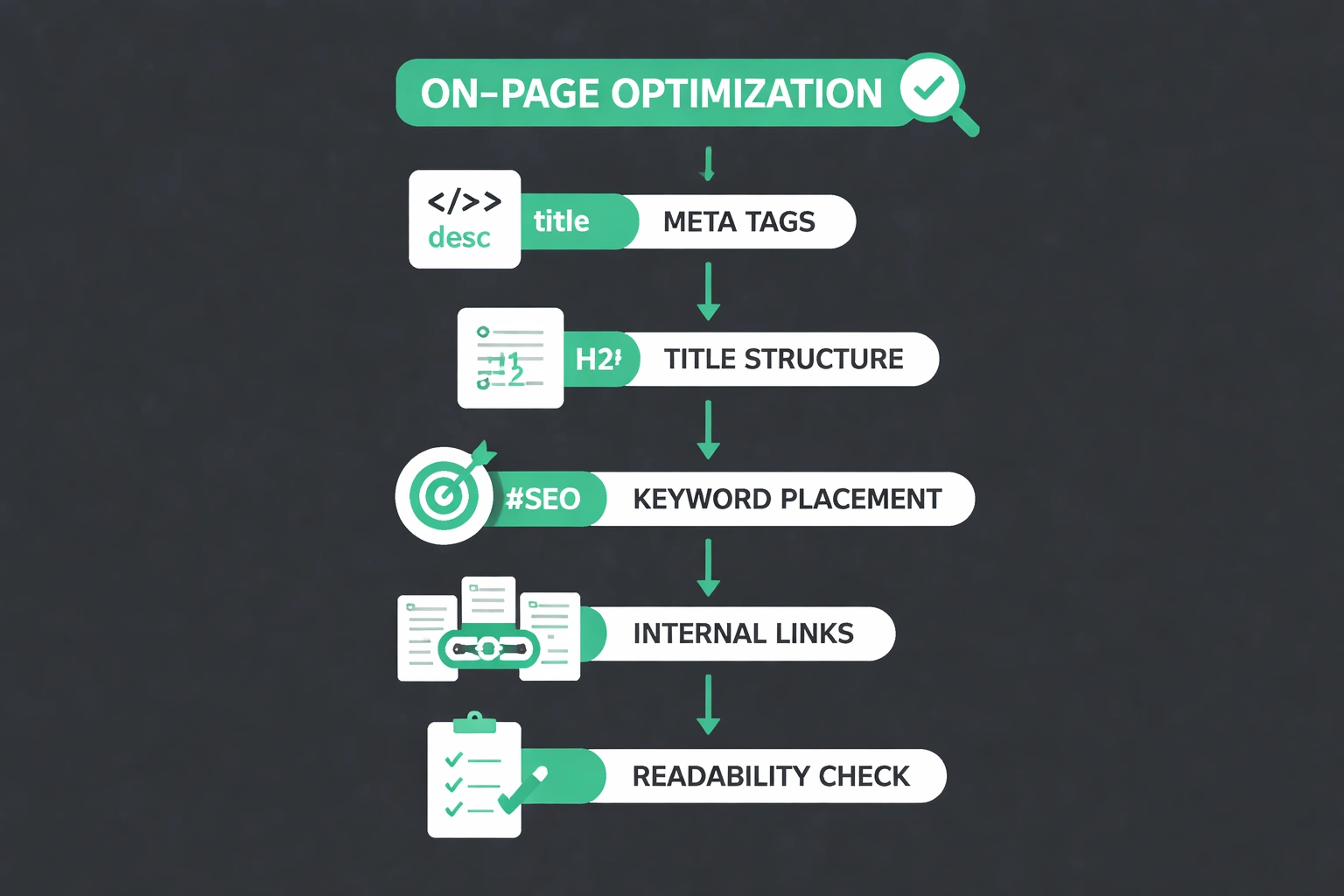
On-page optimization is the layer that turns a well-written draft into a search-ready page. It covers meta tags, internal links, title structure, and keyword placement. Skipping this step is like writing a great book and forgetting the cover and index. Before you publish, run the title through the SEO title generator to check clarity and click-through potential. Write a meta description using the meta description generator. Check keyword balance with the keyword density analyzer, and add 3-5 internal links using internal linking suggestions. Finally, verify readability and grammar with the grammar checker, and generate a clean URL slug with the permalink generator. Each step takes minutes, but they compound into better performance across dozens of posts.
Maintenance: the stage everyone skips
Content maintenance is just updating existing posts to keep them accurate and competitive. Search rankings decay over time as competitors publish fresher content and facts change. If you ignore maintenance, you lose rankings you already earned. A refresh cycle doesn't need to be complicated. Quarterly reviews of top-performing posts, updated statistics, and new internal links keep pages relevant. LeafPad's content refresh tool flags aging content automatically, so teams aren't guessing which posts need attention. Combine that with the index checker to confirm updated pages are actually being recrawled and reindexed.
Measuring whether development efforts work
Measurement closes the loop on any content development system. Traffic alone doesn't tell the full story. Rankings, engagement, and citation visibility in AI search results all matter now. Without tracking, teams repeat the same mistakes indefinitely. When you look at the numbers monthly, track organic traffic trends per post rather than just site-wide. Watch keyword ranking movement for your target terms. Pay attention to AI citation frequency via AI citations tracking, and check internal link click-through between related posts. Teams that skip measurement often keep producing the same underperforming content type simply because nobody flagged the pattern.
Where LeafPad fits into the pipeline
LeafPad brings the entire content development pipeline into one workspace instead of scattering it across a dozen disconnected tools. Research, drafting, optimization, and maintenance all happen without switching platforms. That consolidation is what makes scaling sustainable. For teams comparing options, the compare hub breaks down how LeafPad stacks up against tools like Jasper AI, Copy.ai, and Scalenut. The pricing page outlines plans for solo creators up through agency-scale teams. The underlying principle stays the same: content development only works when it's a system, not a scramble.
Published with LeafPad