Being "SEO driven" means you let search data guide your content decisions instead of guessing. For beginners, this is the shift from random publishing to an actual system built around keywords, structure, and what people search for. It's what separates sites that grow from ones that stall out.
Most new bloggers write first and think about search later or never. That's backwards. You end up spending hours on posts nobody finds. Starting SEO-driven from day one saves time you'd otherwise waste rewriting everything six months later when you realize nothing ranks.
What Does "SEO Driven" Mean?
SEO driven describes a content strategy where search intent, keywords, and technical structure shape decisions before you write a single word. It doesn't mean stuffing keywords everywhere. Research comes first, writing second, and every page has a clear purpose in search.
Think of it as the difference between cooking with a recipe versus throwing in whatever feels right. A recipe-driven cook knows the outcome before starting. An SEO-driven writer knows the target keyword, the audience question, and the ranking competition before drafting a headline. That clarity removes the guesswork that trips up most beginners.
This touches everything: title tags, headings, internal links, image alt text. Nothing gets added because it "feels right." Every element exists to support a search goal.
Why Beginners Should Care
Beginners benefit most from this approach because it stops you from creating content nobody searches for. New bloggers often publish based on personal interest. That's fine for a hobby. Not for growth.
Search engines reward relevance and consistency. A blog built around actual search demand can pull traffic within weeks instead of months. If you're still learning the basics, the guide on SEO for beginners covers fundamentals that pair well with this mindset.
What changes:
- Topics get chosen based on search volume, not just personal preference
- Headlines match what people type into Google
- Content structure follows patterns search engines can parse
- Publishing becomes consistent instead of random
What an SEO-Driven Website Needs
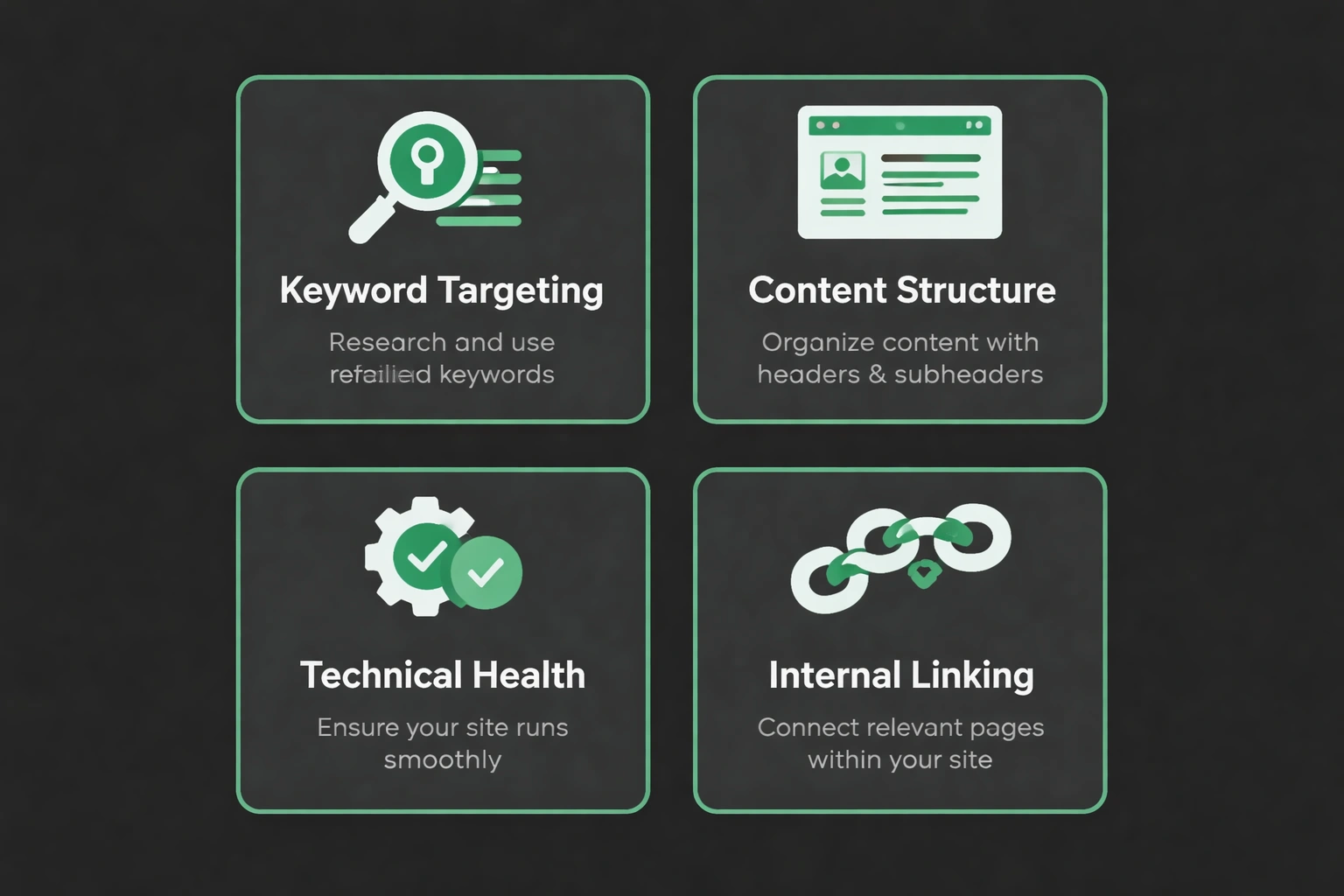
An SEO-driven website rests on four things: keyword targeting, content structure, technical health, and internal linking. Skip any of these and rankings suffer regardless of writing quality.
Keyword targeting starts with understanding what your audience searches. Tools like keyword research help beginners find realistic, low-competition terms instead of chasing impossible ones. Content structure means clear headings, short paragraphs, and logical flow that both readers and crawlers can follow.
Technical health covers page speed, mobile usability, and clean site architecture. Internal linking ties pages together so search engines understand topic relationships. The internal linking tool automates much of this useful when you're starting out and don't have hours for manual link planning.
SEO-Driven Content vs. Random Content
The differences show up in measurable ways:
| Factor | Random Content | SEO-Driven Content |
|---|---|---|
| Topic selection | Based on personal interest | Based on search demand |
| Headline | Creative, vague | Matches actual search queries |
| Structure | Freeform paragraphs | Clear H2/H3 hierarchy |
| Publishing rhythm | Sporadic | Scheduled and consistent |
| Traffic result | Slow or flat | Measurable growth over time |
Random content can still be enjoyable to write. But if you want traffic and visibility, SEO-driven content wins. Creativity doesn't disappear it works inside a framework search engines can actually reward.
How to Build an SEO-Driven Workflow
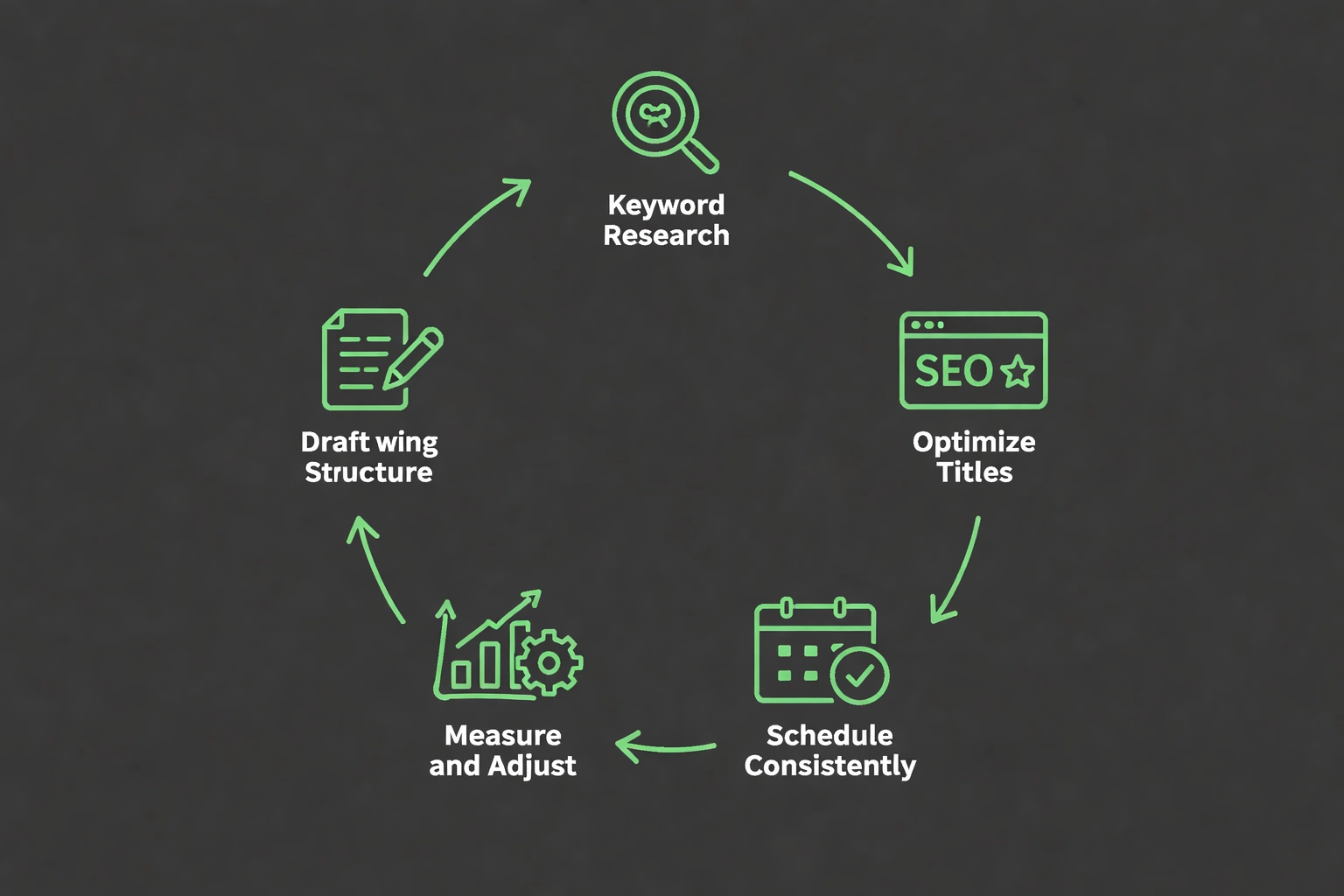
Building an SEO-driven workflow starts with research and ends with measurement. Here's a five-step loop:
- Research the keyword. Use keyword research to confirm search volume and intent before writing anything.
- Draft with structure in mind. Outline headings first, then fill in content. Clarity beats clever phrasing covered in understanding SEO writing.
- Optimize titles and meta descriptions. The SEO title generator and meta description generator speed this up.
- Schedule and publish consistently. A content calendar keeps publishing rhythm steady something search engines notice.
- Measure and adjust. Check what's ranking and refine underperforming pages.
The loop sounds simple. But consistency moves rankings. Beginners who repeat this cycle weekly outperform those who write occasionally, even if the occasional writer is more talented.
Common Mistakes
Beginners often confuse keyword stuffing with being SEO driven. Overloading a page with repeated phrases reads poorly, and search engines penalize it.
Another mistake: skipping keyword density checks entirely, publishing content that overuses or barely mentions the target phrase. The keyword density analyzer catches this before publishing not after rankings stall.
A few other frequent missteps:
- Long, unfocused paragraphs that bury the answer
- Ignoring internal links between related posts
- Publishing once and never updating older content
- Choosing topics with zero real search demand
Fixing these doesn't require advanced skills. Just slow down before hitting publish and check the basics.
Tools That Help You Stay SEO Driven
Staying consistent is difficult without support. Manual research and formatting for every post doesn't scale past a few articles a month.
Platforms like LeafPad's feature set remove much of the manual overhead. The AI blog generator drafts SEO-targeted posts automatically, keeping structure and keywords aligned from the first draft. For beginners on a budget, the free AI SEO tools page offers a starting point without upfront cost.
Tooling doesn't replace strategy. But it removes friction that causes most beginners to quit before seeing results.
Measuring Whether Your Site Is Truly SEO Driven
A site is truly SEO driven when its traffic sources, rankings, and content decisions trace back to search intent data. If you can't explain why a page exists in search terms, it's not there yet.
Check your last five published posts. Ask whether each targets a specific search query with measurable demand. If the answer is unclear, revisit your process.
Over time, this habit becomes second nature. You start every draft by asking what someone is searching for not what you feel like writing about. That shift is the difference between casual blogging and running an SEO-driven site that grows month after month.
For a broader foundation, the SEO text tools guide ties together everything covered here into a wider system worth exploring next.
Published with LeafPad