SEO automation platforms handle keyword research, on-page optimization, internal linking, and publishing without you having to babysit them. They replace the messy stack of spreadsheets, plugins, and disconnected tools with a single system. If you're on a content team in 2026, this is how you actually scale SEO alongside your content volume instead of watching the manual workload pile up.
Most content marketing software still treats SEO like an afterthought. You write the draft, run a quick plugin check, manually fix meta tags, and hope someone remembers to add internal links. An automation platform changes that flow entirely. SEO becomes the foundation the content is built on, rather than a chore you rush through right before hitting publish.
What makes a platform "SEO automation" vs. just content software
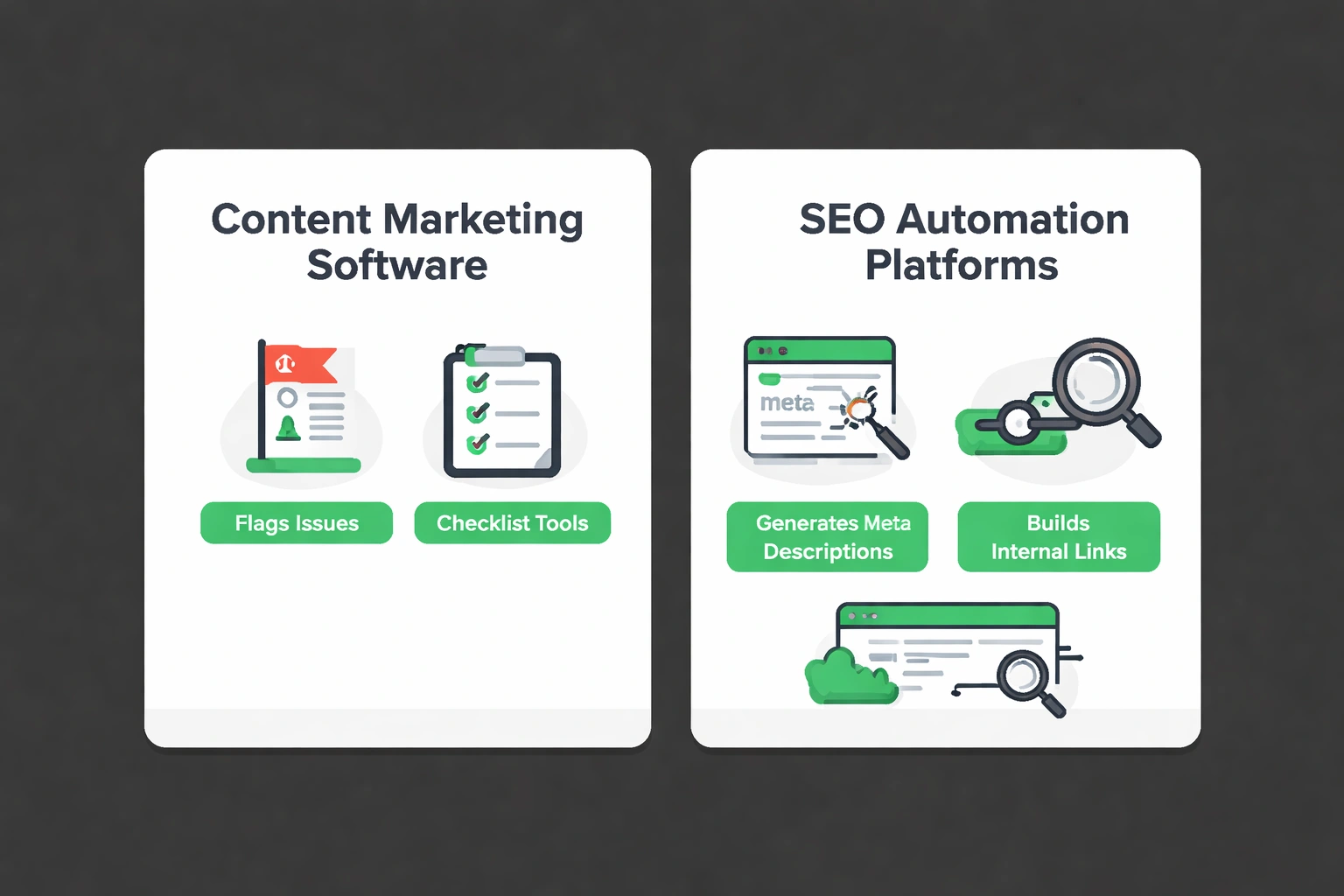
An SEO automation platform actively does the SEO work. It doesn't just suggest it. It generates meta descriptions, builds internal links, and monitors indexing on its own. Traditional content marketing software usually just flags issues for humans to fix later.
The distinction matters more than it sounds. A checklist tool tells you to "add more internal links." An automation platform actually inserts contextually relevant links while you write. That's the gap between advisory software and operational software.
Here's a simple breakdown of the difference:
| Feature | Content Marketing Software | SEO Automation Platform |
|---|---|---|
| Meta tags | Suggests format | Auto-generates and applies |
| Internal linking | Flags missing links | Inserts links automatically |
| Publishing | Manual export/upload | Direct auto-publish |
| Keyword tracking | Separate tool needed | Built into workflow |
| Indexing | No visibility | Monitors and alerts |
If you're evaluating tools like LeafPad's SEO automation suite, this table is a good starting checklist. Ask vendors which column their product actually falls into.
Core functions an SEO automation platform should handle
A real SEO automation platform covers keyword research, content structuring, internal linking, and distribution from a single dashboard. Each function runs with minimal manual input. If you skip even one of these, you create a workflow gap that eventually slows down your publishing speed. Founders often adopt platforms that only solve part of the puzzle, so let's look at the pieces.
Automated keyword research
Keyword research shouldn't require switching between five browser tabs. A platform like LeafPad's keyword research tool surfaces relevant terms directly inside the editor as you write. This keeps intent-matching tight instead of guessing after the draft is done.
Real-time content optimization
Content optimization happens while typing, not after publishing. Automated systems score readability, check heading hierarchy, and suggest LSI keywords in real time. Tools like the LSI keyword generator and keyword density analyzer plug directly into this loop.
Automatic internal linking
Internal linking is where most manual workflows completely break down. Writers forget to link, or they link inconsistently across dozens of posts. An automation platform solves this by scanning published content and inserting relevant links automatically. You can see exactly how this works on LeafPad's internal linking page.
Auto-publishing without developer involvement
Publishing shouldn't require a developer to push code. A proper automation platform lets non-technical marketers hit publish directly to a live domain. Check out LeafPad's auto-publish feature to see what I mean.
Why content marketing software alone isn't enough anymore
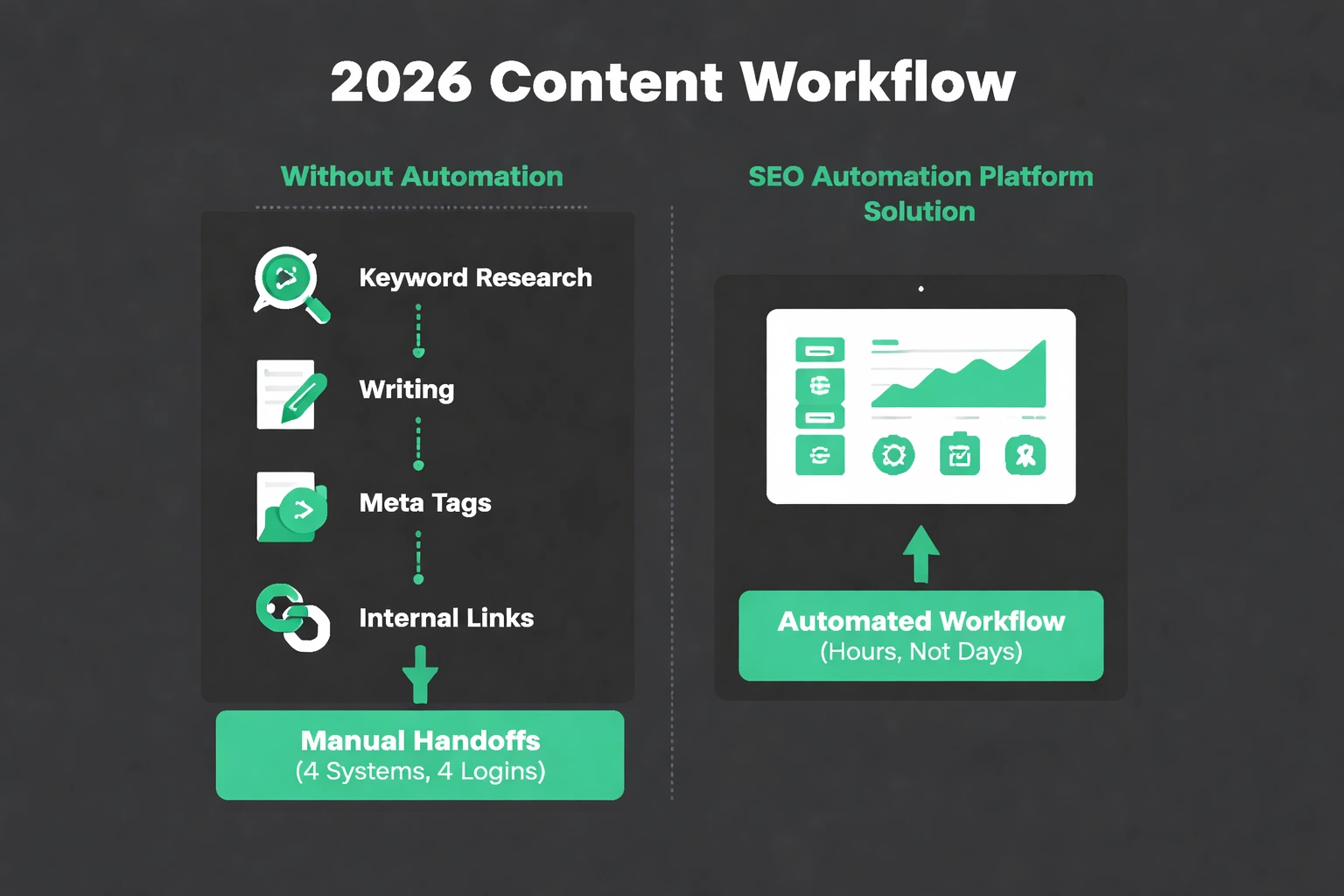
Standalone content marketing software creates bottlenecks because SEO tasks still require manual handoffs. A writer drafts, an SEO specialist reviews, and a developer implements. Each handoff adds days to a timeline that should only take hours.
Think about a typical mid-size marketing team in 2026. They use one tool for keyword research, another for writing, a WordPress plugin for meta tags, and a spreadsheet to track internal links. That's four systems and four logins, giving you four different opportunities for something to fall through the cracks.
An SEO automation platform consolidates this into one workflow. You draft in an editor with live SEO scoring. Keywords surface automatically based on the topic. Internal links get suggested and inserted contextually. Meta descriptions generate without manual writing. Publishing happens with one click, no developer needed.
This isn't theoretical efficiency. It's the difference between publishing three posts a week versus fifteen. Teams stuck on fragmented software plateau fast because every new post costs the same manual effort as the first one.
Choosing the right SEO automation platform for your team
Picking the right platform comes down to matching the automation depth to your team's actual publishing volume and technical comfort. Small teams just need simplicity, while agencies need multi-blog management. The wrong fit gives you either overkill complexity or not enough automation.
Ask these questions before committing:
- Does it publish to your main domain, not a subdomain? SEO authority compounds better under one root domain.
- Can non-developers use it end-to-end? If a developer is required for every post, automation isn't complete.
- Does it scale to programmatic content? Growing keyword footprints often means generating hundreds of similar pages efficiently.
- Is internal linking automatic or manual? This single feature saves the most recurring time.
- Does it integrate with your existing site builder? Compatibility with tools you already use matters more than flashy extras.
If you're comparing specific vendors, resources like the comparison hub break down how platforms differ side by side, including guides like the Outrank alternative and Jasper AI alternative comparisons.
Common mistakes teams make when adopting automation
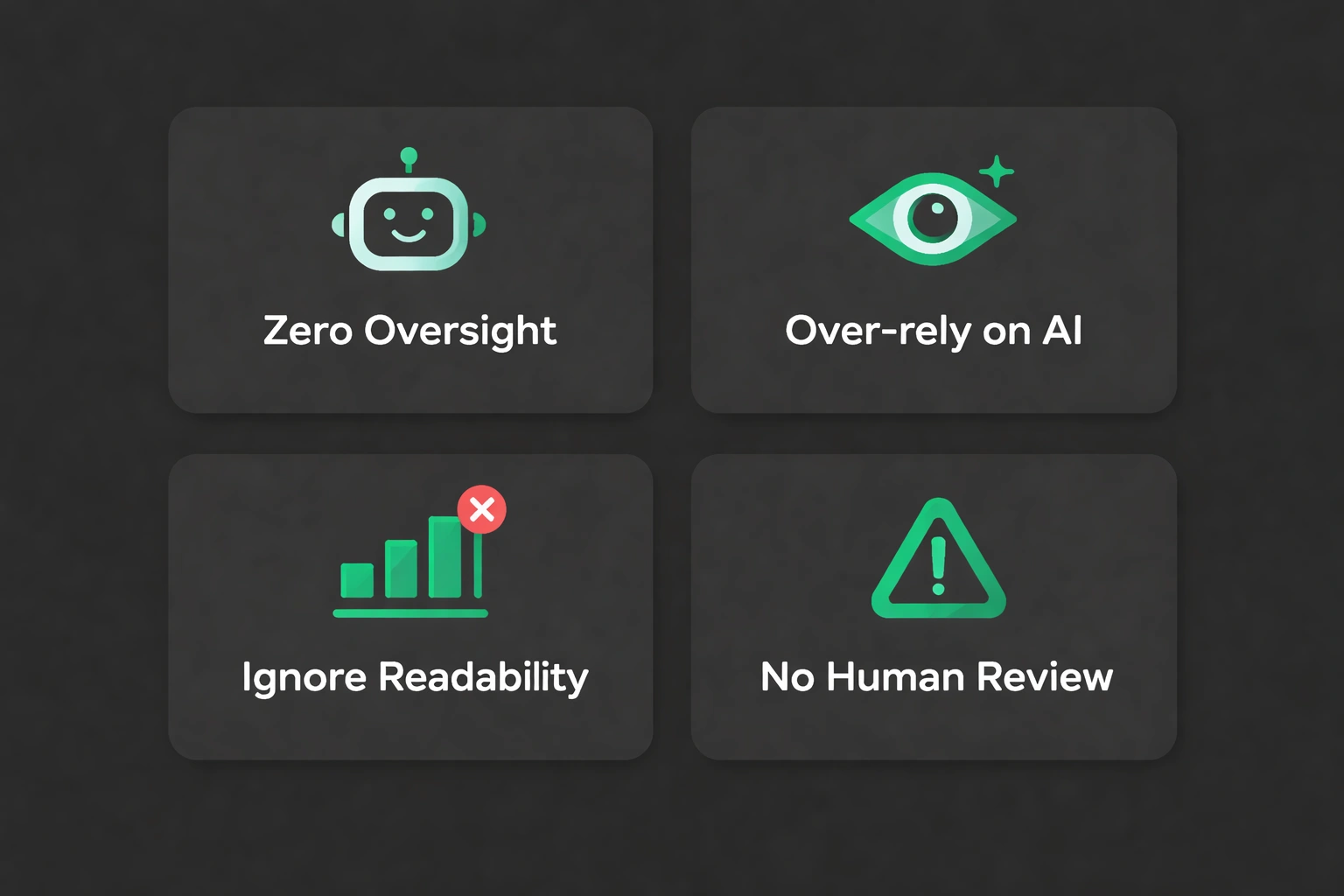
Teams often assume automation means zero oversight, which usually leads to generic, disconnected content. Automation should handle the repetitive mechanics, not replace strategic judgment entirely. The best results come from combining automated infrastructure with actual human editorial direction.
Here are a few frequent missteps worth avoiding. Don't over-rely on AI drafts without review. Automation speeds up structure, but voice and accuracy still need human eyes. Don't ignore readability scores, either. A perfectly keyword-optimized post that reads awkwardly still underperforms. Also, don't skip the content calendar. Automation without a content calendar leads to inconsistent publishing gaps. Don't forget content refresh cycles, because old posts need updates too. Check out content refresh workflows to see how automation handles this. Finally, don't stop tracking indexing. Publishing doesn't guarantee indexing. Use tools like the index checker to confirm pages are actually live in search.
Writers new to SEO-first workflows benefit from foundational reading too. If your team is still building core SEO writing habits, the guide on understanding SEO writing clarity and strategy pairs well with automation adoption. Similarly, teams debating whether to build custom tooling or adopt automation should read auto SEO AI workflows for a deeper comparison.
Measuring whether your automation platform is working
An SEO automation platform's success shows up in publishing frequency, indexing speed, and organic traffic growth over time. Vanity metrics like word count or post volume don't mean much. Real validation comes from search visibility improvements.
Track these signals monthly: time from draft to published post, percentage of posts indexed within 48 hours, internal link density across the blog, organic traffic growth per published cluster, and reduction in manual SEO task hours. If these numbers aren't improving after adopting a platform, something in the setup needs adjustment, usually integration depth, not the core software itself.
Wrapping up
An SEO automation platform isn't a luxury add-on anymore. It's infrastructure. Teams still stitching together plugins, spreadsheets, and manual reviews are losing publishing speed to competitors who automated the mechanics years ago. Start by auditing your current stack against the core functions above, then decide what to consolidate.
For a broader look at how content optimization tools fit into this ecosystem, the parent guide on SEO Text Tools 2026 covers the full toolkit landscape worth exploring alongside automation platforms.
Published with LeafPad