SEO content analysis is just checking your post before you hit publish to see if it actually has a shot at ranking. You look at your keywords, headings, readability, and structure. I genuinely think this one habit saves beginners from wasting time on posts that go absolutely nowhere.
Most new bloggers write first and think about search engines later, if at all. That backwards approach wastes hours on posts that never rank because nobody checked whether the content matched what people actually search for. SEO content analysis flips that order. It gives you a checklist before you publish, instead of regret after.
What Is SEO Content Analysis for Beginners
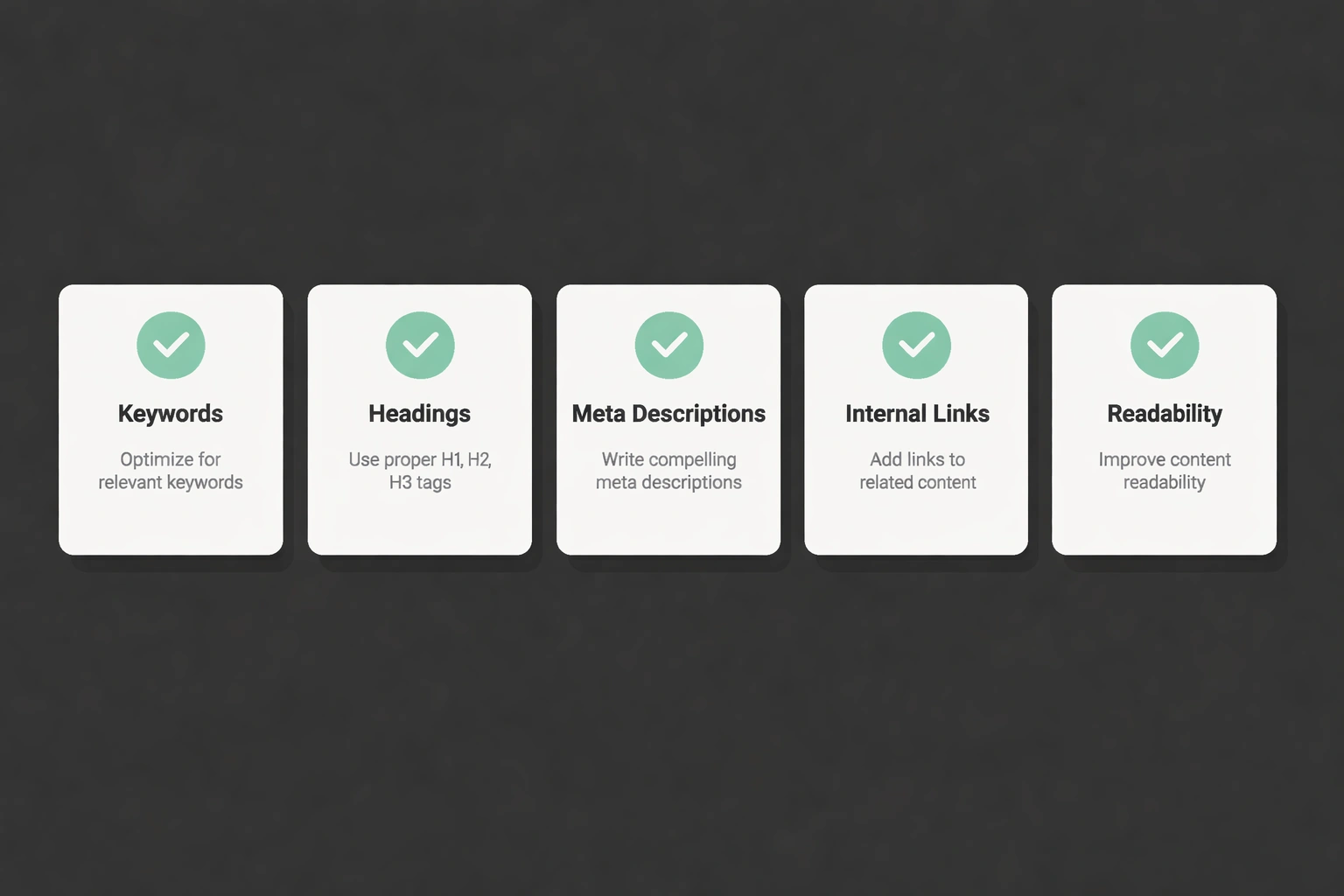
SEO content analysis means reviewing a piece of writing against ranking factors before it goes live. It looks at keyword usage, heading structure, meta descriptions, internal links, and readability. Beginners should treat it as a pre-publish checklist rather than some kind of technical audit.
Think of it like proofreading, except you're checking for search engines instead of typos. A human reader might forgive an awkward sentence. Google won't forgive a missing H1 tag or a page with zero internal links. The analysis step catches these gaps while you can still fix them cheaply, before the post is indexed and judged.
For someone just starting out, this doesn't need to be complicated. You're not running enterprise audits with twenty metrics. You're just checking five or six things that matter most, every single time you write. If you want a broader foundation first, our guide on SEO for beginners covers the basics that content analysis builds on.
Why Beginners Skip This Step and Pay for It Later
Beginners skip content analysis because it feels like extra work after finishing a draft. Writing feels done once the last sentence lands. But skipping analysis means publishing blind, and blind publishing is the top reason beginner blogs get zero traffic for months.
Here's the pattern I see constantly. Someone writes a 1200 word post, publishes it, waits, and sees nothing happen. They blame the algorithm. The real issue is usually much simpler:
- No target keyword in the title or first paragraph
- Headings that read like a diary instead of a search query
- A meta description that got auto-generated as random text
- Zero internal links, so the page sits isolated with no authority flowing to it
- Paragraphs so dense that readers bounce in under ten seconds
Every one of these is catchable in five minutes with a proper analysis pass. None of them require technical skill. They just require a checklist and the discipline to run it before publishing, not after.
The Core Elements Every Content Analysis Should Check
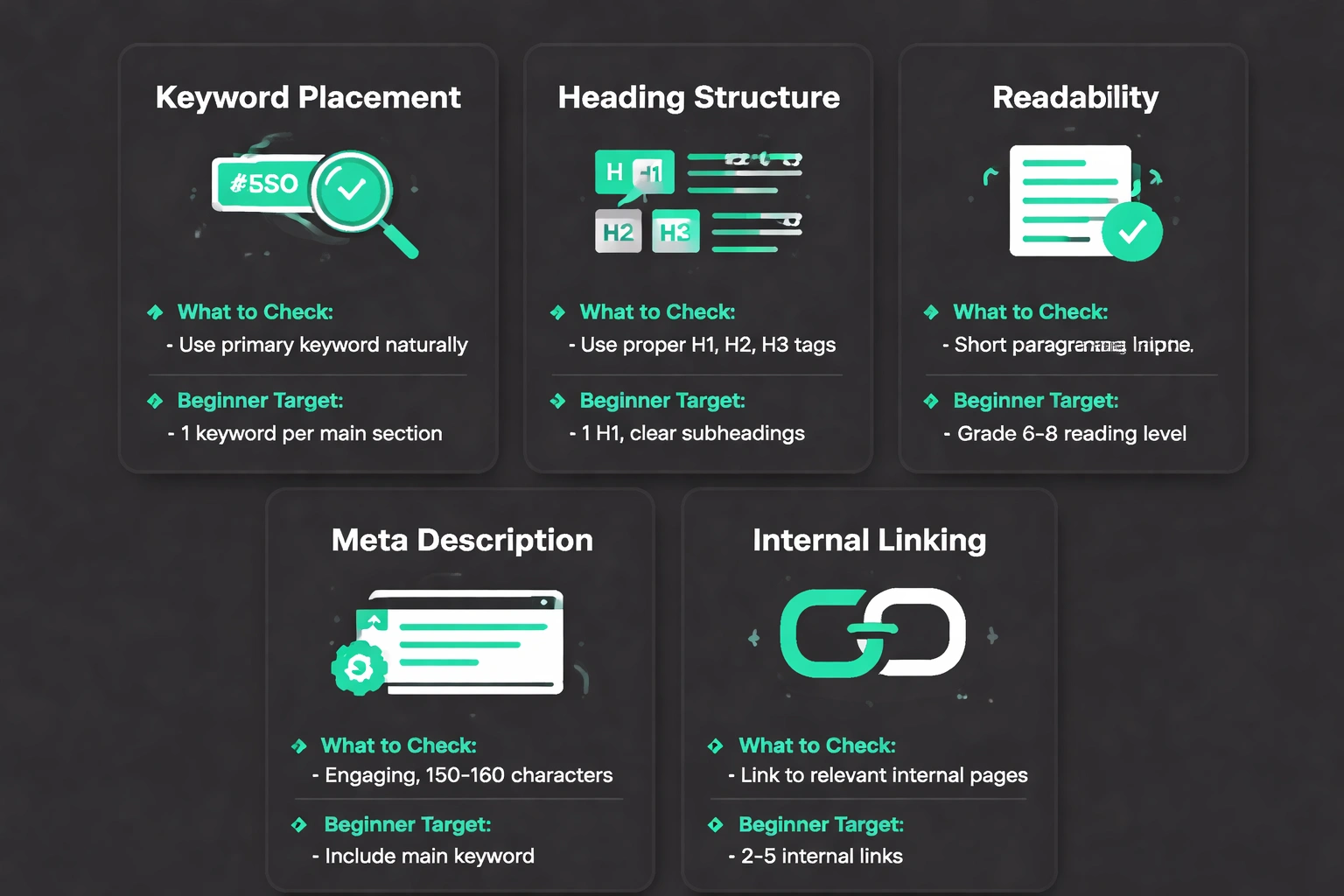
Every SEO content analysis for beginners should check five elements: keyword placement, heading structure, readability, meta description, and internal linking. These five cover roughly 80 percent of what separates a post that ranks from one that doesn't.
Here is what "checking" actually means for each one.
| Element | What to Check | Beginner Target |
|---|---|---|
| Keyword placement | Title, first 100 words, one H2 | Natural, not stuffed |
| Heading structure | One H1, logical H2s, no skipped levels | 3 to 6 H2s per 1000 words |
| Readability | Sentence length, paragraph length | Sentences under 20 words average |
| Meta description | Includes keyword, under 160 characters | Written by you, not auto-generated |
| Internal linking | Links to related and parent content | 3 to 8 links minimum |
Keyword placement matters most in the first hundred words because that's where search engines and readers both decide if the page matches intent. If you're writing about "seo for beginners," that phrase or a close variant needs to show up early, not buried in paragraph seven.
Heading structure is where a lot of beginners quietly fail. They write H2s that sound clever but don't match how people actually search. A heading like "Let's Talk Content" tells search engines nothing. A heading like "What Is SEO Content Analysis for Beginners" tells them exactly what the section answers.
The quickest fix is phrasing headings the way readers phrase their searches, which usually means as questions. If you've ever typed "what is the best tool to rewrite headlines as questions for seo?" into Google, start with the posts you already own. LeafPad reads your existing content, flags headings that don't match how people actually search, and helps you rewrite them as questions without touching the rest of the post.
Readability is measured differently than you'd expect. You don't need to dumb down your ideas, but you do need to watch sentence length and paragraph density. Long, winding sentences lose readers and confuse crawlability tools that try to extract meaning from your text. If you want a deeper look at sentence construction and clarity specifically, understanding SEO writing walks through that in more detail.
How to Run a Manual Content Analysis Without Tools
Manual content analysis without tools starts with reading your draft out loud and marking every sentence over 20 words. Then check your title and first paragraph for the target keyword. Finally, count your headings and internal links against the table above.
This manual pass takes ten to fifteen minutes and costs nothing. Here's a simple sequence beginners can follow every single time:
- Read the title out loud. Does it match a real search query, or does it sound like a diary entry?
- Check the first sentence. Does it answer the core question directly, without a warm-up paragraph?
- Scan your H2s only. Ignore the body text for a second. Do the headings alone tell a complete story?
- Count your links. Are there links pointing to related posts on your own site, or does this page stand alone?
- Read one paragraph at random. Is it under five sentences? Is any single sentence over 25 words?
This manual process builds the instinct you need before you ever touch automated tools. Once that instinct is there, moving to automation feels like an upgrade instead of a crutch. Our SEO-driven content strategy for beginners guide expands on building this kind of repeatable habit into your writing process.
When Beginners Should Move to Automated Analysis Tools
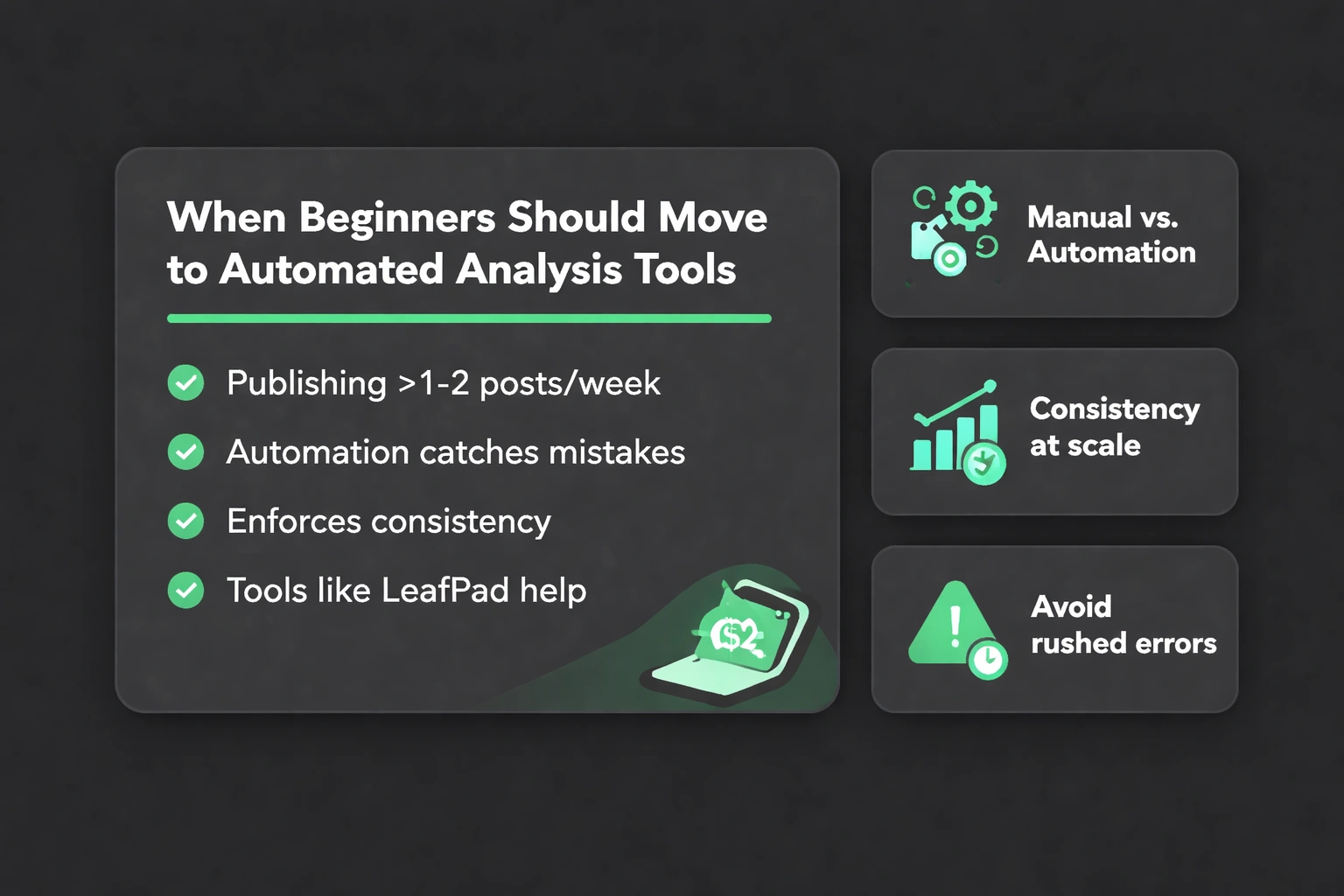
Beginners should move to automated analysis tools once they're publishing more than one or two posts a week. At that pace, manual checklists get skipped under time pressure, and automation catches what a rushed human eye misses.
Automated tools don't replace judgment. They just enforce consistency at scale. When you're writing your third post of the week and tired, an automated keyword density check or readability score catches the mistakes your brain glosses over. This is where platforms like LeafPad's built-in content optimization features become genuinely useful instead of optional extras.
A few tools worth knowing as a beginner:
- Keyword density analyzer: flags stuffing or under-optimization
- Meta description generator: removes the guesswork on character limits
- SEO title generator: tests title variants against search intent
- Grammar checker: catches readability issues before publish
You don't need a technical background to use any of these. They plug into the same editor you're already writing in. Let the tools handle the repetitive checking so you can spend your energy on the actual ideas.
Building Content Analysis Into Your Regular Writing Habit
Content analysis becomes effortless once it's a fixed step in your writing routine, not an afterthought. Treat it the same way you treat spell check: automatic, non-negotiable, and done before every single publish, no exceptions.
The beginners who see traffic growth within their first few months aren't smarter writers. They're just more consistent checkers. They run the same five-point review every time, whether the post took two hours or two days to write. Over time this habit compounds, because every new post benefits from links to and from older posts that were also properly optimized.
If you're setting up your workflow for the first time, it helps to have a platform that builds these checks into the editor itself rather than treating them as a separate audit step. That's part of why LeafPad's features focus on real-time guidance while you write, not a report you get after the fact.
Just pick five checks from this post and run them on your next draft before you publish. That's the whole system. It's enough to put you ahead of most beginner blogs still publishing blind.
Published with LeafPad