Automatic SEO optimization is software that handles the tedious parts of search optimization meta tags, keyword placement, internal linking without you having to manually tweak every single page. Algorithms do the heavy lifting. Instead of a human auditing each post, the system runs continuously in the background.
Search engines change their ranking factors constantly. Manual audits simply can't keep up once a site hits hundreds of pages. Teams that skip automation end up with stale meta descriptions, broken internal links, and missed keyword opportunities. Here is how automatic SEO optimization works and how to actually use it.
What Automatic SEO Optimization Actually Does
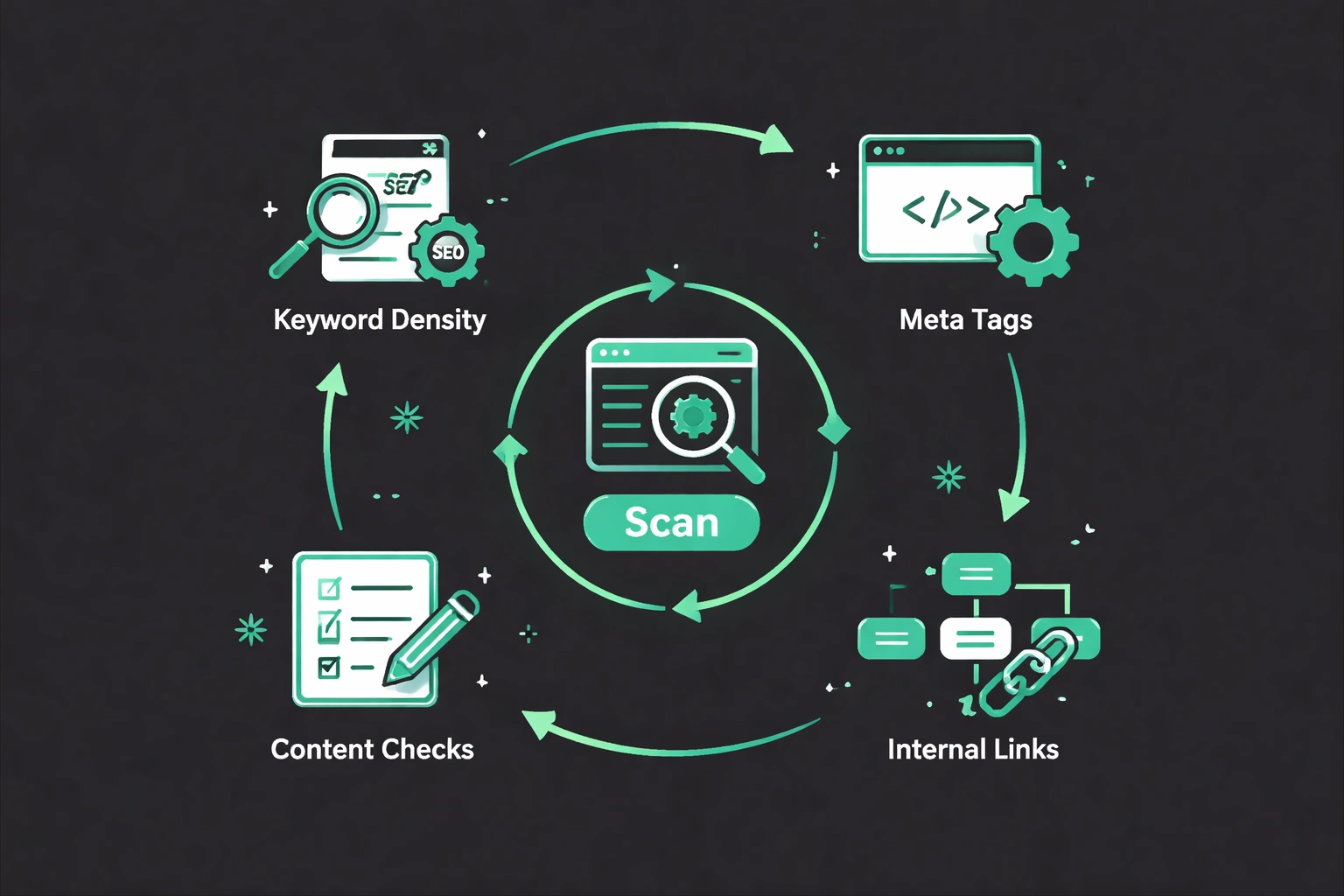
These tools scan your content against live ranking signals and fix gaps before you hit publish. They check keyword density, heading structure, meta length, and internal link coverage in seconds. The goal is to remove the guesswork from technical and on-page SEO.
Most tools run a checklist behind the scenes. They flag missing alt text, thin content, duplicate titles, and weak calls to action. Platforms like LeafPad's features page show how these checks run continuously, not just once at launch. That continuous scanning is what separates true automation from a one-time SEO audit.
Core Components of an Automatic SEO Optimization System
Every system relies on a handful of repeatable checks. These run on every page whenever content changes, without a human clicking a button.
Most tools handle meta tag generation first, writing titles and descriptions to length similar to the logic behind a meta description generator. Then there's title scoring, which checks headline strength and click-through potential, the same job an SEO title generator performs. You'll also see keyword placement checks to ensure primary and secondary terms show up naturally across headings and body text.
Internal link mapping is another big one. The system suggests connections between related pages, a task covered in depth on the internal linking page. Finally, most platforms run readability scoring (sentence length, paragraph density, passive voice) and handle schema markup so search engines understand the page type. Each component feeds into a single content score that tells you if a page is ready or needs another pass.
How Automatic SEO Optimization Differs From Manual Audits
Manual SEO audits depend entirely on a person's time and attention span. Automatic SEO optimization removes that bottleneck by running the same checks on unlimited pages at once. The difference shows up most clearly at scale.
| Factor | Manual Audit | Automatic SEO Optimization |
|---|---|---|
| Speed | Hours per page | Seconds per page |
| Consistency | Varies by reviewer | Identical rules every time |
| Scale | Limited to team size | Unlimited pages |
| Update frequency | Occasional | Continuous |
| Cost over time | Rises with content volume | Stays flat |
A five-person content team can manually review maybe twenty pages a week. An automated system reviews every page in a sitemap on every publish event. That gap widens fast once a blog crosses a few hundred posts.
The Technology Behind Automatic SEO Optimization
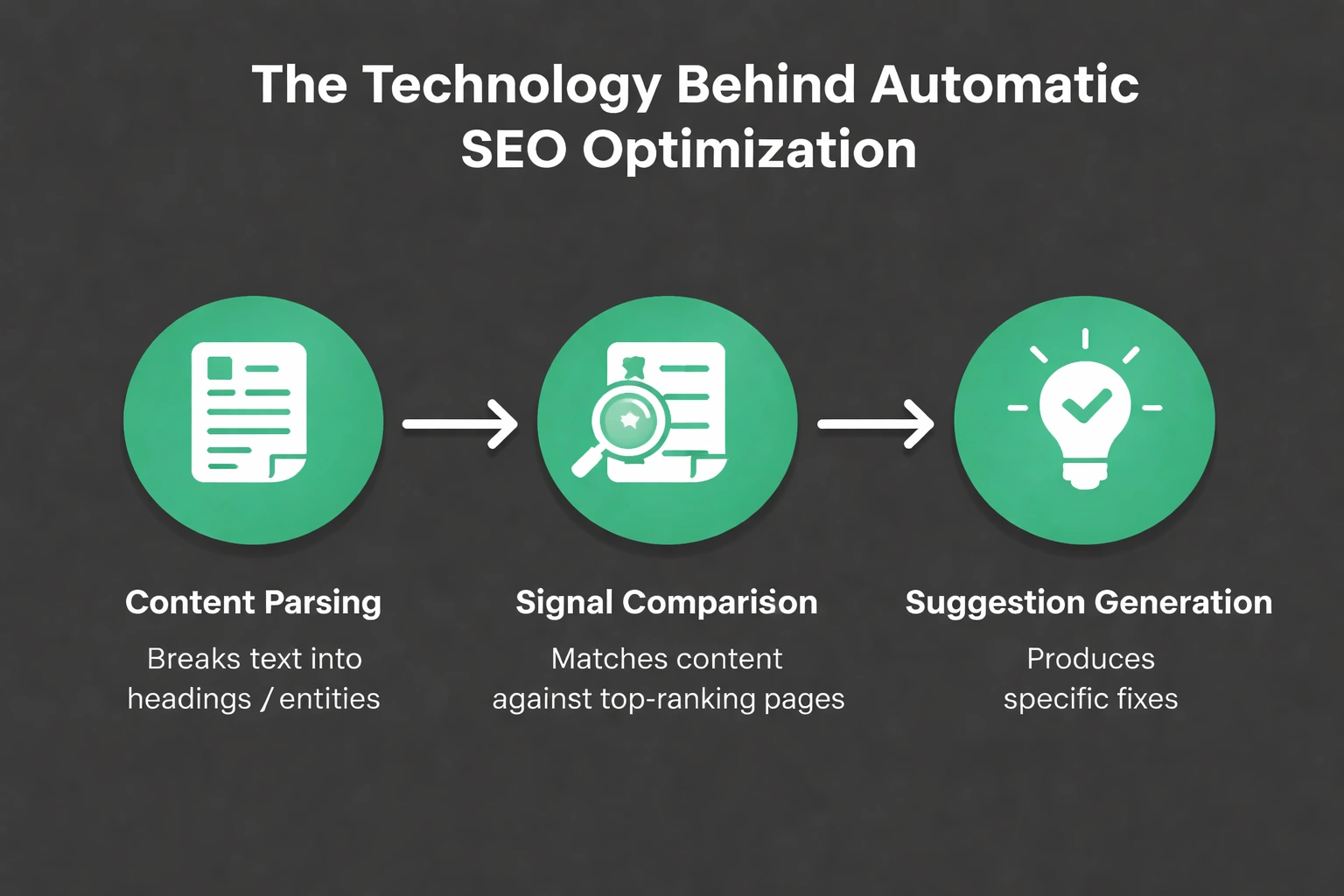
Under the hood, this stuff runs on natural language processing paired with real-time ranking data. NLP models read your content the way a search engine parses it, scoring topical relevance and intent match instantly.
Usually, three layers work together: content parsing breaks text into headings and entities; signal comparison matches your content against top-ranking pages for the target keyword; and suggestion generation produces specific fixes, not just a pass/fail score. This is the same approach discussed in LeafPad's guide on auto SEO AI and content optimization workflows. The best part? You don't need a developer. It runs as part of the writing process.
SEO Content Optimierung and Other Names for the Same Process
SEO content optimierung is just the German term for automatic SEO optimization. The process is identical. Whether your team calls it automatic SEO optimization, SEO content optimierung, or AI content scoring, the workflow doesn't change. This matters for international teams targeting multiple markets from one platform LeafPad's free AI SEO tools apply the same logic regardless of language.
Common Automatic SEO Optimization Tasks You Should Automate First
Start with high-impact, repetitive tasks. These take the most manual time but follow predictable rules.
Automate meta title and description generation for every new post first. Then look at keyword density checks against your primary and secondary terms. Internal link suggestions are huge pull them from your existing keyword research data. You should also run content freshness scans (LeafPad's content refresh tool handles this), heading hierarchy validation to catch skipped H2s, and image alt text generation tied to page context.
These six tasks cover about 80% of the on-page issues most blogs face. The remaining 20% usually needs a human eye anyway.
Choosing the Right Automatic SEO Optimization Tool

Tools vary wildly in depth and accuracy. The right choice depends on how much content you publish and how technical your team is.
Look for real-time scoring so issues get caught before publish, not after. Native platform integration matters too it avoids plugin conflicts and technical debt. And you want transparent suggestions that explain why a fix helps, not just what to change. Tools that bolt onto an existing CMS through plugins often create more maintenance work than they save. That tradeoff is covered in detail on the choosing an SEO-friendly CMS guide.
Common Mistakes When Automating SEO Optimization
This fails when teams treat it as "set it and forget it." Many enable a tool, run it once, then ignore new content.
Don't run optimization only at launch. It needs to run on every update. Don't ignore readability scores just to stuff keywords, and definitely don't skip internal link suggestions between related posts. Publishing without checking meta description length is a common error, as is treating AI suggestions as the final draft. Automation belongs inside your publishing workflow, not outside it. The auto-publish process works best when checks run before content goes live.
How LeafPad Handles Automatic SEO Optimization
LeafPad bakes automatic SEO optimization directly into the writing editor. You don't go to a separate screen. Every draft gets real-time keyword suggestions, meta tag scoring, and internal link recommendations while you type.
This connects to the broader system explained in the SEO text tools guide. Writers see suggestions before publishing, not after a page has already lost ranking potential. The AI blog generator uses the same engine to draft content that meets standards from the first version.
Getting Started With Automatic SEO Optimization This Month
Start small. Pick one content type, run it through automation for two weeks, and measure the difference.
Audit your ten most-visited pages for missing meta data first. Run automatic keyword and readability scoring on them. Apply internal link suggestions between related posts, republish, and watch rankings for four weeks. Then expand automation to new content as it publishes. This avoids overwhelming your team and proves value early. Once those first ten pages show gains, scaling to the rest of the site is an easy call.
Published with LeafPad