Axiom AI is a browser-based automation tool that scrapes and processes web data using natural language prompts instead of code. It sits in a crowded category of tools built to eliminate manual research work for teams that need structured data fast.
Search teams rely on these tools because manual web research simply doesn't scale. Modern SEO workflows demand constant competitive monitoring, SERP tracking, and content gap analysis tasks that eat hours if done by hand. Understanding where Axiom AI fits helps founders and marketers decide if it belongs in their stack or if they need something more robust.
What Is Axiom AI
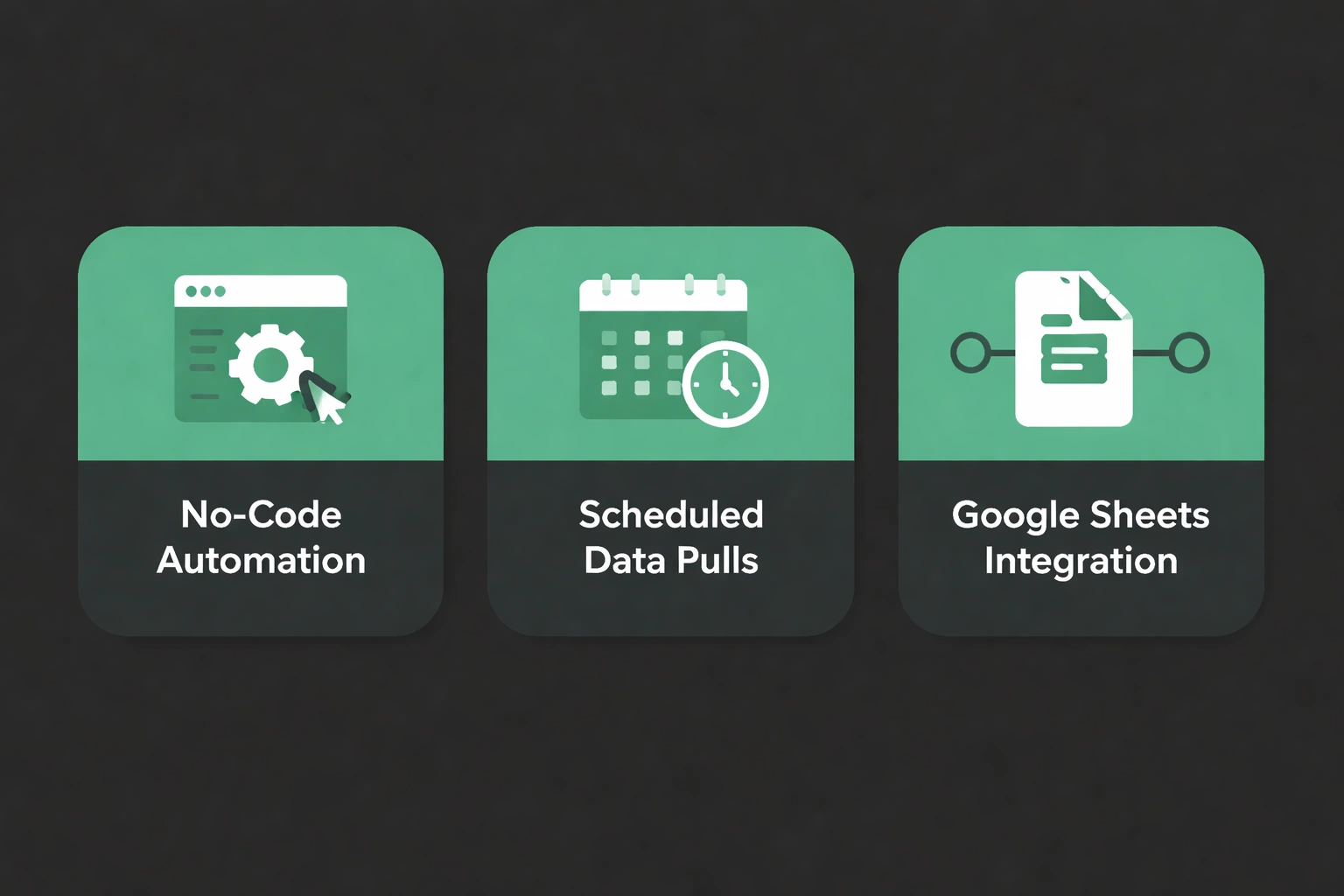
Axiom AI lets users build bots to extract and scrape data from websites without writing code. You describe tasks in plain English or use a visual builder, and the tool translates that into repeatable automation.
The platform has roots in the RPA (robotic process automation) space but has pivoted hard toward search and data extraction. It runs as a Chrome extension or cloud-based bot, meaning it can navigate live pages, click through interfaces, and pull structured data into spreadsheets.
It handles:
- Web scraping without coding
- Scheduled and recurring data pulls
- Integration with Google Sheets, Airtable, and similar tools
- Bot recording that mimics human browsing behavior
- Cloud execution for scraping at scale
For SEO and content teams, this means automated competitor tracking, pricing monitoring, and search result extraction without hiring a developer.
How Automated Search Tools Like Axiom AI Actually Work
These tools work by simulating human browsing actions. You show the tool what to click, scroll, or extract once, and the automation repeats that action across pages or search queries.
This is different from traditional APIs, which require developer access and defined endpoints. Automated search tools interact with the visual layer of a website the same way a person would. This flexibility is useful for sites without public APIs, including most search engine result pages.
The workflow is usually:
- Define the target page or search query
- Record the extraction steps (click, scroll, copy element)
- Set extraction rules for the data fields needed
- Schedule the bot to run daily, weekly, or on demand
- Export results to a connected spreadsheet or database
Axiom AI follows this pattern. It competes with tools like Browse AI, Octoparse, and ParseHub. What separates automated search tools from generic scrapers is the focus on search behavior specifically SERP tracking, keyword monitoring, and query-based extraction rather than just static page scraping.
Where Automated Search Tools Fit in an SEO Workflow
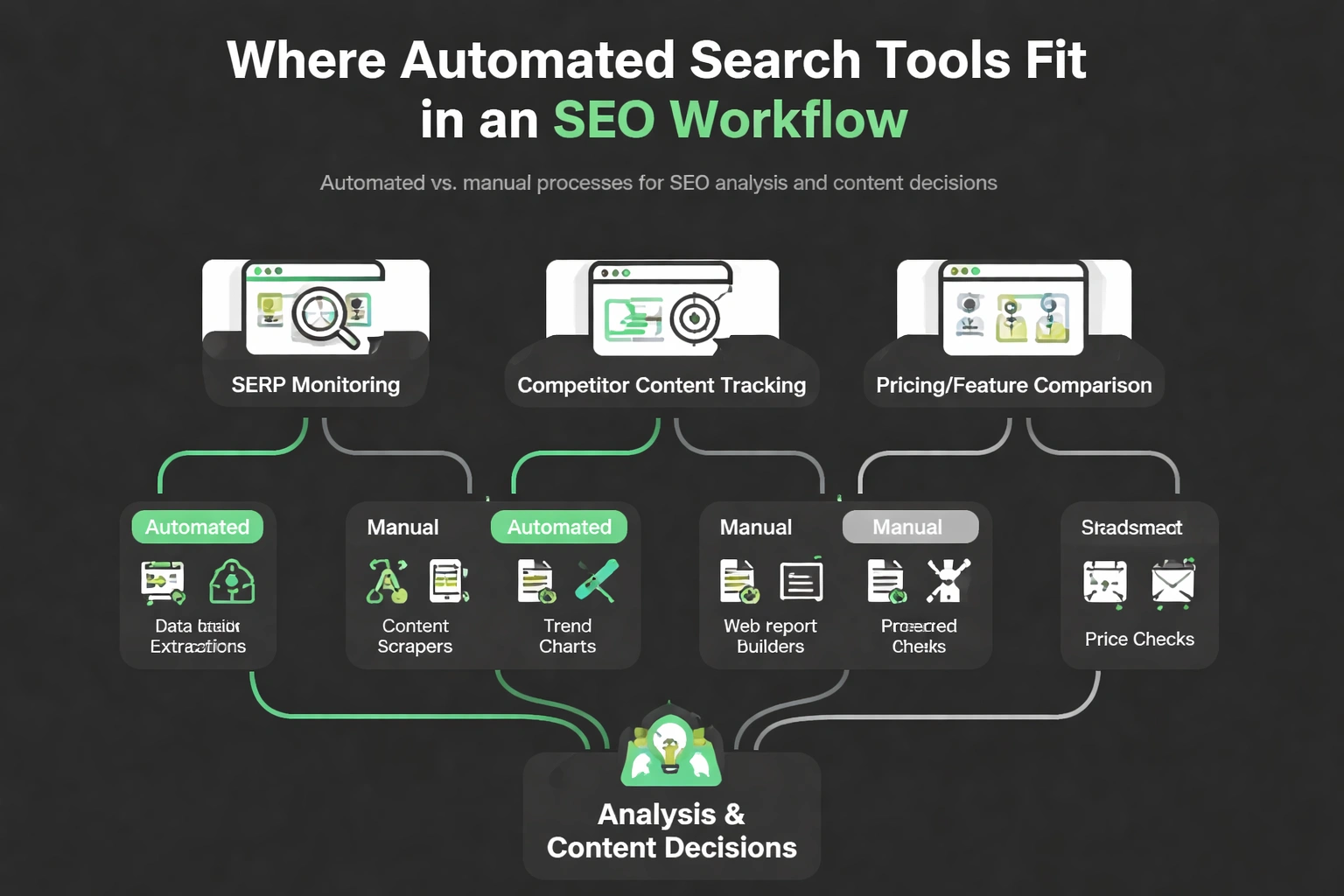
These tools act as data collection layers that feed into analysis and content decisions. They don't replace strategy they replace the manual labor of pulling ranking data, competitor content, or search feature snapshots by hand.
Teams typically plug them in here:
| Use Case | What Gets Automated | Manual Alternative |
|---|---|---|
| SERP monitoring | Pulling top 10 results for target keywords daily | Manually searching and screenshotting |
| Competitor content tracking | Scraping blog titles and publish dates from rivals | Checking competitor blogs weekly |
| Pricing and feature comparison | Extracting pricing tables from competitor sites | Visiting each site manually |
| Local pack tracking | Capturing map pack results by location | Running searches from different IPs manually |
| Featured snippet detection | Flagging when a query triggers a snippet | Scanning search results by eye |
For a platform like LeafPad, this connects to how SEO teams approach keyword research. Automated search tools surface raw ranking data, but that data still needs to feed into content planning which is where pillar content strategies and structured publishing take over.
Practical Examples of Axiom AI in Search Automation
Axiom AI gets used most often for extracting search engine results and monitoring changes over time. Teams set up bots that revisit specific queries and log ranking shifts, new competitors, or altered meta descriptions.
A few concrete examples:
- Rank tracking bots: A bot searches a target keyword weekly and logs the top 10 URLs into a spreadsheet, flagging new entrants.
- Content gap scraping: A bot visits competitor sitemaps or blog indexes and pulls titles, helping teams spot topics they haven't covered.
- Local search snapshots: A bot runs location-based searches and captures the map pack results for multi-location businesses.
- Price monitoring for SaaS comparisons: A bot scrapes competitor pricing pages monthly useful for teams maintaining comparison content like a compare page.
The pattern here is clear: the automation handles collection, but a human or downstream system still needs to interpret the results. This is where automated search tools differ from full AI SEO agents that can both collect and act on data, similar to what's covered in AI SEO Agents: Automate Content Creation & Publishing.
Limitations of Automated Search Tools in 2026
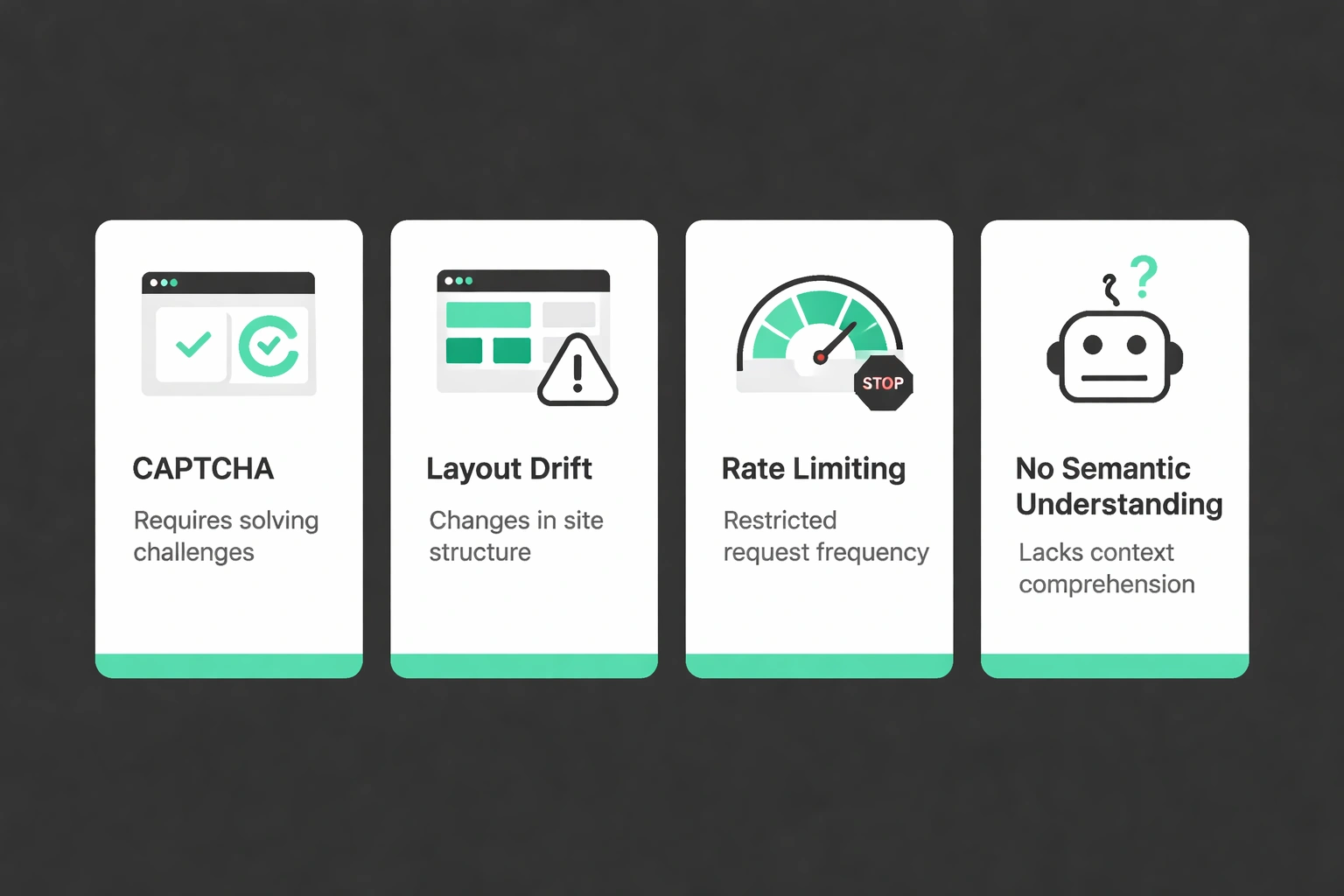
Tools like Axiom AI have real limitations scale, maintenance, and search engine defenses. Bots that mimic human browsing break when sites change layouts, and search engines actively try to block automated querying.
The friction points:
- CAPTCHA and bot detection: Google and other engines increasingly challenge repeated automated queries from the same source.
- Layout drift: A recorded bot breaks the moment a target page redesigns its structure.
- Rate limiting: Running too many queries too fast triggers IP blocks or throttling.
- No semantic understanding: These tools extract what they're told to extract they don't interpret intent or context the way an AI SEO tracking system might.
- Maintenance overhead: Every bot needs occasional review as target sites evolve.
For teams that need raw data extraction with lightweight setup, this tradeoff is often acceptable. For teams that need durable, self-healing SEO infrastructure, tools built around automatic SEO optimization tend to hold up better over time than general-purpose scraping bots.
Automated Search Tools vs Full SEO Platforms
Automated search tools and full SEO platforms solve different problems. Search tools like Axiom AI collect data. SEO platforms interpret that data, generate content, and publish it automatically without requiring a separate extraction step.
The distinction matters when choosing where to invest time:
| Factor | Automated Search Tools | Full SEO Platforms |
|---|---|---|
| Primary function | Data extraction and scraping | Content strategy, creation, publishing |
| Setup effort | Bot recording, rule building | Guided onboarding, minimal config |
| Output | Spreadsheets, raw datasets | Published, optimized blog content |
| Maintenance | Ongoing bot fixes needed | Platform handles updates |
| Best for | One-off or recurring data pulls | Long-term organic growth |
This is a useful distinction for anyone evaluating automatic SEO optimization options. A search tool can tell you what competitors rank for. A platform like LeafPad takes that insight further by helping you publish blog content that targets those same gaps, without switching tools mid-workflow.
Should You Use Axiom AI for Search Automation
Axiom AI makes sense for teams that need flexible, no-code data extraction from search engines and websites without committing to a full SEO platform. It works well as a supplementary tool for research-heavy tasks.
Consider it if:
- You need occasional, custom data pulls that off-the-shelf tools don't support
- Your team is comfortable setting up and maintaining bots
- You want raw data rather than finished content or recommendations
Look elsewhere if:
- You need SEO content published automatically after research
- You want a system resistant to layout changes and bot detection
- You need internal linking, meta optimization, or content refresh built into the same workflow
Automated search tools like Axiom AI solve a narrow but real problem: getting data off the web without writing code. For teams that want that data to turn into ranked content, pairing extraction with a dedicated publishing system tends to close the loop
Published with LeafPad