Citation analysis services track where AI search engines cite your content. They monitor ChatGPT, Perplexity, and Google AI Overviews. The good ones combine automated crawling with real-time alerts and source attribution mapping. If you're building an auto SEO AI stack in 2026, LeafPad's AI citation tracking belongs at the center of it.
AI citations are the new backlinks. Miss them, and you're invisible on the fastest-growing search surface. Competitors are already optimizing for AI mentions daily. If you aren't tracking citations, you're guessing.
What citation analysis actually measures
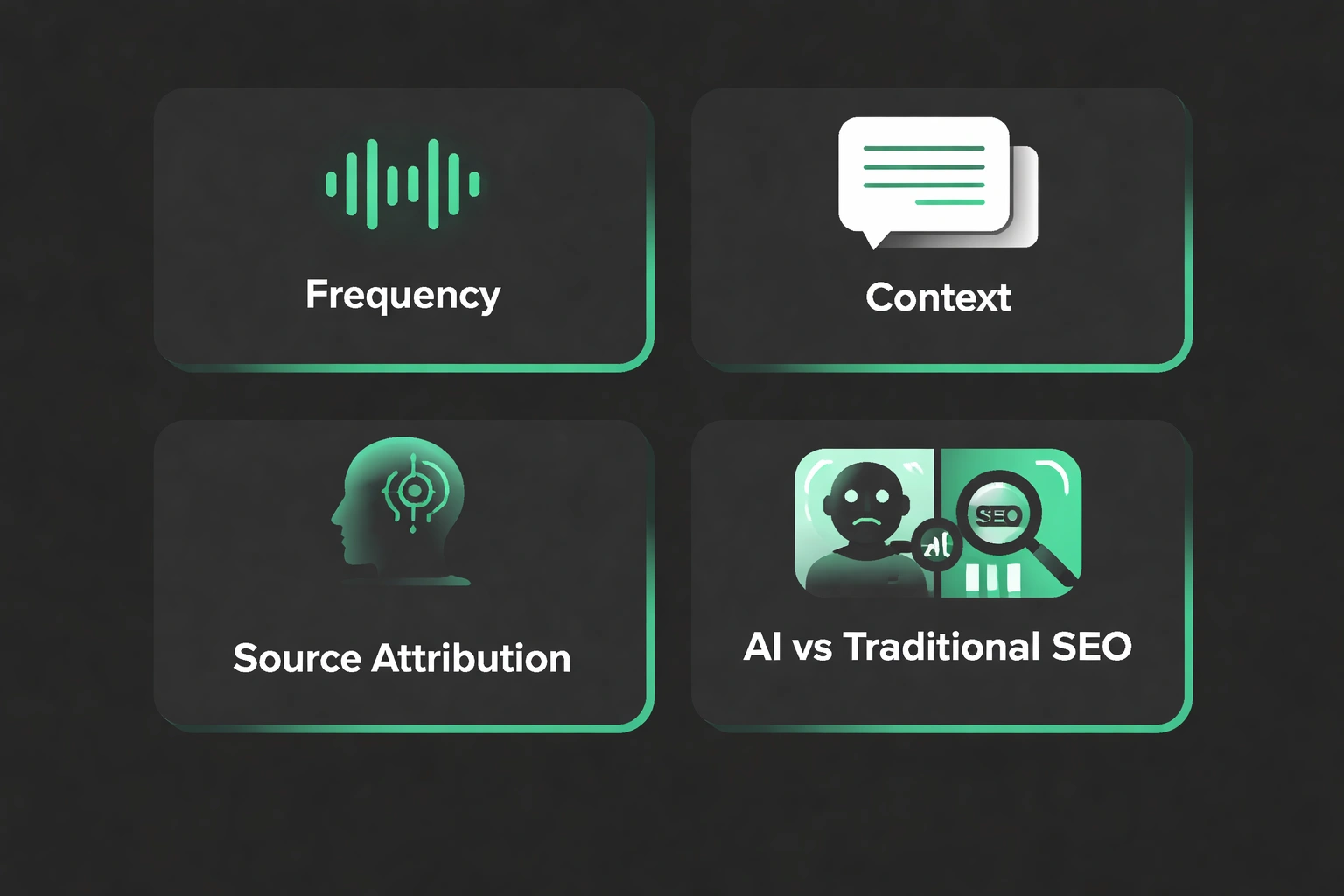
It measures how often, where, and in what context AI engines mention your brand. It tracks source attribution across large language models, not just traditional search rankings. A decent tool shows you the prompt, the answer, and your position in it.
Most auto SEO AI platforms stop at rank tracking. That’s not enough. Citation analysis captures the actual text an AI model generates about your brand. AI answers rarely link out like search results. A citation might be a mention buried in a paragraph with no link. Without tracking, you’d never know it happened.
LeafPad's AI citation tracking tool grabs these mentions across ChatGPT, Perplexity, Claude, and Google AI Overviews. It logs the query, the response snippet, and whether your domain was named.
Why this matters for auto SEO AI workflows
Skip citation monitoring and you miss half the picture in 2026. Automated SEO used to mean meta tags and internal links. Now it means detecting AI mentions automatically.
The shift looks like this:
| Old Auto SEO Focus | 2026 Auto SEO AI Focus |
|---|---|
| Google keyword rankings | AI citation frequency |
| Meta tag automation | Prompt-response monitoring |
| Backlink counts | Source attribution tracking |
| Click-through rate | Mention share of voice |
A workflow that only checks page one rankings runs on outdated assumptions. Search behavior has split. A meaningful chunk of queries now resolve inside an AI chat window, never touching a traditional results page. If your system doesn't account for that, you're optimizing for a shrinking slice of traffic.
That's why citation tracking pairs naturally with the toolkit covered in Auto SEO AI Tools 2026: Streamline Your SEO Workflow. That guide lays out the full stack. Citation analysis is a critical piece.
Core features to look for
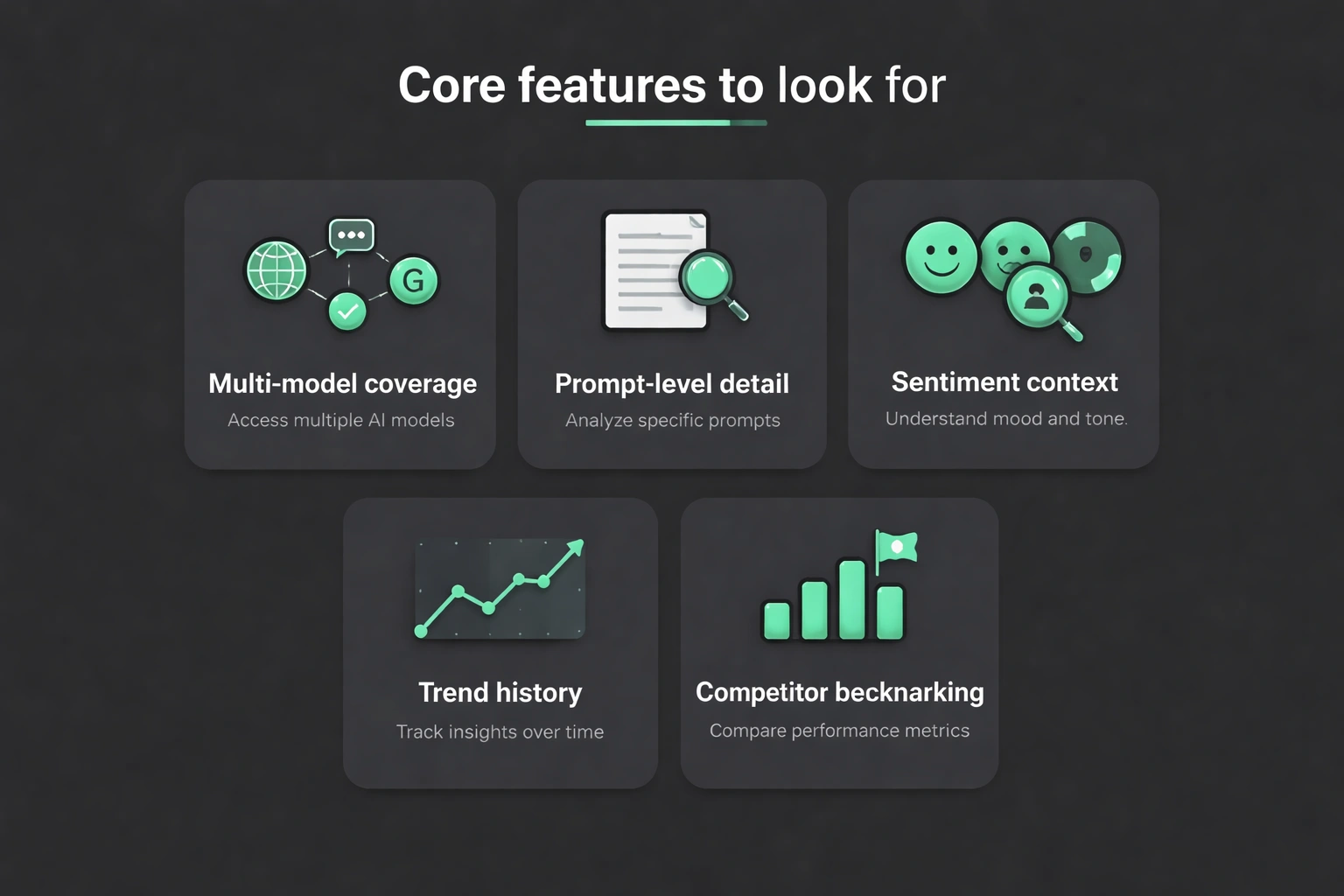
You want real-time detection, multi-model coverage, and historical trend data. A service should show not just that you were cited, but how that citation shifted over time. Weak tools hand you a single snapshot and call it done.
Five capabilities matter:
- Multi-model coverage: tracking across ChatGPT, Perplexity, Gemini, and AI Overviews at once.
- Prompt-level detail: seeing the exact question that triggered your citation.
- Sentiment context: knowing if the mention was positive, neutral, or comparative.
- Trend history: comparing citation frequency month over month.
- Competitor benchmarking: seeing how often rivals get cited for the same queries.
Historical trend data is key. A single snapshot tells you nothing. Patterns emerge over weeks and months. LeafPad's guide on historical data in AI SEO platforms explains why this longitudinal view matters.
How auto SEO AI agents use citation data
Agents pull citation data to prioritize content updates. If a page stops getting cited, something changed either the content or the model's perception of it. Agents flag this automatically, no manual audit required.
It's a feedback loop. The agent monitors citations, detects a drop, and triggers a refresh recommendation. This closes the gap between detection and action. LeafPad's approach is detailed in AI SEO Agents: Automate Content Creation & Publishing, which explains how agents turn signals into publishing decisions.
Setting up citation tracking without a dev team
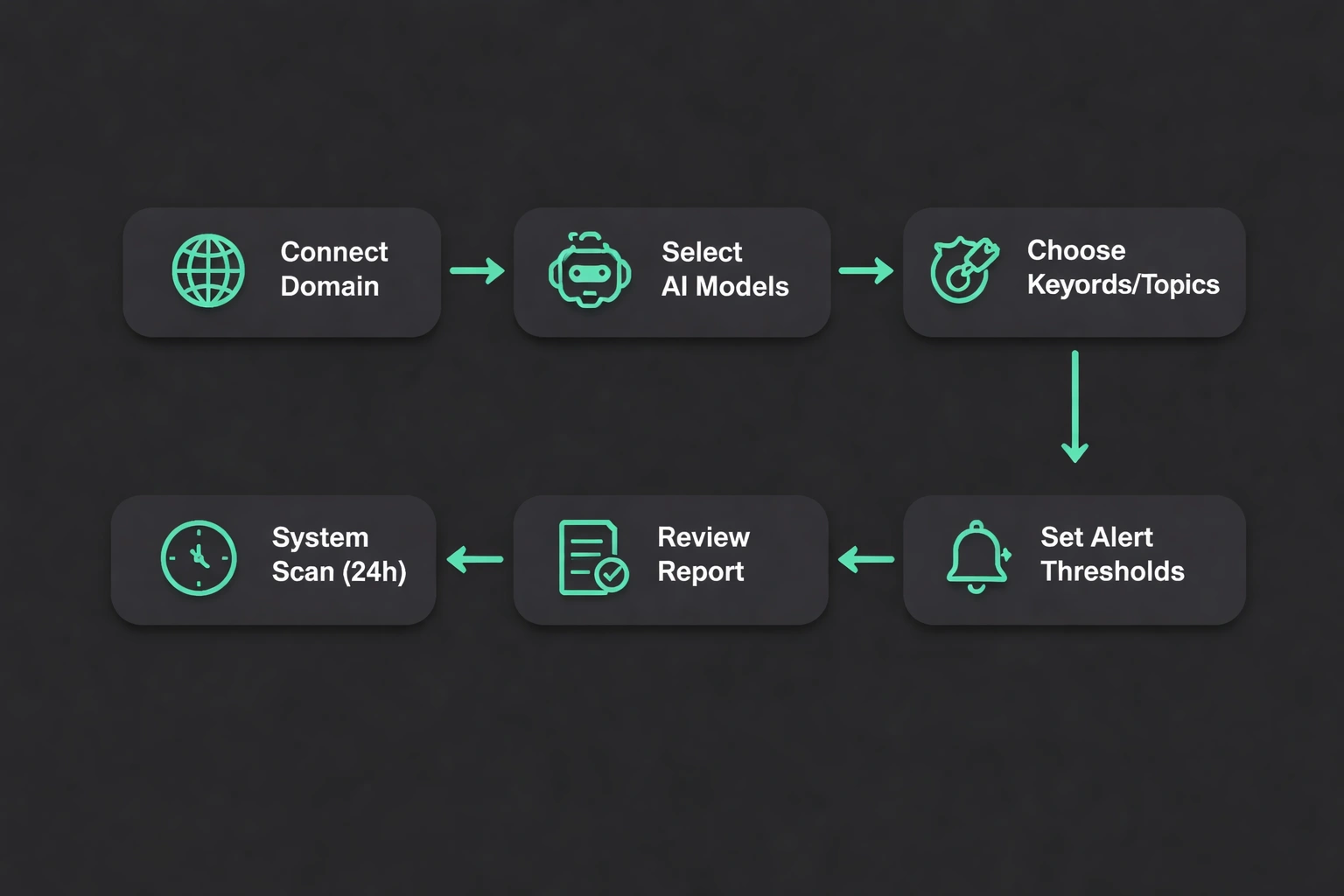
No coding required if you use the right platform. LeafPad connects citation monitoring to your blog content on the features page. No separate dashboard needed.
The process:
- Connect your domain in the LeafPad dashboard.
- Select AI models to monitor.
- Choose target keywords or topics tied to your pillar content.
- Let the system scan usually within 24 hours.
- Review the report and set alert thresholds.
No plugins. No manual crawler setup. Compare that to stitching separate tools together, a pain point covered in Manual SEO vs Automatic SEO: Complete Guide for Founders. Founders without an SEO hire benefit most.
Pricing for the full LeafPad platform, citation tracking included, is on the pricing page.
Common mistakes teams make with citation data
Teams often pull the data and do nothing with it. A dashboard changes nothing. Value shows up when citation drops trigger content decisions.
Mistakes I see often:
- Checking once and walking away. Consistency beats a single audit.
- Ignoring negative citations. A wrong mention hurts trust as much as a good one helps.
- Disconnecting drops from refresh workflows. The content refresh process should trigger from citation signals automatically.
- Treating all AI models the same. ChatGPT, Perplexity, and AI Overviews index and cite differently.
Fixing this usually means setting alerts correctly. Most services allow threshold-based notifications, so a drop above a certain percentage flags you immediately.
Citation analysis vs. traditional rank tracking
Citation analysis measures presence inside generated answers, not position on a results page. Rank tracking shows where you sit among ten blue links. Citation analysis shows if an AI model named you at all.
The metrics can move in opposite directions. A page might drop in rankings while citation frequency rises. AI models weigh content structure and clarity differently than classic algorithms. That's why AEO 2026 strategies treat them as separate KPIs.
For teams using LeafPad's keyword research tools, pairing keyword targets with citation goals gives a fuller picture.
Final thoughts
Citation analysis is essential for any auto SEO AI stack in 2026. Tracking only rankings measures half your visibility. The services that win combine multi-model coverage, historical trends, and automated action not static reports.
Start with the Auto SEO AI Tools 2026 guide, then layer citation tracking on top. It's the piece most teams skip, and the one that matters most right now.
Published with LeafPad