The gap between getting a click and getting a citation is probably the most jarring shift in SEO right now. AI Overviews, ChatGPT, Perplexity, and Claude don't send visitors like Google used to. They read your content, extract the answer, and maybe drop your link. In 2026, that citation is the metric that actually pays the bills.
Search traffic used to be a simple funnel: rank, click, convert. That funnel is breaking apart. Publishers are watching impressions hold steady while clicks tank, because answer engines are solving queries before users ever hit a website. The businesses surviving this aren't just writing more. They're building automated systems that make their content easy to cite, crawl, and trust.
What "AI Visibility" Actually Means in 2026
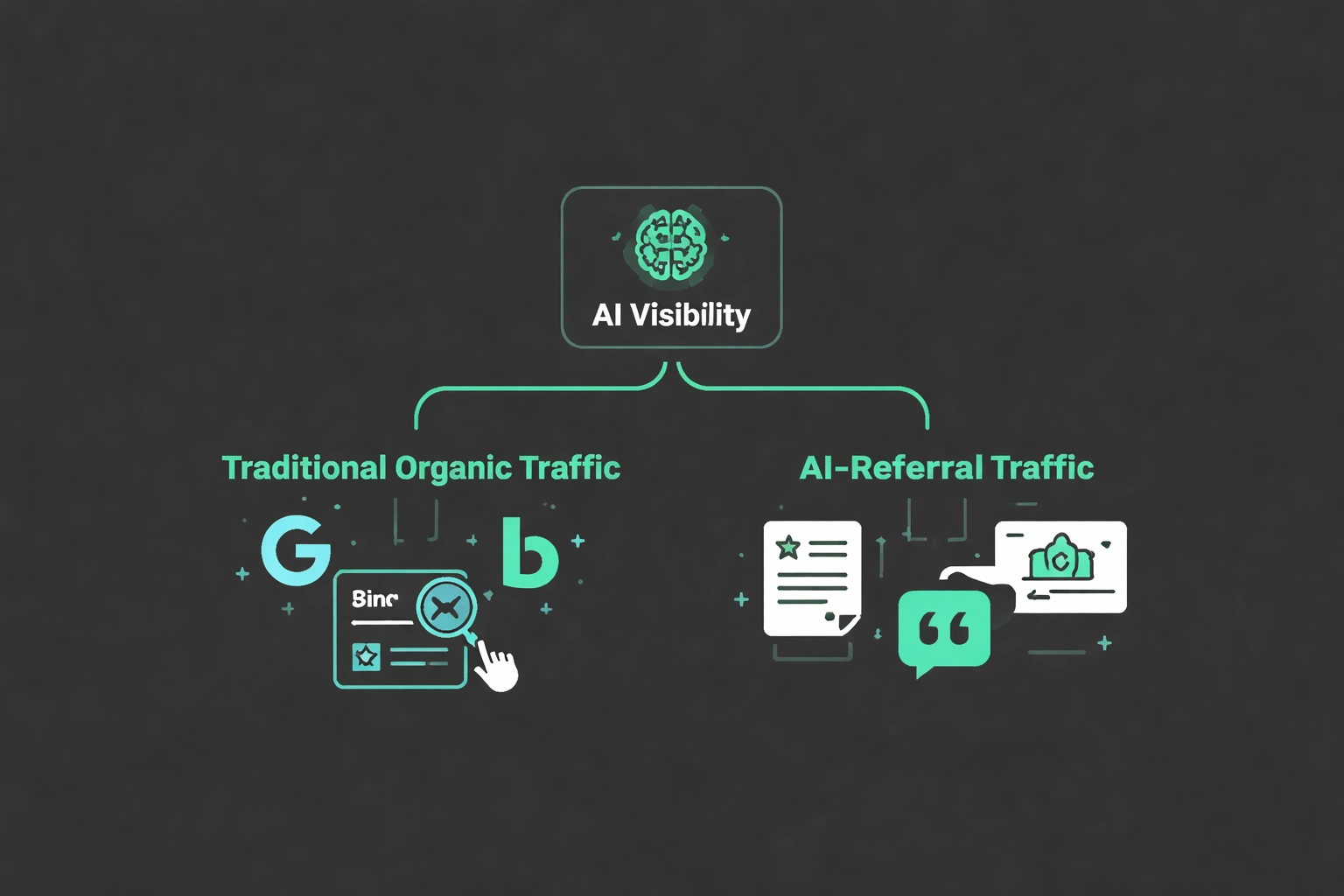
AI visibility is just a measure of how often your content gets referenced, quoted, or linked inside AI-generated answers. It is completely different from your ranking position. A page can rank #8 on Google and still get cited by an LLM if it answers the query cleanly and carries credible signals.
This matters because traffic has split into two lanes. There's traditional organic traffic, still driven by rankings and clicks. Then there's AI-referral traffic, driven by citations inside generated answers. Tools like AI citation tracking exist now specifically because businesses need to know which lane is actually working for them.
The uncomfortable truth is that clicks are declining even for pages that rank well. A widely discussed field experiment found that Google AI Overviews cut publisher clicks by 38% on average. That's not a drill. It doesn't mean visibility disappeared. It just moved. Citations became the new currency, and most sites have no idea if they're earning any.
Why Automated Content Strategies Win This Game
Automated content strategies win because LLMs demand a level of consistency and freshness that human teams just can't maintain manually. Language models favor sites that publish frequently, cover topics deeply, and keep information current. You can't sustain that pace at scale with manual workflows.
Think about what an answer engine is actually doing when it decides whether to cite you. It scans for a clear, self-contained answer near the top of a section. It checks whether your site covers the topic from multiple angles, not just one isolated post. It checks whether the content still reflects reality or was written two years ago and abandoned.
Doing this manually across hundreds of pages isn't realistic for most teams. That's why platforms built around automatic SEO have become the default rather than the exception. Automation handles the repetitive mechanics structure, internal linking, freshness so writers can focus on the substance that actually earns citations.
Here is a rough comparison of how manual versus automated approaches perform on the factors LLMs actually care about:
| Factor | Manual Approach | Automated Approach |
|---|---|---|
| Publishing frequency | Inconsistent, bottlenecked by writers | Continuous, scheduled via auto-publish |
| Content freshness | Rarely revisited | Managed through content refresh cycles |
| Internal linking | Ad hoc, easy to forget | Systematic via internal linking tools |
| Topical coverage | Scattered posts | Structured pillar content clusters |
| Citation tracking | Manual spot checks | Ongoing AI citation tracking |
The Content Structures That Get Cited
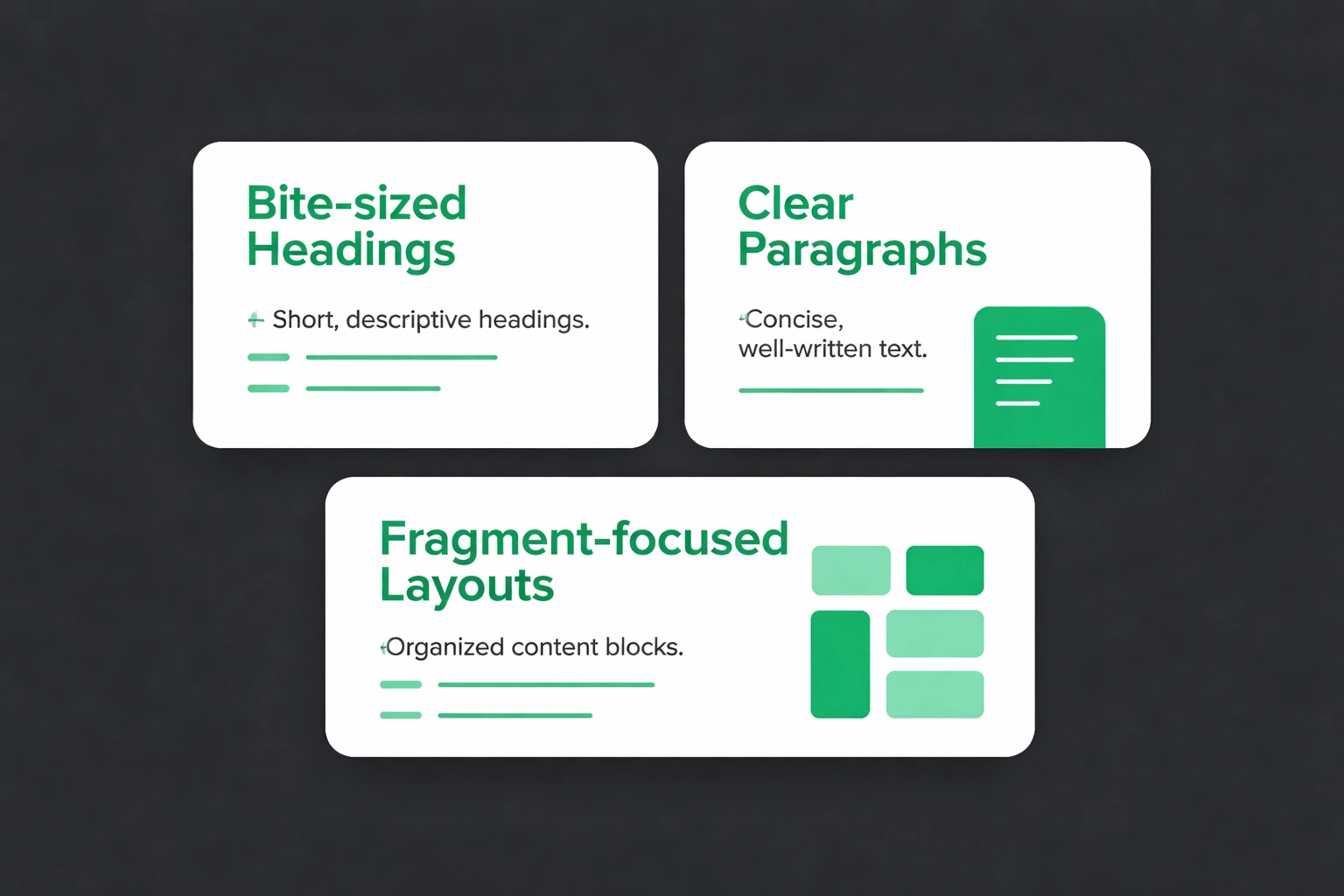
If you want to get cited, your content needs to be bite-sized and brutally clear. LLMs pull from passages that answer a question in one or two sentences, sit under a clear heading, and avoid burying the point in fluff. Structure matters as much as the words themselves right now.
This is where passage-level thinking becomes essential. AI models don't cite entire articles; they cite fragments. A 2,000-word guide might get quoted for one clean paragraph buried in section four. That means every section of every post needs to function like its own mini-answer.
A few structural habits consistently improve citation odds:
- Open every H2 with a direct, quotable answer before expanding
- Keep sentences short and declarative. Don't stack them with qualifiers
- Use tables for comparisons. LLMs parse them cleanly
- Answer the question in the first 40 to 80 words of each section
- Don't use vague framing like "it depends" without following up with actual specifics
This is essentially what LeafPad's editor nudges writers toward with its built-in guidance. If you want a starting framework, the blog outline generator and snippet generator are built around this exact principle.
Freshness Signals Are Doing More Work Than Ever
Freshness signals are doing a lot of heavy lifting in AI visibility right now. Language models are trained on snapshots, so they rely heavily on live crawling to fill in the gaps. Outdated content gets quietly skipped in favor of pages that show recent updates, current data, and active maintenance.
It's a hard break from the old SEO playbook, where a page could rank for years without a single edit. Domain freshness signals now function almost like a trust score. A site that publishes and updates consistently signals to both search engines and AI crawlers that it's still a reliable source.
Practically, this means your content team needs a refresh cadence, not just a publishing calendar. Old posts about pricing, tools, or trends need scheduled reviews. Automated systems flag pages that haven't been touched in months and prioritize them for updates before they go stale in the eyes of a crawler.
Building the Feedback Loop: From Publishing to Citation Tracking
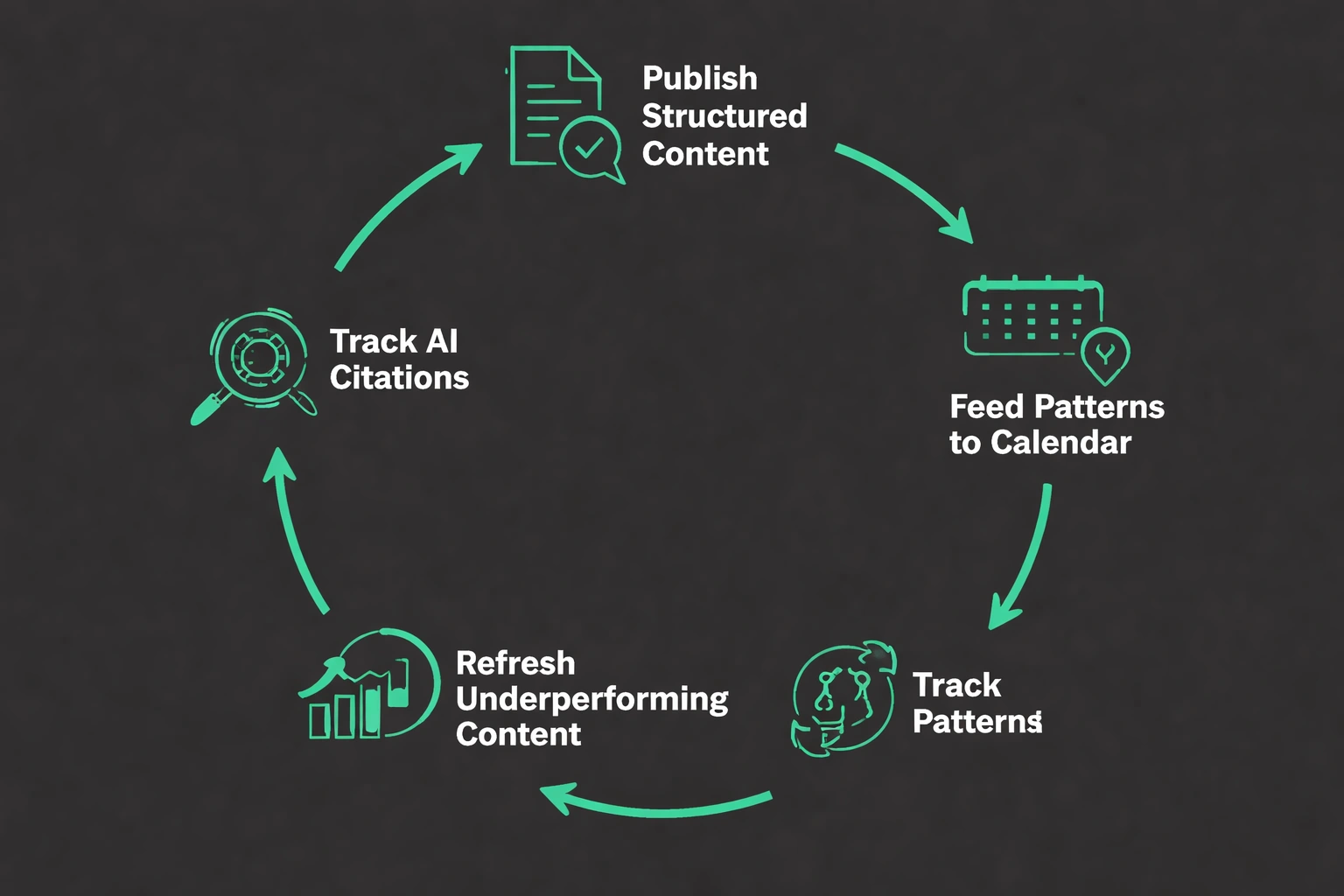
Building this feedback loop means connecting your publishing workflow directly to visibility measurement. Without that loop, teams just publish blindly, guessing at what worked. With it, every post becomes a data point that shapes the next one.
The loop looks something like this in practice:
- Publish structured, passage-optimized content through an automated blog publishing system
- Track which pages get cited using AI citation tracking
- Identify patterns. Which structures, headings, and topics earn citations most often?
- Feed those patterns back into your content calendar
- Refresh underperforming pages using content refresh workflows
This isn't a one-time project. It's an ongoing cycle, and it's exactly why manual processes struggle to keep up. A team publishing three posts a month cannot iterate fast enough to spot citation patterns. A system publishing daily, with structured internal linking and tracked outcomes, generates enough data to actually learn.
Where This Fits Into a Broader SEO Strategy
Don't throw out your traditional SEO fundamentals just yet. Keyword relevance, technical health, and domain authority still matter for ranking. Citation optimization is an additional layer, not a substitute for solid on-page and technical work.
Teams should still be running keyword research, maintaining clean technical SEO, and building topical authority through connected content clusters. AI visibility strategies work best when layered on top of a site that's already structurally sound. There's no shortcut around a broken sitemap or thin content, no matter how well-formatted your passages are.
For businesses comparing platforms to handle this at scale, it's worth looking at how different tools approach the same problem. The comparison page breaks down how various platforms stack up on automation depth and SEO features.
Getting Started Without Overhauling Everything
You don't need to burn your entire content operation to the ground to start fixing this. Start by auditing your highest-traffic pages for citation potential, then apply structural fixes before chasing new volume.
A practical starting sequence:
- Audit top pages for passage clarity using tools like the AI article summarizer
- Rewrite weak openings so each H2 answers its question immediately
- Set up AI citation tracking to establish a baseline
- Layer in a refresh schedule through content refresh
- Scale new content production once the structural fixes show measurable citation lift
Small, structural changes compound faster than most teams expect. A single reworked section can start showing up in AI answers within weeks, especially on pages that already carry some authority.
The shift from clicks to citations isn't a temporary quirk of AI search. It's just how the internet works now. If you want to keep earning visibility, you have to build systems that actually feed the machines what they're looking for. If you want to see how this looks in practice, you can poke around LeafPad's full feature set to see how it fits into a broader automated content strategy.
Published with LeafPad