Metadata bugs are quiet. A wrong canonical or a stale title tag won't throw an error; it just bleeds traffic for weeks. As teams push content through AI blog generators, metadata needs the same rigor as the body copy. Arguably more.
Your pipeline needs to output five fields for every post: title tag, meta description, URL slug, canonical URL, and structured data. I've found three patterns keep these accurate. Treat metadata as a typed contract between stages. Generate everything from the final approved body never the brief. And validate before publishing, then have a human sign off.
What SEO metadata an AI pipeline actually needs
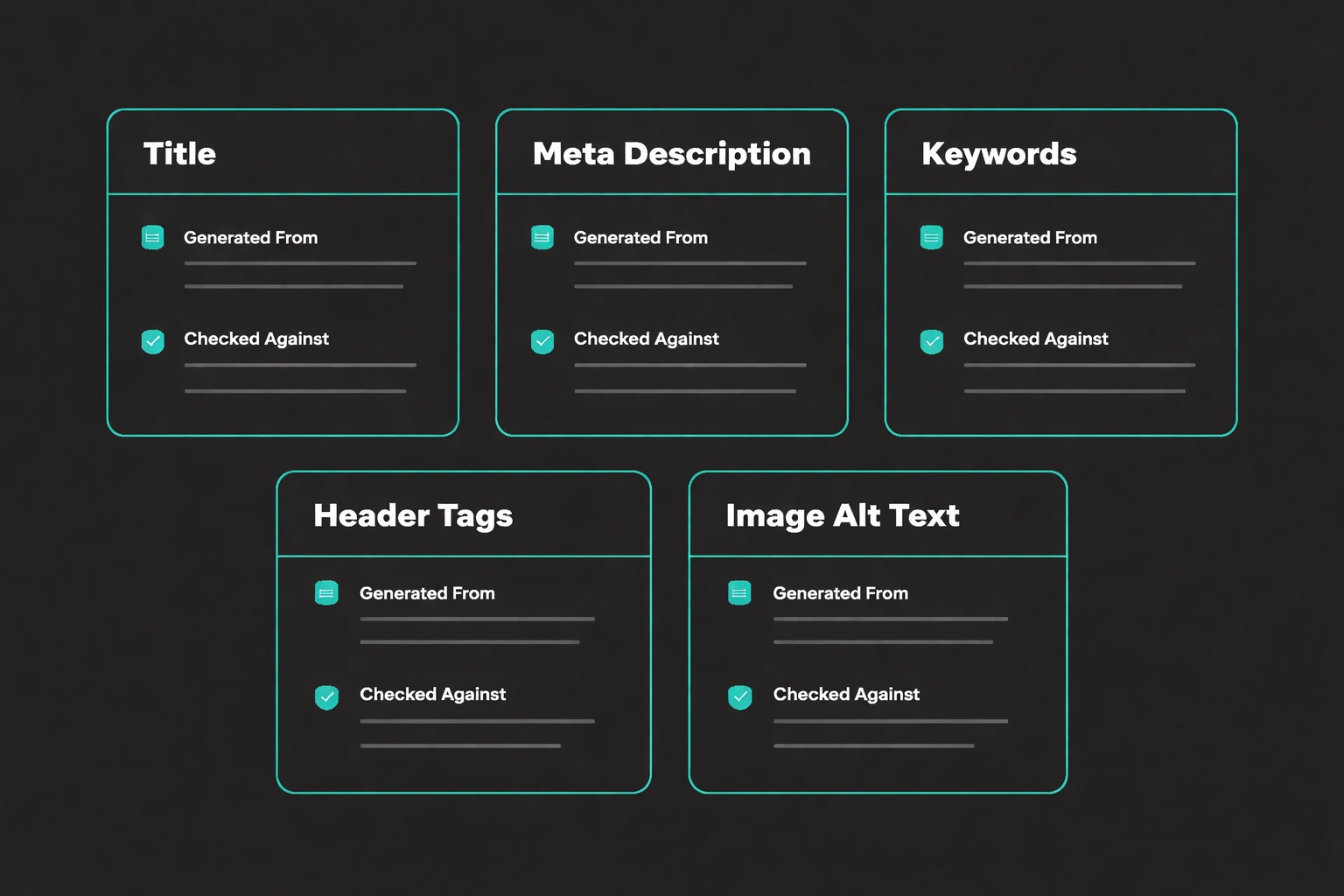
Five fields. Each has a different source of truth and breaks in its own way. Treating them as one blob is how you get errors that slip through for months.
Title and description come from the finished text. The slug is derived once, then frozen. Canonical depends on where it lives. Structured data has to match what's on the page exactly.
| Field | Generated from | Checked against |
|---|---|---|
| Title tag | Final approved body, primary keyword | Character length, site-wide uniqueness |
| Meta description | Final approved body summary | Character length, uniqueness, no truncation |
| URL slug | Approved title at first publish only | Lowercase, hyphenated, stable once live |
| Canonical URL | Publish destination and route config | Absolute, self-referencing, returns 200 |
| Structured data | Final approved body, product or author facts | Valid schema, matches visible content |
Tools that generate titles or descriptions in isolation like a standalone SEO title generator or meta description generator are fine for spot checks. In a pipeline, that logic runs automatically against the final body.
Pattern 1: typed contracts, not loose dictionaries
Define metadata as a strict schema. The drafting stage fills it, validation checks it, and publishing rejects anything that fails. This stops half-finished metadata from reaching a live URL.
If the agent forgets the canonical or writes a 200-character title, the schema rejects it before you even see it. This is the same discipline that makes automated blog publishing work nothing ships without passing a defined shape.
type PostMetadata = {
  titleTag: string;        // 1 to 60 chars
  metaDescription: string; // 1 to 155 chars
  slug: string;            // lowercase, hyphenated, immutable after publish
  canonicalUrl: string;    // absolute URL, self-referencing
  structuredData: {
    type: "Article" | "Product" | "FAQPage";
    payload: Record<string, unknown>;
  };
  status: "draft" | "validated" | "approved" | "published";
};
That status field forces the pipeline through explicit states. You can't hit "published" without passing "validated" and "approved" first.
This plays nice with an internal linking layer and a content calendar, since both need to know a post's real metadata state before scheduling or linking.
Pattern 2: the agent drafts, you approve
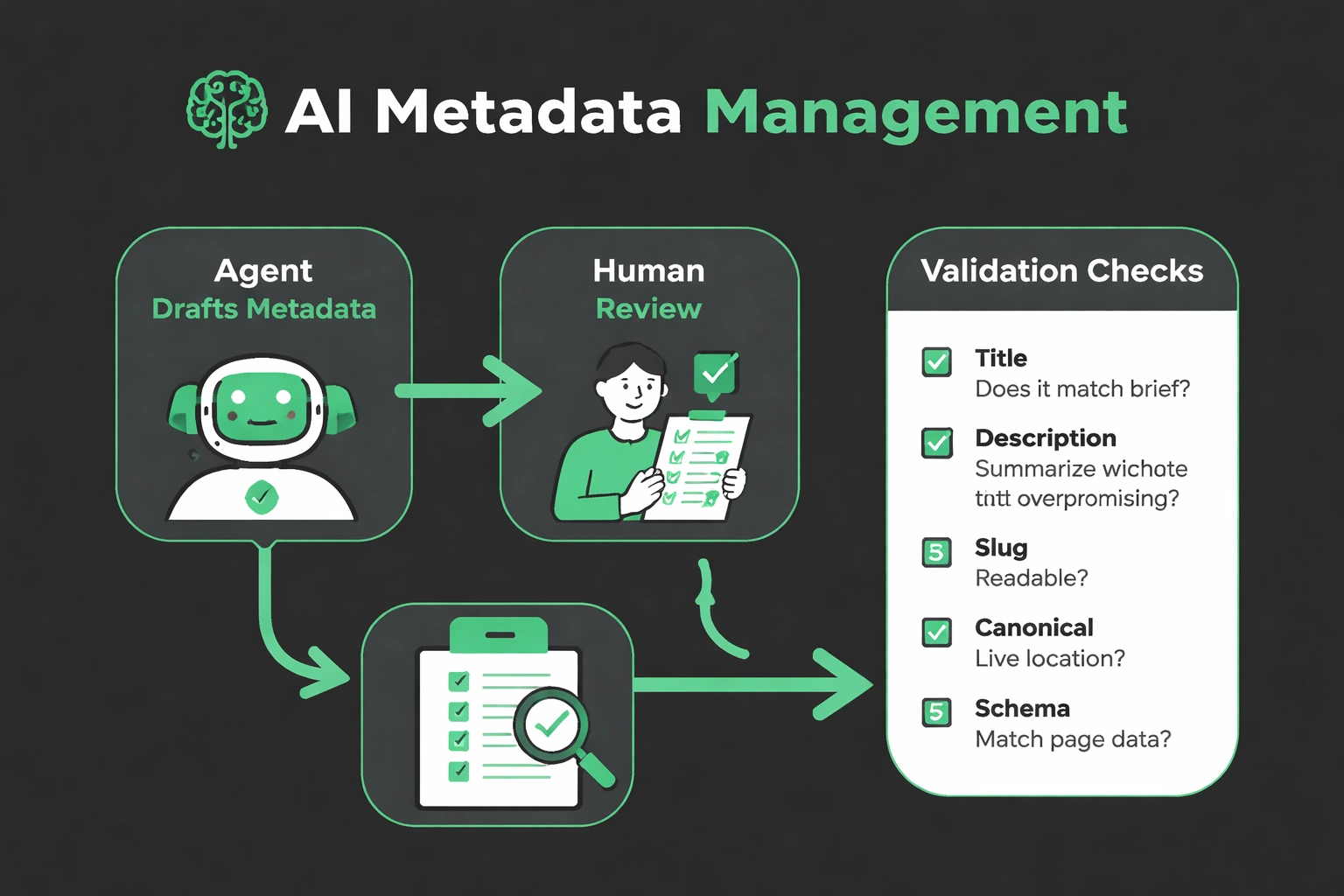
Have the agent draft all five fields alongside the body in a single pass. A human reviews both the content and metadata before anything goes live. You're accountable for what search engines see.
You're not proofreading here. You're checking specific claims:
- Title: Does it match the finished angle, or the original brief?
- Description: Does it summarize without overpromising?
- Slug: Short? Readable? No year or dates that will age?
- Canonical: Pointing to the live location, not staging?
- Schema: Do the prices or dates match what's on the page?
This matters more at scale. Teams running free AI SEO tools or custom stacks can generate hundreds of drafts a week. Approval volume shouldn't outpace your review capacity.
If you're comparing platforms, the LeafPad comparison hub shows how tools like Jasper and Copy.ai handle this split.
Pattern 3: regenerate on content changes, not a timer
Regenerate metadata when the approved body changes, not on a schedule. A cron job that rewrites titles every 30 days will drift from the content. Change detection is the only reliable trigger.
Title, description, and schema follow the body. If you rewrite a paragraph during a content refresh, the metadata catches up in the same pass. Otherwise, the search result describes a version that no longer exists.
Slugs and canonicals are the exception. These shouldn't change once a post is public. The URL is already indexed; changing it breaks backlinks and kills ranking signals.
It's an easy distinction to miss when writing generic regeneration logic. Lock slug and canonical fields the moment status hits "published." Leave title, description, and schema open for updates tied to content changes.
Validating before publish
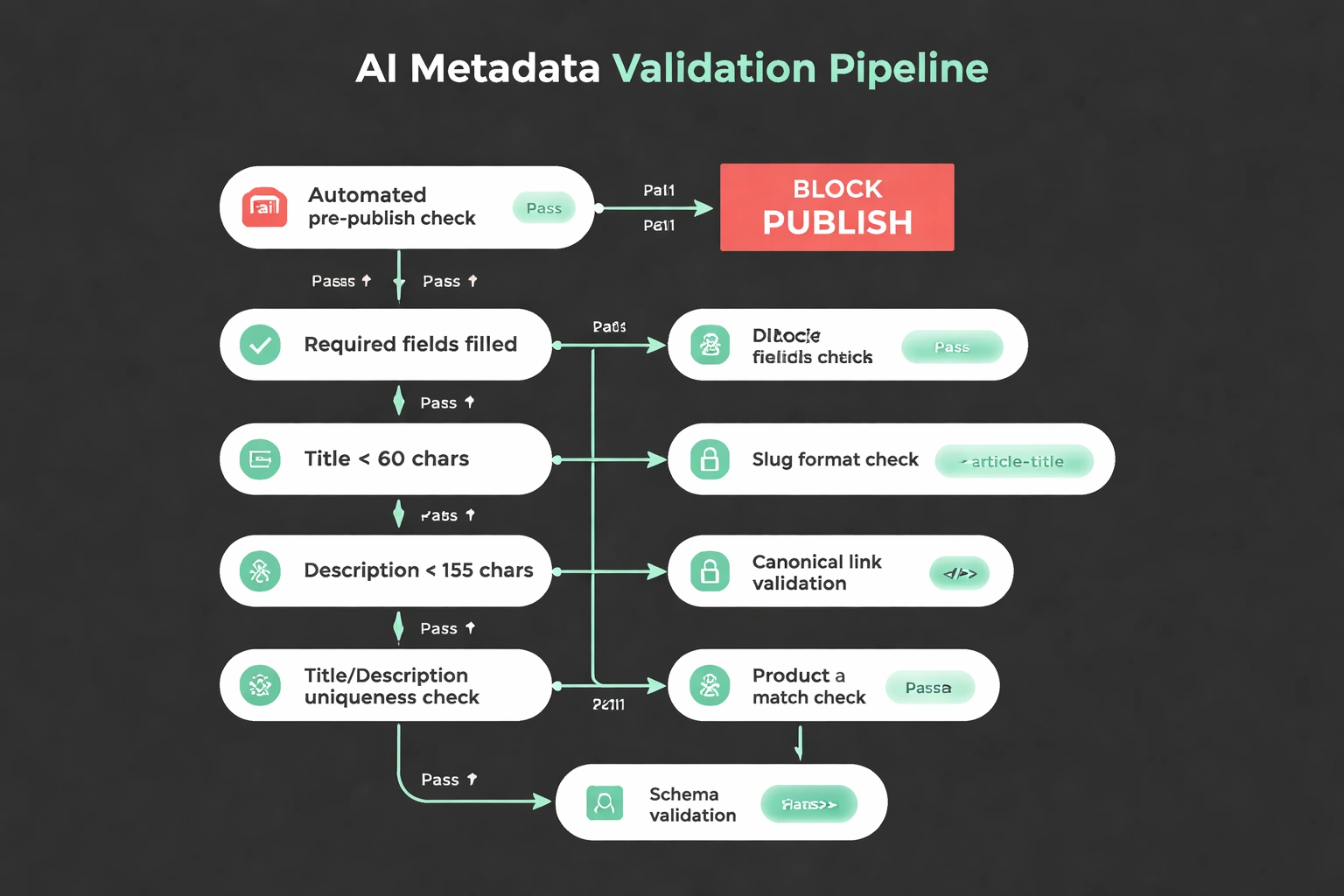
Run an automated pre-publish check on every post. It should block publishing if anything fails, not just log a warning. Manual review is too slow and inconsistent at scale.
- Required fields filled.
- Title under 60 chars, description under 155.
- Title and description unique across the site.
- Slug lowercase, hyphenated, stable if already live.
- Canonical absolute, self-referencing, returns 200.
- Schema parses clean and matches visible content.
- Product data in metadata matches the source, not a cache.
Simple checks, but they're skipped under deadline pressure. Wire them as a hard gate. If you're tracking how AI cites your pages, pair this with AI citation monitoring and an index checker to confirm pages are actually indexed.
A quick pass with a character count tool or word counter catches length issues before validation, which helps when debugging failures.
FAQ
Can the same model generate body and metadata in one pass?
Yes, and it's usually more consistent. The model summarizes what it just wrote, not what a brief guessed.
What if validation rejects metadata?
The post stays in draft/failed and doesn't publish. Surface the specific field that failed so a human or agent can fix it.
Should slugs include dates?
No. Dated slugs age poorly and make refreshed content look stale. Set a clean slug once at publish.
How is this different from a general pipeline architecture guide?
This is just the metadata layer: the five fields, the contract, and validation rules. Broader architecture drafting stages, review queues, infra is a separate topic.
Published with LeafPad